Arachnophonia: “The Musical Temperament” by Anthony E. Kemp

Editor’s note: Arachnophonia (“Arachno” = spider / “-phonia” = sound) is a regular feature on our blog where members of the UR community can share their thoughts about resources from the Parsons Music Library‘s collection.

All links included in these posts will take you to either the library catalog record for the item in question or to additional relevant information from around the web.

Today’s installment of Arachnophonia is by student manager Eliana (class of 2026) and features a book about music psychology as it relates to musicians. Thanks, Eliana!

The Musical Temperament: Psychology and Personality of Musicians by Anthony E. Kemp
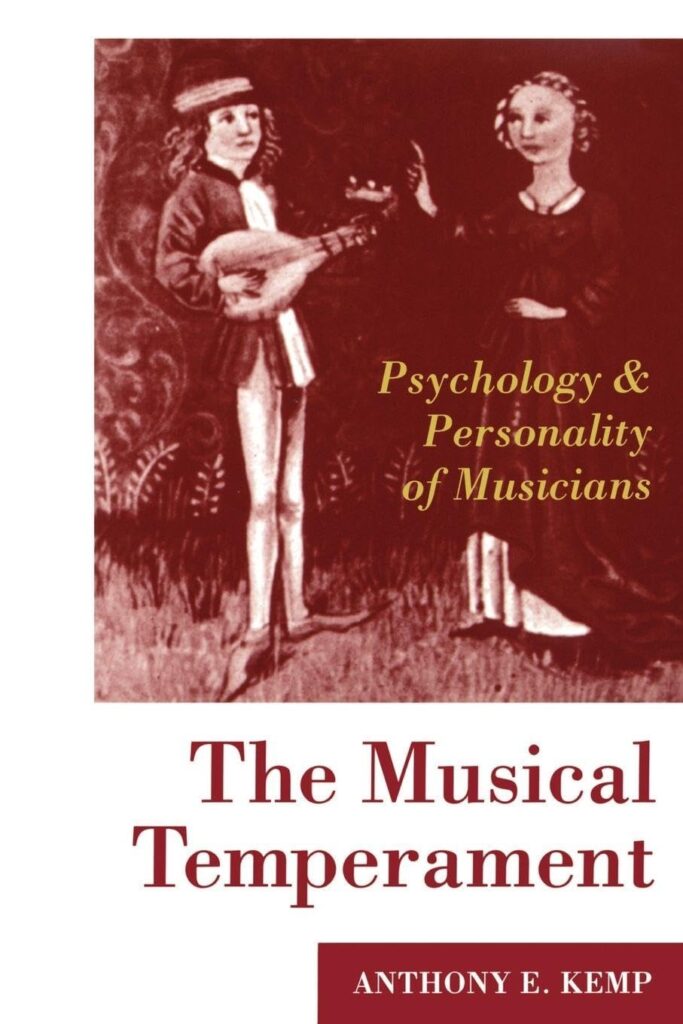
The Musical Temperament: Psychology and Personality of Musicians by Anthony E. Kemp

If you are interested in psychology and music, I recommend reading Anthony E. Kemp’s The Musical Temperament: Psychology and Personality of Musicians if you need some help understanding how research concerning the personalities of musicians has progressed over the years. Though it is heavy in research jargon, this book alerts the reader that this is a growing field that gives insight into how the different paths that musicians choose to take can influence their personality traits.

Published in 1996, The Musical Temperament: Psychology and Personality of Musicians is the first book to address connections of personality traits and psychological states with various types of musicians, including composers, teachers, and many more. The author introduces personality theories that have emerged over the decades and addresses the traits of anxiety, independence, sensitivity, introversion, and gender issues through the lenses of research and scholarly articles. Kemp also considers different forms of musicianship, such as singers or conductors, to demonstrate the impact that different skill sets have on personality and the predisposed path a musician may take in relation to these skills.
Arachnophonia: Recreational Reading – “When No One Is Watching” by Alyssa Cole

Editor’s note: Arachnophonia (“Arachno” = spider / “-phonia” = sound) is a regular feature on our blog where members of the UR community can share their thoughts about resources from the Parsons Music Library‘s collection.

All links included in these posts will take you to either the library catalog record for the item in question or to additional relevant information from around the web.

Today’s installment of Arachnophonia is by student manager Rocio (class of 2027) and features a fiction book from the recreational reading collection currently residing at the Music Library. Thanks, Rocio!

Recreational Reading

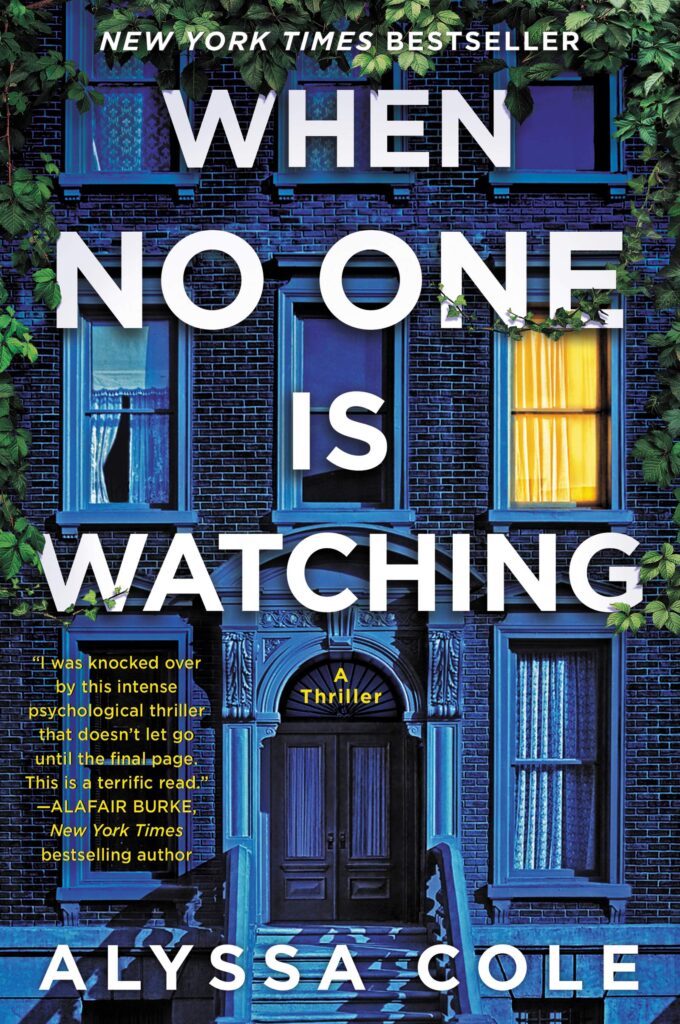
When No One Is Watching by Alyssa Cole

When No One Is Watching by Alyssa Cole

Maybe your New Year’s resolution is to read more during your free time, or maybe to spend less money on books. Either way, the answer is in Parsons Music Library. The library has a great selection of leisure-reading books you can check out and enjoy before the semester starts to feel a little heavier.

One book that immediately caught my eye, and that I would highly recommend, is When No One Is Watching by Alyssa Cole. This novel is a thriller, but it also talks about real-life issues such as gentrification, systemic racism, and economic displacement. The story follows Sydney Green, who begins noticing mysterious disappearances in her historically Black neighborhood. She teams up with her neighbor to investigate what’s really going on.

When No One Is Watching is an expertly crafted thriller that manages to be as informative as it is entertaining. It’s no easy task to unpack a large amount of American history within a suspenseful narrative, but the author does exactly that. What begins as a slow-burning mystery eventually builds into a heart-pounding reveal. While I found the story incredibly creative and necessary, my only critique is that the pacing felt uneven at times, and the ending seemed a bit too packed with information that might have been better spread throughout the novel.

Knowing that Alyssa Cole (the author) is also known for her romance novels, I was pleasantly surprised to see a subtle love story woven into the narrative. It felt like a welcome and thoughtful addition that helped deepen the characters and their relationships. Overall, this is a highly recommended read! Especially for those who may have all but given up on the thriller genre. This book is a must-read and may just restore your faith in a genre that can sometimes feel stale.

Arachnophonia: “There’s Nothing Like This: The Strategic Genius of Taylor Swift” by Kevin Evers

Editor’s note: Arachnophonia (“Arachno” = spider / “-phonia” = sound) is a regular feature on our blog where members of the UR community can share their thoughts about resources from the Parsons Music Library‘s collection.

All links included in these posts will take you to either the library catalog record for the item in question or to additional relevant information from around the web.

Today’s installment of Arachnophonia is by student assistant Elina (class of 2029) and features a book about the intersection of Taylor Swift, pop culture, and business. Thanks, Elina!

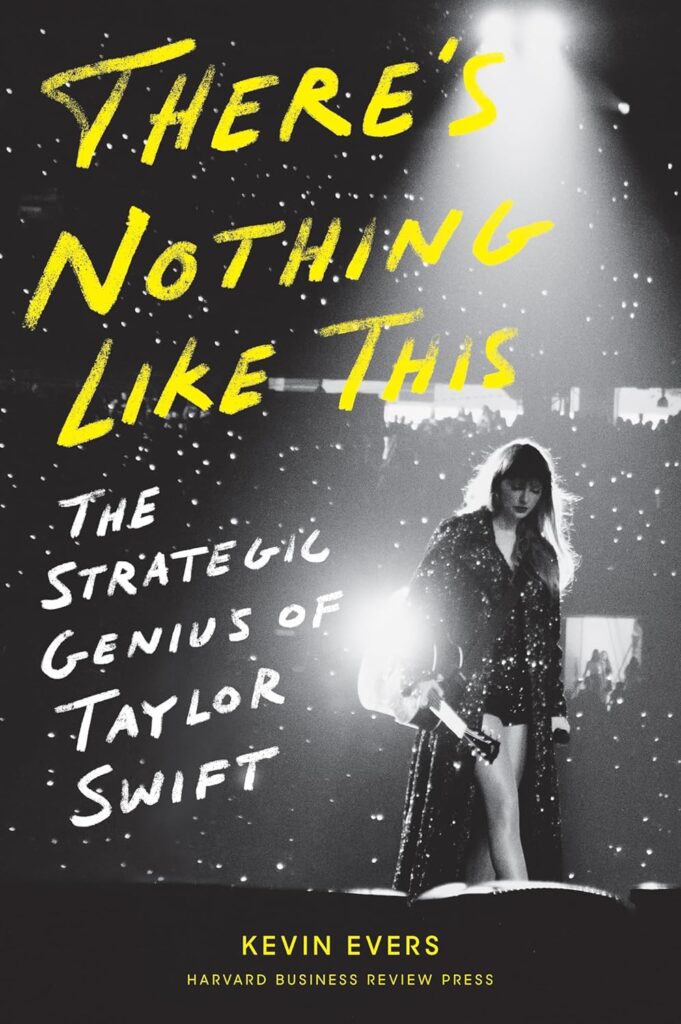
There’s Nothing Like This: The Strategic Genius of Taylor Swift by Kevin Evers

There's Nothing Like This: The Strategic Genius of Taylor Swift by Kevin Evers

Finance bros and Swifties (Taylor Swift’s fans) usually don’t mix. One’s busy crying to heartbreak songs, the other’s checking the stock market a bit too much. But the book titled There’s Nothing Like This: The Strategic Genius of Taylor Swift by Kevin Evers might just bring them together. It’s the rare book that proves that Taylor Swift is not just on top of the charts, but she is also running a billion-dollar brand.

The author Kevin Evers is an editor at Harvard Business Review and this book has been featured in Rolling Stone, People Magazine, US Weekly, USA Today, The Financial Times, and more. The book was named to the Financial Times “What to Read in 2025” list and was also named one of the “Thirty books we’re excited to read in the first half of 2025” by The Sydney Morning Herald.

There’s Nothing Like This unpacks the calculated plan behind Swift’s every move, from re-recording her albums to forming a direct relationship with her fans that beats any thriving company’s customer loyalty strategy. Her fans will love seeing how her methods fit into the business world and anyone interested in marketing or entrepreneurship will be surprised by her strategy.

This book connects two worlds: pop culture and business. It’s written in a way that is fun, easy to follow and you don’t have to have any prior knowledge of marketing to get it. Whether you are a Swiftie who wants to learn more about the behind the scenes of what she does or a finance bro who admires good and successful business strategies, this book shows that Taylor Swift’s success isn’t just luck, it’s a combination of smart moves and understanding of marketing. She truly is a mastermind.

Arachnophonia: Chinese Music by Jin Jie

Editor’s note: Arachnophonia (“Arachno” = spider / “-phonia” = sound) is a regular feature on our blog where members of the UR community can share their thoughts about resources from the Parsons Music Library‘s collection.

All links included in these posts will take you to either the library catalog record for the item in question or to additional relevant information from around the web.

Today’s installment of Arachnophonia is by student manager Sophia (class of 2028) and features an historical overview of the music of China. Thanks, Sophia!

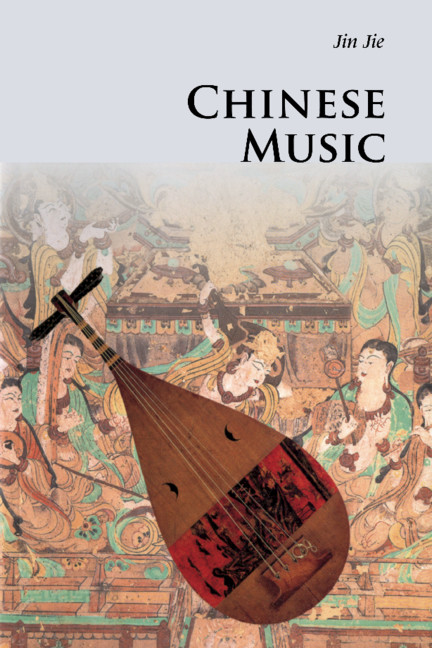
Chinese Music by Jin Jie
Translated by Wang Li and Li Rong.

Chinese Music by Jin Jie

As a student minoring in Chinese studies and a fan of Chinese music, I often find myself listening to older songs that were released before I was born.

The book Chinese Music explores the unique styles of Chinese music, including a variety of musical instruments that played an important role in shaping its culture. Music began with people singing, a form of expression that spread across regions and inspired labor workers to sing while working, offering encouragement.

Back then, people didn’t have the modern instruments we use today, so they created their own. For example, they made flutes out of bones and used special stones called qing to produce clear, piercing sounds. They crafted drums out of bronze and developed instruments like the xun, which resembles an ocarina, sometimes nicknamed a “potato flute.”

As time passes, the instruments they use also evolve. During the Qing Dynasty, performers played instruments like erhus and south bangs. The erhu is a two-stringed instrument played with a bow and held vertically on the lap, similar to a violin. A South Bangs is a small drum struck with a stick.

I found it fascinating to read about these historical instruments, especially since I’ve seen some of them in the shows I watch. If you’re interested in learning more about traditional Chinese music, I highly recommend checking out the book Chinese Music at the Parsons Music Library.

Arachnophonia: Writing in Music

Editor’s note: Arachnophonia (“Arachno” = spider / “-phonia” = sound) is a regular feature on our blog where members of the UR community can share their thoughts about resources from the Parsons Music Library‘s collection.

All links included in these posts will take you to either the library catalog record for the item in question or to additional relevant information from around the web.

Today’s installment of Arachnophonia is by Music Library associate Melanie and features a guide to writing about music.

Writing in Music: A Brief Guide by Lynne Rogers, Karen Bottge & Sara Haefeli

Writing in Music: A Brief Guide book cover

A new school year is upon us and everyone is getting back into the rhythms of classes and activities.

You’re excited about the new music class you’re taking this term, but feeling a bit trepidatious because the syllabus says you have to write a research paper/review/analysis as a big part of your grade. How on earth do you approach even picking a topic, much less writing a paper about it?

Worry not! The Music Library has useful resources like Writing in Music: A Brief Guide to get you started.

This pocket-sized style guide offers a practical introduction to many aspects of writing about music in an academic context. It offers useful tips and tricks for all stages of the writing process from choosing a topic and creating a thesis to the nitty gritty of researching and drafting a research paper.

Writing in Music will help you explore writing about music from a historical and cultural context and/or writing from a musical analysis point of view (or both!). This comprehensive intro will get you on your way to creating a great paper, thus making your professor happy and making the class a more enriching learning experience for you!

Writing in Music and many more helpful resources are available in the Parsons Music Library – just ask our friendly staff for help.

Arachnophonia: Music in Film by Michel Chion

Editor’s note: Arachnophonia (“Arachno” = spider / “-phonia” = sound) is a regular feature on our blog where members of the UR community can share their thoughts about resources from the Parsons Music Library‘s collection.

All links included in these posts will take you to either the library catalog record for the item in question or to additional relevant information from around the web.

Today’s installment of Arachnophonia is by student assistant Naron (class of 2023) and features a book about film music. Thanks, Naron!

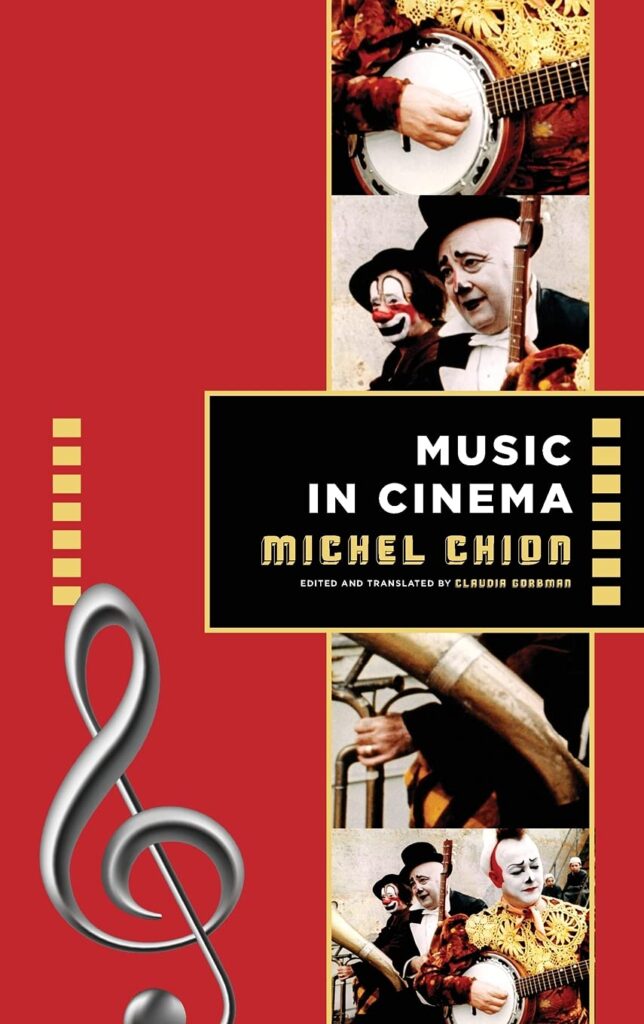
Music In Film by Michel Chion
Edited and translated by Claudia Gorbman

Music in Cinema

Summary:
I find this book called Music in Film captivating and quite thought-provoking. The author acknowledges the rich history of music in cinema, from the early days of devices like the praxinoscope and kinetoscope to the diverse range of musical styles and genres that have been integrated into films. It raises questions about the purpose of music in cinema and the complex relationship between music and film. The author also expresses a desire to provide a comprehensive overview of this subject while avoiding oversimplification.

Why I Like This Book so Far:
As a music & film student, I find this book intriguing for several reasons. Firstly, it recognizes the vast history of music in cinema, going beyond the conventional notion of “the cinema” and acknowledging the diverse influences and traditions that have shaped the use of music in films. This inclusive approach aligns with my own belief in the importance of understanding the diverse cultural and artistic contexts of music in cinema.

Secondly, the book raises thought-provoking questions about the purpose of music in films, such as why music is used to accompany moving images and spoken dialogue, and how it can impact the emotional experience of the audience. These questions resonate with my own curiosity and desire to explore the multifaceted relationship between music and film.

Thirdly, the author’s intention to provide a comprehensive overview of significant examples of music in cinema, while acknowledging the limitations of exhaustive detail, is appealing to me as a student. The book offers a balanced and comprehensive approach to studying the subject, without oversimplifying or favoring certain films over others.

The author finds it difficult to view history solely through the lens of winners and losers, or to solely praise masterpieces while disregarding other works. As a result, unlike some current and past writing on the subject, particularly in France, this book may be perceived as indulgent towards a wide range of films and recent aesthetic trends, which may come across as guilty to some. The author’s aim is to inform readers and engage in thoughtful reflection, without resorting to oversimplification. This doesn’t mean that all films are liked, but I do believe that each film deserves recognition for its artistic ambitions, including the intent to entertain.

Arachnophonia: Music as Biology

Editor’s note: Arachnophonia (“Arachno” = spider / “-phonia” = sound) is a regular feature on our blog where members of the UR community can share their thoughts about resources from the Parsons Music Library‘s collection.

All links included in these posts will take you to either the library catalog record for the item in question or to additional relevant information from around the web.

Today’s installment of Arachnophonia is by student manager Esther (class of 2025) and features a book about the connections between music and biology. Thanks, Esther!

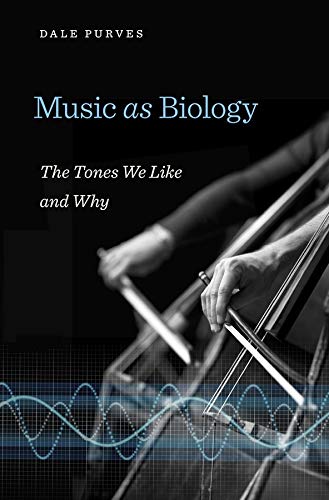
Music As Biology: The Tones We Like and Why by Dale Purves

Music As Biology: The Tones We Like and Why by Dale Purves

The innate attraction we have towards music as humans have always fascinated me. Nicknamed the “universal language,” music seems to be so deeply embedded into society. The way it evokes certain emotions within us feels like a concept too abstract to be explained. Why do we enjoy certain combinations of tones over others? How does music remain the same or change over time and cultures? Why do different scales induce different emotions? Music as Biology by Dale Purves was an interesting read that helped me formulate concrete ideas about some of these questions through a biological perspective. 

Dale Purves is a highly accomplished neuroscientist who is currently a professor at Duke University. His lab studies the neurobiological underpinnings of our perception to different stimuli, including sound.  Dr. Purves takes an empirical approach to music, incorporating data and research from biology to support his arguments on how we react to music. He provides additional links to more information on certain questions throughout the book if you were interested in further research as well. Overlapping music theory and biology offered a refreshing insight into how we perceive music. I highly recommend this book to anyone interested in music or science!

Arachnophonia: Erik Satie

Editor’s note: Arachnophonia (“Arachno” = spider / “-phonia” = sound) is a regular feature on our blog where members of the UR community can share their thoughts about resources from the Parsons Music Library‘s collection.

All links included in these posts will take you to either the library catalog record for the item in question or to additional relevant information from around the web.

Today’s installment of Arachnophonia is by student assistant Nikoloz (class of 2026) and features a book about French composer Erik Satie. Thanks, Nikoloz!

Erik Satie

Erik Satie

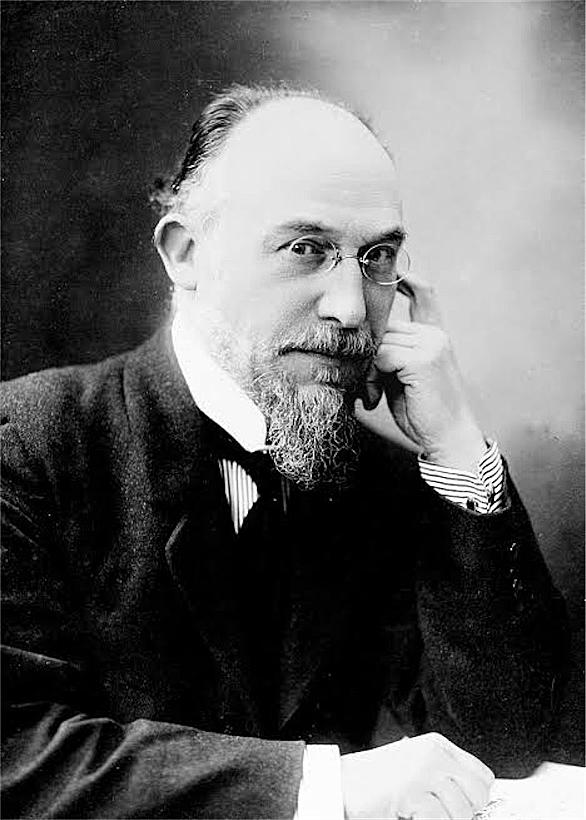
Erik Satie in 1920

Erik Satie (1866-1925) was a French composer whose spare, unconventional, often witty style influenced 20th-century music greatly, particularly in France. Satie’s music represents the first definite break with 19th-century French Romanticism. Closely allied to the Dadaist and Surrealist movements in art, it refuses to become involved with grandiose sentiment or transcendent significance, disregards traditional forms and tonal structures, and characteristically takes the form of parody, with flippant titles, such as Trois morceaux en forme de poire (1903; Three Pieces in the Shape of a Pear) and Embryons Desséchés (1913; Desiccated Embryos), and directions to the player such as “with much illness” or “light as an egg.” Satie was often dismissed as a charlatan by musicians who misunderstood his irreverence and wit.

One of Satie’s most known works are the Trois Gymnopédies (1888). Gymnopédie No.1 (You can listen to it here), for example, is a work of music not too complicated. Regardless, I have always found it to influence me like no other piece. Sometimes, it sets the mood to be quite melancholic while also, in my opinion, sprinkling a vast amount of joy by the end. Other times it could lay a feeling of calmness on the listener, like a break from a hard day at work or a breeze on a hot summer afternoon.

You can check out this book (among others) in the Parsons Music Library if you’d like to learn more about Erik Satie and his work.

Arachnophonia: Mozart’s Letters, Mozart’s Life

Editor’s note: Arachnophonia (“Arachno” = spider / “-phonia” = sound) is a regular feature on our blog where members of the UR community can share their thoughts about resources from the Parsons Music Library‘s collection.

All links included in these posts will take you to either the library catalog record for the item in question or to additional relevant information from around the web.

Today’s installment of Arachnophonia is by student assistant Esther (class of 2025) and features a collection of Mozart’s letters. Thanks, Esther!

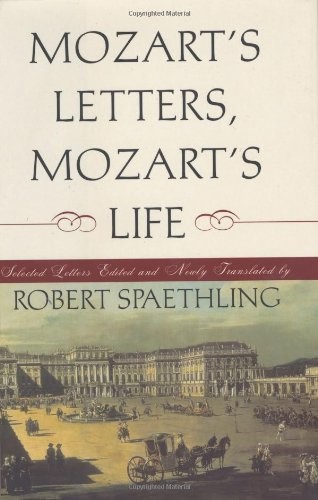
Mozart’s Letters, Mozart’s Life: Selected Letters
Edited and translated by Robert Spaethling

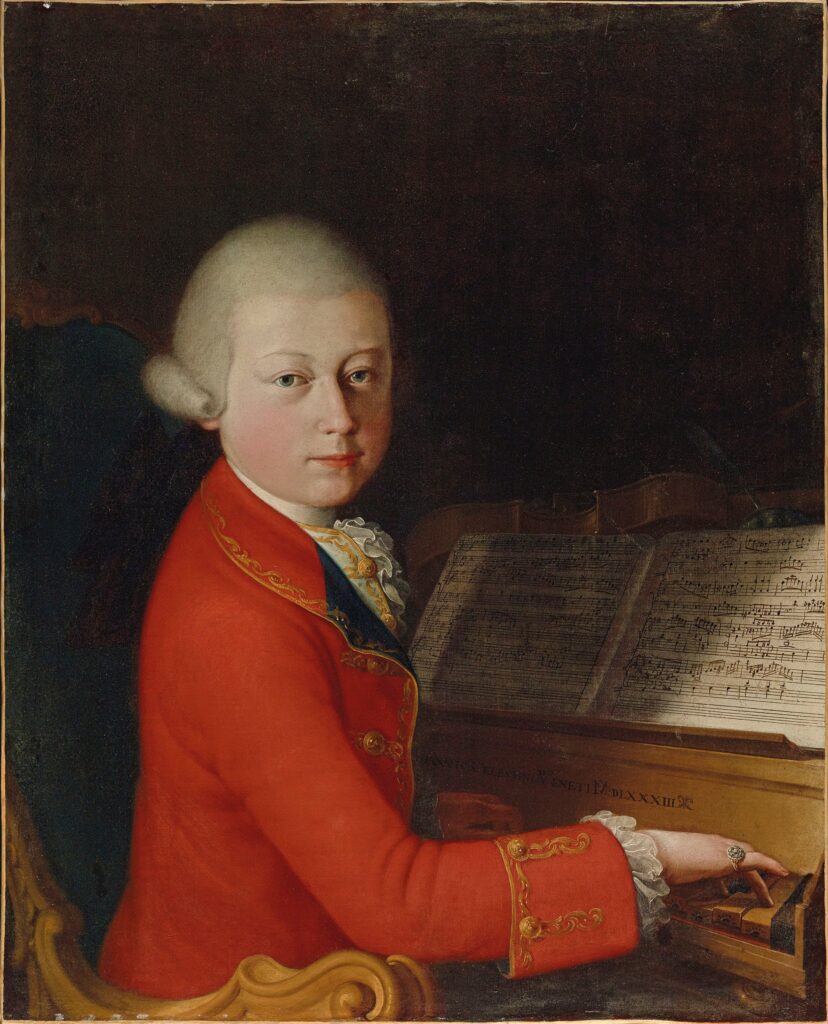
Portrait of a young Mozart

Portrait of Wolfgang Amadeus Mozart at the age of 13 in Verona, 1770

When we first hear the term “classical music,” we often think of great composers like Beethoven and Mozart. Despite his relatively short life, Mozart is known and celebrated for his prodigious musicality and influential compositions even to this day. But what was Mozart like? You may know several of his pieces, but have you taken the time to consider the person behind these famous pieces?

There’s no better way of being first introduced to Mozart’s private life than Mozart’s Letters, Mozart’s Life by Robert Spaethling. Spaethling, a scholar of German literature of the 19th and 20th centuries and Mozart, has carefully chosen and depicted a compilation of Mozart’s letters spanning twenty-two years of the young composer’s life. Spaethling’s most recent edit of these letters provides us with the most accurate translation to appropriately convey Mozart’s nuanced personality.

Mozarts Letters Mozarts Life

Through Mozart’s Letters, Mozart’s Life, we are invited to explore Mozart’s innermost thoughts and raw perspective of life. In addition to the analysis of the different voices that shine through in Mozart’s candid letters, Spaethling includes information, such as various life events throughout the composer’s life, that encourages us to think deeply and have greater appreciation for the person behind these great works.

Arachnophonia: Folk Music and the New Left in the Sixties

Editor’s note: Arachnophonia is a regular feature on our blog where members of the UR community can share their thoughts about resources from the Parsons Music Library‘s collection.

All links included in these posts will take you to either the library catalog record for the item in question or to additional relevant information from around the web.

Today’s installment of Arachnophonia is by student worker Eve (class of 2020) and features a book entitled Folk Music and the New Left in the Sixties. Thanks, Eve!

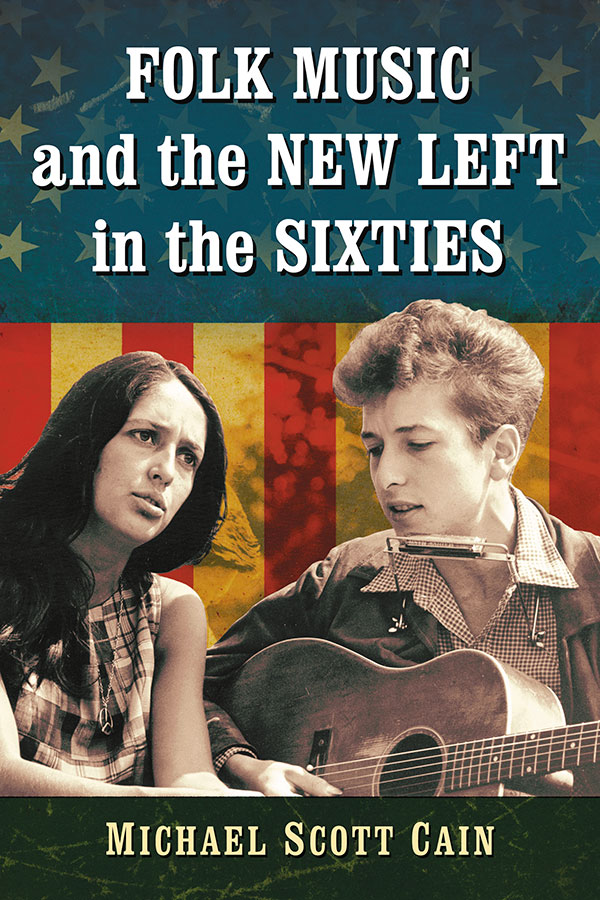
Folk Music and the New Left in the Sixties by Michael Scott Cain

Folk Music and the New Left in the Sixties

I am super excited about Michael Scott Cain’s Folk Music and the New Left in the Sixties book available through the Music Library Collection! As an environmental activist, I am intrigued by the connection between music and activism and have drawn strength from songs like “The Times They Are A – Changin’” (Bob Dylan), “Resilient” (Rising Appalachia) and “Pa’lante” (Hurray for The Riff Raff). Most recently, at the Climate Strike in D.C., performers like Caroline Rose sang “Money”, and my Environmental Law professor’s daughter performed an original song about climate change!

https://globalclimatestrike.net/

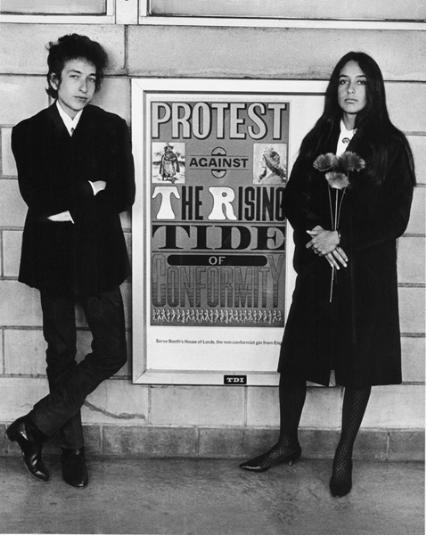
As a result, I am excited to explore this book and Cain’s insight about the revival of folk music in the 1960’s that addressed a political shift and new cultural ideologies in America. The book focuses on musicians like Joan Baez, Peter Paul & Mary, and Bob Dylan and is divided into three parts; first, The Background, focused on the emergence of the New Left, second, The Politics, examining the politics of the New Left, and third, The Music, or the soundtrack of the New Left movement. When paging through the book, I was interested in the connection between suburbanization and the emergence of the New Left, and was drawn to the idea of a “prefigurative model” that turns the status quo upside down, where the “last shall be first”. Michael Scott Cain integrates an analysis of American history, culture, icons, music and experiences in an accessible and interesting read. Check it out!

Bob Dylan & Joan Baez during the 1960s