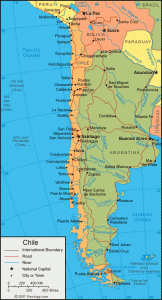
At the Music Library, we have celebrated this year’s Chile-themed International Education Week with an exhibit about the country’s music.
Our exhibit highlights items (both physical and streaming) from UR’s collection as well as information about traditional Chilean instruments and dance. It also includes thumbnail biographical info on several Chilean musicians.
Here’s a little info on the music with some links to items in the library’s collection and a few video clips for good measure!
***
The traditional music of Chile is a rich mixture of Spanish and Pre-Columbian influences.
Some of the traditional instruments commonly used in Chile include Andean instruments such as
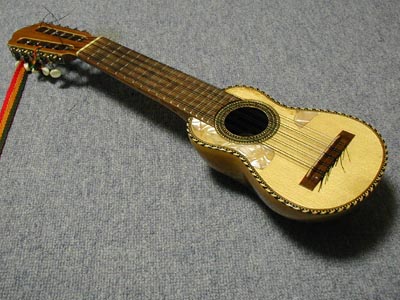
* The charango – a small stringed instrument of the lute family. It was traditionally made from armadillo shell, but is more commonly made of wood today. It has 10 strings.
and
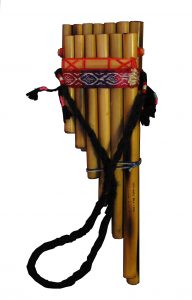
* The zampoña – these are Chilean panpipes.
You can hear some examples of these instruments in action on songs like “Nieve, Viento Y Sol (Snow, Wind and Sun)” which is available to stream at this link: https://richmond.primo.exlibrisgroup.com/permalink/01URICH_INST/191gg5k/alma9917693733606241
***
The Cueca is considered to be the “most traditional music and dance of Chile” and is officially the country’s national dance. While cueca’s origins are not entirely certain, indigenous, African and Spanish influences are evident.
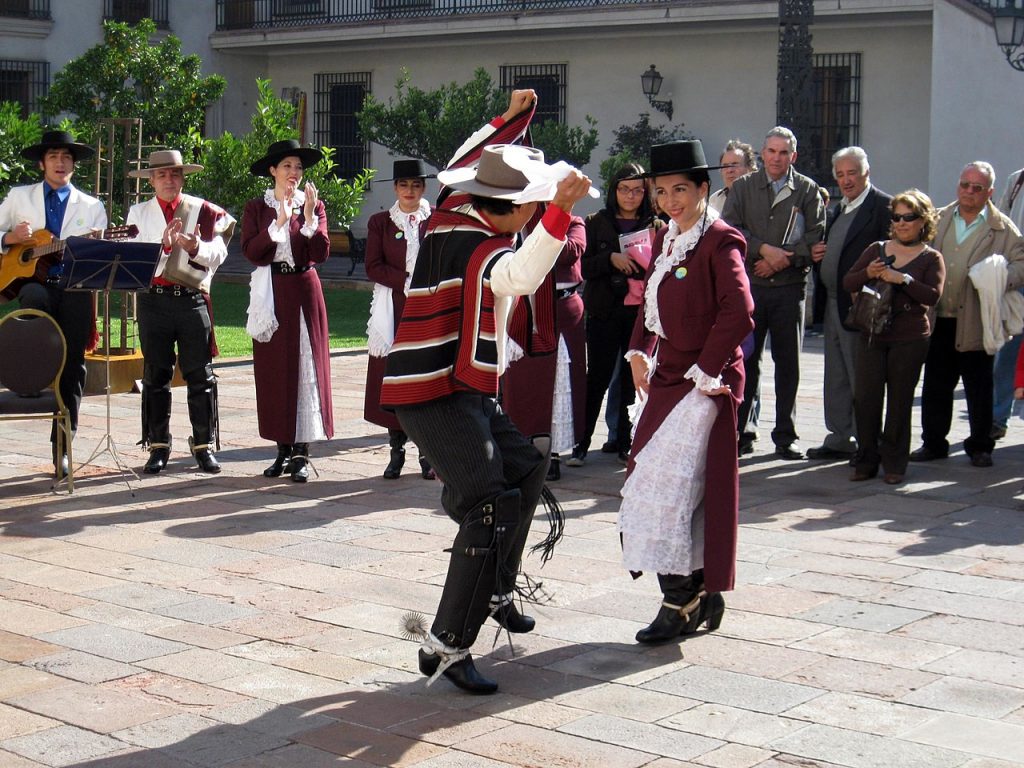
It is a partner dance which is indented imitate the courtship of a rooster and hen. Men usually wear a traditional Chilean cowboy costume while women traditionally don a flowered dresses with an apron.
Here is a video of a cueca performance:
And here is a link to a reference article about the dance.
***
Nueva Canción Chilena
In the 1960s and 1970s, Chilean songwriters like Victor Jara and Violeta Parra used the tonada as a foundation of the “Nueva Canción,” explicitly political music that blended Chilean folk music with progressive politics, similar to the way Bob Dylan and Joan Baez led a political folk revival around the same time in the U.S.
The foundations of nueva canción were laid by Violeta Parra (1917-1967) who was a popular folk singer-songwriter and musicologist who researched and recovered the poetry and songs of rural Chile.
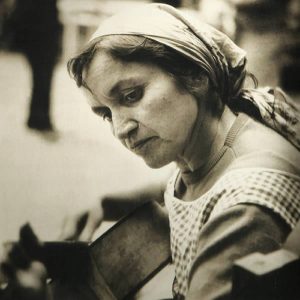
The library owns several resources with information about her and also a 2013 biopic about her called Violeta se fu a los cielos (Violeta Went to Heaven) that’s worth a look. Here’s the trailer for the film:
Víctor Jara (1932-1973) was a legendary Chilean folk singer and political activist who also pioneered nueva canción. His activism led to his murder by the Pinochet dictatorship in 1973.
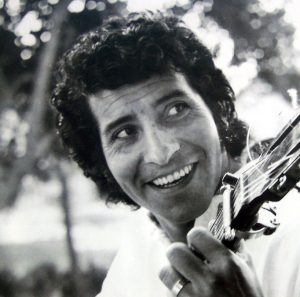
Jara’s life and work continue to be celebrated by Latin American artists as well as globally known bands like U2 and The Clash. The 2018 documentary film The Resurrection of Víctor Jara is a great introduction to his life and legacy and is available to UR students, faculty and staff as a streaming video resource.
Here’s a trailer for the documentary:
***
Claudio Arrau (1903-1991) was a Chilean pianist known for his interpretations of a vast repertoire, especially the works of Bach, Beethoven, Schubert, Chopin, Schumann, Liszt and Brahms.
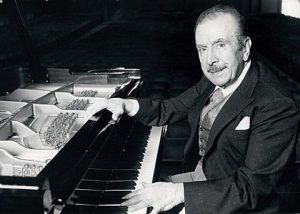
He is widely considered to be one of the greatest pianists of the twentieth century.
Here are a couple of library resources about his life and work:
* Claudio Arrau, the Emperor (DVD)
* Piano Lessons with Claudio Arrau: A Guide to His Philosophy and Techniques (Book)
***
Of course, this is only a small sampling of music from Chile, but hopefully it will intrigue you and make you want to learn more!