Arachnophonia: Twenty One Pilots “Blurryface”

Editor’s note: Arachnophonia (“Arachno” = spider / “-phonia” = sound) is a regular feature on our blog where members of the UR community can share their thoughts about resources from the Parsons Music Library‘s collection.

All links included in these posts will take you to either the library catalog record for the item in question or to additional relevant information from around the web.

Today’s installment of Arachnophonia is by student manager Kiran (class of 2024) and features Twenty One Pilots’ 2015 album Blurryface. Thanks, Kiran!

Twenty One Pilots
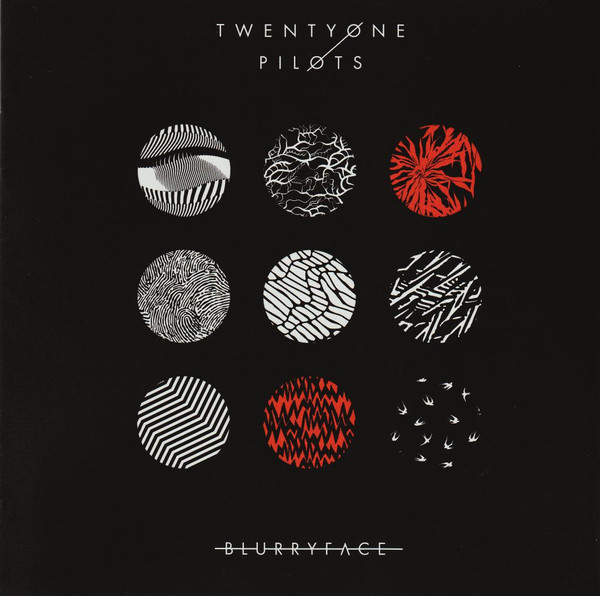
Blurryface

Twenty One Pilots Live

Wait…how many Pilots?

The early 2010s gave rise to a multitude of alternative-rock bands: Panic! at the Disco, Fall Out Boy, and Cage the Elephant, just to name a few. I, like most other middle/high schoolers at the time, was obsessed with these bands. Twenty One Pilots was no exception. The duo from Columbus, Ohio, exploded into the alternative-rock scene with their 2015 album, Blurryface. Their songs “Stressed Out”, “Tear in My Heart”, and “Ride” were all hits, with “Ride” making the top 5 on The US Billboard 100. The band went on to win the 2017 Grammy for Best Pop Duo/Group Performance. Bandmates Tyler Joseph and Joshua Dun accepted the award without their pants, as a tribute to the way they were watching the Grammys a few years prior to their breakout.

In his speech, Joseph concluded that “anyone from anywhere can do anything,” which aligns with the overarching message they convey through their music and performances. The duo often sings of mental hardships and social constructs, but have always weaved a positive narrative into their music. Their two most recent albums, Trench (2018) and Scaled and Icy (2021), have intricate story lines that show how perseverance can outstand even the toughest circumstances. Each song plays a different role and serves as a world-building tool. “Dema” is a fictional land that is guarded by several bishops, each representing an inner demon or fear. Throughout several videos, Joesph and Dun befriend the weird creatures and strange rebels in order to escape. These are just a few examples of how Twenty One Pilots uses creative techniques to express raw and difficult emotions and experiences.

Although I didn’t understand how relatable these lyrics were at the time, my 8th grade-self fell in love with the intricate bass lines and vibrant drum solos. Since then, my fondness for this band has grown exponentially. While some have outgrown the duo, I have continued to follow their musical journey. Twenty One Pilots is currently on their third world tour and came to the DMV last month. I’ve seen three of their shows over the past six years and have yet to be disappointed. Their stage presence and interaction with the fan base is incredible and truly a unique experience.

If you’re ready to start an emotional roadshow, come check out Blurryface and other related CDs in Parsons Music Library!

Twenty One Pilots - Blurryface album cover

Arachnophonia: Amy Winehouse “Back To Black”

Editor’s note: Arachnophonia (“Arachno” = spider / “-phonia” = sound) is a regular feature on our blog where members of the UR community can share their thoughts about resources from the Parsons Music Library‘s collection.

All links included in these posts will take you to either the library catalog record for the item in question or to additional relevant information from around the web.

Today’s installment of Arachnophonia is by student manager Deisy (class of 2024) and features Amy Winehouse’s 2007 album Back To Black. Thanks, Deisy!

Amy Winehouse

Back To Black

Amy Winehouse - Back to Black

Throughout my years in college, I have tried to expand my musical taste by asking friends to introduce me to some of their favorite artists. Along the way, a good friend of mine introduced me to Amy Winehouse, one of the best things in my life. My favorite song of hers has to be “You Know I’m No Good” and “Back to Black.” Her Back to Black album was on repeat for a long time in 2021 as I began to discover more of her work.

If people are interested in discovering new artists and songs, I recommend asking a friend or coming to the Parsons Music Library where there is a large collection of CDs and LPs to look through.

Arachnophonia: Elton John “Goodbye Yellow Brick Road”

Editor’s note: Arachnophonia (“Arachno” = spider / “-phonia” = sound) is a regular feature on our blog where members of the UR community can share their thoughts about resources from the Parsons Music Library‘s collection.

All links included in these posts will take you to either the library catalog record for the item in question or to additional relevant information from around the web.

Today’s installment of Arachnophonia is by student manager Christian (class of 2023) and features Elton John’s classic 1973 album Goodbye Yellow Brick Road. Thanks, Christian!

Elton John

Goodbye Yellow Brick Road

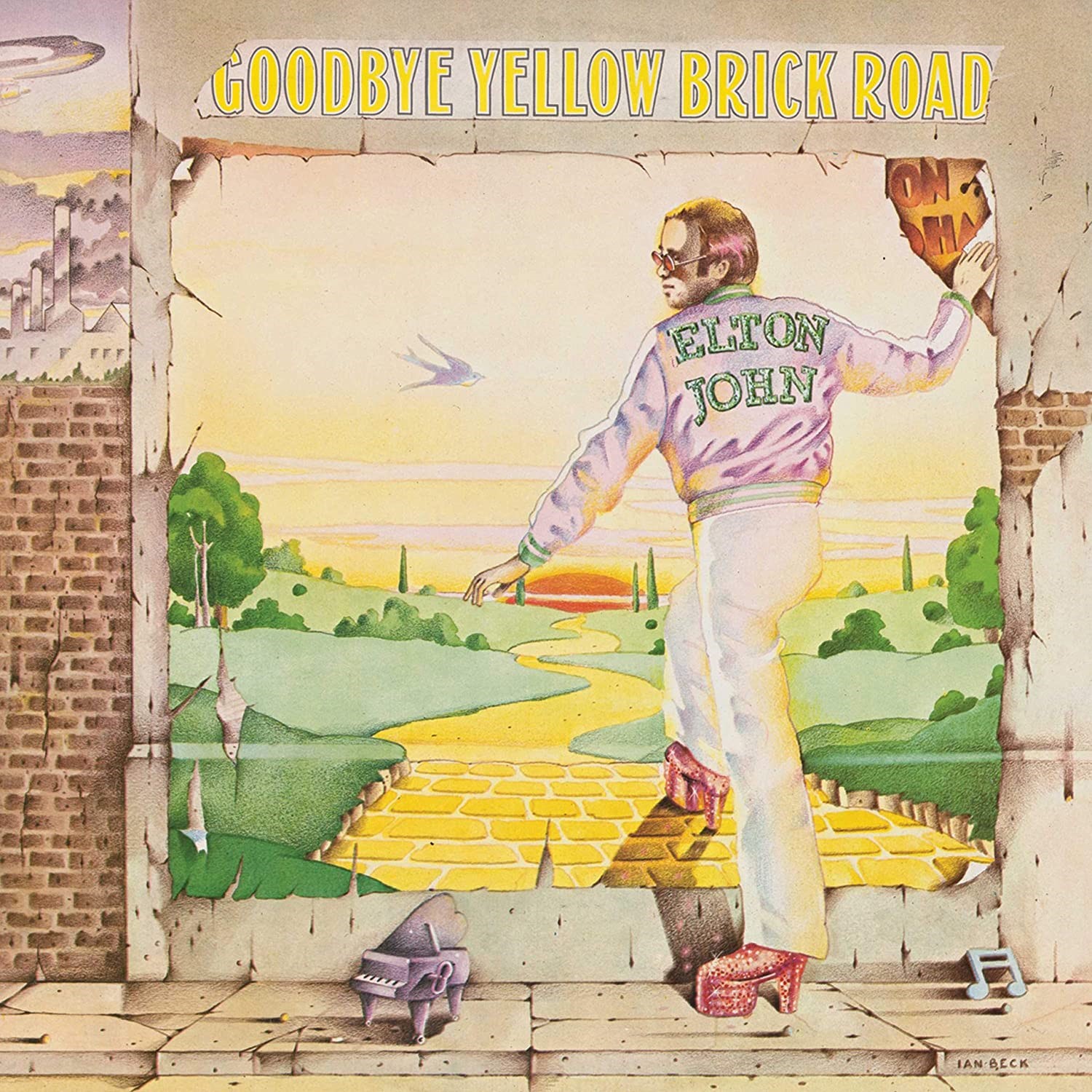
Elton John - Goodbye Yellow Brick Road

Elton John is one of the most successful and influential musicians of all time, known for his expressive outfits and electrifying performances. In 1973, John released Goodbye Yellow Brick Road, a 17-song album that would go on to sell over 30 million copies worldwide. The album, with lyrics written by Bernie Taupin and produced by Gus Dudgeon, is known as one of John’s best works. Some of the best songs on the album include “Goodbye Yellow Brick Road,” “Candle in the Wind,” and “Bennie and the Jets”.

Ever since I had to analyze Goodbye Yellow Brick Road for a school project, the title track is one of my favorite songs. On the surface, “Goodbye Yellow Brick Road” contains rich vocal harmonies, dreamy piano chords, and a crisp drum beat to create a contemplative atmosphere for John to reflect on his life of fame. As a child, I remember my parents singing along to “Bennie and the Jets” on the radio, another personal favorite song of mine from the album. The song has an instantly recognizable introduction and a spectacular piano solo that displays John’s genius piano and composition skills.

Though John struggled with addiction at the height of his fame, he managed to quit his substance abuse and create his own charity, the Elton John AIDS Foundation. Despite his personal struggles, Elton John is one of the most successful musicians of all time, selling over 300 million records and producing many timeless hits that will live on long after his career is over.

Arachnophonia: The Beach Boys “Smile”

Editor’s note: Arachnophonia (“Arachno” = spider / “-phonia” = sound) is a regular feature on our blog where members of the UR community can share their thoughts about resources from the Parsons Music Library‘s collection.

All links included in these posts will take you to either the library catalog record for the item in question or to additional relevant information from around the web.

Today’s installment of Arachnophonia is by student assistant Amy (class of 2025) and features The Beach Boys’ unfinished album Smile. Thanks, Amy!

The Beach Boys

Smile

The Beach Boys - Smile

Referred to as the most renowned unreleased album in pop music history, Smile was supposed to be the 12th studio album by the American band the Beach Boys, projected to be released after their album Pet Sounds. However, they did not officially release the album, potentially because of legality issues with Capitol Records and the producer and composer of the album – Brian Wilson’s – rocky emotional state.

The album had fully completed musical tracks, but only a few of the songs have vocal recordings. Potentially because of his fear of ridicule, Brian Wilson refused to finish the album, but when bootleg versions of the album became popular among the Beach Boys’ audience in the 80s, Capitol Records released a portion of the album to the public in the 90s.

Wilson drew inspiration from astrology, numerology, and the occult when composing Smile. He also became fascinated with religion, even adopting meditation and vegetarianism. Wilson wanted this album to be a “teenage symphony to God.” The group named the album Smile because it focused on good thought and happiness.

You can find the Beach Boys Smile album at the Parsons Music Library. The box set includes 40 tracks, many of which are unfinished but include parts of the structure of the original Smile album. The box also includes a small book of notes from Wilson and photos from the recording sessions.

Arachnophonia: Green Day “American Idiot”

Editor’s note: Arachnophonia (“Arachno” = spider / “-phonia” = sound) is a regular feature on our blog where members of the UR community can share their thoughts about resources from the Parsons Music Library‘s collection.

All links included in these posts will take you to either the library catalog record for the item in question or to additional relevant information from around the web.

Today’s installment of Arachnophonia is by student manager Deisy (class of 2024) and features Green Day’s 2004 album American Idiot. Thanks, Deisy!

Green Day

American Idiot

Green Day - American Idiot

Green Day is a band that many are fans of and many have heard of. I remember going to my local dentist and waiting to be attended to when their infamous song “Boulevard of Broken Dreams” begins to play. Without fail, every year I would step into this dentist and the song would start playing on the radio. As time went on, I discovered the name of the song and eventually got into listening to the band and have since fallen in love with many of their songs. And I wonder, was this song such a prominent part of other people’s lives just as it was to me, or was I just exposed to it too consistently in that dentist room?

The band’s official beginnings started in 1989 as a group of teenagers in Northern California came together to create Green Day. Their most successful and biggest hit album, American Idiot, shook the world when it came out in 2004. This album contains songs like “Boulevard of Broken Dreams“, “Holiday“, and “Wake Me Up When September Ends“.

While this music may not be to everyone’s taste, it is certainly a genre that can allow one to feel free and youthful. Green Day was known as a band that empowered the youth and was not scared to point out the faults of today’s society. They are the type of band one listens to when trying to de-stress and feel that sense of freedom many young adults crave.

Currently, the Pearsons Music Library has a copy of American Idiot and other notable albums such as 21st-Century Breakdown (2009) and Dookie, which are available for loans or to simply listen to in our study rooms. If at any moment in the semester you feel like decompressing with some pop-punk, try giving Green Day a listen!

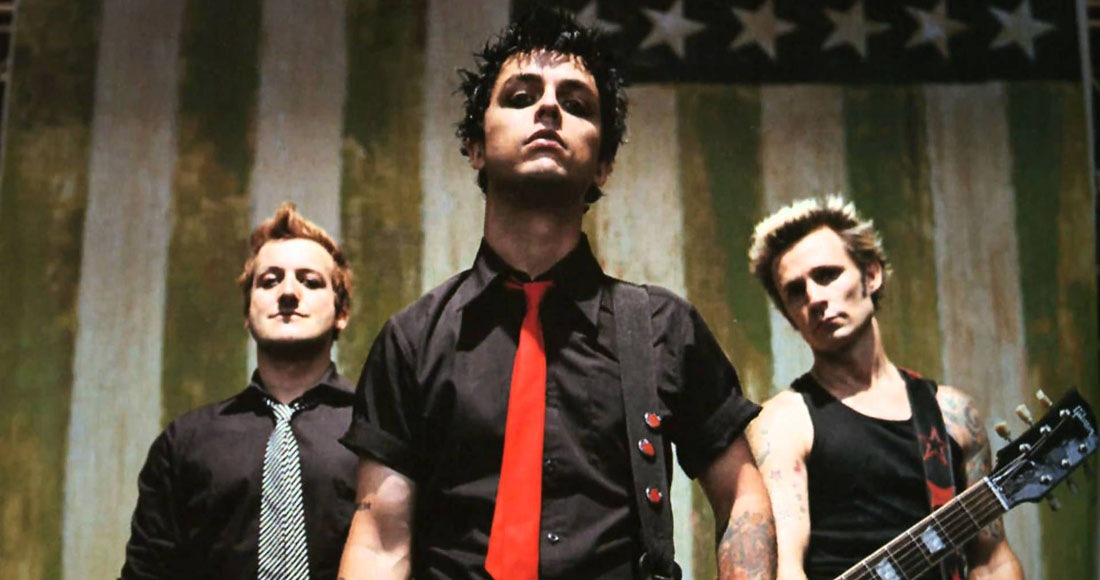
green-day-american-idiot-video

Arachnophonia: A New Dawn Fades “I See The Nightbirds”

Editor’s note: Arachnophonia (“Arachno” = spider / “-phonia” = sound) is a regular feature on our blog where members of the UR community can share their thoughts about resources from the Parsons Music Library‘s collection.

All links included in these posts will take you to either the library catalog record for the item in question or to additional relevant information from around the web.

Today’s installment of Arachnophonia is by student assistant Esther (class of 2025) and features a locally produced album by A New Dawn Fades. Thanks, Esther!

A New Dawn Fades

I See The Nightbirds

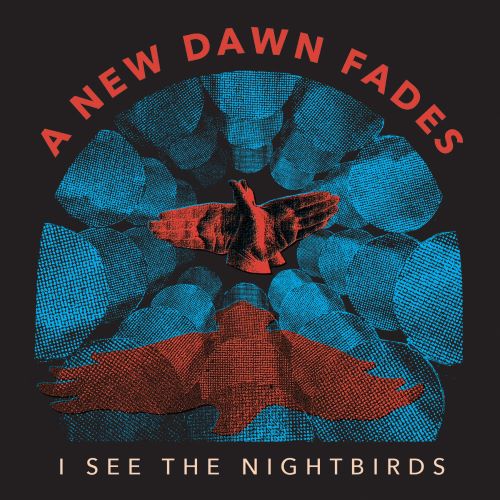
A New Dawn Fades - "I See The Nightbirds" album cover

I See the Nightbirds by A New Dawn Fades is a new album released by Cherub Records. The title song’s polyrhythmic beat, complimentary guitar and bass lines, and attractive transitions converge to create a distinctive musical picture. The gradual accumulation of tension yet unrushed nature of the piece is what results in the captivating arch shape drawn throughout the song.

Cherub Records, founded by PJ Sykes in 2001, is an outlet through which Sykes and his friends communicate their music to the rest of the world. Though originally located in Lynchburg, VA, Cherub Records has now moved to the city of Richmond where they document and release music of numerous bands. Their curious exploration of music conveyed through improvised pieces has been one of the defining traits of this band. Furthermore, they are known for blurring the line drawn between the audience and performers by interacting with the crowd during their live performances.

Because Richmond is known for its unique sense of community, supporting our local musicians is significant in allowing the local music scene to grow and thrive. It gives us the opportunity to experience new music specific to our area and builds mutual support between the musicians and ourselves. I assure you, I See the Nightbirds will make you reflect on the vast range of what music encompasses and what makes it truly special.

Arachnophonia: Queen Greatest Hits

Editor’s note: Arachnophonia (“Arachno” = spider / “-phonia” = sound) is a regular feature on our blog where members of the UR community can share their thoughts about resources from the Parsons Music Library‘s collection.

All links included in these posts will take you to either the library catalog record for the item in question or to additional relevant information from around the web.

Today’s installment of Arachnophonia is by student manager Deisy (class of 2024) and features insert title info here. Thanks, Deisy!

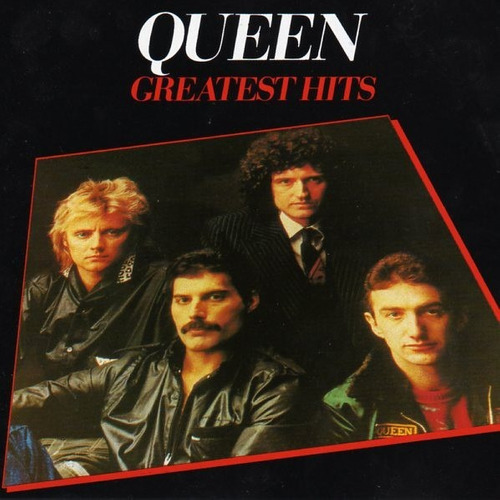
Queen – Greatest Hits

Queen Greatest Hits

I am ashamed to say that I did not know of Queen until after the movie Bohemian Rhapsody came out in 2018. But it was one of the best decisions I ever made when I decided to do my research and listen to their songs.

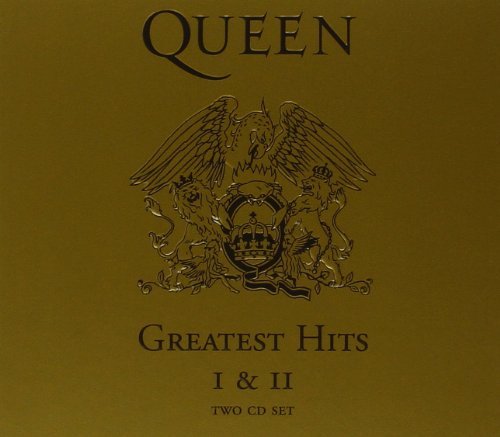
My favorite Queen song has to be “Love of My Life” which was released in 1975, beginning with the soft piano music, adding Mercury’s vocals, and finishing off with some electric guitar allowing the listeners to feel the emotions of the singer. The Parsons Music Library has access to all of the band’s greatest hits in a CD form which contains hits such as “Bohemian Rhapsody“, “Somebody to Love“, “Another One Bites the Dust“, and much more.

Queen is the type of band that gets you in the mood to take over the world. Listening to these songs first thing in the morning will allow you to finish the day with a sense of accomplishment. Perfect to get you pumped up for the day or before an exam, it is the type of music you must give a try!

Queen Greatest Hits + logo

Arachnophonia: The Killers “Hot Fuss”

Editor’s note: Arachnophonia (“Arachno” = spider / “-phonia” = sound) is a regular feature on our blog where members of the UR community can share their thoughts about resources from the Parsons Music Library‘s collection.

All links included in these posts will take you to either the library catalog record for the item in question or to additional relevant information from around the web.

Today’s installment of Arachnophonia is by student manager Danny (class of 2023) and features the Killers’ 2004 album Hot Fuss. Thanks, Danny!

The Killers

Hot Fuss

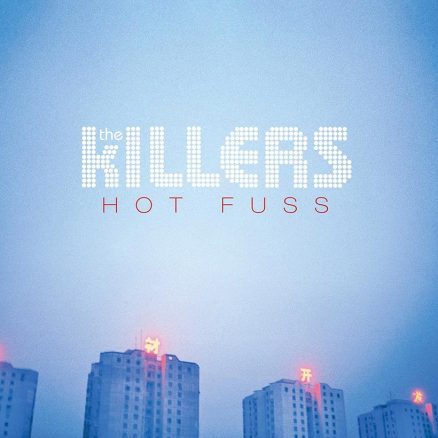
The Killers - Hot Fuss album cover

Everybody – and I mean everybody – seems to know the Killers from one song: “Mr. Brightside.” The song has become a party and nightclub staple, garnering tons of partygoer enthusiasm as everyone shouts the lyrics in unison.
But what if I said that although it is the group’s most popular song, it is not one of their best songs? What if I said that the Killers have been very prominent in the alternative rock industry for years, pumping out album after album over the years, with some of the core members remaining in the band for its entire existence?

I can go on for hours talking in-depth about every single one of the Killers’ albums, from Hot Fuss all the way to Pressure Machine. My favorite album of all time, Sam’s Town, is also by the Killers. However, in terms of popularity, I feel that Hot Fuss takes the awards. Therefore, to appeal to the general public of those reading this post, my focus will be on this 45 minute masterpiece.

Hot Fuss was released on June 7th 2004 and reached seventh on the Billboard 200. Although being extremely popular in America, the album was actually more of a commercial success in Ireland and England. This album, was the beginning of a 17 year (and counting) career. It was the very first album by the Killers and has been the one that most people adore most.

The track list is absolutely amazing. The four band members, Brandon Flowers, Ronnie Vannucci, Dave Keuning, and Mark Stoermer each had significant roles in writing most of the songs. Vanucci, the drummer of the band, had the least writing credits on the album, but only 3 of the 11 songs on the album were written alone by Brandon Flowers. The rest all involved some sort of mix of the 4.

One of the most interesting easter eggs within the album is the connection between two of the songs and “Leave the Bourbon on the Shelf” which was included in their album Sawdust (a compilation of unreleased songs). The two songs in Hot Fuss that are connected are “Jenny was a Friend of Mine” (the opening track) and “Midnight Show.” The three songs all tell the story of a criminal case concerning Robert Chambers.

This was also the album that featured the anthem “Mr. Brightside.” Some other notable songs of theirs include “Smile Like you Mean It,” “Somebody Told Me” and “All These Things I’ve Done.”

Despite these being the most popular songs on the album, the tracks I have enjoyed the most are “Everything Will be Alright,” “Believe me Natalie,” and “Change your Mind.” The second of the trio is the most upbeat and encapsulates most of the rock elements the Killers were known for. The other two are much slower and are just as good in my opinion.

In conclusion, Hot Fuss is one of my all time favorites. My ranking for all Killers albums goes as follows:
1. Sam’s Town
2. Hot Fuss
3. Day & Age
4. Battle Born
5. Imploding the Mirage
6. Sawdust
7. Wonderful Wonderful
8. Pressure Machine

Arachnophonia: Harry Styles

Editor’s note: Arachnophonia is a regular feature on our blog where members of the UR community can share their thoughts about resources from the Parsons Music Library‘s collection.

All links included in these posts will take you to either the library catalog record for the item in question or to additional relevant information from around the web.

Today’s installment of Arachnophonia is by student manager Colin (class of 2021) and features English singer songwriter Harry Styles’ eponymous debut solo album. Thanks, Colin!

Harry Styles

Harry Styles
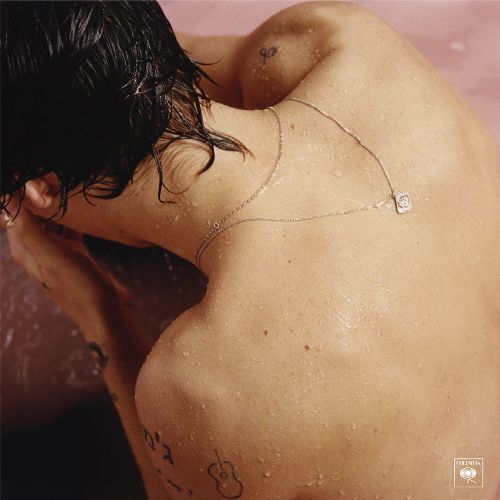
Harry Styles  2017 album cover

Harry Styles’s self-titled debut album marked the transition in Styles’s career from popular member of the boy band One Direction to his own solo work following the hiatus and eventual separation of the teen musical group. During his time in One Direction, Styles amassed an enormous fanbase from around the world, and the split of the group shocked these fans. Zayn Malik was the first member to separate from the group, which may have led to the eventual collapse of the group as a whole, and he started to release his own music in 2015, creating his own solo album in 2016 titled Mind of Mine. Eager and attentive fans turned their attention to the other members of One Direction to anticipate which teen sensation would begin releasing their own music next. Harry Styles would soon find that both himself and his music would become the spotlight of these fans, as his self-stardom rose above all other members and continues to this day.

Harry Styles would lead this craze, as Styles’s first solo album connected well with varying audiences. The album was teased with the release of its first single, “Sign of the Times,” in April 2017, projecting a combination of soft rock and pop music into a wistful ballad that was a completely new sound for Styles. This single is famously accompanied by its music video that was released a month later in May 2017, in which Styles flies over a body of water quite majestically. The full album would follow this video with its release four days later, meeting the anticipation of fans.
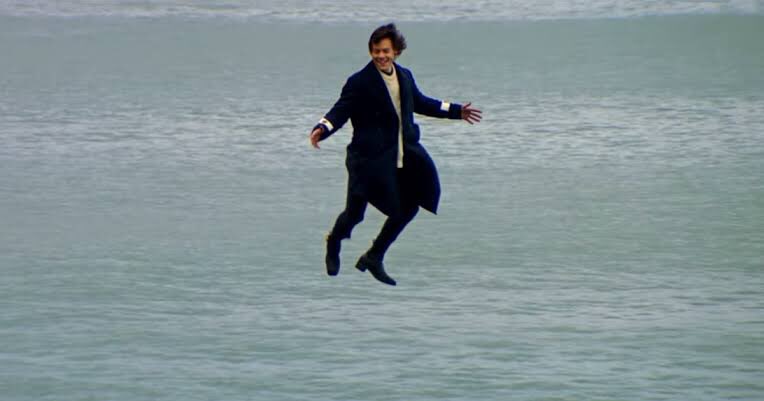
Flying Styles

Harry Styles would achieve a new musical direction for the artist, as fans and critics were surprised with the range of musical styles incorporated throughout the album. Songs featured throughout the work include a mixture of pop, British pop, rock, and soft rock styles, being influenced by famous and innovative artists like Queen, Elton John, David Bowie, Pink Floyd, and the Rolling Stones. Overall, I enjoy how each song on the album feels different and refreshing, never becoming too stale in their approach and delivery. There are 10 tracks on the album, and some stand-out pieces to me include “Only Angel,” “Ever Since New York,” and “From the Dining Table.”

Lyrically, “Only Angel” is a strange dichotomy between the love Harry Styles has for himself and love for the girl he references as “angel.” He begins the song by singing “Open up your eyes, shut your mouth and see/That I’m the only one who’s been in love with me,” expressing to listeners that Styles is confidant in being himself and that rampant tabloid exposure on all of his romantic partners are typically blown out of proportion, and he seems to be telling his audience and the media that his public relationships are often misunderstood. This is then contrasted with the chorus of “She’s an angel, only angel/She’s an angel, my only angel,” in which Styles is turning his attention towards his romantic partner that he refers to as an angel. What I particularly like about this song is not the lyrics however, but more towards the production of the Rock pop composition of the piece. This song comes across to me as a modern-day pop version of Elton John.

Ever Since New York” is a tribute to Styles’s late stepfather who passed away following a battle with cancer, after Styles was delivered the terrible news of the affliction while staying in a New York hotel. The song deals with Styles’s grief in the aftermath of his stepfather’s passing, and the feelings he carries with him about how people try to support him, by singing “Oh, tell me something I don’t already know.” This emotional ballad is characterized by the driving force of the instrumentation, which upon initial hearing does not immediately indicate to the listener that this is a song about missing someone who has tragically passed away. However, Styles chose to allow the production and orchestration of this piece to be more gospel-like in nature with a sonic depth of sound surrounding the lyrics, indicating that Styles did not intend to make this piece overly dramatic but rather a strong remembrance of his late stepfather.

Finally, “From the Dining Table,” is another emotional love song but directed towards Styles’s lost love and longing for a past relationship. This final piece to the album relates to the first piece of the album, “Meet Me in the Hallway,” in numerous ways. First, both subjects of the song and lyrics are reflections on a past relationship, in which Styles implies that he put more effort into it and that he is the one who still cares for the lost romance, indicated by the chorus line “Why won’t you ever be the first one to break?” Another connection is that both song titles refer to a sense of home, in which it can be implied that Styles and his partner were living together, and he is referring to significant places in the home that meant something in their relationship. Finally, both songs feature similar instrumentation, characterized by an acoustic guitar and emphasis on Styles’s vocals. The change in orchestration is different across both songs, but the similar feeling of vocals paired with acoustic guitar only emphasize the feeling of longing and desperation that Styles is singing about.

Publicity photo of Harry Styles

Overall, this album is a great listen and while it may not be perfect in my eyes, it certainly won the hearts of many fans that were longing for more music from the most prominent member of One Direction.


Arachnophonia: “It Might Get Loud”

Editor’s note: Arachnophonia is a regular feature on our blog where members of the UR community can share their thoughts about resources from the Parsons Music Library‘s collection.

All links included in these posts will take you to either the library catalog record for the item in question or to additional relevant information from around the web.

Today’s installment of Arachnophonia is by student manager Cole (class of 2021) and features the music documentary film It Might Get Loud. Thanks, Cole!

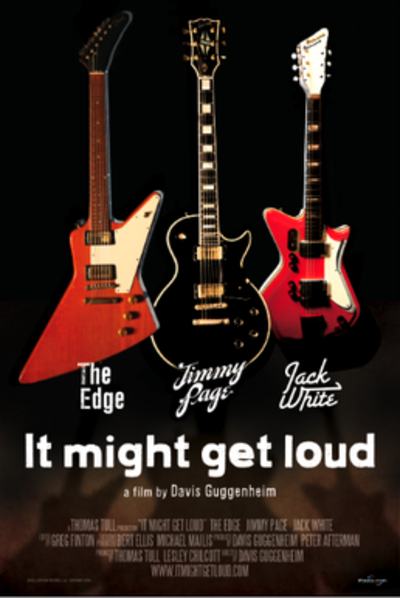
It Might Get Loud (2008)

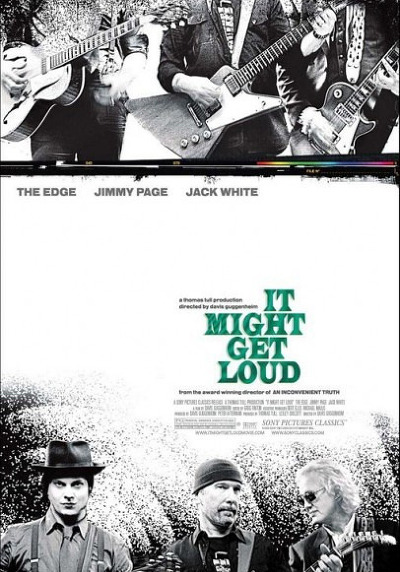
It Might Get Loud movie poster

What happens when three of the most influential guitarists alive, each from different eras of popular music, sit down for a day to swap stories and riffs? That’s the question at the heart of Davis Guggenheim’s 2008 documentary It Might Get Loud, starring Jimmy Page (of Led Zeppelin), The Edge (of U2), and Jack White (of The White Stripes). Although the three musicians come from differing backgrounds and generations, the film explores the three men’s lives as they’ve revolved around their shared fixation: the electric guitar.

In proportion to the total runtime, footage of the three’s meeting, dubbed “The Summit,” is relatively sparse. Instead, the film documents each of the musicians in and around their respective homes, piecing together their personal narratives, playing and recording styles, and musical philosophies. The film crew follows Jimmy Page to Headley Grange, a former workhouse-turned-recording studio whose interior acoustics can be heard on Led Zeppelin IV. The Edge visits the secondary school in Dublin where he co-founded U2 with his childhood friends. The film opens on Jack White assembling a rudimentary one-string guitar from plywood and a glass bottle on the porch of his Tennessee farmhouse. Guggenheim constantly moves between these three strands, allowing the guitarists to tell their own very different stories while revealing the subtle similarities in their lives that drove them all to the electric guitar.

The Summit - production still

My favorite moment in the film comes when The Edge delves into his playing philosophy. Known for his extensive use of reverb and delay, The Edge is sometimes criticized for playing his pedal board more than his guitar. Hearing him explain his methodology reveals the sheer creativity at work in creating his sounds, despite not “shredding” in the same vein as White and Page. At one point, The Edge plays the riff to “Elevation,” in which his guitar undulates between an indefinite number of notes. He then strips the effects and reveals the riff to be simply two notes, the space between filled with reverb, delay, and distortion. While this style of play rubs some the wrong way — such as those who consider effect pedals “cheating” to hide technical deficiencies — the great strength of It Might Get Loud is in capturing the dialogue between three pillars of guitar styles. In the film’s introductory sequence, Page admires The Edge as a “sonic architect,” a powerful compliment coming from the man most often placed beside Jimi Hendrix and Eric Clapton in conversations of electric guitar greatness.

An added bonus of the film’s three stars is consequentially broad appeal. If you are a fan of guitar-driven music, you’ll likely enjoy what’s offered here. It Might Get Loud is available to check out as a DVD from the Parsons Music Library and also from Boatwright Memorial Library. It is also available to stream online for those on the University network.

It Might Get Loud guitar poster