
At the start of spring, a number of folks from the university traveled to the national ASBMB meeting in Washington DC. It was a first time for me at this conference and I really enjoyed the atmosphere. There was a nice mix of scientific sessions and educational sessions. I even sat in on some mitochondria talks and was able to come up with a question for my biochemistry exam for after spring break!
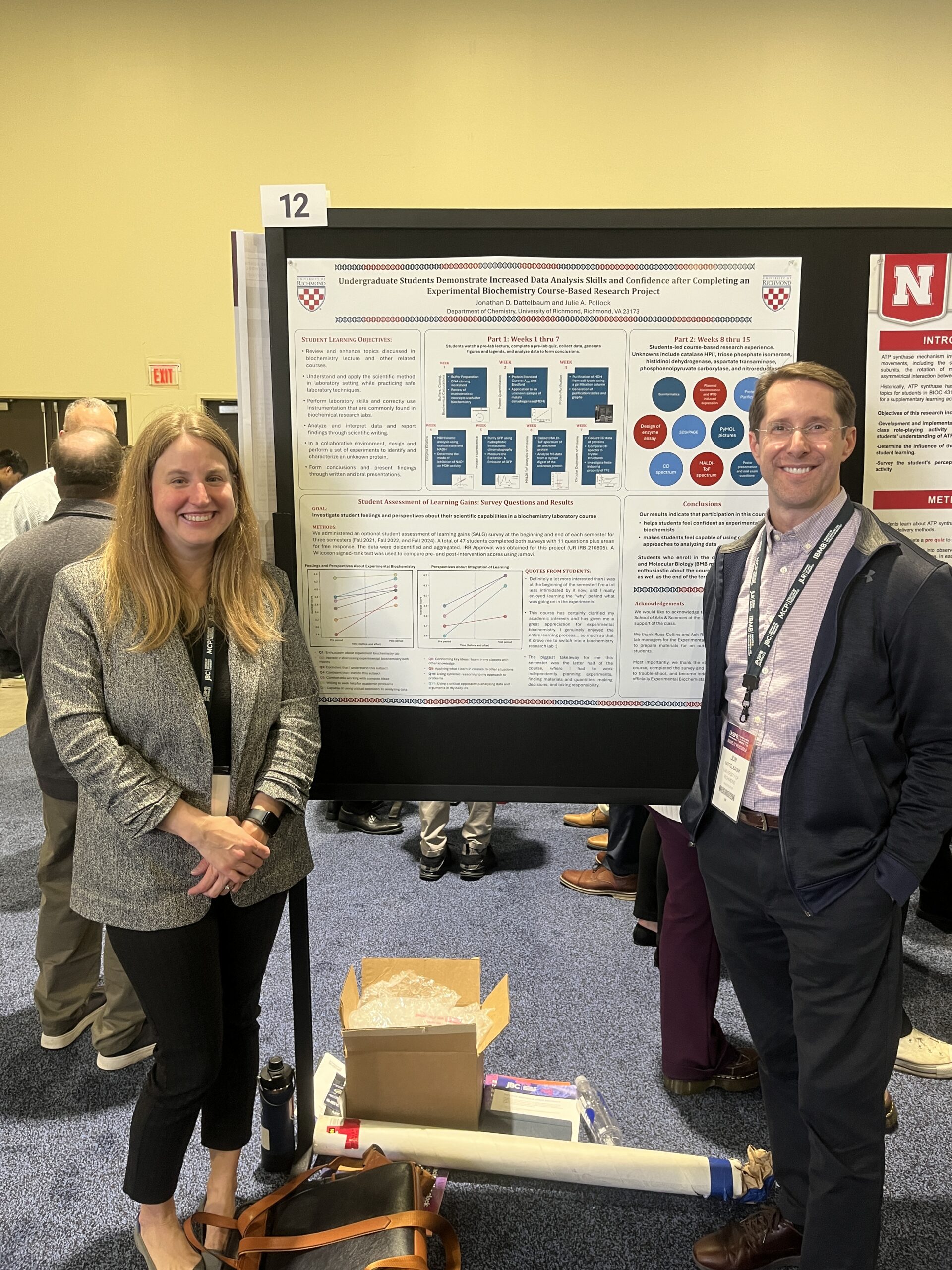
Dr. Jonathan Dattelbaum and I presented findings based on CHEM 324, Experimental Biochemistry, and the assessment of student learning gains survey that we have been collecting. The feedback on and interest in our poster was great!
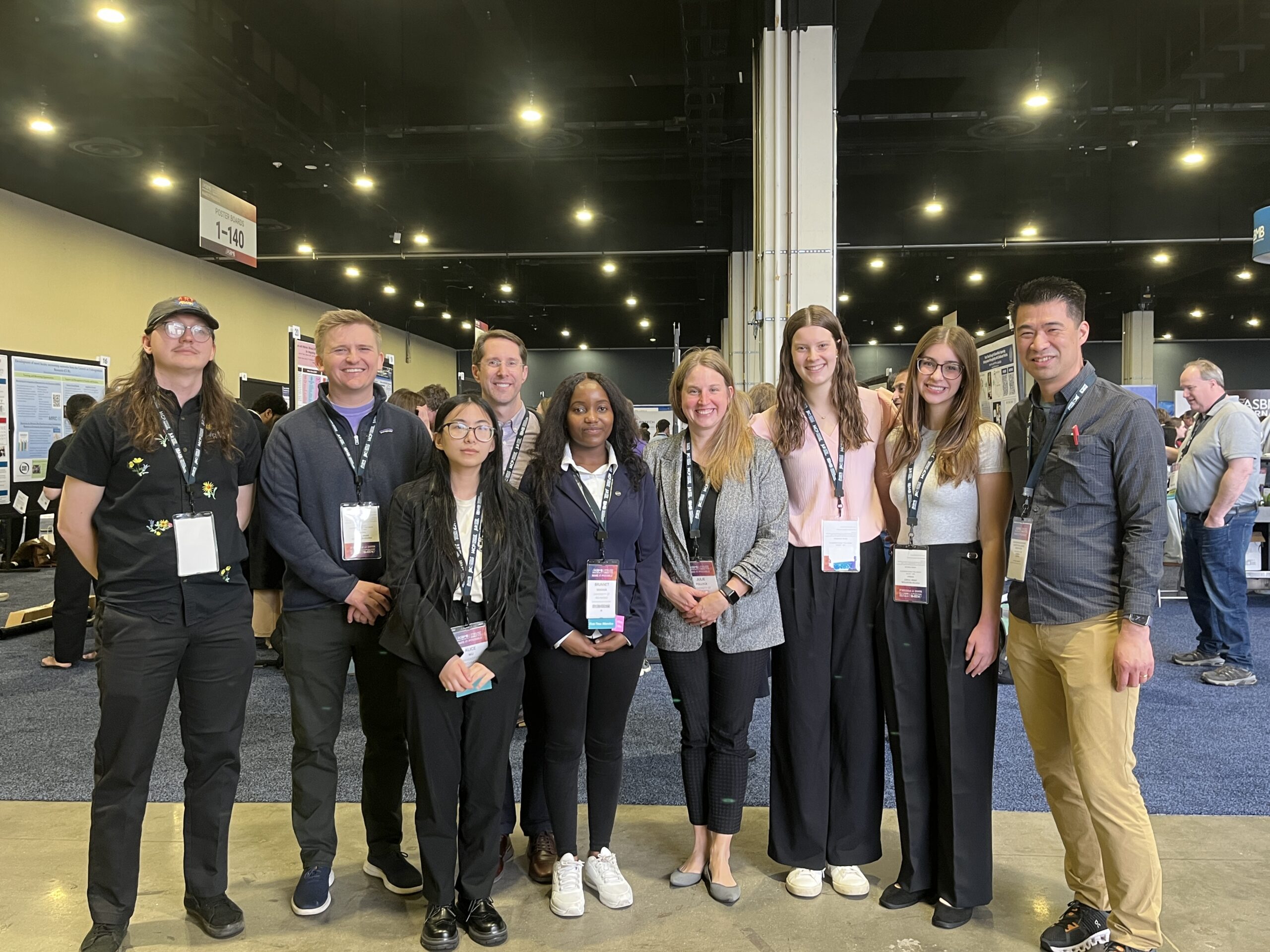
See a few fun pictures from the conference below.
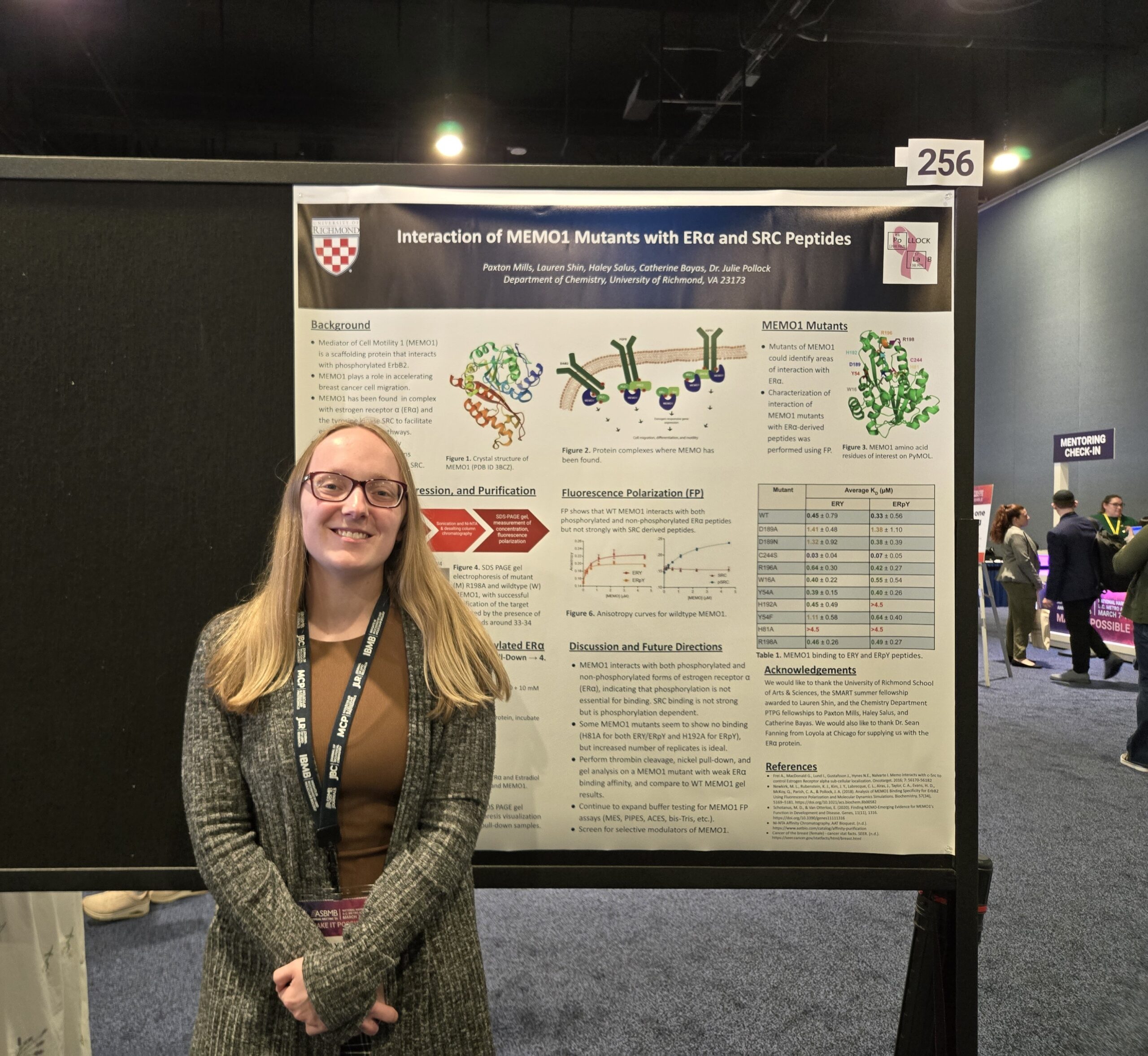
Two of the Pollock lab members attended the conference and presented their research. Let’s hear what they had to say about the conference (and see some pictures of them!).
I attended the 2026 meeting of the American Society of Biochemistry and Molecular Biology to present a poster of the MEMO1 project from the Pollock lab, which was a fantastic experience, allowing me to practice sharing my science with diverse audiences, from fellow undergraduates to lead scientists at institutions from across the country. At the conference, I was also able to attend a variety of talks and sessions covering a wide range of topics from AMPylation to pedagogical approaches. One session, “Scaffolding Scientific Writing with AI: From Goals to Feedback” particularly caught my attention. This talk, given by Dr. Susan Lang (The Ohio State University), Dr. Mike Ibba (Chapman University), and Dr. Karin Musier-Forsyth (The Ohio State University), aimed to improve scientific communication across all academic levels through the development and dissemination of effective learning aids. The speakers started by framing the conversation around written communication skill progression of undergraduate students from foundations, application, analysis, to expertise across four years. They then went on to share information about an AI writing tool (STEM Writing Assistant) being developed and used in their classrooms which is designed to follow instructional design and assignment rubrics, after which students input their own personal writing goals, upload their assignment, and receive feedback in order to encourage the revision process. The audience was then given the time and space to try the tool out for themselves, which I found to be an effective way to motivate engagement. The tool was user friendly, provided specific details in its feedback, is continually being improved by the design team, and seems to be well-received by the students back at the presenters’ home institution. This session was particularly interesting to me as I reflect on my years studying at college and how my own writing skills have changed throughout my time. As someone who plans on using scientific communication for the rest of my career, I want to continually refine my own skillset and better understand how we can encourage and support others, from all skill levels, to do the same. At the same time, I think students must find a balance between utilizing available tools while also continuing to foster the development of original ideas and critical thinking skills. In the digital age where discussions surrounding the usage of AI are prevalent, I think it is important to have constructive conversations surrounding the situations in which it may be used as an effective tool, as well as what unintended consequences may arise from its usage.
-Paxton Mills (BMB ’26)
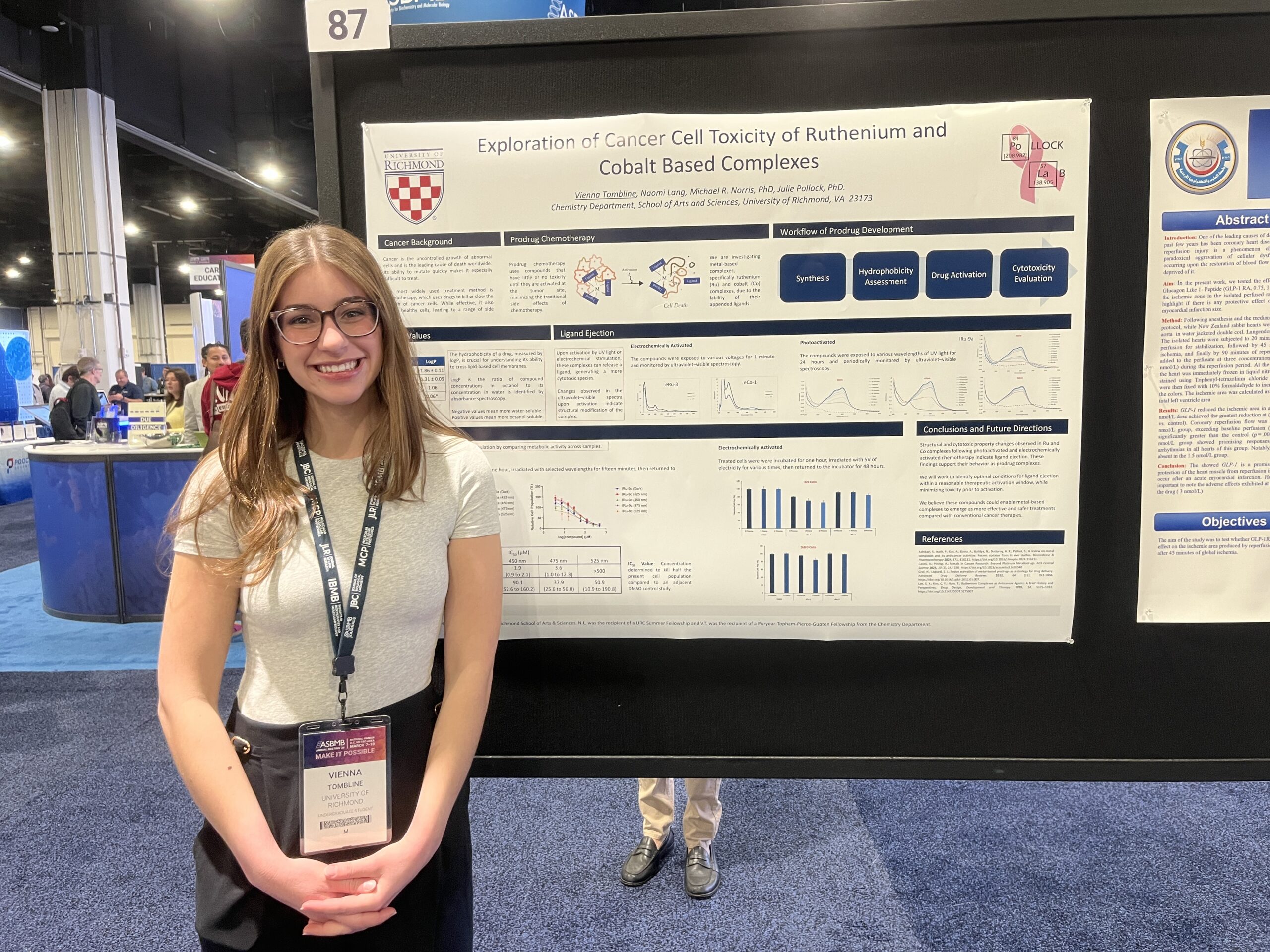
I really enjoyed attending the ASBMB annual meeting and hearing a wide variety of talks on diverse topics. My favorite presentation was “From Discovery to Global Impact: The Role of Biochemistry in Transforming HIV Treatment and Prevention,” given by Dr. Wesley Sundquist from the University of Utah School of Medicine. Dr. Sundquist discussed how his lab focuses on HIV assembly and replication, and how this research contributed to the development of the HIV medication and PrEP drug Lenacapavir. His lab studies the structure and function of the HIV capsid, which led to a deeper understanding of how drugs like Lenacapavir can inhibit the virus. They discovered that the HIV capsid forms a fullerene cone and is linked to the human ESCRT pathway. With this knowledge, Gilead, a biopharmaceutical company, developed Lenacapavir, which works by interrupting the assembly and nuclear import of the HIV capsid. Lenacapavir is administered as a twice-yearly subcutaneous injection and has demonstrated close to 100% efficacy in clinical trials. It is currently approved in 15 countries, including the United States, and is considered groundbreaking due to its ease of use and effectiveness, helping to overcome many previous treatment challenges. I enjoyed this talk as it addressed a highly prevalent issue that I had some prior knowledge of and allowed me to learn more about it from a biochemistry perspective. As someone interested in pursuing a career in pharmacy, I also found it very interesting to learn about the importance of collaboration between academic research labs and pharmaceutical companies in the development of drugs.
– Vienna Tombline (CHEM ’27)
Recent Comments