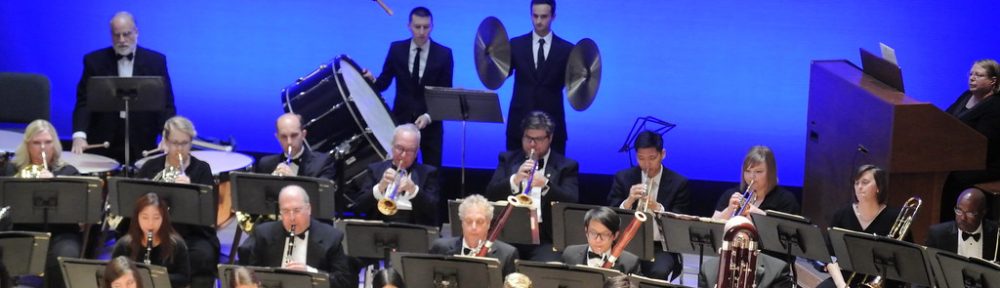
New CDs for January- March 2021
Orchestral, Concertos and Chamber Music
Emanuele Arciuli – Walk in Beauty
Beethoven – Beethoven “Fur Elise,” Bagatelles, opp. 33, 119, & 126 / Paul Lewis, piano
Kenji Bunch – Boiling Point: Music of Kenji Bunch
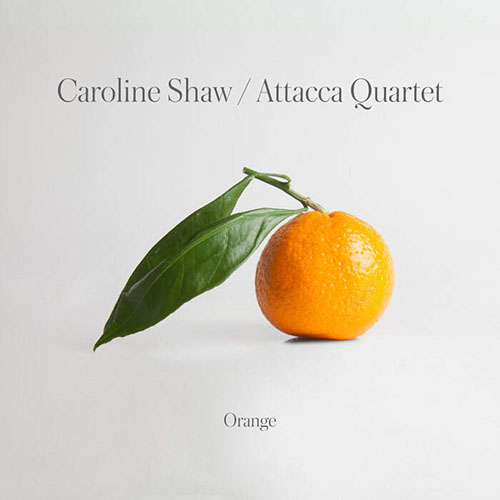
Caroline Shaw / Attaca Quartet – Orange
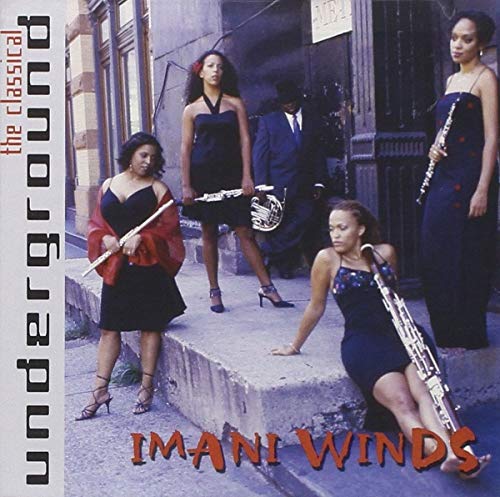
Imani Winds – The Classical Underground
Imani Winds – Terra Incognita
Opera, Opera Excerpts, Choral Music and Art Songs
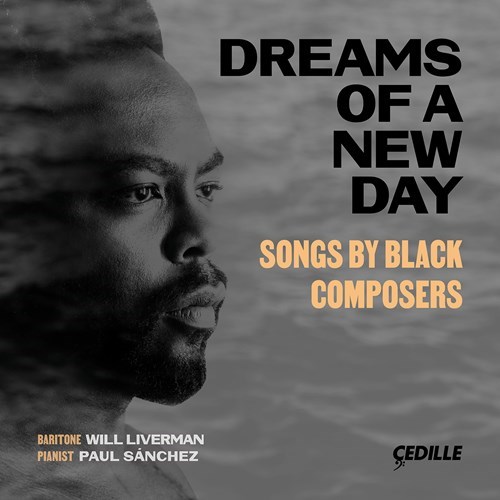
Will Liverman & Paul Sánchez – Dreams of a New Day: Songs By Black Composers
Kurt Sander – The Divine Liturgy of St. John Chrysostom
Popular Music
Lizzo – Cuz I Love You
Mile Twelve – Roll The Tapes All Night Long
Various Artists – At The Minstrel Show: Minstrel Routines From The Studio, 1894-1926

Dance Music
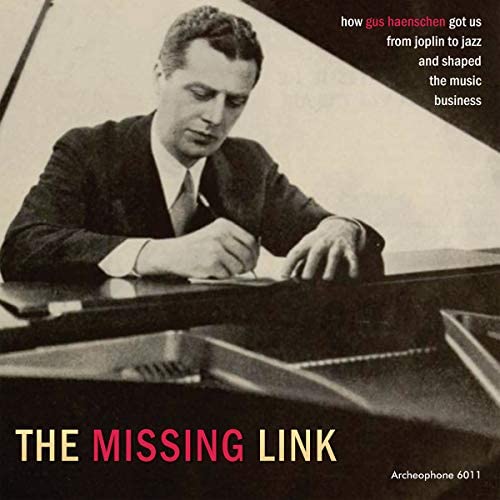
Gus Haenschen – The Missing Link: How Gus Haenschen Got Us from Joplin to Jazz and Shaped the Music Business
Musical Theatre
Original Broadway Cast – Moulin Rouge! The Musical
Stephen Sondheim – Anyone Can Whistle
Arachnophonia: “9 to 5”
Editor’s note: Arachnophonia is a regular feature on our blog where members of the UR community can share their thoughts about resources from the Parsons Music Library‘s collection.
All links included in these posts will take you to either the library catalog record for the item in question or to additional relevant information from around the web.
Today’s installment of Arachnophonia is by student assistant Allison (class of 2022) and features . Thanks, Allison!
I recently came across a Vouge interview of Dolly Parton which piqued my interest of her and her work. While our generation mainly knows of Dolly Parton from her appearances in Hannah Montana, many of us aren’t aware of her earlier musical and acting ventures.
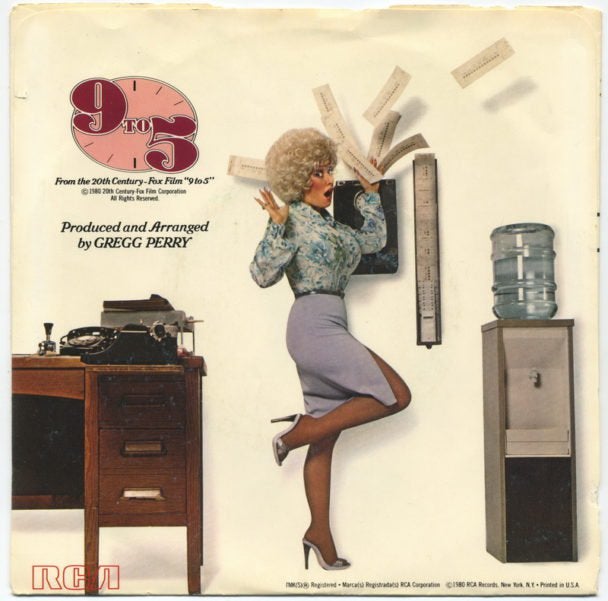
Dolly’s career started as a songwriter for other artists and then released her debut album in 1967. For the next two decades her songs topped the country music charts and she also began acting. In 1980, she starred in the film 9 to 5 along with Jane Fonda and Lily Tomlin.
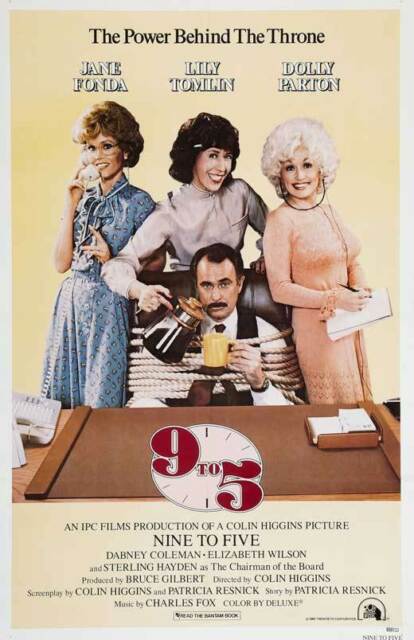
She wrote the song “9 to 5” for that movie and it is also one of her most popular songs. “9 to 5” is not only a catchy tune, but the lyrics highlight workplace issues that are very relevant in both the 80’s and today. I would highly recommend giving the song a listen!
Digital Resources: Music Online – Popular Music Library
The Music Library has more resources available than physical items. We’re highlighting some of our digital resources, and including information about them as told by our student employees.
Today’s digital resource is:
Music Online: Popular Music Library

Music Online – Popular Music Library features audio recordings of popular music from around the world.
Here is what student manager Cole (class of 2021) had to say about this resource:
“Music Online’s Popular Music Library is exactly what it sounds like: an online repository of popular music from around the world, all tagged with the appropriate metadata to make the site an effective research tool. Something I appreciate about Music Online’s collection is the emphasis placed on international works. The site is filled with recordings of songs I have never been exposed to, across all genres and in various languages. Many of the works archived are not available for sale online, so the site can be a valuable resource if one is looking for an obscure, elusive track.
When I first opened Popular Music Library, I was immediately greeted by the album Babies Go Pink Floyd, one of the works featured on the rotating carousel of new arrivals.
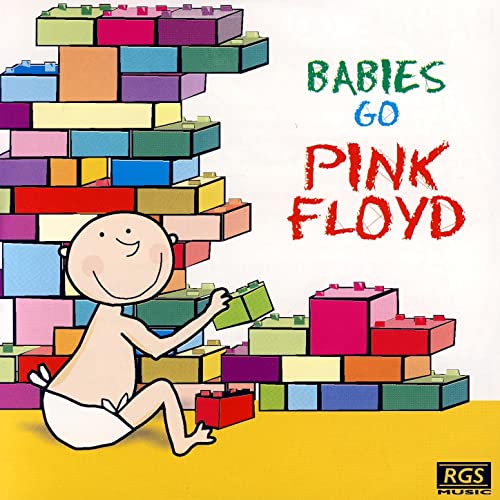
I immediately clicked on it to find out what exactly I was seeing. Each album is displayed as a waveform, with vertical lines separating individual tracks. The music player is accompanied by a sidebar of details and the track listing, with each track accompanied by the appropriate metadata. After some listening and further digging on the site, I learned that Babies Go … is a series of albums, originally sold in the UK, that rework popular music acts into soothing lullabies. Some of my favorite editions include: Babies Go The Cure, Babies Go Led Zeppelin, Babies Go Shakira, and, of course, Babies Go Radiohead, the music player for which, in an apparent (and humorous) technical oversight, presents a flat line and reads, “Waveform temporarily unavailable.”
Though Babies Go … probably won’t be often used as research material, I like to imagine it as a testament to the diversity of material collected for your listening in the Popular Music Library.”
Digital Resources: Qwest.TV
The Music Library has more resources available than physical items. We’re highlighting some of our digital resources, and including information about them as told by our student employees.
Today’s digital resource is:

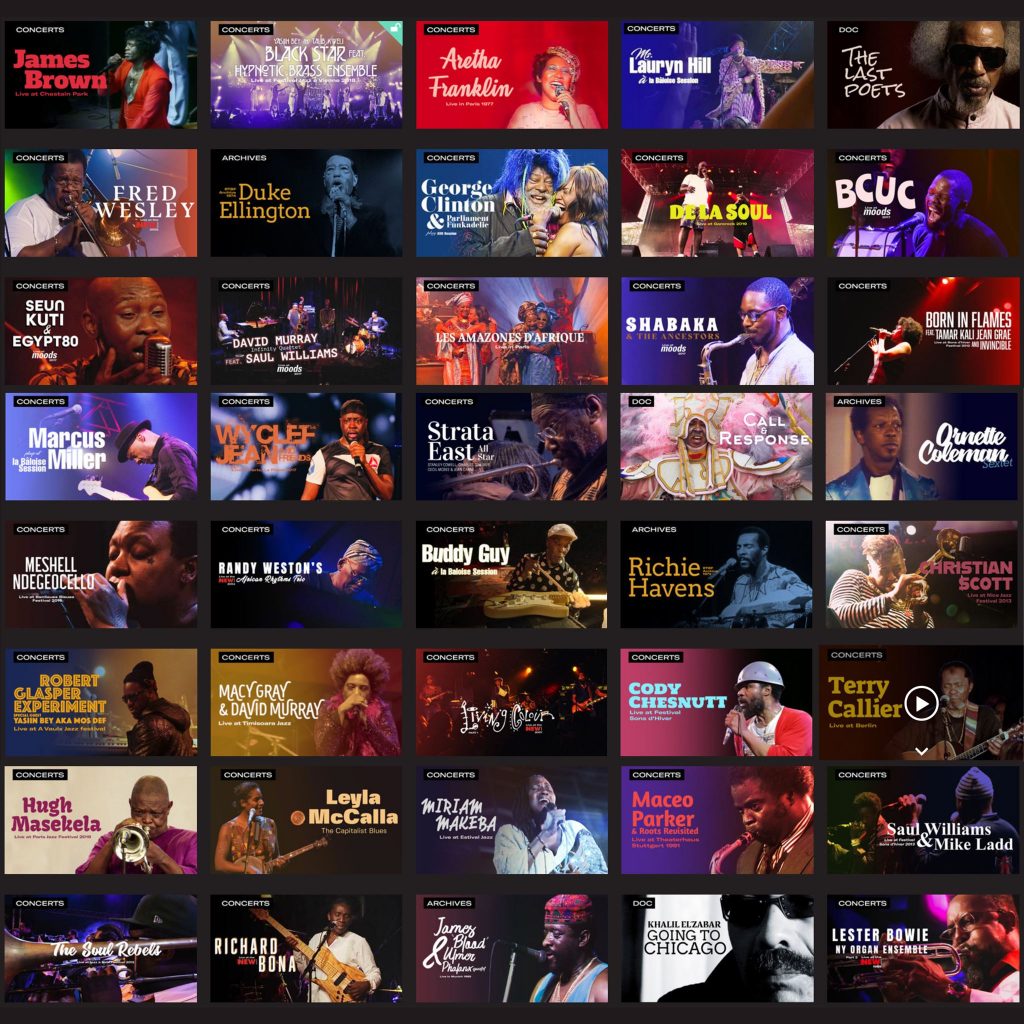
Here’s what student manager Abby (class of 2021) had to say about this resource:
“QwestTV is the first ever streaming service dedicated to Jazz, Soul, Funk & World Music. Created by Quincy Jones and curated by other music legends, this service contains hundreds of concerts, documentaries, archives, and exclusive content. And with the “My List” feature, you can keep track of all your favorites. On top of premium streaming video, QwestTV also offers articles, interviews, and album reviews written by professional journalists and renowned jazz experts. With content spanning decades, this service is a powerful research tool and just an all-around awesome resource for any music lover.”
Arachnophonia: “It Might Get Loud”
Editor’s note: Arachnophonia is a regular feature on our blog where members of the UR community can share their thoughts about resources from the Parsons Music Library‘s collection.
All links included in these posts will take you to either the library catalog record for the item in question or to additional relevant information from around the web.
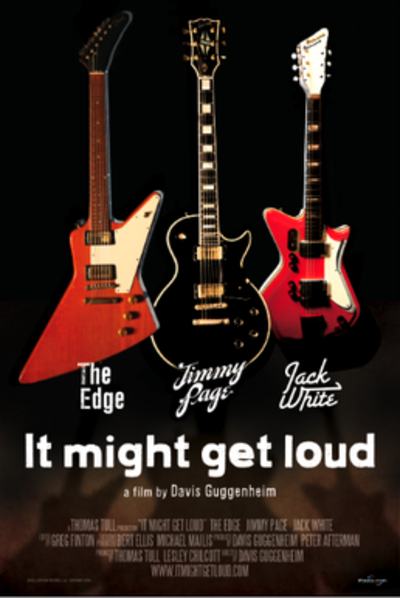
Today’s installment of Arachnophonia is by student manager Cole (class of 2021) and features the music documentary film It Might Get Loud. Thanks, Cole!
It Might Get Loud (2008)
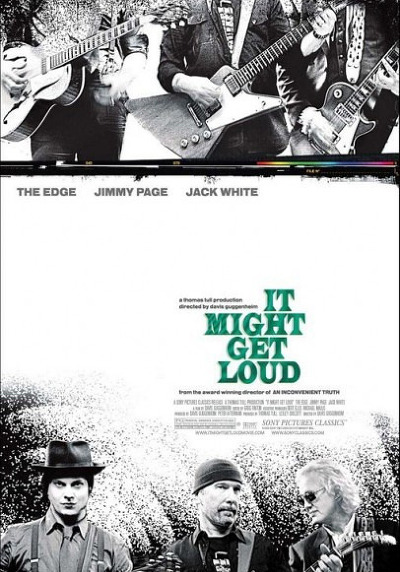
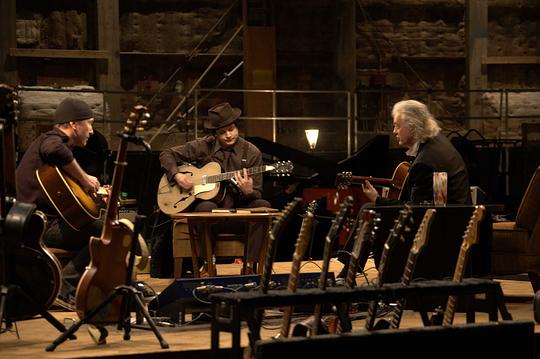
What happens when three of the most influential guitarists alive, each from different eras of popular music, sit down for a day to swap stories and riffs? That’s the question at the heart of Davis Guggenheim’s 2008 documentary It Might Get Loud, starring Jimmy Page (of Led Zeppelin), The Edge (of U2), and Jack White (of The White Stripes). Although the three musicians come from differing backgrounds and generations, the film explores the three men’s lives as they’ve revolved around their shared fixation: the electric guitar.
In proportion to the total runtime, footage of the three’s meeting, dubbed “The Summit,” is relatively sparse. Instead, the film documents each of the musicians in and around their respective homes, piecing together their personal narratives, playing and recording styles, and musical philosophies. The film crew follows Jimmy Page to Headley Grange, a former workhouse-turned-recording studio whose interior acoustics can be heard on Led Zeppelin IV. The Edge visits the secondary school in Dublin where he co-founded U2 with his childhood friends. The film opens on Jack White assembling a rudimentary one-string guitar from plywood and a glass bottle on the porch of his Tennessee farmhouse. Guggenheim constantly moves between these three strands, allowing the guitarists to tell their own very different stories while revealing the subtle similarities in their lives that drove them all to the electric guitar.
My favorite moment in the film comes when The Edge delves into his playing philosophy. Known for his extensive use of reverb and delay, The Edge is sometimes criticized for playing his pedal board more than his guitar. Hearing him explain his methodology reveals the sheer creativity at work in creating his sounds, despite not “shredding” in the same vein as White and Page. At one point, The Edge plays the riff to “Elevation,” in which his guitar undulates between an indefinite number of notes. He then strips the effects and reveals the riff to be simply two notes, the space between filled with reverb, delay, and distortion. While this style of play rubs some the wrong way — such as those who consider effect pedals “cheating” to hide technical deficiencies — the great strength of It Might Get Loud is in capturing the dialogue between three pillars of guitar styles. In the film’s introductory sequence, Page admires The Edge as a “sonic architect,” a powerful compliment coming from the man most often placed beside Jimi Hendrix and Eric Clapton in conversations of electric guitar greatness.
An added bonus of the film’s three stars is consequentially broad appeal. If you are a fan of guitar-driven music, you’ll likely enjoy what’s offered here. It Might Get Loud is available to check out as a DVD from the Parsons Music Library and also from Boatwright Memorial Library. It is also available to stream online for those on the University network.
Digital Resources: Music ID
The Music Library has more resources available than physical items. We’re highlighting some of our digital resources, and including information about them as told by our student employees.
Today’s digital resource is:

Music ID offers over 60 years (1950 – present) of international chart data for popular music recordings.
Here’s what student manager Abby (class of 2021) had to say about this resource:
“One of our research tools that I find particularly interesting is Music ID. This resource compiles over 100 years of global music industry data in an incredibly easy-to-use platform. The site itself is divided into three analytical topics — most popular, most profitable, and most impactful. It’s fascinating to see the difference between the three, especially with the site’s ability to separate song, album, and artist. And with data going back as far as 1900, not only can you discover some great old songs you may have never heard of but also a comprehensive meta-narrative of popular music itself, and by extension its cultural impact.”
And here’s what student manager Colin (class of 2021) had to say about this resource:
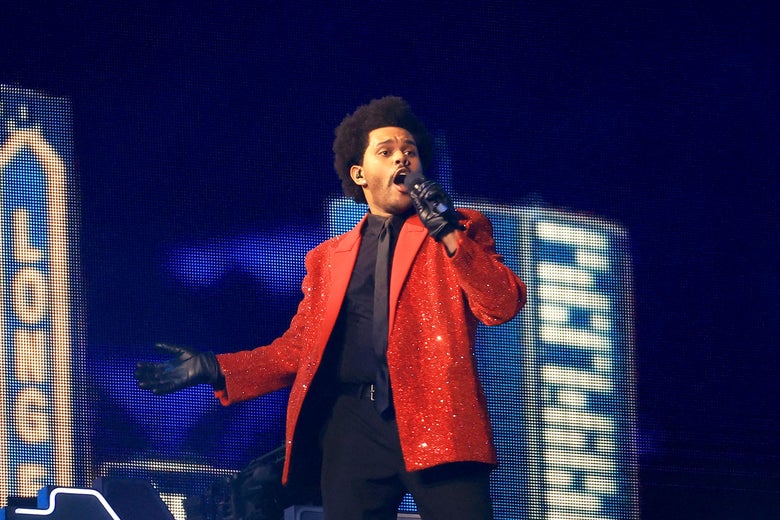
“A resource I like and that I have used for a paper before is Music ID. Specifically, Music ID Data‘s database has information on over 5,000 different charts, tracking music popularity in countries all over the world based on the popularity of artists and their songs on these different charts, as well as on platforms like Spotify, Apple Music, and Shazam. This resource is best utilized by examining overlapping chart data to analyze the popularity and trends that follow an artist, whether it be through a new album release or from a popular single track. To use this platform you type a keyword into a search bar, such as the latest Super Bowl Halftime Show artist “The Weeknd,” and select the different measures you wish to analyze. From there, the website will bring you to a graph that details the artist’s popularity based on the measures you selected. For example, you can simply click “The Weeknd” as an artist and you can see his trend in the U.S. Billboard Top 100 artists over the years in which Music ID has effective data. To utilize this resource further, you can start applying additional filters, specifically on singles he has released like “The Hills” and “Can’t Feel My Face,” to effectively observe how the popularity trends of his songs affect the popularity of himself as an artist. Music ID Data has a lot of information that can be applied to many different artists across the world and is an amazing research tool when needing to find graphical trends as evidence for reference support.”
Digital Resources: All Music Guide
The Music Library has more resources available than physical items. We’re highlighting some of our digital resources, and including information about them as told by our student employees.
Today’s digital resource is:

All Music offers biographies and discographies in all genres
Here is what student assistant Danny (class of 2023) had to say about this resource:
“A digital resource that I found very interesting was called “All Music.” This research guide was very helpful, for you can search just about any album, artist, or song and get not only some information about it, but what album it was connected to, reviews, the year that it came out, and reviews about it.
This guide is especially helpful to learn more about artists and the albums they have released. For instance, let’s say you just found out about a new artist. You can look them up on AllMusic and access their discography. (Some even have links that will allow you to hear samples of songs!) You can also see lists of similar albums and songs that you can check out if you want to hear more music that sounds similar to the artist you’ve searched for.
Finally, there is a new release radar, a discover tab, and articles related to current news that can be extremely helpful if you want to keep track of the day-to-day goings-on in the music industry.”
And here is what student assistant Ryan (class of 2022) thought about the AllMusic Guide:
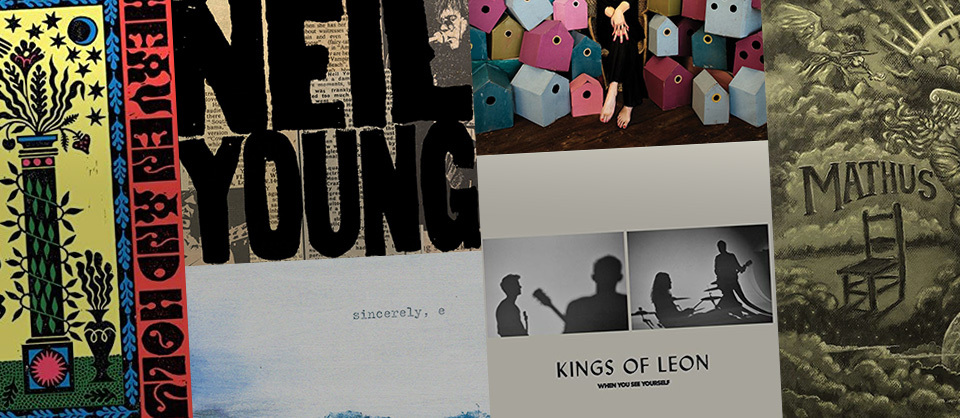
“Allmusic.com is an incredibly broad music database that has information on all kinds of music, from B.T.S. to R.E.M. The website features Discover sections that can help you find music based on genre, mood, and even lyrical content.
Ever been curious about the difference between bluegrass and blues? How about progressive metal and post punk? AllMusic has artists and albums divided into the most niche subgenres, so you can find examples of almost anything. The website also offers articles, album reviews, recommendations, and artist interviews. If you’re looking to expand your musical horizons, AllMusic.com is the place to start!”
Arachnophonia: Erik Satie
Editor’s note: Arachnophonia is a feature on our blog where members of the UR community can share their thoughts about resources from the Parsons Music Library‘s collection.
All links included in these posts will take you to either the library catalog record for the item in question or to additional relevant information from around the web.
Today’s installment of Arachnophonia is by student assistant Ryan (class of 2022) and features a collection of works by French composer Erik Satie. Thanks, Ryan!
Erik Satie (b. 1866 – d. 1925)
Parade ; Trois gymnopédies ; Mercure ; Trois gnossiennes ; Relâche
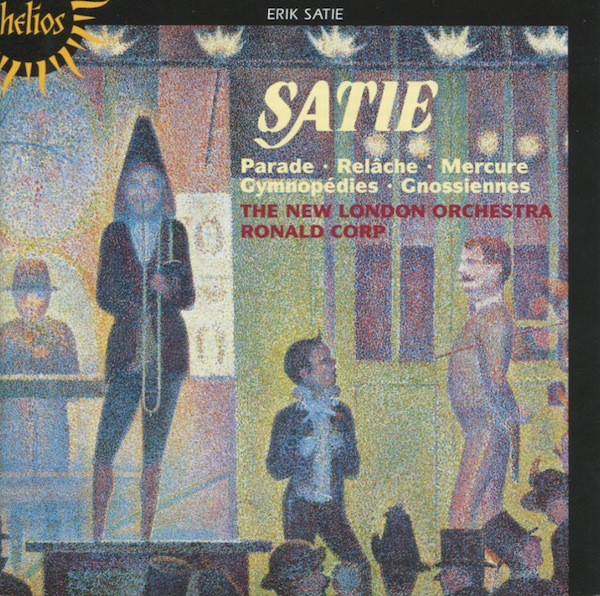
Erik Satie has long been one of my favorite composers for his ability to blend together subtlety and expressiveness to create an ambiance unlike any other artist. In his day, Satie struggled greatly to find support for his music, but his friendship with composer Claude Debussy proved valuable when Debussy offered to orchestrate two of Satie’s three “Gymnopédies”. Among Satie’s earlier works, Debussy saw great potential in “Trois Gymnopédies” and his orchestrations are still performed today, although Debussy disliked the second of the three and never orchestrated it. In this CD recording by the New London Orchestra, conductor Ronald Corp attempts to elucidate the same subtleties Debussy loved so much in Satie’s work with his orchestrations of Gymnopédie no. 2 as well as “Trois Gnossiennes”. This CD also features recordings of some of Satie’s ballets: Parade, Mercure, and Relâche. Each was met with mixed reviews at their debuts, but are now considered to be some of his finest works.

Erik Satie in 1920
I love to listen to Satie, especially the Gymnopédies, while I read or do work. Music historians often credit Satie as being one of the precursors to modern “ambient music”, and it’s easy to see why. Satie’s music lends itself equally well to thoughtful listening as it does to background enjoyment. If you’re looking for a CD to help you relax after a long week or accompany a good book, I highly recommend the New London Orchestra’s collection of recordings.
Digital Resources: Kanopy Music Videos
The Music Library has more resources available than physical items. We’re highlighting some of our digital resources, and including information about them as told by our student employees.
Today’s digital resource is:
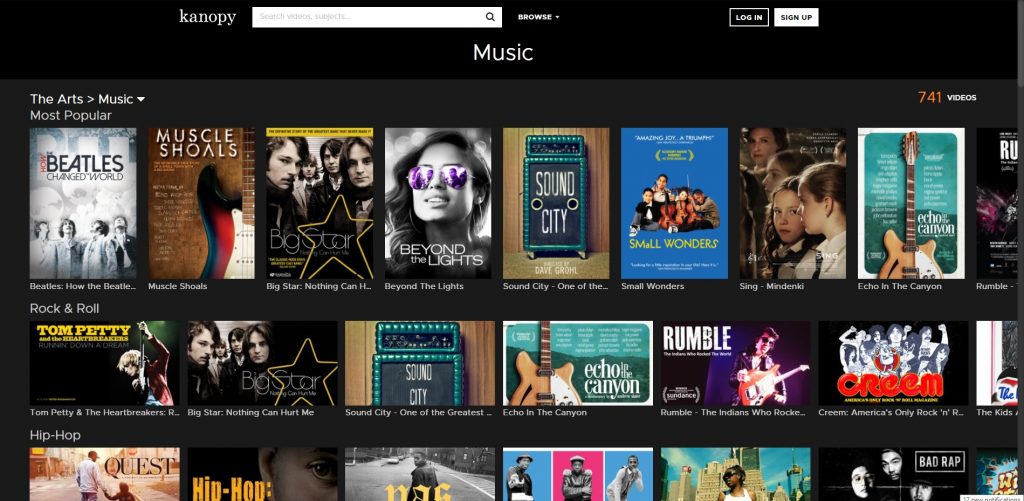
Kanopy Music Videos offers streaming videos of performances and documentaries in all musical genres.
Here’s what student manager Colin (class of 2021) had to say about Kanopy Music Videos:
“A resource that I enjoy from our streaming audio & video resources is the Kanopy Music Videos selection. This website has a great, diverse selection of films that most people will be able to find something of interest to them. Examples of these topics include videos on documentaries, live concert performances, ethnomusicology, music instruction, classical music, opera, musicals, and much more. While this service may not focus particularly on one genre or characteristic of music, limiting its resources to deep or extensive videos on one topic, Kanopy guarantees that all users will find something of interest and help. The user interface is friendly, as the videos are all available by scrolling through the page, and there is a search bar to use in case a user cannot find their intended video. Kanopy Music Videos is great for me, as I am definitely a visual learner and love watching films, which this resource focuses and delivers on.”

And here is student manager Cole’s (class of 2021) take on this resource:
“I love Kanopy. It’s an online streaming service for films and documentaries that all University of Richmond students have access to via the libraries. The Music category is a diverse collection of material, including well-known films (The Beatles’ flick A Hard Day’s Night), under the radar works of ethnomusicology (Shaping Bamboo, a documentary about the ‘Are’are people of the Solomon Islands and their panflute ensembles), and even videos of music instruction, such as Max Milligan’s Play series, videos that unpack the unique playstyles of iconic guitarists.
Two other notable resources include both of Ken Burns’ music docu-series: Jazz and Country Music. These expansive series could be useful for any research into the respective genres. Another benefit of Kanopy is the inclusion of time-stamped, fully searchable (via CTRL + F) transcripts with all of their videos. This makes pulling out specific clips or quotes far easier, especially for series such as Ken Burns’ with total running times of over 1,000 minutes.
Kanopy is one of my favorite library resources, both for research and entertainment. I find it easy to lose myself in its vast catalog, and I always leave with a longer list of things to watch.”

Digital Resources: Grove Music Online
The Music Library has more resources available than physical items. We’re highlighting some of our digital resources, and including information about them as told by our student employees.
Today’s digital resource is:

Grove Music Online is an authoritative reference resource. It includes the full-texts of The New Grove Dictionary of Music and Musicians, The New Grove Dictionary of Opera, and The New Grove Dictionary of Jazz, with updates and emendations.

Here is what student assistant Allison (class of 2022) had to say about Grove Music Online:
“Grove Music Online is an extensive online music encyclopedia that provides detailed information on composers, their music, and other music scholarship. I like how the resource is run by an editorial board at Oxford University Press so that there isn’t much question regarding the credibility of the content. I looked up Paul Hindemith and George Gershwin and found a lot of information about each of their respective lives along with some articles about their work. Grove Music Online seems like a very valuable resource for researching composers and music in the classical/jazz field.”
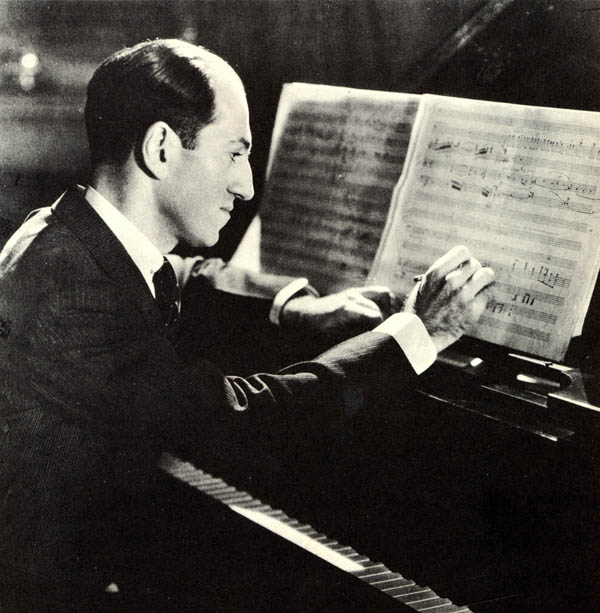
George Gershwin (1898-1937)

Paul Hindemith (1895-1963)