Arachnophonia: Amy Winehouse “Back to Black”

Editor’s note: Arachnophonia (“Arachno” = spider / “-phonia” = sound) is a regular feature on our blog where members of the UR community can share their thoughts about resources from the Parsons Music Library‘s collection.

All links included in these posts will take you to either the library catalog record for the item in question or to additional relevant information from around the web.

Today’s installment of Arachnophonia is by student assistant Jillian (class of 2027) and features Amy Winehouse’s Back to Black album on vinyl. Thanks, Jillian!

Amy Winehouse
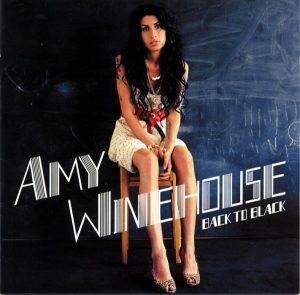
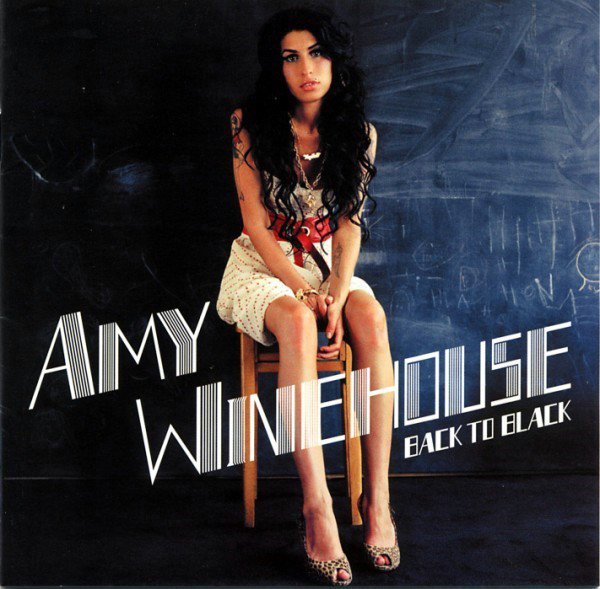
Back to Black

Amy Winehouse - Back to Black (vinyl)

Amy Winehouse was a British neo-soul songwriter who received attention in late 2006 and early 2007 after the release of Back to Black on October 27th, 2006, by Island Records. Growing up in London, Winehouse was a member of the National Youth Jazz Orchestra, later signing a publishing deal with major record label EMI and then finally Island Records in 2002. She produced two studio albums, Frank in 2003 and then Back to Black in 2006.

In 2008, Winehouse won 5 Grammys for her Back to Black album, Best New Artist, Record of the Year, Song of the Year for “Rehab”, and Best Pop Vocal Album. In a world where Soul and Jazz are fading genres, Winehouse incorporates a blend of Soul, Jazz, R&B, and pop in her music, drawing from various timeframes. Songs like “Tears Dry on Their Own” and “He Can Only Hold Her” draw from classic Motown tunes such as Marvin Gaye and Tammi Terrell’s 1967 “Ain’t No Mountain High Enough” and The Icemen’s 1966 “My Girl (She’s a Fox)”, bringing back the 60s. The use of rich horns, dominant bass lines, and big band presence in “Rehab” and “Me & Mr. Jones”, to name a few, demonstrates the artist’s inspiration from 1950’s/60’s Jazz.

The artist’s impact on the world of retro-soul led to the release of the biopic Back to Black in 2024. According to IMDb, the film received a 6.3/10 rating, though focusing more on Winehouse’s romantic relationships than her career, according to the New York Times. The movie paid tribute to Winehouse and her career’s impact after her unexpected death in 2011 due to alcohol poisoning. Her timeless music remains popular today, with 2026 marking the 20th anniversary of the release of this album which brought her to fame.
Parsons Playlists: Through the Decades

Welcome back to Parsons Playlists! Today’s playlist is curated by Music Library student assistant Rocio (class of 2027). It features a multi-decade selection of songs.

Through the Decades: A Journey Through Time

This playlist spans across many different styles, from rock to soul, from grunge to pop, each representing the distinct culture of its time (1960s – 2020s).

1960s

The Beatles – “Here Comes the Sun”
Genre: Rock/Pop
A perfect track to represent the cultural shift of the ’60s, full of optimism and innovation.

Aretha Franklin – “Respect”
Genre: Soul/R&B
An iconic anthem for empowerment and the civil rights movement.

1970s

David Bowie – “Space Oddity”
Genre: Glam Rock
This track encapsulates the futuristic and experimental vibes of the ’70s.

Fleetwood Mac – “Landslide”
Genre: Folk Rock
A soft, introspective classic that showcases the band’s emotional depth.

1980s

Michael Jackson – “Billie Jean”
Genre: Pop/Funk
One of the defining tracks of the ’80s, with its infectious groove and pioneering production.

The Smiths – “There Is A Light That Never Goes Out”
Genre: Indie Rock
A melancholic yet beautiful anthem from the ’80s alternative scene.

1990s

Nirvana – “Smells Like Teen Spirit”
Genre: Grunge/Rock
A cultural shift to grunge, encapsulating the rebellious spirit of the ’90s.

Lauryn Hill – “Doo Wop (That Thing)”
Genre: R&B/Hip-Hop
A blend of soulful R&B and sharp rap lyrics that defined ’90s hip-hop culture.

2000s

OutKast – “Hey Ya!”
Genre: Funk/Pop
A genre-defying hit that blends funk, pop, and dance.

Amy Winehouse – “Rehab”
Genre: Soul/Pop
A modern classic, blending jazz, soul, and pop with sharp lyrics.

2010s

Kendrick Lamar – “Alright”
Genre: Hip-Hop
An anthem for social change, it captures the political and cultural landscape of the 2010s.

Lorde – “Royals”
Genre: Indie Pop
This minimalist anthem became a defining song of the ’10s indie scene.

2020s

Taylor Swift – “All Too Well”
Genre: Pop/country
A track that redefined mainstream pop with its unique production and style.

Olivia Rodrigo – “drivers license”
Genre: Pop
One of the biggest songs of the 2020s, full of emotional vulnerability and teenage angst.

Here is a link to the whole playlist on YouTube: https://youtube.com/playlist?list=PLU94rco57ZezxvxmvyKbScOGaCAawroKq&si=6FIbD3s07_Bu9S3M

Arachnophonia: Amy Winehouse “Back To Black”

Editor’s note: Arachnophonia (“Arachno” = spider / “-phonia” = sound) is a regular feature on our blog where members of the UR community can share their thoughts about resources from the Parsons Music Library‘s collection.

All links included in these posts will take you to either the library catalog record for the item in question or to additional relevant information from around the web.

Today’s installment of Arachnophonia is by student manager Amy (class of 2025) and features Amy Winehouse’s 2007 album Back To Black. Thanks, Amy!

Amy Winehouse

Back To Black

Amy Winehouse - Back to Black

Amy Winehouse’s album Back to Black has been my top album since I was 16. Not only is the unique quality of her voice astounding but her lyrics perfectly encapsulate the realities of an abusive relationship.

Back to Black was Winehouse’s sophomore album and the title track, “Rehab,” suggested the album would be nothing like its predecessor Frank (released in 2003). Frank sounded as if Winehouse had taken the lyrics of an artist like Michael Bublé and added a bit of hip-hop to it, the most notable piece was her voice.

These raspy painful notes that begin “Rehab,” a Top 10 hit in the UK and US, point to the three years between Frank and Back to Black being far from easy. After Frank debuted, Winehouse began a very topsy-turvy relationship with Blake Fielder-Civil, a music video assistant. Fielder-Civil has come forward and admitted to being Winehouse’s introduction to hard drugs. The two would get into physical and verbal altercations in public, the catalysis of this being Fielder-Civil leaving Winehouse at one point for his ex-girlfriend.

Fielder-Civil leaving was the inspriation for the song “Back to Black.” It described the dark moments of depression she felt after he left. It also described how she went back to abusing alcohol after he left because she didn’t have anything else to cope with.

Another of her famous singles “Love is a Losing Game,” a long metaphor for love being an unfair game, the song, while quite simple with lyrics like “Know you’re a gambling man/ Love is a losing hand,” is considered to be one of Winehouse’s most powerful songs because of its deep meaning.

My personal favorite song, “Tears Dry on Their Own” is an anthem for those who need the hard truth: it is time to get over it. In an interview with BBC, Winehouse described her inspiration for the song: “I was with someone that I couldn’t really be with and I knew it wouldn’t last. But I think because I knew it couldn’t last, it’s kinda like saying, “I’m upset, but I know I’ll get over it, I guess.”

After a stint in rehab and an arrest for marijuana possession, Winehouse won five Grammy Awards in 2008, an award ceremony she was not able to attend as the US denied her visa on grounds of use and abuse of narcotics. That same year, Back to Black was said to be the second-highest selling album in the world. Winehouse died of accidental alcohol poisoning on July 23, 2011.

Arachnophonia: Amy Winehouse “Back To Black”

Editor’s note: Arachnophonia (“Arachno” = spider / “-phonia” = sound) is a regular feature on our blog where members of the UR community can share their thoughts about resources from the Parsons Music Library‘s collection.

All links included in these posts will take you to either the library catalog record for the item in question or to additional relevant information from around the web.

Today’s installment of Arachnophonia is by student manager Deisy (class of 2024) and features Amy Winehouse’s 2007 album Back To Black. Thanks, Deisy!

Amy Winehouse

Back To Black

Amy Winehouse - Back to Black

Throughout my years in college, I have tried to expand my musical taste by asking friends to introduce me to some of their favorite artists. Along the way, a good friend of mine introduced me to Amy Winehouse, one of the best things in my life. My favorite song of hers has to be “You Know I’m No Good” and “Back to Black.” Her Back to Black album was on repeat for a long time in 2021 as I began to discover more of her work.

If people are interested in discovering new artists and songs, I recommend asking a friend or coming to the Parsons Music Library where there is a large collection of CDs and LPs to look through.

Arachnophonia: Amy Winehouse “Back To Black”

Editor’s note: Arachnophonia is a regular feature on our blog where members of the UR community can share their thoughts about resources from the Parsons Music Library‘s collection.

All links included in these posts will take you to either the library catalog record for the item in question or to additional relevant information from around the web.

Today’s installment of Arachnophonia is by student worker Lauren (class of 2023) and features Back To Black, the second and final studio album by English singer-songwriter Amy Winehouse. Thanks, Lauren!

Amy Winehouse

Back To Black

Amy Winehouse - Back to Black

Back to Black by Amy Winehouse is one of the most influential albums of all time that served to inspire the next wave of female artists such as Adele and Florence and the Machine. Amy Winehouse was an English singer with a uniquely soulful and expressive vocal repertoire. Her music is reminiscent of blues, jazz, and soul by conveying a deep and emotional mood. Not only was her music so revolutionary for its new sound, but it was also reflective of her life and personal struggles. The song “Rehab” featured on the album reflects on the protagonist’s desire to avoid going to rehab for alcohol abuse, unfortunately foreshadowing the singer’s demise. This album may be used for research in order to understand more about Winehouse’s personal emotions, or to learn how she influenced later female artists.

Personally, Amy Winehouse has been someone I’ve admired for her empowering songs and unique character. Even though she has since passed, she remains an iconic musical artist, whose music will be remembered forever. When I listen to Back to Black, I am immediately transported into another time-period and empowered by my femininity.

amy winehouse

Arachnophonia: Amy Winehouse “Back to Black”

Editor’s note: Arachnophonia is a regular feature on our blog where members of the UR community can share their thoughts about items in the Parsons Music Library‘s collection. All links included in these posts will take you to either the library catalog record for the item in question or to additional relevant information from around the web.

Today’s installment of Arachnophonia is by Music Library student worker, Eve (class of 2020) and features English singer songwriter Amy Winehouse’s second and final studio album Back to Black. Thanks, Eve!

Amy Winehouse

Back to Black

Amy Winehouse - Back to Black

Amy Winehouse is famed for her distinctive voice and mastery of jazz, rhythm and blues, and soul, and the English singer-songwriter’s second album Back to Black reflects the impressive vocals and originality that brought her to fame. The album was released in 2006 and earned Winehouse five Grammy Awards, the 2007 Best British Female Artist Brit Award, and world-wide recognition.

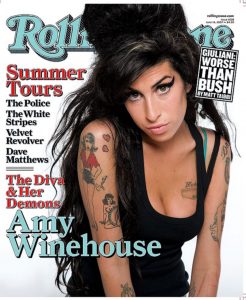
Amy Winehouse - Rolling Stone Cover 2007

Winehouse on the cover of Rolling Stone Magazine, June 2007

Yet in many ways, Back to Black reflects the unhappy circumstances that surrounded Winehouse’s life and led to her untimely death at the age of 27. For example, songs such as “Back to Black” and “Rehab” reveal themes of depression and substance addiction struggles, while “Love is a Losing Game” speaks to the toxic nature of Winehouse’s romantic relationships. Still, darker elements of the album are balanced by upbeat tracks, and song such as “Tears Dry On Their Own” provide a refreshing message of self-confidence and perspective. If viewed through the lens of Amy Winehouse’s life, the honesty and rawness of Back to Black is moving, yet tracks also stand on their own for listener interpretation. In this way, Back to Black can be heard as a musical feat, tribute to Winehouse and medium for artistic contemplation.

Amy Winehouse - Back to Black