
Arachnophonia: Laufey “A Matter of Time”

Editor’s note: Arachnophonia (“Arachno” = spider / “-phonia” = sound) is a regular feature on our blog where members of the UR community can share their thoughts about resources from the Parsons Music Library‘s collection.

All links included in these posts will take you to either the library catalog record for the item in question or to additional relevant information from around the web.

Today’s installment of Arachnophonia is by student assistant Joyce (class of 2027) and features Laufey’s 2025 album A Matter of Time. Thanks, Joyce!

Laufey

A Matter of Time

Laufey - A Matter of Time

I chose A Matter of Time by Laufey because her music is a combination of genres that I have always been drawn to. I like jazz, and Laufey’s sound blends that style with pop in a way that feels both modern and timeless. I think her music is especially compelling to me because of its classical influence. She often sings with an operatic tone, and her background in classical music as a cellist shapes the structure and emotional depth of her songs. That classical foundation gives her music a richness that sets it apart from typical pop albums.

This album is important to me because it feels versatile and comforting. My favorite song, “Lover Girl,” is especially catchy and lively, and I think it is good to listen to in everyday moments. It is the kind of song I enjoy playing while going on a walk or cleaning my room. Overall, I think this studio album captures why I appreciate Laufey as an artist. She creates music that is approachable and fun, yet grounded in a strong classical background.
Arachnophonia: Getz/Gilberto

Editor’s note: Arachnophonia is a regular feature on our blog where members of the UR community can share their thoughts about resources from the Parsons Music Library‘s collection.

All links included in these posts will take you to either the library catalog record for the item in question or to additional relevant information from around the web.

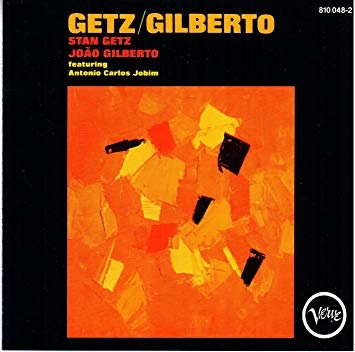
Today’s installment of Arachnophonia is by student worker Colin (class of 2021) and features the classic 1963 bossa nova album Getz/Gilberto. Thanks, Colin!

Stan Getz / João Gilberto

Getz/Gilberto

Getz / Gilberto

America in the 1950s was one of the greatest growing periods of this nation’s history. The decade marked huge economic growth following the end of World War II, a spiked population rate from the “baby boomers,” and the rise of new forms of technology and music. Rock n’ roll quickly became a well-received genre among the nation’s youth, and this was expedited by the new product known as television and also the “King” of hip-shaking and dance, Elvis Presley. Jazz, which had established itself as a cornerstone of American music, found it was taking a backseat both commercially and artistically against all the attention rock had been receiving.

However, because of Tony Bennett’s trip to Brazil in 1961, the brazilian-jazz genre of bossa nova was introduced to the United States. One of the musicians that became hooked on this type of music was Stan Getz, an American saxophonist. Bossa nova then found its way into the music scene, and after João Gilberto performed a concert in Carnegie Hall centered around bossa nova, a mutual friend introduced Gilberto and Getz to one another, and the album Getz/Gilberto was released in 1963.

What first attracted me to this album was a random jazz playlist I was listening to on Spotify. Through all the eclectic songs I heard, “The Girl from Ipanema” stood out to me as significant. I had listened to the famous song before, but this version of airy, Portuguese vocals immediately drew my attention. From there, I decided to listen to the album and had such a fun and relaxing time vibing with each song. My personal favorite track is “Corcovado (Quiet Night of Quiet Stars).” The song’s lyrics are quite short, simply referring to a quiet evening in which one can enjoy the sound of music while looking upon the beautiful mountain known as Corcovado. However, the melody and performance of the song are really astounding, and this song serves as one of my favorite jazz tunes of all time.

This album was also received critically well, as it won the Grammy for Album of the Year in 1965; the only jazz album to do so up to that point in history, and it maintained that status until 2008. Also, contrary to what was mentioned about jazz earlier, the JazzTimes released an article that stated it “served as proof that it is possible for music to be both artistically and commercially successful.” Getz/Gilberto definitely helped re-establish jazz into the population’s mindset, and it pushed the doors open for foreign influence in American music.