Arachnophonia: The Miles Davis Story

Editor’s note: Arachnophonia (“Arachno” = spider / “-phonia” = sound) is a regular feature on our blog where members of the UR community can share their thoughts about resources from the Parsons Music Library‘s collection.

All links included in these posts will take you to either the library catalog record for the item in question or to additional relevant information from around the web.

Today’s installment of Arachnophonia is by student manager Griffin (class of 2027) and features a film documentary about jazz legend Miles Davis. Thanks, Griffin!
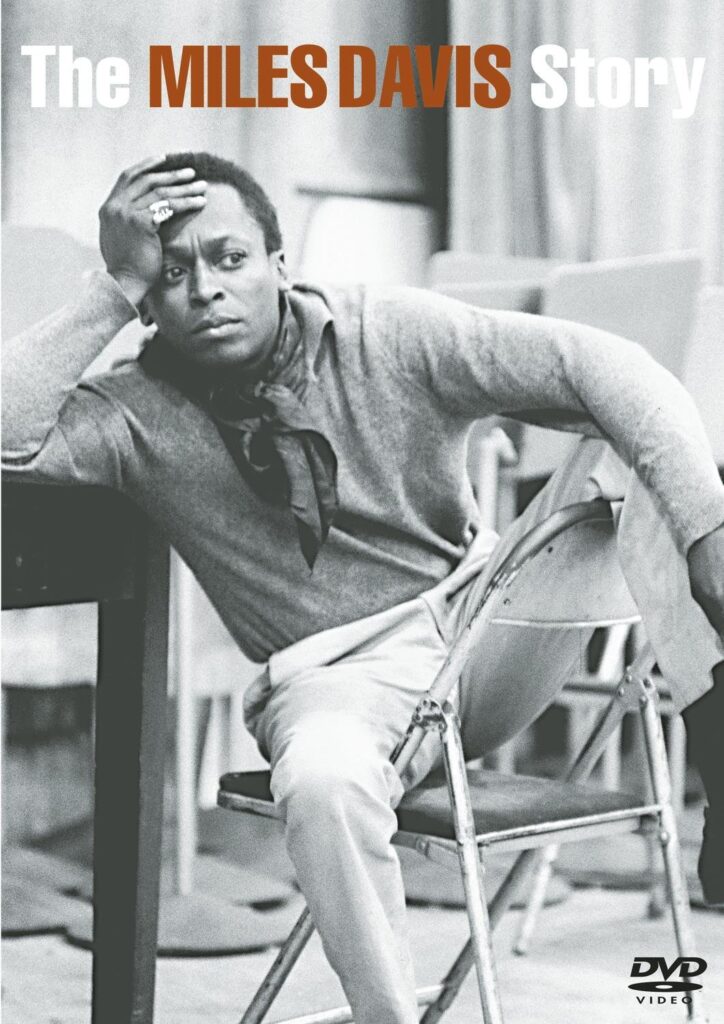
The Miles Davis Story

The Miles Davis Story

A revolutionary figure in the Jazz genre, Miles Davis is the most influential figure in Jazz since Louis Armstrong. The British documentary The Miles Davis Story follows the artist throughout his career, beginning from high school up until his death. The film explores the man behind the music through a collection of interviews from his close musician colleagues, family, friends, past relationships, historians and rare interview footage of Miles himself.

What I found very interesting was how popular Miles Davis became outside America. Europeans were much more accepting and interested in Jazz than back home, where the scene for the genre was dying in New York. They held Davis to a higher regard as well, treating his music as high-class art, and he wasn’t scrutinized for drinking or smoking like he would in the U.S. for “indecent behavior.” Another topic I found surprising was the amount of direct conflict Miles Davis faced with segregation. I have never thought of the artist as very political, but it was unavoidable for him not to confront these truths, partially from the flamboyant lifestyle that many did not approve of. Aware of these cultural tensions, he often supported other black artists and figures. Davis was incredible at finding new talent to play alongside and drive for new innovations in sound throughout his entire career. This is proven by just how many bandmates were interviewed.

The artist didn’t come without his flaws. The documentary explores every facet of his pioneering career, which includes issues with his romantic affairs and struggle with drugs that ultimately played a part in his untimely death. Throughout it all, one thing was certain: Miles Davis had a gift to constantly innovate his music at every age and cared more passionately about his work than anything. His story is quite reminiscent of another late and great legend of music, Prince, who would follow in remarkably similar footsteps. The film’s interviews add great layers to who this artist really was, on top of the beautiful music, and some gorgeous photography and cinematography of Miles Davis throughout his life. Check out The Miles Davis Story from the music library today to see it for yourself!
Arachnophonia: “It Might Get Loud”

Editor’s note: Arachnophonia is a regular feature on our blog where members of the UR community can share their thoughts about resources from the Parsons Music Library‘s collection.

All links included in these posts will take you to either the library catalog record for the item in question or to additional relevant information from around the web.

Today’s installment of Arachnophonia is by student manager Cole (class of 2021) and features the music documentary film It Might Get Loud. Thanks, Cole!

It Might Get Loud (2008)

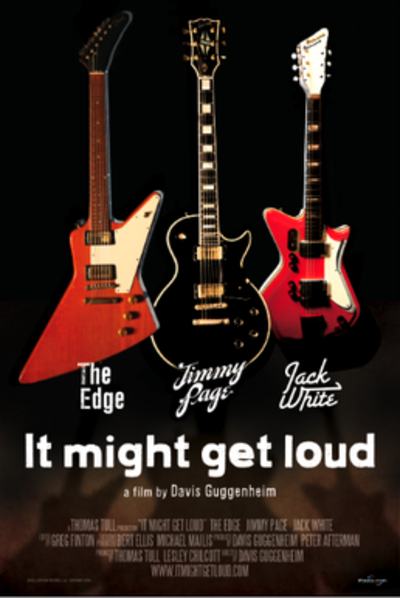
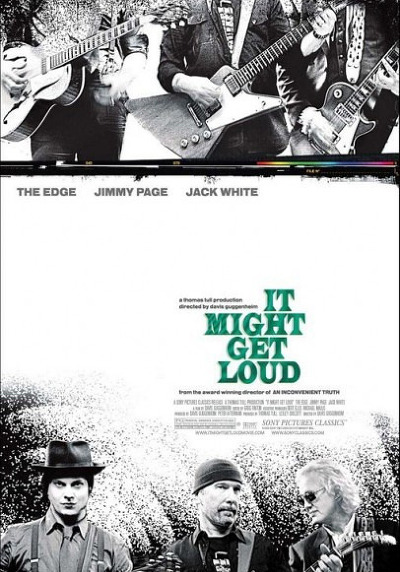
It Might Get Loud movie poster

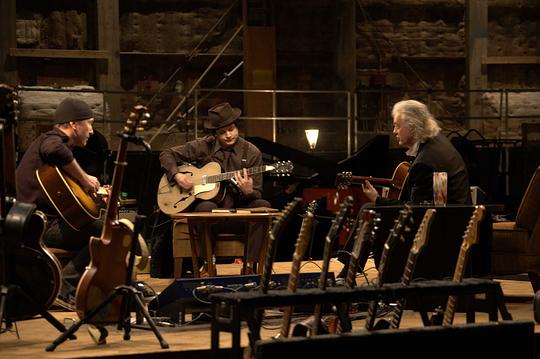
What happens when three of the most influential guitarists alive, each from different eras of popular music, sit down for a day to swap stories and riffs? That’s the question at the heart of Davis Guggenheim’s 2008 documentary It Might Get Loud, starring Jimmy Page (of Led Zeppelin), The Edge (of U2), and Jack White (of The White Stripes). Although the three musicians come from differing backgrounds and generations, the film explores the three men’s lives as they’ve revolved around their shared fixation: the electric guitar.

In proportion to the total runtime, footage of the three’s meeting, dubbed “The Summit,” is relatively sparse. Instead, the film documents each of the musicians in and around their respective homes, piecing together their personal narratives, playing and recording styles, and musical philosophies. The film crew follows Jimmy Page to Headley Grange, a former workhouse-turned-recording studio whose interior acoustics can be heard on Led Zeppelin IV. The Edge visits the secondary school in Dublin where he co-founded U2 with his childhood friends. The film opens on Jack White assembling a rudimentary one-string guitar from plywood and a glass bottle on the porch of his Tennessee farmhouse. Guggenheim constantly moves between these three strands, allowing the guitarists to tell their own very different stories while revealing the subtle similarities in their lives that drove them all to the electric guitar.

The Summit - production still

My favorite moment in the film comes when The Edge delves into his playing philosophy. Known for his extensive use of reverb and delay, The Edge is sometimes criticized for playing his pedal board more than his guitar. Hearing him explain his methodology reveals the sheer creativity at work in creating his sounds, despite not “shredding” in the same vein as White and Page. At one point, The Edge plays the riff to “Elevation,” in which his guitar undulates between an indefinite number of notes. He then strips the effects and reveals the riff to be simply two notes, the space between filled with reverb, delay, and distortion. While this style of play rubs some the wrong way — such as those who consider effect pedals “cheating” to hide technical deficiencies — the great strength of It Might Get Loud is in capturing the dialogue between three pillars of guitar styles. In the film’s introductory sequence, Page admires The Edge as a “sonic architect,” a powerful compliment coming from the man most often placed beside Jimi Hendrix and Eric Clapton in conversations of electric guitar greatness.

An added bonus of the film’s three stars is consequentially broad appeal. If you are a fan of guitar-driven music, you’ll likely enjoy what’s offered here. It Might Get Loud is available to check out as a DVD from the Parsons Music Library and also from Boatwright Memorial Library. It is also available to stream online for those on the University network.

It Might Get Loud guitar poster

Spider Sounds: “The History of Rock ‘N’ Roll”

Editor’s Note: “Spider Sounds” invites members of the University of Richmond community to share their thoughts about CDs and other items in the Parsons Music Library’s collection. The links included will take you to the library catalog record for the item in question, or to additional relevant information.
Today’s installment of “Spider Sounds” comes courtesy of UR Music Department faculty member Joanna Love, Ph.D., who is on sabbatical currently but was kind enough to share her thoughts on a 5 disc set of DVDs entitled “The History of Rock ‘n’ Roll.” This multi-part documentary covers rock history from its beginnings in the 1950s to Lollapalooza in the 1990s and features interviews, classic footage and concert performances. Thanks, Joanna!

Time Life Video
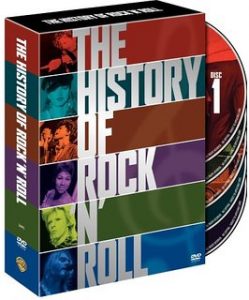
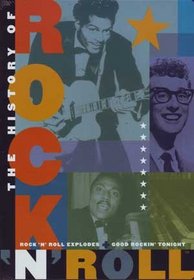
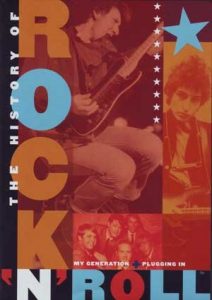
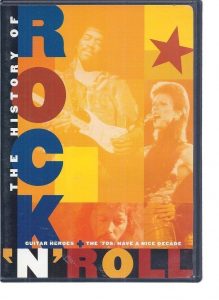
The History of Rock ‘n’ Roll

The History of Rock 'n' Roll DVD set

I really like the Time Life History of Rock n Roll DVD collection.
It provides insightful (and entertaining) primary and secondary source interviews that situate American musical styles popular in the latter half of the 20th century within American culture, the music industry, and technological innovations.
It’s particularly interesting that you get to see the artists and producers themselves reflecting on their music.

Spider Sounds