Arachnophonia: Amy Winehouse “Back to Black”

Editor’s note: Arachnophonia (“Arachno” = spider / “-phonia” = sound) is a regular feature on our blog where members of the UR community can share their thoughts about resources from the Parsons Music Library‘s collection.

All links included in these posts will take you to either the library catalog record for the item in question or to additional relevant information from around the web.

Today’s installment of Arachnophonia is by student assistant Jillian (class of 2027) and features Amy Winehouse’s Back to Black album on vinyl. Thanks, Jillian!

Amy Winehouse
Back to Black

Amy Winehouse - Back to Black (vinyl)

Amy Winehouse was a British neo-soul songwriter who received attention in late 2006 and early 2007 after the release of Back to Black on October 27th, 2006, by Island Records. Growing up in London, Winehouse was a member of the National Youth Jazz Orchestra, later signing a publishing deal with major record label EMI and then finally Island Records in 2002. She produced two studio albums, Frank in 2003 and then Back to Black in 2006.

In 2008, Winehouse won 5 Grammys for her Back to Black album, Best New Artist, Record of the Year, Song of the Year for “Rehab”, and Best Pop Vocal Album. In a world where Soul and Jazz are fading genres, Winehouse incorporates a blend of Soul, Jazz, R&B, and pop in her music, drawing from various timeframes. Songs like “Tears Dry on Their Own” and “He Can Only Hold Her” draw from classic Motown tunes such as Marvin Gaye and Tammi Terrell’s 1967 “Ain’t No Mountain High Enough” and The Icemen’s 1966 “My Girl (She’s a Fox)”, bringing back the 60s. The use of rich horns, dominant bass lines, and big band presence in “Rehab” and “Me & Mr. Jones”, to name a few, demonstrates the artist’s inspiration from 1950’s/60’s Jazz.

The artist’s impact on the world of retro-soul led to the release of the biopic Back to Black in 2024. According to IMDb, the film received a 6.3/10 rating, though focusing more on Winehouse’s romantic relationships than her career, according to the New York Times. The movie paid tribute to Winehouse and her career’s impact after her unexpected death in 2011 due to alcohol poisoning. Her timeless music remains popular today, with 2026 marking the 20th anniversary of the release of this album which brought her to fame.
Arachnophonia: Grover Washington Jr. “Winelight”

Editor’s note: Arachnophonia (“Arachno” = spider / “-phonia” = sound) is a regular feature on our blog where members of the UR community can share their thoughts about resources from the Parsons Music Library‘s collection.

All links included in these posts will take you to either the library catalog record for the item in question or to additional relevant information from around the web.

Today’s installment of Arachnophonia is by student manager Rocio (class of 2027) and features a song from Grover Washington Jr.’s 1980 album Winelight. Thanks, Rocio!

Grover Washington Jr.
Winelight

“Just the Two of Us”

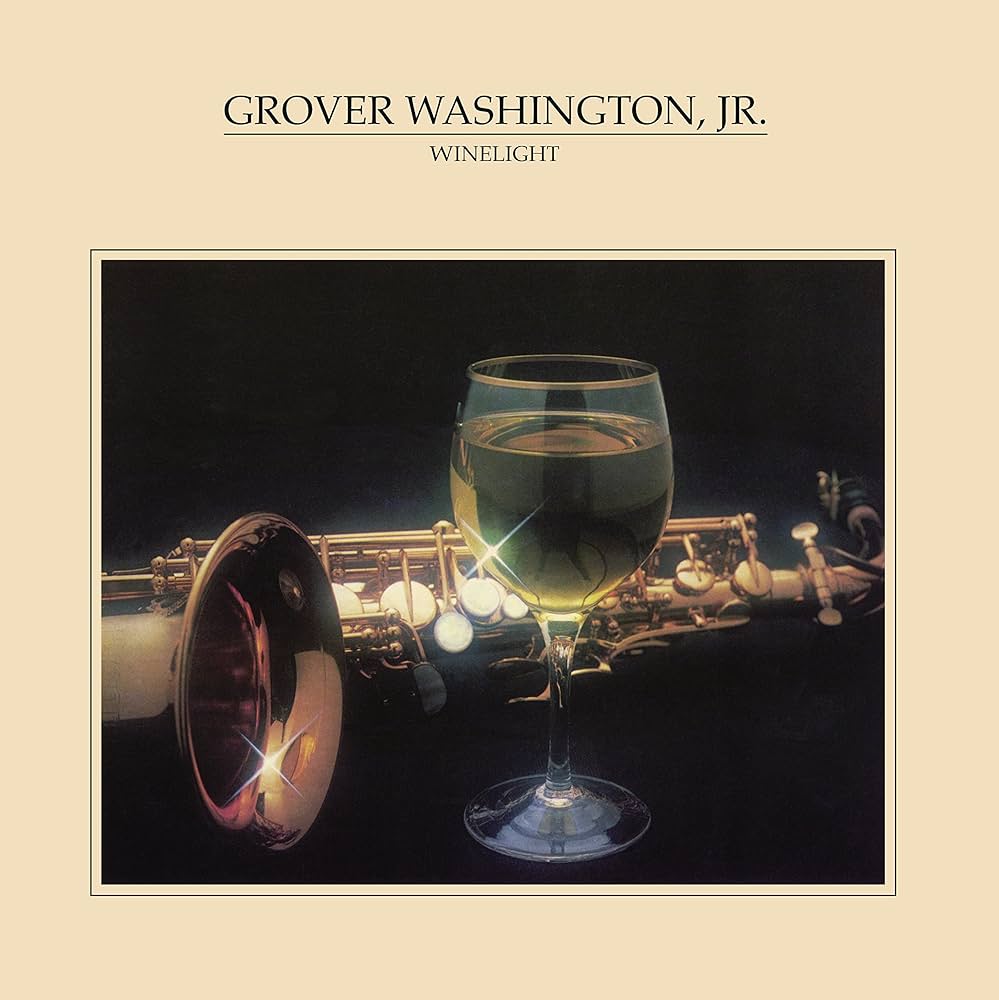
Grover Washington, Jr. - Winelight album cover

While I was walking through the vinyl section of the library, I ran into a major throwback: the record featuring “Just the Two of Us.” It’s one of those songs that can totally lock you in or give you just the right amount of motivation at the beginning of the semester. Just you, the music, and your assignment lining up perfectly and locking in. That said, it’s way too early in the semester to be stressing about procrastination and deadlines when it’s literally only week one.

I don’t know if you’ve noticed, but with 2026 feeling like the new 2016, nostalgia is definitely in the air. Naturally, I had to bring this jazzy vinyl back into rotation.

For a little background: “Just the Two of Us” was released (as a single) in 1981 by Grover Washington Jr., featuring Bill Withers, and it’s one of those rare songs that blends jazz, soul, and R&B so smoothly that it never really goes out of style. AND it won a Grammy Award! In addition, this record has been sampled and referenced countless times since, which probably explains why it still feels so familiar even decades later.

This vinyl is perfect whether you’re listening in a library study room, vibing with your AirPods on (yes, you can do that in this library, kind of iconic if you ask me), or checking it out to play in your dorm and fully romanticize your evening. It’s low-key, timeless, and the kind of sound that makes studying, just existing, or feeling a little cooler.

Arachnophonia: For the Audiophiles

Editor’s note: Arachnophonia (“Arachno” = spider / “-phonia” = sound) is a regular feature on our blog where members of the UR community can share their thoughts about resources from the Parsons Music Library‘s collection.

All links included in these posts will take you to either the library catalog record for the item(s) in question or to additional relevant information from around the web.

Today’s installment of Arachnophonia is by student manager Esther (class of 2025) and features our new portable record player and an opera LP to go with it. Thanks, Esther!

For the Audiophiles

Vinyl LPs

I love exploring different mediums of storage when it comes to art. I initially became interested in physical art forms because of film photography; as a musician, it was inevitable for me to stumble into the world of sound storage mediums. From VHS tapes to 8-track cartridges to cassette tapes to vinyl records, there were so many different forms of music over the years I did not know about. There seems to be controversy over what form sounds best, but we can respect all the different presentations!

LP stands for “Long Playing” due to the extended playing time (around 22 minutes per side) that resulted from the larger discs spinning at 33 ⅓ rpm. (As compared to EPs which are smaller and held about 10-15 minutes of material per side.) They are also referred to as vinyl records because of the material the physical discs are made of. These discs can transmit sound waves when placed on a turntable because the stylus placed on top of the disc moves through the small grooves along the record. As the stylus is reading, the tip of it vibrates and the microscopic bounces are transmitted along the bar. Ultimately, an electrical signal is generated and is played through the stereo speakers!

I appreciate the history of music storage forms, especially because of the wide availability we have for any song nowadays that significantly contributed to the relationship between the listeners and producers. Though I prefer the pros of digital music over analog with the technology we have today, the nostalgia of LP records is appealing as well. One of my fondest memories of growing up was listening to opera on the cassette tape player with my mother.

So, when I found out about a new addition to the music library — a portable record player — I had to recommend this LP to go with it!

Ten Tenors, Ten Arias

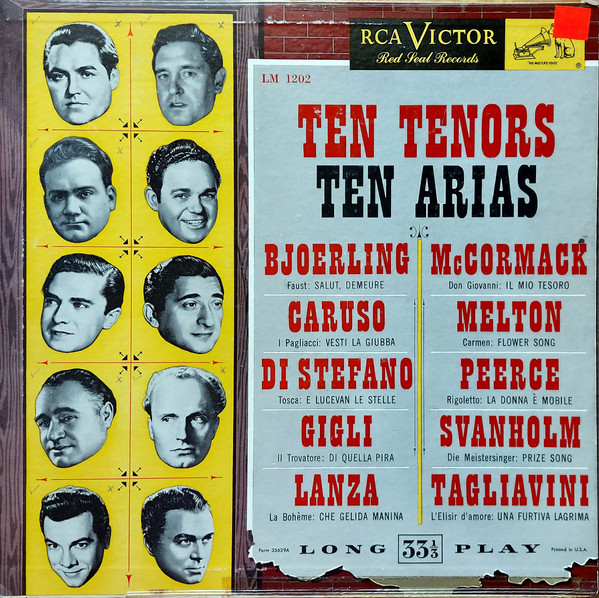
Ten Tenors Ten Arias LP cover

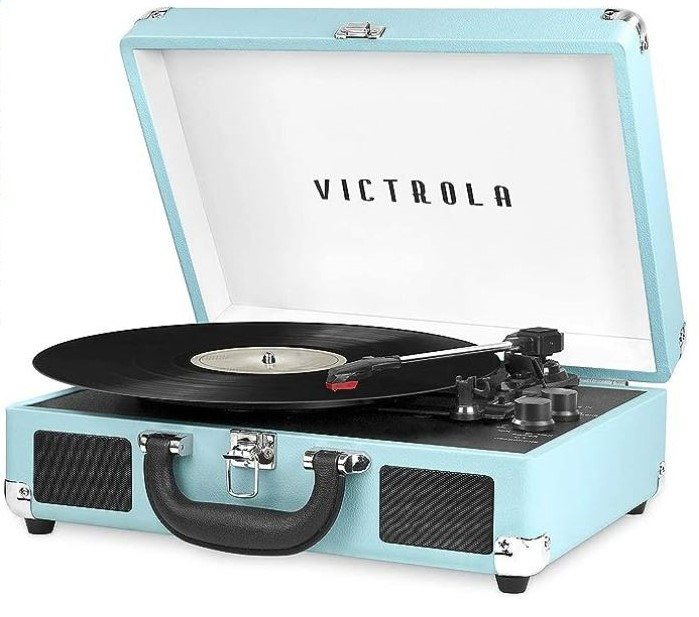
Though you are welcome to play it on your turntable, and in addition to the record player that lives in one of our study rooms, the Music Library also has a portable vinyl player available for anyone to check out for a week at a time!

Record Player