Arachnophonia: “Sinners” soundtrack

Editor’s note: Arachnophonia (“Arachno” = spider / “-phonia” = sound) is a regular feature on our blog where members of the UR community can share their thoughts about resources from the Parsons Music Library‘s collection.

All links included in these posts will take you to either the library catalog record for the item in question or to additional relevant information from around the web.

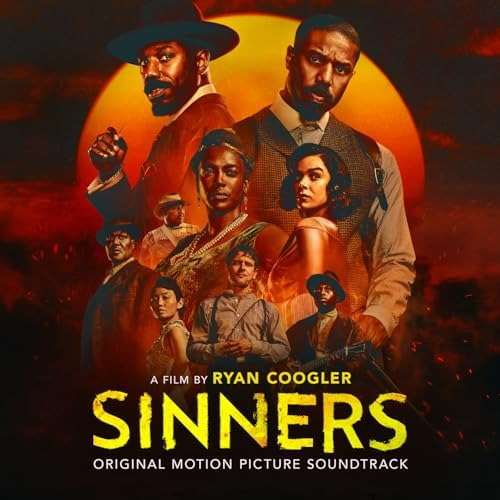
Today’s installment of Arachnophonia is by student manager Julie (class of 2028) and features the soundtrack to the 2025 film Sinners on vinyl. Thanks, Julie!
Sinners

Sinners soundtrack album

The soundtrack of the 2025 vampire horror film Sinners features powerful renditions of known songs from the 1930s and early 1940s that bridge the gap between tradition and modernity. Guided by intentionality, historical accuracy, and his own experience with American blues music, producer Ludwig Göransson drew from various genres, including blues, Irish folk, gospel, jazz, and soul. Through its attention to technical detail and inventive blend of styles, the soundtrack alone is enough to make the movie worth watching.

One of my two favorite tracks on the album, “Rocky Road to Dublin,” starts off more slowly and quickly evolves into a lively mixed-meter jig with strong vocals and even stronger energy. In contrast, the other, “Will Ye Go, Lassie Go?” is captivating with its simple melody and rich harmonies that manage to sound like home, even while being sung by a band of mildly-threatening vampires.

In vastly different ways, these two songs (along with all the others on the soundtrack) capture the heart and soul that was put into the film, as well as the hearts of listeners and viewers alike. The masterful musicians of Sinners have truly earned their place in Parsons Music Library.
Arachnophonia: Prince and the Revolution “Purple Rain”

Editor’s note: Arachnophonia (“Arachno” = spider / “-phonia” = sound) is a regular feature on our blog where members of the UR community can share their thoughts about resources from the Parsons Music Library‘s collection.

All links included in these posts will take you to either the library catalog record for the item in question or to additional relevant information from around the web.

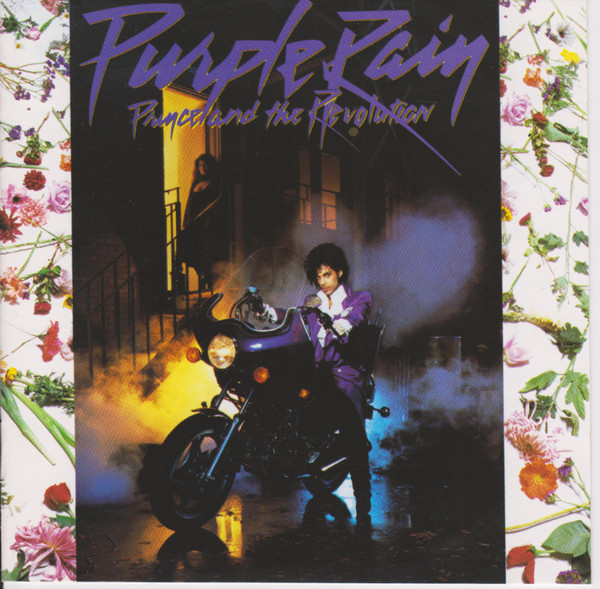
Today’s installment of Arachnophonia is by student manager Griffin (class of 2027) and features Prince and the Revolution’s classic album Purple Rain (available on vinyl and CD at the Music Library). Thanks, Griffin!

Prince and the Revolution

Purple Rain

Purple Rain album cover

How did Prince’s legacy we honor today as an international pop superstar begin? For starters, it comes from this record smashing album that is one of the most iconic records from the 80s. Already making quite a significant headway in the music industry from earlier songs like “1999” and “Little Red Corvette” that got Prince to the peak of some mountains, this album was the ship that blasted off Prince into the stardom we know today. Earning Prince best album of the year, song of the year, and movie of the year, and awarded 4th place on Apple’s 100 best albums list, Purple Rain brought forth the future of music as we know it.

Released in 1984, the album broke the rules of the music genre like never before. This is unsurprising for Prince who always fought against being bound to any one particular label and its restrictions (literal music labels as well as the metaphoric ones). The album mixed pop, soul, funk, R&B, rock, gospel, and neo-psychedelia into an unpredictable sonic experience. This fusion found new ways of expression through music and sent waves of influence into the present landscape of music.

As for the content, Prince explores themes of love, lust, identity, alienation, loss and spirituality. Singing with raw emotional depth, the topics give a profound view into the artist’s life and speaks to the human experience. Through “I Would Die 4 U”, Prince challenges ideas of masculinity and sexuality, becoming one of the first artists of color to champion gender-fluidity on the global stage. Purple Rain also influenced how albums were sold because of its content. The track “Darling Nikkispurred public backlash for its sexually explicit themes, creating the rule in the music industry that albums with child-unfriendly material must have Parental Advisory stickers.

Overall, Purple Rain was one of the most culturally significant albums created and the magnum opus of the late artist formerly known as Prince, and you can check out the vinyl at the Music Library today!

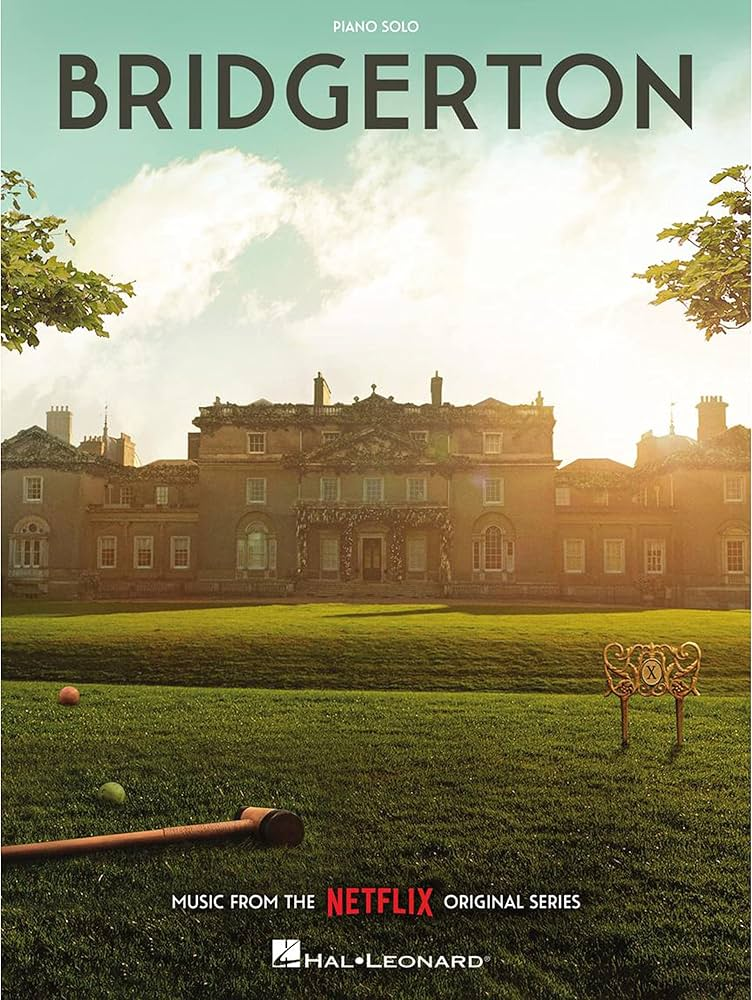
Parsons Playlists: Bridgerton – A Regency Romance Playlist

Welcome back to Parsons Playlists! Today’s playlist is curated by Music Library student assistant Rocio (class of 2027) which features music from the Bridgerton television series.

Bridgerton: A Regency Romance Playlist

Immerse yourself in the opulent world of Bridgerton with this curated playlist. Inspired by the lavish early 1800s London Regency era depicted in the series, each track captures the elegance, drama, and allure of high society. Experience the charm and sophistication of a world where love and ambition dance in perfect harmony.

Kris Bowers – “Bridgerton Opening Credits / Main Title Theme”

Vitamin String Quartet – “thank u, next”

Vitamin String Quartet – “Girls Like You”

Vitamin String Quartet – “In My Blood”

Vitamin String Quartet – “bad guy”

Duomo – “Wildest Dreams”

Ludwig van Beethoven – “Piano Sonata No.21 in C Major Op. 53: I. Allegro con brio” (performed by Boris Giltburg)

Sufjan Stevens – “Love Yourself (Short Reprise)”

Franz Joseph Haydn – “String Quartet No. 82, Op. 77”

Here is a link to the whole playlist on YouTube: https://youtube.com/playlist?list=PLU94rco57ZewFMUSaqVeLdBLyj3xO11gj&si=alVwrbq6A362kRfq

Parsons Playlists: Coming-of-Age Movie Soundtrack

Welcome back to Parsons Playlists! Today’s playlist is curated by Music Library student assistant Nicole (class of 2024) and features

Coming-of-Age Movie Soundtrack

With Commencement coming up and only a couple of months until Summer, one can’t help but ponder on how far they’ve come and think about how uncertain the future is. Here is a playlist with songs to help you romanticize academic life and think of it as if you were the main character of a coming-of-age film!

BØRNS – “Electric Love”

Florence + The Machine – “Dogs Days Are Over”

GROUPLOVE – “Tongue Tied”

Harry Styles – “Keep Driving”

Harry Styles – “Matilda”

Indigo De Souza – “Younger & Dumber”

Keane – “Somewhere Only We Know”

MGMT – “Time to Pretend”

Of Monsters and Men – “Little Talks”

Royel Otis – “Oysters in My Pocket”

Tame Impala – “Yes I’m Changing”

Taylor Swift – “You’re On Your Own, Kid”

Tears for Fears – “Everybody Wants To Rule The World”

The 1975 – “Robbers”

The Script – “For the First Time”

The Strokes – “Hard to Explain”

Vacations – “No Place Like Home”

Here is a link to the whole playlist on YouTube: https://youtube.com/playlist?list=PLU94rco57ZezPBKdTCZPVYTGk1TkN7DeZ&si=YIkZOpxp2ukj5kY9

Arachnophonia: Amelie

Editor’s note: Arachnophonia (“Arachno” = spider / “-phonia” = sound) is a regular feature on our blog where members of the UR community can share their thoughts about resources from the Parsons Music Library‘s collection.

All links included in these posts will take you to either the library catalog record for the item in question or to additional relevant information from around the web.

Today’s installment of Arachnophonia is by student assistant Nicole (class of 2024) and features the soundtrack to the 2001 film Amélie. Thanks, Nicole!

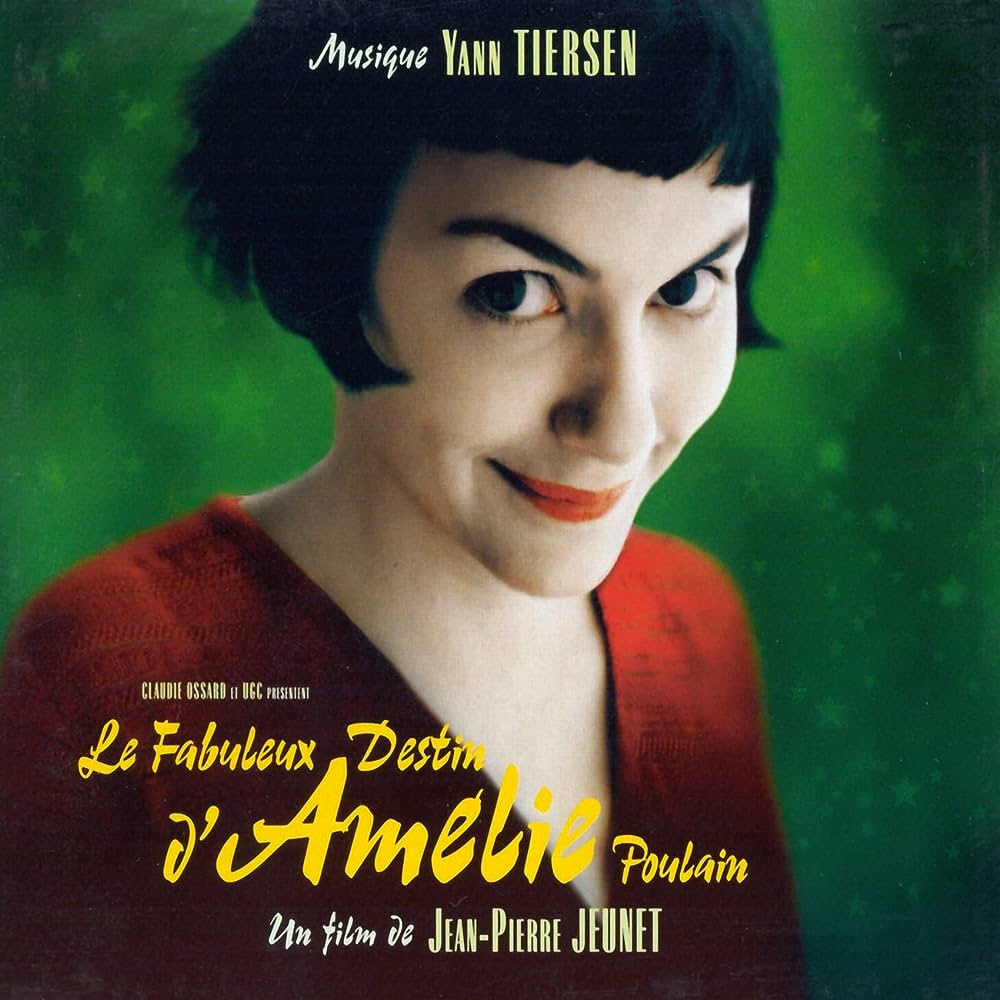
Amélie

Amelie soundtrack album

Are you looking for the perfect movie soundtrack for a productive study session?

My favorite movie soundtrack to listen to is Amélie, composed by Yann Tiersen. Amélie is a French film directed by Jean-Pierre Jeunet, released in 2001. The story revolves around Amélie Poulain, a shy and imaginative young woman with a unique perspective on life. Throughout the story, Amélie searches for love and connection, as she navigates her feelings for a quirky and introverted young man named Nino. The film is known for its visually rich cinematography and imaginative storytelling. It is essentially a celebration of the small joys in life, emphasizing the transformative power of kindness and the magic that can be found in everyday moments.

Yann Tiersen’s enchanting and evocative soundtrack for the film Amélie stands as a testament to the power of music in capturing the whimsy and charm of this cinematic world. The delicate piano melodies, accordion harmonies, and playful orchestration transport listeners into the imaginative universe of the main character. Tiersen’s ability to convey the innocence, romance, and melancholy within the film is truly extraordinary. From the waltz of “Comptine d’un autre ete: L’apres-midi” to the introspective notes of “La Valse d’Amélie,” (my personal favorite) each piece is a musical masterpiece that mirrors the emotional depth and complexity of the narrative.

You can check out the Amélie soundtrack CD at the Parsons Music Library!

Arachnophonia: Casablanca

Editor’s note: Arachnophonia (“Arachno” = spider / “-phonia” = sound) is a regular feature on our blog where members of the UR community can share their thoughts about resources from the Parsons Music Library‘s collection.

All links included in these posts will take you to either the library catalog record for the item in question or to additional relevant information from around the web.

Today’s installment of Arachnophonia is by student manager Eliana (class of 2024) and features insert title info here. Thanks, Eliana!

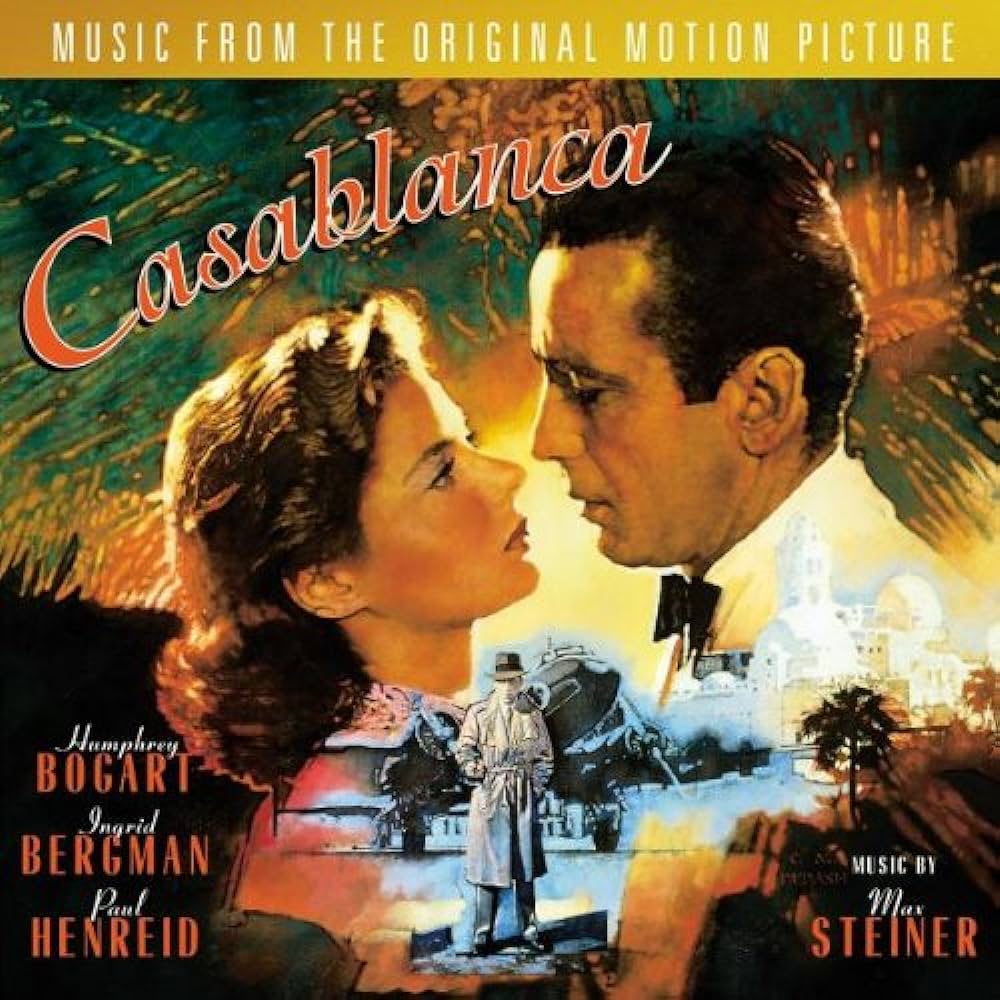
Casablanca: Original Motion Picture Soundtrack

Casablanca soundtrack

Among the shelves of CD’s in Parson’s music library sits the soundtrack of Casablanca, one of the most famous movies of all time with a score that certainly holds its own. The score, composed by revolutionary Austrian composer Max Steiner, will transport you to the 1940s and fill you with the triumphant energy of World War II cinema. Steiner not only utilizes leitmotifs in his scoring, but his songs provide formal and rhythmic continuity for the film as a whole, making his composition a true masterpiece.

The beating heart of the film is the song “As Time Goes By,” originally written by Herman Hupfeld in 1931. It is rumored that Steiner disliked this song and wanted to scrap it altogether, but he was forced to use it because the female lead (Ingrid Bergman) cut her hair for a different production and wouldn’t be able to reshoot any scenes with a new theme song. Notwithstanding Steiner’s disdain, the song is a true masterpiece with the context of the film. “As Time Goes By” represents not only the love that Rick and Ilsa have for each other, but also the past that they shared. When the song is not present in scenes between the two of them, the strain on their relationship becomes all the more apparent. Conversely, the song’s presence denotes a sense of calm between the two. Steiner weaves the song’s melody throughout the film to somehow bridge gaps between scenes, allude to strife, and foster love all at once. It is his compositional ingenuity that sets this film apart from many others.

Other notable songs present in the film are “La Marseillaise,” “It Had to Be You,” and “Die Wacht am Rhein.” You can listen to these, as well as the rest of the score, from the Casablanca CD located in the Parsons Music Library.

Arachnophonia: La La Land

Editor’s note: Arachnophonia (“Arachno” = spider / “-phonia” = sound) is a regular feature on our blog where members of the UR community can share their thoughts about resources from the Parsons Music Library‘s collection.

All links included in these posts will take you to either the library catalog record for the item in question or to additional relevant information from around the web.

Today’s installment of Arachnophonia is by student manager Deisy (class of 2024) and features music from the 2016 film La La Land. Thanks, Deisy!

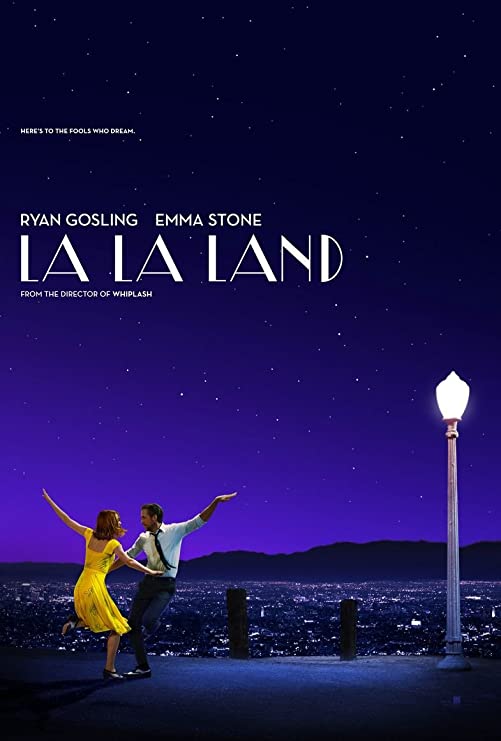
La La Land

La La Land - movie poster

One of the best films I have watched is definitely La La Land. For the longest time, I have heard so much about this film and how it is so many people’s favorite movie. But I never understood the hype for it until very recently.

La La Land is a musical centered in Hollywood as two individuals fall in love. Emma Stone plays Mia, an aspiring actress, and Ryan Gosling, plays Sebastian, a struggling Jazz pianist. The characters meet and fall in love as they try to pursue their dreams. This is a beautiful movie about following one’s dream, falling in love, and the hard decisions that can intervene between the two lovers.

This movie is filled with beautiful Jazz music, many colorful and beautiful scenes, and moments that make you fall in love with the story. The soundtrack in particular is very compelling. My favorite tracks from the movie are “Mia and Sabastian’s Theme,” “Planetarium,” and “City of Stars.” The Music Library actually has a score dedicated to the music in the film. The score focuses on piano, vocal, and guitar chords arrangements for anyone to try.

If you have not yet watched or heard about the amazing film La La Land, I definitely recommend giving it a try!

Arachnophonia: Slumdog Millionaire

Editor’s note: Arachnophonia (“Arachno” = spider / “-phonia” = sound) is a regular feature on our blog where members of the UR community can share their thoughts about resources from the Parsons Music Library‘s collection.

All links included in these posts will take you to either the library catalog record for the item in question or to additional relevant information from around the web.

Today’s installment of Arachnophonia is by student manager Amy (class of 2025) and features the soundtrack to the 2008 film Slumdog Millionaire. Thanks, Amy!

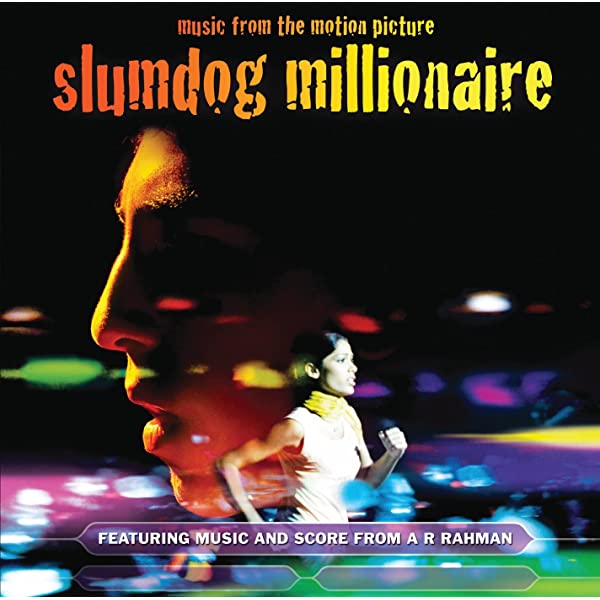
Slumdog Millionaire

Slumdog Millionaire soundtrack album cover

“What can a Slumdog possibly know?”

When I think of a powerful and incredibly well-made movie, Slumdog Millionaire is one that comes to mind. The 2008 drama stars Dev Patel as Jamal Malik, a teen on the Indian version of “Who Wants to Be a Millionaire.”

Slumdog Millionaire flashes between Jamal’s life as a teen and his childhood, showing the realities of living on the streets of Mumbai as a young child. The story is compelling, and the acting is phenomenal, but the thing that makes this film is the soundtrack. With artists like M.I.A. involved, it is easy to understand how this film won the Golden Globe for best soundtrack in 2009. A. R. Rahman, the score’s creator, wanted to create a mix of both modern and old India in the soundtrack.

A. R. Rahman’s original song “Jai Ho” for the movie won an Academy Award for Best Original Song and a Grammy for Best Song Written for a Motion Picture. The song was an international success with remixes and covers of the song coming from across the globe. The song was also the Indian National Congress’s official campaign song in 2009.

While this movie discusses and portrays hardship and is not indicative of every success story, I think it gives hope to those who feel stuck and like they won’t succeed. You can check out the soundtrack for Slumdog Millionaire at the Music Library!

Arachnophonia: Mamma Mia!

Editor’s note: Arachnophonia (“Arachno” = spider / “-phonia” = sound) is a regular feature on our blog where members of the UR community can share their thoughts about resources from the Parsons Music Library‘s collection.

All links included in these posts will take you to either the library catalog record for the item(s) in question or to additional relevant information from around the web.

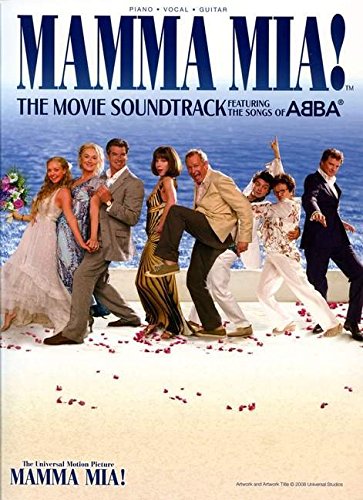
Today’s installment of Arachnophonia is by student assistant Kiran (class of 2024) and features the ABBA musical Mamma Mia!. Thanks, Kiran!

Mamma Mia!

Mamma Mia! selections piano/vocal/guitar

Songs for the Dancing Queen

If you’re anything like me, Mama Mia! is a classic pick for movie night. The catchy songs, written by Swedish 70s group ABBA, are upbeat and danceable. The movie features Meryl Streep, who plays the hardworking Donna. Her daughter, Sophie (Amanda Seyfried), is getting married and wants to invite her biological father. However, it could be one of three different men that Donna was involved with. Sophie sends invitations to all of them, leaving her mother in a predicament as she faces her former lovers. With the addition of breathtaking Greek landscapes and hilarious friends, this film embodies the music that brought it to life. The sweet, slow ballad reminds me of the waves crashing on Greek beaches while the fiery electric guitar solos personify the energy that the men bring to Donna’s life once again. I often wonder how a series of ABBA songs could correlate to form an entire movie. The original recordings are so iconic on their own but Mama Mia! brings them all together for one hilarious story. Parsons Music Library offers both ABBA CDs and the score from Mama Mia!, so you can also listen and read along with these iconic tunes.

Arachnophonia: Selections from “Charlie and the Chocolate Factory”

Editor’s note: Arachnophonia (“Arachno” = spider / “-phonia” = sound) is a regular feature on our blog where members of the UR community can share their thoughts about resources from the Parsons Music Library‘s collection.

All links included in these posts will take you to either the library catalog record for the item in question or to additional relevant information from around the web.

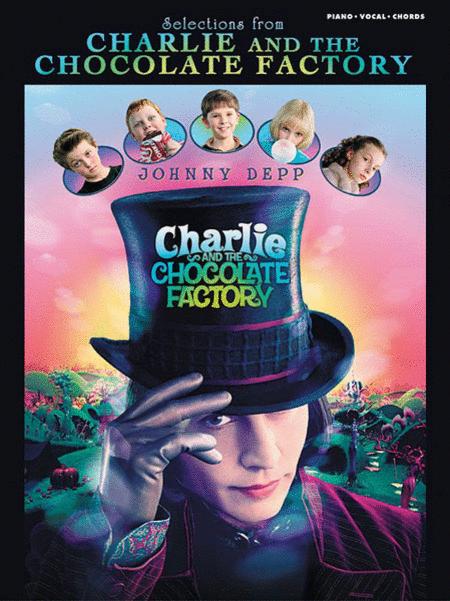
Today’s installment of Arachnophonia is by student assistant Nathan (class of 2024) and features piano/vocal selections from the 2005 film Charlie and the Chocolate Factory. Thanks, Nathan!

Selections from Charlie and the Chocolate Factory

Selections from "Charlie and the Chocolate Factory"

Danny Elfman is such a prolific composer, known for commonly working alongside filmmaker Tim Burton. Arguably, the best and most diverse collection of his work can be found in his music for the 2005 adaptation of Roald Dahl’s “Charlie and the Chocolate Factory.” His score explores a variety of styles, from Bollywood to the sugar-pop of the 1960s. While the piano score struggles to capture all of the complex work and sound behind the “Main Titles” (Elfman at his prime, in my opinion), it does an excellent job providing a solid basework for solo playability. The piano adaptation for the “Finale” is perfectly captured and successfully leaves what it intends to bring – a feeling of finality and completion at the end of a wild ride.