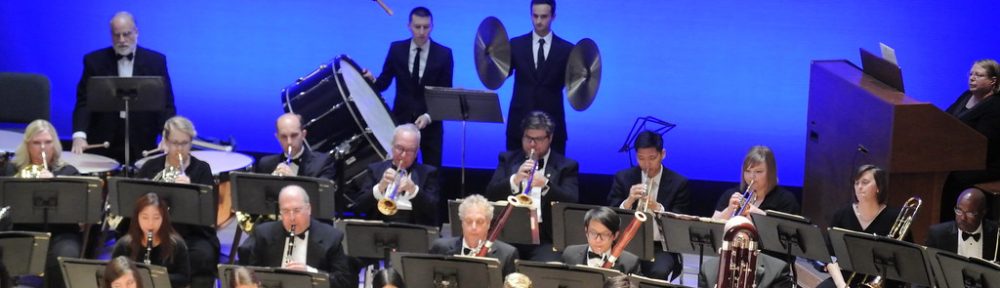
Welcome back to Parsons Playlists! Today’s playlist is curated by student assistant Madelyn (class of 2028) and features some music for times when you need calm.
Classical Tranquility
Hello everyone! This playlist is a compilation of classical music, specifically the piano. I think this classical piece of various songs truly brings about a sense of peace and serenity. The soft yet passionate tone of this instrument is truly enjoyable. I highly recommend that you listen to these pieces whenever you need a tone of peace and calmness.
Editor’s note:Arachnophonia (“Arachno” = spider / “-phonia” = sound) is a regular feature on our blog where members of the UR community can share their thoughts about resources from the Parsons Music Library‘s collection.
Erik Satie’s “Parade,” “Relâche,” and “Gymnopédies” are some of the most dynamically rich and musically innovative pieces I’ve had the pleasure of listening to. Prior to discovering this vinyl, I had heard some of Satie’s music before (mostly through social media) and had appreciated the atmospheric and slightly ambiguous nature of the chords; however, based on my experience with the “Gymnopédies,” the strongest feelings that came to mind while listening had been limited to “centered,” “surreal”, and maybe a little “unnerved.” After making my way through the tracks on the vinyl, however, I discovered a different side of Satie that captured my interest and inspired me to write this blog post!
“Parade,” performed by the Paris Conservatoire Orchestra and conducted by Louis Auriacombe is one of Satie’s later works, and is the original music created for the 1917 satirical ballet by the same name. In contrast to some of his earlier works of a more “minimalist” style, “Parade” features dynamic and emotional highs and lows that, at one point, had me literally jumping out of my seat. While I enjoyed trying to use “Parade” for studying, I found myself spending more time listening to it than I did doing anything else.
If I had to choose one word to describe Satie and his music, I would pick “moody.” I can’t say that I would necessarily recommend this vinyl to someone in need of cheering up, but I would absolutely send it in the direction of any music lover who’s interested in jumping on Satie’s musical roller coaster of emotions. If you end up listening, I hope you enjoy the ride!
Editor’s note:Arachnophonia (“Arachno” = spider / “-phonia” = sound) is a regular feature on our blog where members of the UR community can share their thoughts about resources from the Parsons Music Library‘s collection.
Sergei Rachmaninoff was a Russian composer and pianist whose works stand among the most emotionally powerful in the late Romantic tradition. Born in 1873, Rachmaninoff suffered a devastating crisis of confidence after the poor reception of his First Symphony in 1897, falling into a prolonged creative silence. With the help of hypnotherapy from Dr. Nikolai Dahl, he gradually recovered his confidence and began composing again. The result was the Piano Concerto No. 2 in C Minor, Op. 18, completed in 1901, a triumphant return that would become one of the most beloved works in the concerto repertoire. The piece opens with an iconic series of tolling piano chords that build to a sweeping orchestral entrance, immediately establishing the concerto’s character of brooding grandeur and soaring lyricism.
The first movement, I. Moderato introduces the main themes with the piano and orchestra in deep dialogue. The piano’s opening chords, unusual for their time in starting without orchestral introduction, give way to sweeping, lyrical lines that alternate between melancholy and urgency. Rachmaninoff’s gift for long, arching melody is on full display, with the piano and strings exchanging themes of aching beauty. The second movement, II. Adagio sostenuto, is the emotional heart of the concerto. A serene, almost hymn-like theme unfolds over a murmuring piano accompaniment, then builds to a passionate climax and retreats into a quiet resolution. The third movement, III. Allegro scherzando, bursts with energy and rhythmic drive, revisiting themes from the first movement and building to a heroic, triumphant conclusion that showcases both the soloist and the full orchestra at their most brilliant.
This particular recording, pressed on vinyl as DGM 12036, features the legendary Soviet pianist Sviatoslav Richter, widely considered one of the greatest interpreters of the Romantic piano repertoire. Conducting is Stanisław Wisłocki at the helm of the Warsaw Philharmonic Orchestra (Filharmonia Narodowa). Recorded in 1960, the performance is celebrated for Richter’s extraordinary blend of architectural clarity and deep emotional commitment; his playing is never indulgent, yet fully alive to every surge of Rachmaninoff’s feeling. The six Preludes on the second side of the vinyl offer an intimate counterpart to the concerto, revealing Rachmaninoff as a master of concentrated expression, each prelude a small world of its own.
Overall, Rachmaninoff’s Piano Concerto No. 2 stands as a monument of the late Romantic era and a testament to the composer’s resilience and artistic depth. It has since become one of the most performed and recorded concertos in the classical canon, and Richter’s 1960 interpretation remains a gold standard. Richter himself was known for his refusal to play to the crowd. He once said he saw himself as a servant of the composer rather than a showman. In this recording, that philosophy yields something rare: a performance that feels both inevitable and alive, as if Rachmaninoff’s own voice speaks through every note.
Editor’s note:Arachnophonia (“Arachno” = spider / “-phonia” = sound) is a regular feature on our blog where members of the UR community can share their thoughts about resources from the Parsons Music Library‘s collection.
Amy Beach, Passionate Victorian is a detailed biography by Adrienne Fried Block, a renowned musicologist and scholar of American classical music. Block’s work was a significant contribution to the field, especially in the study of women composers who have often been overlooked in the traditional narrative of classical music. Block’s book dives into Beach’s life, not only exploring the cultural and societal challenges Beach faced as a woman in a male-dominated field, but also highlighting her overall impressive musical achievements as an accomplished composer.
In this biography, Block traces Beach’s life from her childhood in New Hampshire, where she displayed musical talent, to her rise as a respected composer and performer in the late 19th and early 20th centuries. Beach, who became the first American woman to compose a symphony, overcame many personal and professional obstacles, but her work continues to resonate today. Block’s narrative emphasizes Beach’s legacy in the context of American classical music, examining her compositions, such as the “Gaelic Symphony” and “Piano Concerto in C-sharp minor,” and situating her within broader cultural movements. The biography is not just an account of Beach’s career but a reflection on the complexities of gender, artistry, and recognition in the classical music world, offering readers a deeper understanding of Beach’s lasting impact on the music community!
Editor’s note:Arachnophonia (“Arachno” = spider / “-phonia” = sound) is a regular feature on our blog where members of the UR community can share their thoughts about resources from the Parsons Music Library‘s collection.
George Gershwin was an American composer who revolutionized the music scene in the early 1900s, merging the new jazz genre with classical. His experimental piece Rhapsody in Blue merged a classical orchestra with concert piano in a pseudo-piano concerto form to wild acclaim. Despite classical music’s rigid and highly critical tradition, Gershwin created a way for listeners to experience the new American jazz style in a concert hall setting. The rapid success of Rhapsody in Blue gave Gershwin a chance to compose a full-length concerto in 1925, his now immortal Piano Concerto in F. Gershwin’s longest work, the concerto is divided into three movements which each highlight a distinct style of jazz.
The first movement, I. Allegro moderato, uses the Charleston and features syncopation in a swing style just debuting in the US at the time. Its first climax introduces the piano into the concerto in a melancholy start, quickly dazzling listeners with key changes and pentatonic scales uncommon to classical piano concertos. A second climax features sweeping strings and huge chord progressions before descending into more syncopated rhythms that one could imagine dancing to in the 1920s.
The second movement, II. Andante con moto, is a slow section similar to an Adagio or Largo movement but uses a blues feel to characterize the emotional equivalents in typical classical movements. His alternations of instruments soloing the main theme, whether that be violin, piano, or trumpet, represent the big band jazz style growing during the concerto’s premier.
The third movement, III. Allegro agitato, starts with a flourish of woodwinds and brass to begin an exciting, fast-paced theme introduced in the first movement. Gershwin continues to experiment with jazz-inspired chords and syncopated rhythms, emblematic of his American heritage and pride in the new music genre.
Overall, Gershwin’s experimental Piano Concerto in F expands upon his work with Rhapsody in Blue and the excitement surrounding American jazz during the 1920s. Gershwin once asked another modernizing composer, Maurice Ravel, to mentor him. Ravel promptly rejected the request, stating “Why would I teach you to become a second-rate Ravel when you are already a first-rate Gershwin?” The unique output of Gershwin and his exciting Piano Concerto in F leave a lasting impression on listeners about the development of American music to rival great classical composers of Europe.
Welcome back to Parsons Playlists! Today’s playlist is curated by Music Library student manger Tim (class of 2024) featuring some classical music for saxophone.
Welcome back to Parsons Playlists! Today’s playlist is curated by Music Library student assistant Alexandra (class of 2026) featuring some classical music.
Welcome back to Parsons Playlists! Today’s playlist is curated by Music Library student manager Esther (class of 2025) which features some music for your Valentine’s Day enjoyment.
Editor’s note:Arachnophonia (“Arachno” = spider / “-phonia” = sound) is a regular feature on our blog where members of the UR community can share their thoughts about resources from the Parsons Music Library‘s collection.
When wedding music is discussed, the song that comes to almost everyone’s mind is Johann Pachelbel’s Canon in D. The simple baroque era piece is everywhere, from TV shows to playlists to lists of the best pieces of classical music of all time. But it’s eight bars of music 28 times, how is it so popular?
I’ll explain. Pachelbel and his musical career are not well-known. The original composition of Canon (and Gigue (yes, there is a second movement to this piece)) in D was most likely written around 1680, but not published until the early 1900s. The piece fell to the wayside, pushed out of the spotlight by composers like Vivaldi, Bach, and Handel (no malice towards these very fabulous composers, their music is beautiful as well).
In a New York Times article, the conductor and organist at the Cathedral of St. John the Divine in New York, Kent Tritle, said the piece just became popular through that recording, just by happenstance. It was then featured in the Academy Award-winning film Ordinary People, which catapulted it to further stardom.
However, the thing that sealed the deal of Canon in D as the perfect wedding song was Prince Charles and Princess Diana’s wedding in 1981, which used a baroque processional, shining a light on other baroque composers from long ago.
Canon in D is simple, at its core. And that’s what made people love it. Its use of four instruments and natural progression from simple, quiet notes to a swell of instruments gives an intimate feel to the piece.
It’s also simple, musicality-wise. This canon created what is known as the Pachelbel Progression, which is the same eight chords, typically in a major key, repeated over and over again, which are all built upon the same bass line. The bass line of this canon is an ostinato or a continually repeated musical phrase. In the case of Pachelbel’s canon, it’s the same eight notes all throughout the bass line. These chords are then seemingly played in a round-like way so each instrument plays a similar if not the same melody starting at different times, in this case, that’s the canon part of this piece.
The piece is also simple enough to arrange for any set of instruments, string quartet, organ, keyboard, etc., the only thing holding someone back is the occasion. It is also simple enough for a walk. In a traditional wedding, the bride walking down the aisle is nervous, thus having a steady four-count beat to keep her up and something to focus on makes it so much easier on her. It also makes it easy for her to take her time on her walk, there isn’t a set end to Canon in D, since it is a canon and has the same eight chords, it can just be played forever if needed.
So, in the end, there’s a reason Canon in D is the “wedding song.” It’s simple to play, never-ending, and just a good time. It might be overhyped, but it is near and dear to the hearts of many, including me. This was the first “real” piece of music I learned when I started playing the cello. My aunts were finally allowed to get married and they wanted me to play something for them. My cello teacher at the time pulled out a wrinkled copy of the bass line of Canon in D and let me use it. The notes were easy enough and something I could handle, and it sounded beautiful. Who knew eight notes thrown together would sound so right?
Welcome back to Parsons Playlists! Today’s playlist is curated by Music Library student manager Amy (class of 2025) which explores how classical music can convey many emotions.
Emotional Classical Music
When people hear I enjoy listening to classical music, they often assume it’s the soft repetitive music most associate with studying. However, classical music is much more than just something to put on in the background. It is compelling storytelling, music I am not able to listen to while working because I am too enthralled by the story unfolding in my ears to pay attention to anything else. This is why I created this playlist: to show new classical music listeners that classical music is not a one-size-fits-all genre, it can convey anything you want it to.