Arachnophonia: The Architect of Music – How Bach Built Cathedrals in Sound

Editor’s note: Arachnophonia (“Arachno” = spider / “-phonia” = sound) is a regular feature on our blog where members of the UR community can share their thoughts about resources from the Parsons Music Library‘s collection.

All links included in these posts will take you to either the library catalog record for the item(s) in question or to additional relevant information from around the web.

Today’s installment of Arachnophonia is by student manager Nikoloz (class of 2026) and features works relating to Baroque composer Johann Sebastian Bach (1685-1750). Thanks, Nikoloz!

The Architect of Music: How Bach Built Cathedrals in Sound
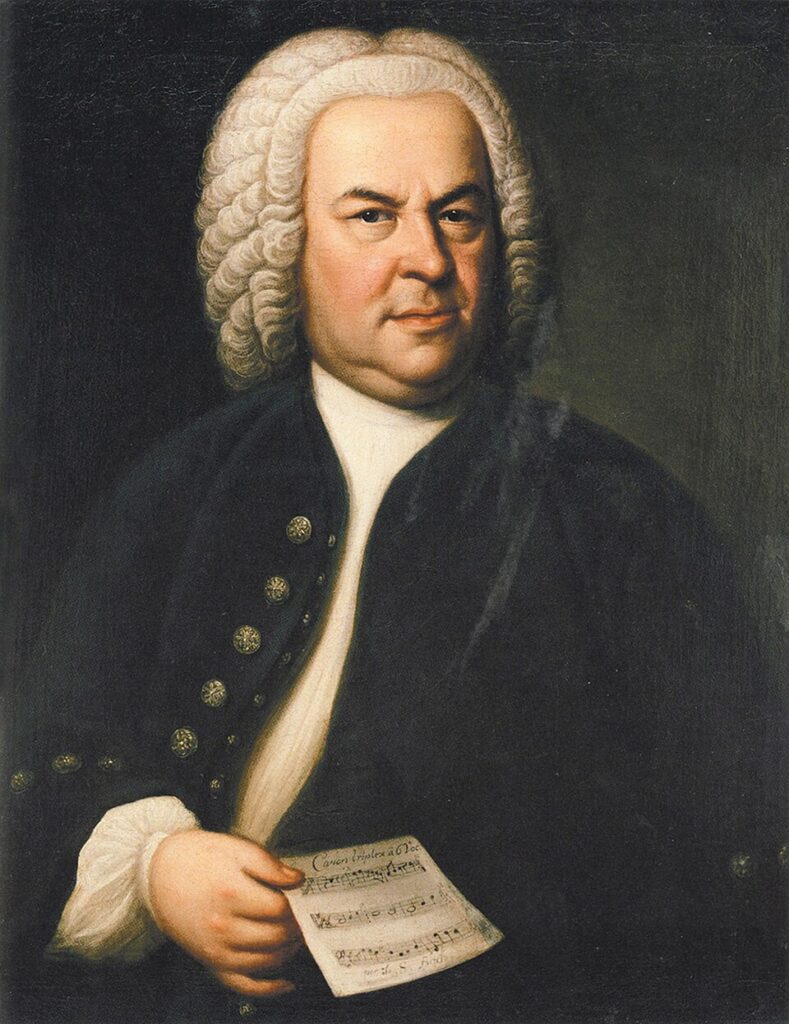
Johann Sebastian Bach (1685-1750)

We often think of classical music as elegant and pleasant. But listen to Johann Sebastian Bach not for melody, but for structure. He wasn’t just a composer; he was a master architect who built intellectual and spiritual cathedrals using only notes.

Working in 18th-century Germany, Bach was less a tormented artist and more a brilliant craftsman, composing for the church and court. Yet, within that formal role, he achieved a superhuman balance of mathematical precision and profound emotion.

Consider his Goldberg Variations. It begins with a simple, graceful “Aria.” What follows is not just a series of songs, but a universe built from that single theme.

Bach takes this Aria and puts it through 30 different transformations. He creates canons at every interval, turns it into a furious fugue, a delicate dance, and a mournful lament. Every variation is a new room in this vast musical palace, yet the blueprint of the original Aria is always there. It is a breathtaking display of controlled invention.

Why This Matters for You

You don’t need to be a musician to appreciate Bach’s genius. Listening to his work is like watching a master engineer solve an impossible puzzle. There is a deep, human satisfaction in hearing complex parts interlock perfectly.

In a world of chaotic noise and fleeting trends, Bach offers a different experience: the beauty of perfect order. It is music that appeals equally to the heart and the mind, a timeless structure you can return to again and again to find both solace and awe.

The World of the Bach Cantatas, edited by Christoph Wolff

Find out more about Bach and his work at the Parson’s Music Library through books like The World of the Bach Cantatas or streaming audio and more!
Arachnophonia: Kendrick Lamar “To Pimp A Butterfly”

Editor’s note: Arachnophonia (“Arachno” = spider / “-phonia” = sound) is a regular feature on our blog where members of the UR community can share their thoughts about resources from the Parsons Music Library‘s collection.

All links included in these posts will take you to either the library catalog record for the item in question or to additional relevant information from around the web.

Today’s installment of Arachnophonia is by student manager Alexandra (class of 2026) and features our vinyl copy of Kendrick Lamar’s 2015 album To Pimp A Butterfly. Thanks, Alex!

Kendrick Lamar

To Pimp A Butterfly

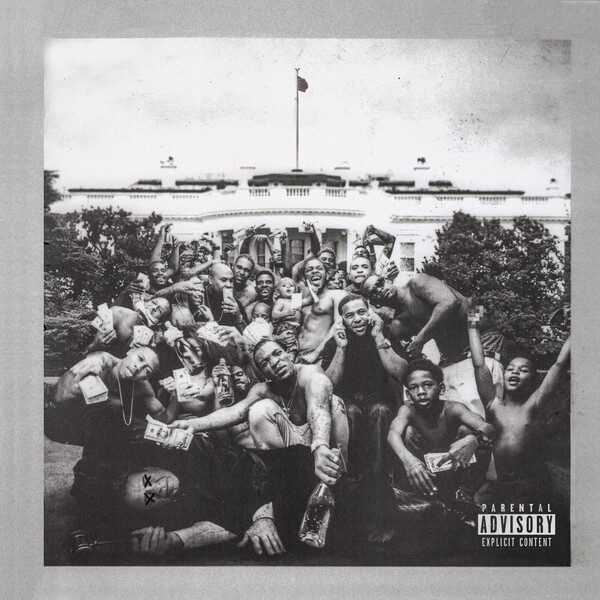
Kendrick Lamar - To Pimp A Butterfly - Album Cover Art

Kendrick Lamar’s To Pimp a Butterfly album is still as popular now, if not more, than it was when it was released in 2015. The album features a wide variety of songs, with some more jazzy, experimental, and some more typical hip-hop. One of the most infamous songs featured is “Alright.” The instrumental was produced by Pharrell Williams in 2014 for rapper Fabolous. When Fabolous turned the song down, it was turned over to Kendrick Lamar where he started creating lyrics. Initially, Kendrick Lamar stated he felt the song did not fit well with the rest of the album. After adding some drums to the background, Kendrick approved it for his album.

“Alright” alone received four nominations for Grammy awards, winning Best Rap Song and Best Rap Performance. The total album earned Lamar seven nominations at that year’s Grammy Awards. The album went on to win Best Rap Album for the year. In the years following, To Pimp A Butterfly was named one of the best albums of the 2010s and Rolling Stone’s added it to The 500 Greatest Albums of All Time. All of the awards highlight the experience the album provided. The numerous musical styles and messages provided in each song have continued to make it feel fresh after each listen, contributing to the popularity of the album still seen today.

Arachnophonia: Amy Beach

Editor’s note: Arachnophonia (“Arachno” = spider / “-phonia” = sound) is a regular feature on our blog where members of the UR community can share their thoughts about resources from the Parsons Music Library‘s collection.

All links included in these posts will take you to either the library catalog record for the item in question or to additional relevant information from around the web.

Today’s installment of Arachnophonia is by student manager Esther (class of 2025) and features a biography of American composer Amy Beach (1867-1944). Thanks, Esther!

Amy Beach, Passionate Victorian by Adrienne Fried Block

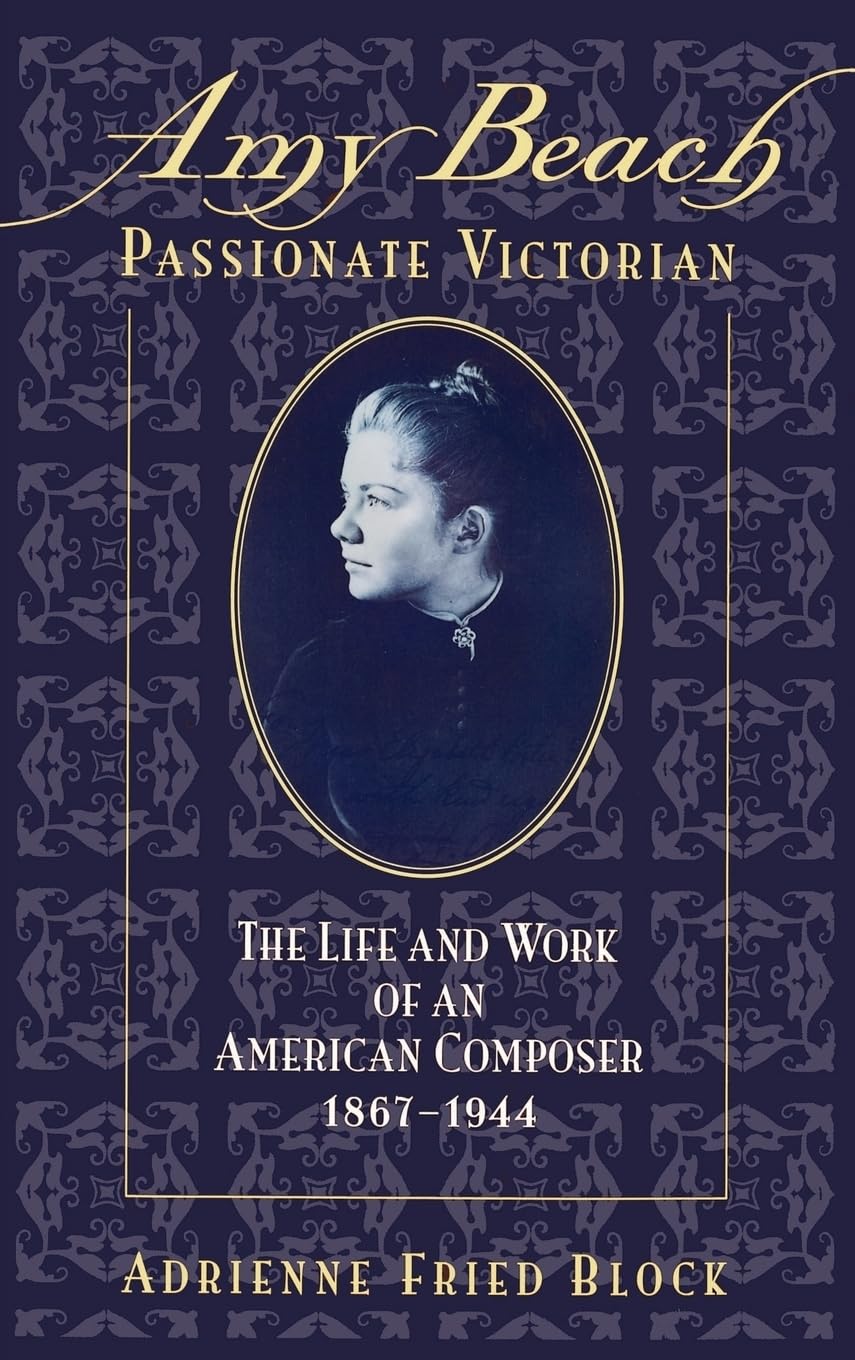
Amy Beach, Passionate Victorian by Adrienne Fried Block - book cover

Amy Beach, Passionate Victorian is a detailed biography by Adrienne Fried Block, a renowned musicologist and scholar of American classical music. Block’s work was a significant contribution to the field, especially in the study of women composers who have often been overlooked in the traditional narrative of classical music. Block’s book dives into Beach’s life, not only exploring the cultural and societal challenges Beach faced as a woman in a male-dominated field, but also highlighting her overall impressive musical achievements as an accomplished composer.

In this biography, Block traces Beach’s life from her childhood in New Hampshire, where she displayed musical talent, to her rise as a respected composer and performer in the late 19th and early 20th centuries. Beach, who became the first American woman to compose a symphony, overcame many personal and professional obstacles, but her work continues to resonate today. Block’s narrative emphasizes Beach’s legacy in the context of American classical music, examining her compositions, such as the “Gaelic Symphony” and “Piano Concerto in C-sharp minor,” and situating her within broader cultural movements. The biography is not just an account of Beach’s career but a reflection on the complexities of gender, artistry, and recognition in the classical music world, offering readers a deeper understanding of Beach’s lasting impact on the music community!

Arachnophonia: Kendrick Lamar “To Pimp A Butterfly”

Editor’s note: Arachnophonia (“Arachno” = spider / “-phonia” = sound) is a regular feature on our blog where members of the UR community can share their thoughts about resources from the Parsons Music Library‘s collection.

All links included in these posts will take you to either the library catalog record for the item in question or to additional relevant information from around the web.

Today’s installment of Arachnophonia is by student assistant Susanne (class of 2026) and features Kendrick Lamar’s 2015 album To Pimp A Butterfly. Thanks, Susanne!

Kendrick Lamar

To Pimp A Butterfly

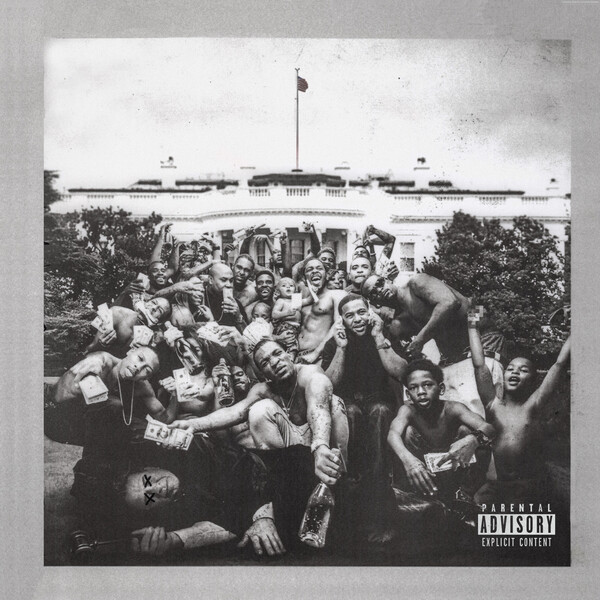
Kendrick Lamar - To Pimp A Butterfly - Album Cover Art

Celebrating 10 Years of To Pimp A Butterfly

Released almost 10 years ago on March 15, 2015, To Pimp A Butterfly is American rapper Kendrick Lamar’s third studio album. To Pimp A Butterfly blends numerous genres rooted in African American music styles, including hip-hop, jazz, funk, and soul.

The album centers political commentary surrounding racial violence and institutional discrimination, gaining widespread recognition for the artistry and social impact of the lyricism. Lamar drew inspiration from his travels to South Africa where he was able to draw connections between their racial and social landscape and Black communities of the U.S.

To Pimp A Butterfly centers Black memory and tradition while still focusing on contemporary social issues. Lamar’s song “Alright,” for example, came to be used in the Black Lives Matter movement as a call to action. Lamar received eleven total nominations at the 2016 Grammy Awards, seven just for To Pimp A Butterfly, and won Best Rap Album of the Year.

At a time of growing Black activism throughout the country, To Pimp A Butterfly had a tremendous impact on the hip-hop and rap industry. Many artists and fans alike cite Lamar’s album as a moment of empowerment to create pieces that express their cultural experiences and speak out against critical social inequalities.