 What Sri Lanka’s civilian-bravery stories can teach us about courage, compassion, and human behaviour
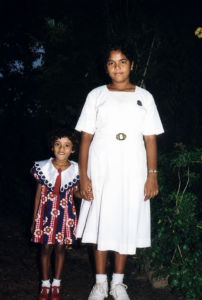
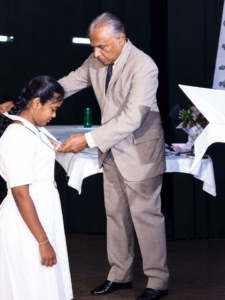
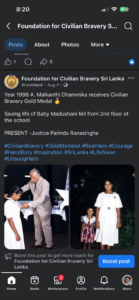
A young girl falls from the third floor of a school building. There is almost no time to think. Fifteen-year-old J. A. Malkanthi Dhammika Jayasuriya, a Grade 11 student and head prefect at Sunethra Devi Girls’ School in Pepiliyana, sees the child falling. She positions herself underneath the girl and catches her. The impact knocks Dhammika down. Remarkably, neither child is injured.
For this act, Dhammika received the 1999 Gold Medal of Civilian Bravery from the Foundation for Civilian Bravery.
What happened in those few seconds? Did she calculate the danger? Did she consciously decide to become a hero? Or did something faster and deeper take over—the impulse to protect another human being?
We don’t know. And that is precisely why such stories deserve more than admiration. They deserve study.
Another Person, Another Emergency
Years later, another Sri Lankan faced a very different situation. On 19 November 2016, Dhanushka Lakmal Kumara, a driver, was returning home when he noticed people gathered on a bridge over the Gin Ganga at Baddegama. Looking into the river, he realised that two women were drowning.
Other people were present, but nobody was volunteering to enter the water. Dhanushka went down to the river and rescued the first woman. He then returned to search for the second. Swimming against the current, he eventually brought her to safety with the assistance of a rope thrown by a police officer.
The women were strangers. They were not his relatives or friends. Yet, faced with another person’s imminent death, he moved towards the danger. Why?
The Mystery of Civilian Bravery
We often use words such as courage, heroism, altruism and compassion as though we already understand them. But describing behaviour is not the same as explaining it. A person who voluntarily risks their own life to save another presents one of the clearest examples of high-stakes helping behaviour.
 The Foundation for Civilian Bravery has used a practical definition of civilian bravery centred on the voluntary saving of a life in peril at the risk of one’s own life. The distinction is important. A soldier may be required by professional duty to enter danger. A firefighter may be trained and expected to rescue people from a burning building.
But a civilian who suddenly encounters someone in mortal danger has no such professional obligation. The person faces a choice: Do I act—or do I remain an observer?
Sri Lanka Has Been Recording These Moments for Decades
Since 1993, the Foundation for Civilian Bravery has identified and recognised exceptional acts of civilian bravery in Sri Lanka. Its published record, Civilian Bravery in Sri Lanka 1993–2018, documents 84 recognised cases—22 Gold and 62 Silver—over a 25-year period.
The incidents are diverse. People have entered rivers, wells and other dangerous waters. They have responded to road and railway accidents, fires, disasters and other situations in which another person’s life was in immediate danger.
One example occurred in 2016, when W. H. G. Wikramathilaka saw an agricultural research officer swept into a flooded lake at Yakkalamulla. He entered the dangerous water and succeeded in saving her life while exposing himself to considerable risk.
These are not simply stories about medals. They are documented examples of human behaviour under extraordinary circumstances. Collectively, they raise questions that deserve scientific investigation.
Why Does One Person Act While Others Watch?
Perhaps the most intriguing feature of some incidents is the presence of bystanders. In the Baddegama river incident, Dhanushka saw that two women were drowning while other people were gathered nearby. He entered the river when nobody else volunteered.
This raises an important psychological question: when an emergency occurs in a public place, what determines whether an individual becomes an active rescuer or remains an observer?
Is it personality? Empathy? Previous experience? Confidence? Risk perception? Moral responsibility? Physical ability? Or does the situation itself create a moment in which action becomes almost automatic?
Perhaps the answer is not one factor alone. Perhaps bravery emerges from an interaction between the individual, the situation and the social environment.
The Stranger Question
Why do people sometimes risk their lives for strangers? Family relationships provide an obvious context for helping behaviour. We naturally expect parents to protect their children and family members to help one another.
But when the person in danger is unknown to the rescuer, the explanation becomes more challenging. The Sri Lankan cases include people who intervened to save individuals with whom they had no apparent personal relationship. That makes civilian bravery particularly interesting for research into human helping and altruism.
The question is not simply: Why are some people brave? It is: Why would a person accept a potentially fatal cost to save another human being with whom there is no previous relationship?
Heroism Doesn’t Begin with the Medal
A heroic act does not exist only at the moment when the rescue takes place. First there is the emergency. Then there is the decision to intervene. Then comes the outcome. Afterwards, witnesses remember what happened. Someone reports the incident. An organisation investigates it. Finally, society decides whether the action deserves recognition.
The Foundation’s long-running record therefore represents more than a collection of heroic stories. It also provides a record of how a society identifies, documents and remembers exceptional acts of citizenship.
This creates an unusual opportunity. The archive may potentially become a starting point for systematic research.
From Stories to Science
Imagine transforming these historical accounts into a research database. Researchers could ask the following questions:
- Who was the rescuer?
- How old was the person?
- Was the victim a stranger, friend or relative?
- What type of emergency occurred?
- How great was the apparent danger?
- Were other people present?
- Did the rescuer have previous relevant experience?
- Was there time to deliberate, or was the response immediate?
- What happened to the rescuer and victim afterwards?
- How was the act subsequently recognised?
Such questions could transform an archive of individual stories into a resource for studying exceptional human behaviour. But an important qualification is necessary. The Foundation’s archive is an archive of recognised cases, not a representative sample of all emergencies or all people. It cannot, by itself, tell us how common civilian bravery is in the general population. Nor can it establish why people behave heroically.
What it can provide is something valuable at the beginning of a research programme: real-world cases from which scientifically testable questions can be developed.
Recognition Matters, Too
Why do we recognise civilian bravery? In his contribution to Civilian Bravery in Sri Lanka 1993–2018, the late Judge C. G. Weeramantry emphasised the broader social value of recognising exceptional self-sacrifice. Recognition can expose younger generations to admirable conduct and communicate society’s appreciation of exemplary behaviour.
When a society tells a young person, “This is behaviour worth admiring,” it is also communicating something about the kind of society it values. A medal can therefore be more than a reward. It can be a social signal.
And that raises another research question: Can recognition itself influence future behaviour?
What Does Heroism Tell Us About Ourselves?
Every emergency can create a tension between self-preservation and concern for another person. Most of the time, self-preservation is entirely natural. Yet occasionally, someone crosses that boundary.
A schoolgirl sees a child falling and moves underneath her. A driver sees two strangers drowning and enters a dangerous river. A passer-by sees someone in peril and decides that he cannot simply watch.
These moments are brief. But they reveal something profound about human beings. They suggest that alongside our powerful instinct for self-preservation, human beings also possess the capacity—under certain circumstances—to place another person’s survival above their own immediate safety.
We still know much less about this capacity than we might wish.
From Celebrating Heroes to Understanding Heroism
For more than three decades, the Foundation for Civilian Bravery has had a simple purpose: to ensure that acts of civilian courage are not forgotten. But perhaps the time has come to ask a further question: Can these stories help us understand heroism scientifically?
 Sri Lanka offers an unusual starting point. There is a documented historical archive accumulated through a long-running recognition system, containing real-world examples of people confronting extraordinary situations.
The archive does not provide all the answers. It provides an opportunity to ask better questions. Why did Dhammika act? Why did Dhanushka act when others remained on the bridge? Why do some people move towards danger? Why do some help strangers? What happens psychologically before, during and after the act? How do ordinary acts of bravery become recognised as heroic? And can societies cultivate conditions in which courageous helping behaviour becomes more likely?
Perhaps the ultimate purpose of studying civilian bravery is therefore not simply to understand heroes. It is to understand human potential.
Because somewhere, at some unexpected moment, an ordinary person may face an extraordinary choice. And what that person chooses to do may determine whether another human being lives or dies. That is the moment when an ordinary person becomes a hero.
And perhaps it is also the moment when science should begin asking why.
= = = = = = = = =
Philip Chandraratne is a Sri Lankan visionary best known as the pioneer and founder of the Foundation of Civilian Bravery. He established the organization to formally recognize and celebrate ordinary citizens who risk their lives to perform extraordinary acts of bravery outside the scope of their standard professional duties.