
 By Annie Ryan
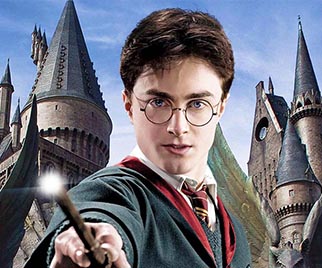
It may seem obvious that Harry Potter is a hero. After all, he does save the world from the evil that is Lord Voldemort. But what kind of hero is he? According to Goethals and Allison’s (2012) taxonomy of heroism, Harry fits best in the traditional hero category, in which the hero completes the the class hero’s journey as described by famed mythologist Joseph Campbell.
Throughout the series’ cumulative 4100 pages, Harry follows the major stages of the hero’s journey: departure, initiation, and return. When we first meet Harry, he is an obedient, insecure, and lonely boy who lives in a closet. He has no friends and no one who cares about him, and he accepts that this is his life. Fortuitously, Harry is plucked out of this mundane life, never to return again. In this new world, he is famous, adored, and is expected to do great things.
In his initiation stage, a second taxonomic system can be included in defining Harry Potter as a hero. Harry belongs in the category of underdog, an important hero-type in Franco, Blau, & Zimbardo’s (2011) taxonomy of heroism. He is in a world where everyone exceeds him in knowledge and experience. At Hogwarts, almost all the students grew up with wizards, and have had exposure to magic. Harry is an underdog on the traditional hero’s journey.
This underdog theme persists throughout the various books: he is the only first-year Quidditch player, is more sensitive to the dementors that are brought into Hogwarts than the other students, and is the only under-age 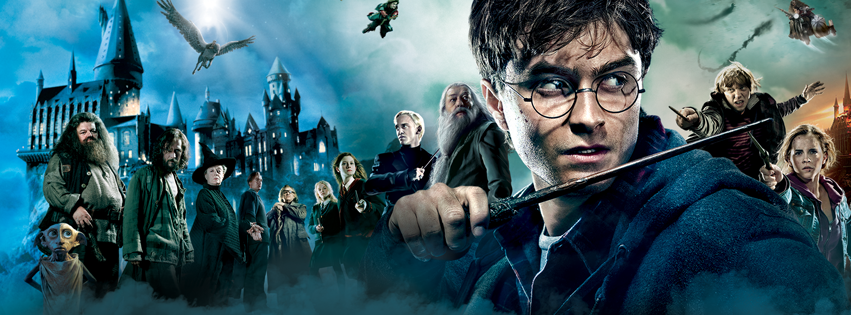 student in the Triwizard Tournament. Most importantly, his archenemy, Lord Voldemort, is a brilliant wizard with powerful wizards as his allies. Harry is an amateur wizard, and his allies are amateur wizards for the majority of obstacles he faces.
Inspiring underdogs often emerge as leaders. Harry has had various labels assigned to him, including “The Boy Who Lived”, “The Chosen One”, “Undesirable Number One”, and “a lying show-off”. There’s no denying that Harry embraces his role in the war against Voldemort, and he begins to become a leader. He heads the rebel organization Dumbledore’s Army, is Quidditch Captain, and is ultimately commander-in-chief of the Battle of Hogwarts, which results in the defeat of Lord Voldemort and the Death Eaters. His influence is so strong that people continued to fight and die for him even after they thought he was dead.
His death suggests that Harry fits into a second category in Franco et al.’s taxonomic structure of heroes, the martyr. In one of the final chapters of the books, Harry sacrifices his own life in order to defeat Lord Voldemort and save the world. But even before his ultimate sacrifice, Harry risks his life to help others. Harry completes dangerous tasks to stop Lord Voldermort from reaching the Sorcerer’s Stone, enters the Chamber of Secrets to save Ginny Weasley’s life, and almost drowns saving Gabrielle Delacour. In Harry Potter and the Deathly Hallows, Harry breaks into the Ministry of Magic, Gringotts, and Hogwarts under the risk of capture and subsequent death in order to destroy the Horcruxes and thus Lord Voldemort.
One could say that Harry’s return stage begins after he dies. After Lord Voldemort “kills” him, he talks to his mentor, Albus Dumbledore, and finally learns all the information to defeat Lord Voldemort. As with all great heroes, Harry returns to Earth, his transformation complete. He can finally complete his journey, and although he never physically returns to the Muggle world where he started, he is rejoined with everything he loves. After coming back from the dead, Harry is the true heroic leader everyone expected him to be.
References
Allison, S. T., Goethals, G. R., & Kramer, R. M. (2017). Setting the scene: The rise and coalescence of heroism science. In S. T. Allison, G. R. Goethals, & R. M. Kramer (Eds.), Handbook of heroism and heroic leadership. New York: Routledge.
Goethals, G. R., & Allison, S. T. (2012). Making heroes: The construction of courage, competence, and virtue. Advances in Experimental Social Psychology, 46, 183-235.
Franco, Z. E., Blau, K., & Zimbardo, P. G. (2011). Heroism: A conceptual analysis and differentiation between heroic action and altruism. Review of General Psychology, 15(2), 99-113.
 By Kathryn Lynch
 According to Si, “I know they are tired of living here. They have had difficulties. They have no one to help them.”
 they pushed him away and yelled in his face, content to accept their fate, and did not believe they were worthy of help and compassion.
 By Rick Hutchins
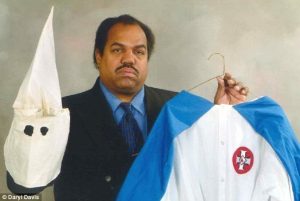
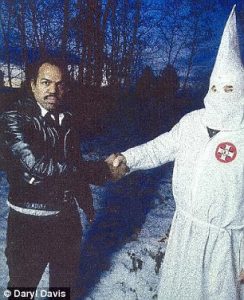 bachelor’s degree in music and who has performed with artists such as Chuck Berry and Jerry Lee Lewis (to say nothing of his own band), is a Black man who was a child during the Civil Rights Era. He experienced firsthand the harsh reality of that struggle when he became the first Black member of a local Cub Scout troop in Massachusetts. But his innate intellectual curiosity combined with his benevolent disposition to form a most unique reaction to the problem of racism.
 Davis is currently in possession of more than two dozen KKK robes, given to him by former Klansman who have abandoned their ideology, disarmed by the mere existence of this good-natured peacemaker. Among those who have foresworn White supremacy in favor of a Black friend is Roger Kelly, former Imperial Wizard of the Maryland KKK. Kelly later invited Davis to be his daughter’s godfather.
 It has been hailed as a gorgeous river city blessed with abundant resources. It has also been called the city of “contradictions” and “crises” (Campbell, 2012), a city with a “complicated history” replete with “struggles and wounds” (Ayers, 2012; Schwartz, 2012). Richmond, Virginia, has been a magnet for heroism and villainy, a place where the best and worst of human nature have collided over several centuries.

 By Scott T. Allison
 the one undergone by Jesus of Nazareth. His life followed the classic pattern in hero storytelling. Denied proper shelter and born in a manger, Jesus overcame poverty to grow into the wisest spiritual leader of his time – a remarkable transformation. This transformative rise of the hero represents the first part of the heroic arc.
 be born to resurrection. The imitation of Christ, then, is participating in the suffering and joys of the world, all the while seeing through them the radiance of the divine presence.”
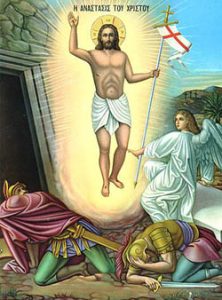
 a butterfly. The resurrection of Jesus is the most dramatic form of transformation possible, at personal level and at the level of an entire society or culture.