All posts by Scott Allison

About Scott Allison

Scott Allison has authored numerous books, including 'Heroes' and 'Heroic Leadership'. He is Professor of Psychology at the University of Richmond where he has published extensively on heroism and leadership. His other books include Reel Heroes, Conceptions of Leadership, Frontiers in Spiritual Leadership, and the Handbook of Heroism. His work has appeared in USA Today, National Public Radio, the New York Times, the Los Angeles Times, Slate Magazine, MSNBC, CBS, Psychology Today, and the Christian Science Monitor. He has received Richmond's Distinguished Educator Award and the Virginia Council of Higher Education's Outstanding Faculty Award.

Leadership Illiteracy: Why We Keep Choosing the Wrong Leaders

By Scott T. Allison

What makes someone a great leader?

Most of us think we know. We look for confidence. Presence. Strength. Charisma. We’re drawn to people who command attention—those who seem certain, bold, and larger than life.

But what if we’re using the wrong criteria altogether?

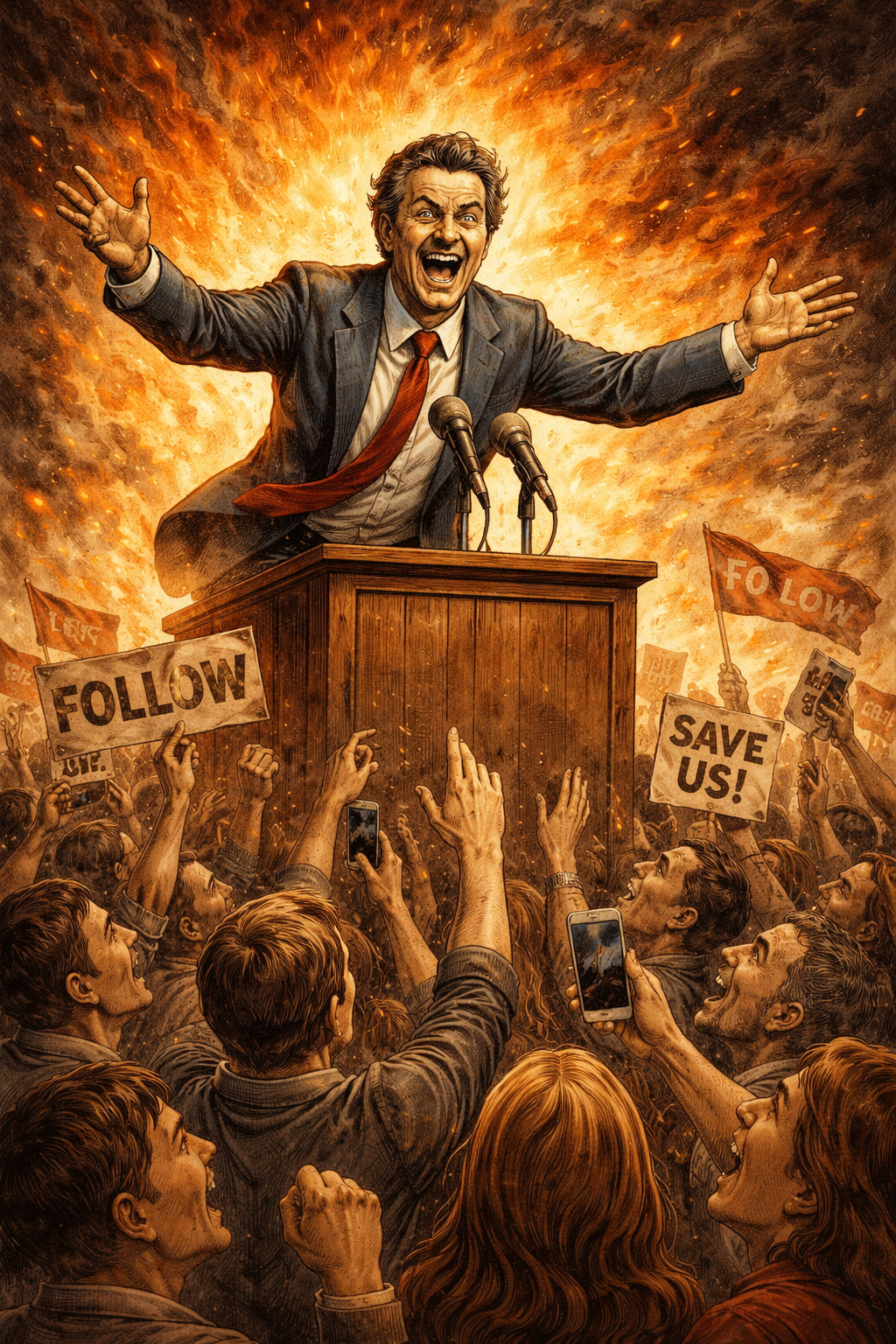
A growing problem in modern society is what we might call leadership illiteracy: the tendency to evaluate leaders using the wrong signals. Instead of focusing on what truly matters, we rely on surface-level cues—style over substance, appearance over character. And the consequences can be profound.

The Illusion of Leadership

Leadership illiteracy begins with a simple mistake: confusing how a leader looks with who a leader is. We instinctively equate charisma with competence, confidence with credibility, and strength with moral authority. These assumptions feel natural—but they are often wrong.

Psychologically, this reflects a well-known bias: we rely on quick, visible cues to make judgments about others. In leadership contexts, however, this shortcut becomes especially dangerous. It leads to what we might call the heroism attribution error—the tendency to assume that someone who looks like a hero actually is one.

In reality, many of the traits we admire most in leaders are morally neutral. Charisma, boldness, and determination can serve noble purposes—or destructive ones. Leadership illiteracy occurs when we fail to tell the difference.

The Container vs. the Content

One way to understand this problem is to distinguish between the container of leadership and its content. The container is what we see first: charisma, confidence, resilience, communication skill. These qualities are vivid, engaging, and easy to recognize.

The content is what truly defines leadership: values, moral commitments, and how a leader treats others—especially those with less power. The problem is that the container is loud, while the content is quiet.

We are naturally drawn to leaders who appear strong and inspiring. But these traits tell us very little about whether someone is ethical, compassionate, or trustworthy. In fact, many qualities we associate with heroes—being bold, inspiring, or determined—can just as easily describe villains. These traits are tools. Their moral value depends entirely on how they are used.

Leadership illiteracy is, at its core, a failure to distinguish between container and content.

Why We Keep Getting It Wrong

If the distinction seems obvious, why do we keep making the same mistake? Because human attention is not neutral. We are wired to notice what stands out. Psychologists call this salience—the tendency for vivid, attention-grabbing features to dominate our perception. Charismatic leaders benefit enormously from this bias.

They capture our attention quickly. And once they do, we begin to fill in the blanks. We assume competence. We assume integrity. We assume leadership.

But these assumptions are often unwarranted. This helps explain why people sometimes elevate leaders who are confident but not compassionate, persuasive but not ethical. Charisma creates an illusion of depth where little exists. And once we are impressed, it becomes harder to step back and evaluate critically.

The Real Cost of Leadership Illiteracy

Leadership illiteracy is not just a cognitive error—it has real-world consequences. When individuals and societies prioritize style over substance, they risk empowering leaders whose moral compass is weak or self-serving. History offers many examples of leaders who were compelling and persuasive, yet deeply harmful.

The issue is not that charisma is bad. Charisma can be a force for good. The problem is that charisma is not a reliable indicator of moral character. When we evaluate leaders based on the wrong criteria, we increase the likelihood of poor—and sometimes disastrous—choices.

What We Should Be Looking For

If we are illiterate in leadership, the solution is not to abandon judgment—it is to learn to read leadership differently. Across research on heroism and moral behavior, one theme appears consistently: true leadership is rooted in concern for others. The traits that distinguish genuine leaders are not about dominance or visibility. Instead, they include:

  • selflessness
  • moral integrity
  • compassion
  • a commitment to helping and protecting others

These qualities reflect the moral content of leadership. Importantly, they are often less visible than charisma. They do not always capture attention. But they are far more predictive of whether a leader’s actions will benefit or harm others.

Mythologist Joseph Campbell described the hero’s journey as a transformation from self-centeredness to service. At its end, the hero recognizes their deep connection to others. This idea echoes across traditions. Martin Luther King Jr. emphasized our “interrelated structure of reality,” while Albert Einstein urged us to expand our circle of compassion beyond ourselves.

These perspectives converge on a simple insight: The best leaders unite. They do not divide.

Leadership as Love in Action

At its core, effective leadership can be understood in one phrase: Love in action. This is not about sentimentality. It is about behavior—how leaders act in relation to others. When people take risks to protect others, stand up against injustice, or act with integrity in difficult situations, they are expressing leadership grounded in care.

This kind of leadership appears in everyday life:

  • a teacher supporting a struggling student
  • a colleague speaking up against unfairness
  • a community member helping others in crisis
  • an individual choosing integrity over convenience

These actions may not be flashy. But they reveal something more important than charisma: character.

Becoming More Literate About Leadership

If leadership illiteracy is the problem, then the solution is learning to ask better questions. Instead of asking: “Is this person impressive?” We should ask: “Who does this person serve?”

Do their actions benefit others, or primarily themselves? Do they expand compassion, or create division? Do they take responsibility, or deflect blame?

These questions shift our focus from appearance to substance. They help us evaluate the content of leadership, not just its container.

Final Thought

We all want strong leaders—people who inspire us and guide us through uncertainty.  But if we rely on the wrong signals, we will continue to choose poorly.

Leadership illiteracy is not inevitable. It is a skill gap—one we can correct. Because in the end, leadership is not about who stands out. It is about who shows up for others—consistently, compassionately, and with integrity.

And that is something no amount of charisma can replace.

References

Allison, S. T. (2024). Heroism attribution error. In S. T. Allison, J. K. Beggan, and G. R. Goethals (Eds.), Encyclopedia of Heroism Studies. Springer.

Allison, S. T. (2025). The love with a thousand faces: Heroism as embodied love in action. Heroism Science, 9, 1-30.

Allison, S. T., & Goethals, G. R. (2024). Heroic leadership: An influence taxonomy of 100 exceptional individuals (2nd ed.). Routledge.

Goethals, G. R., Allison, S. T., & Sorenson, G. J. (Eds.) (2023). The SAGE encyclopedia of leadership studies. Sage.

Major Contributions to Heroism Studies by Scott T. Allison’s Research Lab: 2005-Present

Since 2005, Scott Allison’s Heroism Studies Lab has identified many principles, phenomena, and theories of heroism. These contributions illuminate:

  • how people perceive heroes
  • how heroes influence individuals and societies
  • how heroism itself develops

The contributions below are presented in reverse chronological order so that returning visitors can immediately see the newest developments. Together they trace the continuing evolution of heroism science, from early discoveries about hero perception to recent work on the developmental systems theory of heroism.

  • Reciprocal Developmental Systems Theory of Heroism (2027)

This theory recognizes that heroes are not born fully formed, nor do societies evolve just by accident. Both develop through an ongoing process of reciprocal influence. Heroes are shaped by families, mentors, adversity, communities, and culture. In turn, they reshape those same social worlds through their actions, stories, and legacies. Heroism is therefore not simply something extraordinary people do. It is one of the primary ways humanity learns, grows, and becomes its better self.

Allison, S. T., & Goethals, G. R. (2027). Heroes: What they do and why we need them (2nd ed.).  Oxford University Press.

  • Mature Heroism (2027)

Mature heroism is a deep understanding of heroic action that embraces its full developmental, emotional, moral, and social complexity without diminishing our admiration for it. It recognizes that the deepest acts of courage often arise when there are no perfect choices, only the responsibility to pursue the wisest and most compassionate course available. Whereas popular heroism says “Heroes are amazing,” mature heroism says “Heroism is extraordinarily complex.”

Allison, S. T., & Goethals, G. R. (2027). Heroes: What they do and why we need them (2nd ed.).  Oxford University Press.

  • Everyday Antiheroism (2027)

Everyday antiheroism refers to the morally complex ways ordinary people strive to do good while continuing to struggle with unresolved pain, inner conflict, or psychological wounds. Rather than representing the opposite of heroism, everyday antiheroism reflects an incomplete or imperfect heroic journey in which courage, virtue, and growth coexist with lingering suffering, moral ambiguity, or personal limitation.

Prusa, I. & Allison, S. T. (2027). Everyday antiheroism: The pain with a thousand faces. In J. Pascoe et al. (Eds.), Everyday Heroism: Courage, compassion and the power to change the world. Cambridge Scholars.

  • Recursive Process of Situationally Activated Everyday Heroism (2027)

Everyday heroism is situationally activated when external circumstances cause ordinary people to act with courage, compassion, or moral responsibility. In a recursive process, the situation provides the opportunity for heroism, and the heroic actor then becomes part of the situational context that influences the next generation of everyday heroes.

Allison, S. T. (2027). Philip Zimbardo and Carl Sagan: Situationally activated everyday heroism in public life. In C. Maslach et al. (Eds.), Elgar Companion to Philip G. Zimbardo. Elgar.

  • Heroism as Emotional Integration (2026)

Heroism rarely emerges from a single emotion acting alone. More often, it arises from the successful integration of competing emotional forces. To take heroic action, people must integrate positive emotions (e.g., empathy, hope, compassion) with negative emotions  (e.g., fear, anger, uncertainty).

Allison, S. T. (2026). Heroism as emotional integration: A process model of emotion-driven heroic action. Heroism Science, 11, 87-116.

  • The Glass Mask Phenomenon (2026)

The Glass Mask describes a subtle imbalance in how leadership is perceived: the same movements that help men be seen as both capable leaders and admirable figures do not always carry the same meaning when expressed by women. By weakening the natural link between authority and admiration, the Glass Mask makes women’s leadership less immediately recognizable as heroic and more likely to be viewed through caution or constraint.

Allison, S. T., & Goethals, G. R. (2026). Motional Intelligence: The Power of Movement in Leadership. Emerald.

  • Chrono-Archetypes (2025)

Chrono-archetypes are symbolic inner personas grounded in Zimbardo’s Time Perspective Theory. They are dynamic, narrative-based identities (e.g., Legacy Keeper, Visionary, Wounded Historian) that respond to everyday “calls to action,” including ethical dilemmas, crises, and opportunities for prosocial innovation.

Allison, S. T. (2025). Temporal identities and moral courage: A chrono-archetype model of workplace heroism. Journal of Organizational Psychology, 25(3), 129-145.

  • Amalgamated Heroes (2024)

An amalgamated hero is a legendary, cultural hero who is derived from a complex blending of similar historical figures and our own cognitive embellishments of those figures.

Allison, S. T. & Hutchins, R. (2024). Amalgamated heroes. In S. T. Allison, J. K. Beggan, and G. R. Goethals (Eds.), Encyclopedia of Heroism Studies. Springer.

  • Heroism-by-Proxy (2024)

Heroism-by-proxy describes a psychological phenomenon that occurs when an individual develops a strong psychological association with a hero or a heroic figure, leading to a sense of personal heroism. Heroism-by-proxy can be constructive when it inspires heroism but can be destructive when it engenders either complacency or a psychological identification with violent, divisive leaders.

Allison, S. T., Beggan, J. K., & Goethals, G. R. (2024). Heroism-by-Proxy. In S. T. Allison, J. K. Beggan, and G. R. Goethals (Eds.), Encyclopedia of Heroism Studies. Springer.

  • Perfect Confluence and Herois (2024)

The “perfect storm” is a term often used metaphorically to describe situations where a convergence of multiple factors leads to a particularly significant or catastrophic outcome. The perfect confluence refers to any convergence of circumstances that results in a particularly positive or heroic outcome.

Allison, S. T. (2024). Perfect storm, perfect confluence, and heroism. In S. T. Allison, J. K. Beggan, and G. R. Goethals (Eds.), Encyclopedia of Heroism Studies. Springer.

  • Intuitive Heroism (2024)

Intuitive heroism refers to how individuals naturally and intuitively make sense of heroism. People have their own ideas about what heroes do, what heroes are like, and what motivates heroism. These intuitive notions of heroism are accurate in some ways but also contain factual errors and misunderstandings about heroism.

Allison, S. T. (2024). Intuitive heroism. In S. T. Allison, J. K. Beggan, and G. R. Goethals (Eds.), Encyclopedia of Heroism Studies. Springer.

  • Heroism Attribution Error (2024)

The tendency of people to confuse fame for heroism, such that they attribute heroism to celebrities who are famous for non-heroic reasons.

Allison, S. T. (2024). Heroism attribution error. In S. T. Allison, J. K. Beggan, and G. R. Goethals (Eds.), Encyclopedia of Heroism Studies. Springer.

  • Hero Illiteracy (2024)

The lack of knowledge about heroism, or a misunderstanding about what comprises heroism. The condition can afflict an individual or an entire society. It can include an inability to distinguish heroes from villains and an erroneous belief that money, fame, and celebrity status are the determinants of heroism.

.Allison, S. T., & Beggan, J. K.  (2024). Hero Illiteracy. In S. T. Allison, J. K. Beggan, and G. R. Goethals (Eds.), Encyclopedia of Heroism Studies. Springer.

  • Motional Intelligence (2023, 2026)

A form of kinesthetic intelligence that enables leaders to move the emotions of their followers. It is the ability of heroic (and villainous) leaders to use their body movements and voices effectively in a way that inspires and mobilizes followers.

Allison, S. T. (2023). Motional intelligence and leadership. In G. R. Goethals, S. T. Allison, & G. J. Sorenson (Eds.). The SAGE Encyclopedia of Leadership Studies. Sage.

Allison, S. T., & Goethals, G. R. (2026). Motional intelligence: The power of movement in leadership. Emerald.

  • Dynamic Negotiated Exchange Theory of Heroism (2022)

The dynamic negotiated exchange model of heroism refers to the processes by which the implicit exchange agreement between heroes and their followers evolves over time. Terms of the exchange agreement often change in response to a major crisis, such as the COVID pandemic of early 2020s.

Allison, S. T., & Beggan, J. K. (2022). The dynamic negotiated exchange model of heroism and heroic leadership: Lessons from the COVID-19 pandemic. Interdisciplinary Journal of Leadership Studies, 1, 15-31.

  • Heroic Balance (2021)

The ability of the hero to achieve a healthy psychological balance needed to achieve their heroic mission. Heroes must balance intuition with reason; emotion with logic; self-confidence with humility; autonomy with dependency; personal life with professional life; and more.

Allison, S. T. (2021). Beth Harmon’s hero’s journey: The psychology of heroism in The Queen’s Gambit. Palsgrove.

  • Heroic Autonomy (2021, 2024)

The imperative of the hero to perform the last and most crucial heroic act alone — independent from friends and mentors who have helped the hero prepare for that heroic moment.

Allison, S. T. (2021). Beth Harmon’s hero’s journey: The psychology of heroism in The Queen’s Gambit. Palsgrove.

Allison, S. T. (2024). Heroic autonomy. In S. T. Allison, J. K. Beggan, and G. R. Goethals (Eds.), Encyclopedia of Heroism Studies. Springer.

  • Puer Aeternus as an Obstacle to Heroism (2020)

The Puer Aeternus complex describes an adult, often a man, who remains in an extended state of adolescence, exhibiting traits commonly associated with youth. The phenomenon represents a significant barrier to personal growth and heroism due to its characteristic evasion of the hero’s journey that transforms people into their best, most heroic selves.

Allison, S. T., Goethals, G. R., & Spyrou, S. P. (2020). Donald Trump as the archetypal puer aeternus: The psychology of mature and immature leadership. In K. Bezio & G. R. Goethals (Eds.), Leadership, populism, and resistance. Edward Elgar.

  • The Hero Androgyny Phenomenon (2020)

The tendency of heroes to possess a healthy blend of both masculine and feminine traits. The blend combines a sense of agency, autonomy, and effectiveness with  moral warmth, empathy, and communality.

Hoyt, C. L., Allison, S. T., Barnowski, A., & Sultan, A. (2020). Lay theories of heroism and leadership: The role of gender, communion, and agency. Social Psychology, 51, 381-395.

  • Heroic Wholeness Imperative (2020)

The mandate of leaders to promote psychological wholeness and well-being by meeting the higher-level transcendent needs of followers.

Allison, S. T. & Goethals, G. R. (2020). The heroic leadership imperative: How leaders inspire and mobilize change. Emerald.

  • Heroic Leadership Imperative (2020)

The mandate of transforming heroic leaders to meet the individual, collective, and transcendent needs of their followers.

Allison, S. T. & Goethals, G. R. (2020). The heroic leadership imperative: How leaders inspire and mobilize change. Emerald.

  • Romance of Heroism (2019)

The romance of heroism refers to people’s idealistic and quixotic notions of heroes, which leads to exaggerated perceptions of the heroic qualities in certain types of people, especially under conditions of uncertainty. Romanticized desires to designate people as heroes are subject to distortion and can induce people to choose false heroes.

Goethals, G. R., & Allison, S. T. (2019). The romance of heroism and heroic leadership: Ambiguity, attribution, and apotheosis. Emerald.

  • Seven Barriers to Heroic Transformation (2019)

Seven ways people avoid heroic transformation: self-ignorance, impoverished environments, personal trauma, victim identification, absence of mentors, mental/physical illness, and lack of psychological flexibility.

Allison, S. T., Goethals, G. R., Marrinan, A. R., Parker, O. M., Spyrou, S. P., Stein, M. (2019). The metamorphosis of the hero: Principles, processes, and purpose. Frontiers in Psychology, 10, 606.

  • Heroic Consciousnes (2019, 2024)

Heroic consciousness is a state of heightened awareness, reasoning, emotional experience, self-identity, intention, and will, all aimed at saving lives, pursuing a noble cause, and promoting the greater good.

Allison, S. T. (2019). Heroic consciousness. Heroism Science, 4, 1-43.

Allison, S. T. (2024). Heroic consciousness. In S. T. Allison, J. K. Beggan, and G. R. Goethals (Eds.), Encyclopedia of Heroism Studies. Springer.

  • Heroic Lag (2019, 2024)

Activist heroes are often ahead of their time, advocating changes that challenge prevailing assumptions, power structures, or group identities. Heroic lag refers to the delay between the time when a hero champions a transformative idea and the time when society comes to recognize the value of that idea.

Goethals, G. R., & Allison, S. T. (2019). The romance of heroism and heroic leadership: Ambiguity, attribution, and apotheosis. Emerald.

Allison, S. T. (2024). Heroic lag. In S. T. Allison, J. K. Beggan, and G. R. Goethals (Eds.), Encyclopedia of Heroism Studies. Springer.

  • Transcendent and Trapped Immortality (2018, 2024)

The tendency of people to perceive dead heroes and villains differently. Specifically, we believe deceased good-doers achieve transcendent immortality, with their souls persisting beyond space and time. In contrast, evil-doers are perceived to have trapped immortality, with their souls persisting on Earth, bound to a physical location.

Gray, K., Anderson, S., Doyle, C. M., Hester, N., Schmitt, P., Vonasch, A., Allison, S. T., and Jackson, J. C. (2018). To be immortal, do good or evil. Personality and Social Psychology Bulletin, 44, 868-880.

Allison, S. T. (2024). Transcendent immortality and heroism. In S. T. Allison, J. K. Beggan, and G. R. Goethals (Eds.), Encyclopedia of Heroism Studies. Springer.

  • The Personal Heroic Imperative (2018)

Each human being’s built-in mandate to fulfill their heroic imperative by imagining and creating their own heroic growth.

Efthimiou, O., Allison, S. T., & Franco, Z. E. (2018). Heroism and wellbeing in the 21st century: Recognizing our personal heroic imperative. In O. Efthimiou, S. T. Allison, & Z. E. Franco (Eds.), Heroism and wellbeing in the 21st Century: Applied and emerging perspectives.  Routledge.

  • Three Heroic Transformative Arcs (2017)

The developmental process  of ordinary people transforming into heroes by transforming from a state of egocentricity to sociocentricity; from dependence to autonomy; and from stagnation to growth.

Allison, S. T., & Goethals, G. R. (2017). The hero’s transformation. In S. T. Allison, G. R. Goethals, & R. M. Kramer (Eds.), Handbook of heroism and heroic leadership. Routledge.

  • Six Types of Heroic Transformation (2017, 2024)

Six commons patterns of transformation in heroes that involve changes in their mental, emotional, physical, spiritual, moral, and motivational state.

Allison, S. T., Goethals, G. R., & Kramer, R. M. (2017). Setting the scene: The rise and coalescence of heroism science. In S. T. Allison, G. R. Goethals, & R. M. Kramer (Eds.), Handbook of heroism and heroic leadership. Routledge.

Allison, S. T. (2024). Heroic transformation. In S. T. Allison, J. K. Beggan, and G. R. Goethals (Eds.), Encyclopedia of Heroism Studies. Springer.

  • Six Benefits of Suffering (2016, 2024)

The identification of benefits of heroic suffering as offering (1) redemption, (2) developmental progress, (3) humility, (4) compassion, (5) social union, and (6) meaning and purpose.

Allison, S. T., & Setterberg, G. C. (2016). Suffering and sacrifice: Individual and collective benefits, and implications for leadership. In S. T. Allison, C. T. Kocher, & G. R. Goethals (Eds), Frontiers in spiritual leadership: Discovering the better angels of our nature. Palgrave Macmillan.

Allison, S. T. (2024). Suffering of the hero. In S. T. Allison, J. K. Beggan, and G. R. Goethals (Eds.), Encyclopedia of Heroism Studies. Springer.

  • Need-Based Heroism — AKA The Johnny Carson Effect (2016, 2024)

The tendency of people’s current need states to determine their choice of heroes, with these need-states changing as a function of people’s developmental stages and their changing life circumstances. (named after Johnny Carson’s quip that after all his divorces, his hero changed from Babe Ruth to King Henry VIII)

Allison, S. T., & Goethals, G. R. (2016). Hero worship: The elevation of the human spirit. Journal for the Theory of Social Behaviour, 46, 187-210.

Allison, S. T. (2024). Need-based heroism. In S. T. Allison, J. K. Beggan, and G. R. Goethals (Eds.), Encyclopedia of Heroism Studies. Springer.

  • Epistemic and Energizing Functions of Heroism (2014)

The conceptualization of the functions of heroism that includes epistemic needs involving the imparting of wisdom and emerging needs involving healing, growing, and inspiration.

Allison, S. T., & Goethals, G. R. (2014). “Now he belongs to the ages”: The heroic leadership dynamic and deep narratives of greatness. In Goethals, G. R., et al. (Eds.), Conceptions of leadership: Enduring ideas and emerging insights. Palgrave Macmillan.

  • The Heroic Leadership Dynamic (2014)

A system of psychological forces that can explain the complex relationship between heroes and their followers. It explains how we are drawn to heroes, how we benefit from these heroes, and how our choice of heroes changes over time.

Allison, S. T., & Goethals, G. R. (2014). “Now he belongs to the ages”: The heroic leadership dynamic and deep narratives of greatness. In Goethals, G. R., et al. (Eds.), Conceptions of leadership: Enduring ideas and emerging insights. Palgrave Macmillan.

  • Social Influence Based Taxonomy of Heroism (2012)

The scientific identification of heroes as Transforming, Transfigured, Traditional, Transparent, Transposed, Tragic, Transitional, Transitory, Trending, and Transcendent.

Allison, S. T., & Goethals, G. R. (2013). Heroic leadership: An influence taxonomy of 100 exceptional individuals. Routledge.

  • The Great Eight Traits of Heroes (2011)

The discovery that people believe that heroes possess the traits of wise, strong, charismatic, caring, resilient, reliable, selfless, and inspiring.

Allison, S. T., & Goethals, G. R. (2011). Heroes: What they do and why we need them.  Oxford University Press.

  • The Underdog Abandonment Effect (2008)

The tendency of people to no longer root for underdog heroes when their success has low self-relevance and low consequences.

Kim, J., Allison, S. T., Eylon, D., Goethals, G., Markus, M., McGuire, H., & Hindle, S. (2008). Rooting for (and then Abandoning) the Underdog. Journal of Applied Social Psychology, 38, 2550-2573.

  • The Frozen in Time Effect (2005)

People’s tendency to resist changing their impressions of dead heroes compared to living heroes.

Eylon, D., & Allison, S. T. (2005). The frozen in time effect in evaluations of the dead. Personality and Social Psychology Bulletin, 31, 1708-1717.

Allison, S. T. (2024). Frozen in time effect and heroism. In S. T. Allison, J. K. Beggan, and G. R. Goethals (Eds.), Encyclopedia of Heroism Studies. Springer.

  • The Death Positivity Bias (2005)

The tendency of people to evaluate the dead more favorably than the living. This is one way we “heroize” past legendary figures.

Allison, S. T., & Eylon, D. (2005). The demise of leadership: Death positivity biases in posthumous impressions of leaders. In D. Messick & R. Kramer (Eds.), The Psychology of Leadership: New Perspectives and Research (pp 295-317). New York: Erlbaum.

Allison, S. T. (2024). Death positivity bias and heroism. In S. T. Allison, J. K. Beggan, and G. R. Goethals (Eds.), Encyclopedia of Heroism Studies. Springer.

       LOOKING AHEAD

Heroism science continues to evolve. Many of the contributions listed above have generated new questions, theoretical models, and lines of investigation that are still unfolding. As our understanding of heroism grows, this page will continue to document new discoveries that illuminate how heroes emerge, inspire, develop, and shape the world around them.

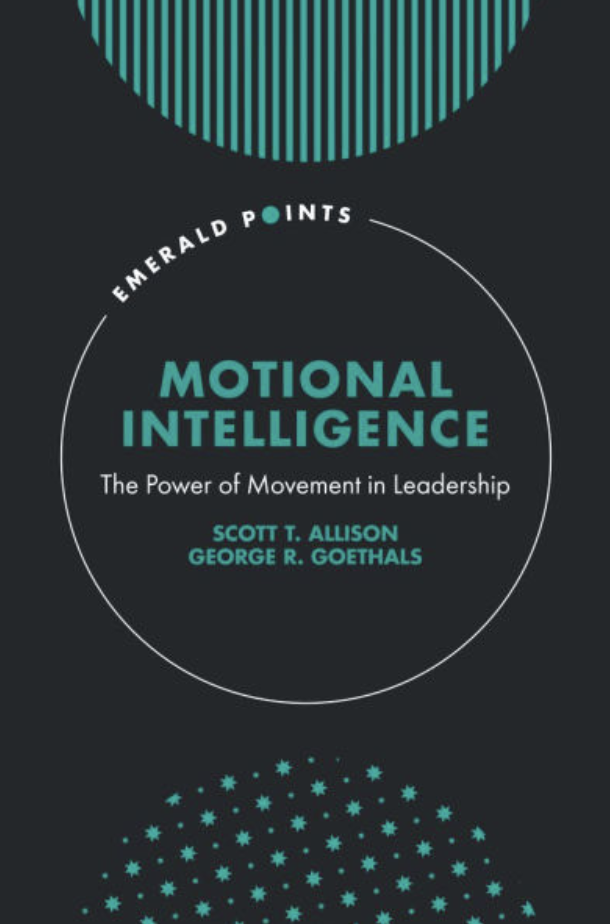
Our Latest Book: “Motional Intelligence: The Power of Movement in Leadership”

By Scott T. Allison

In 2026 we have released our new book on Motional Intelligence (MI) — a concept we believe fills a major gap in how we understand human interaction. MI refers to the ability to use body movement intentionally to influence others, to accurately read the movements of those around us, and to regulate our own physical behavior in shifting social situations. In short, it’s the intelligence of movement — the missing sibling of emotional intelligence.

Where emotional intelligence focuses on recognizing and managing feelings, MI centers on the moving body itself: posture, gesture, timing, rhythm, stillness, synchrony, and physical presence. It asks how movement shapes perception, connection, influence, and social meaning. And once you start paying attention to MI, you see it everywhere.

We form impressions of people long before they speak. Confidence, anxiety, warmth, dominance, awkwardness — we infer these qualities from motion: how someone enters a room, occupies space, approaches others, or carries themselves physically. Human beings are constant motion‑readers, often without realizing it.

Heroism, too, may depend heavily on MI. Before anyone is recognized as a hero, they are often first perceived as calm under pressure, physically decisive, emotionally grounded, or willing to step forward when others hesitate. Movement becomes the first visible signal of courage and agency.

Motional Intelligence explores this overlooked dimension of social life — and how understanding it can deepen our relationships, strengthen our leadership, and illuminate the subtle choreography of human connection.

Over Two Million People Have Visited This Heroes Blog

 People thirst for heroes. Back in 2010, on the eve of the release of our first book, Heroes: What They Do & Why We Need them, we decided to blog about them.

Little did we know that over 15 years later our heroes blog would be visited by over two million people. We’ve had visitors from all 50 states and over 260 countries.

The 20 nations who visit our blog most frequently are the U.S., Britain, Canada, France, Australia, the Philippines, India, Germany, Malaysia, Indonesia, Brazil, New Zealand, China, South Africa, Singapore, and Mexico.  We thank all of you for visiting us, leaving comments on our blog posts, and giving us helpful feedback and suggestions.

The top 10 U.S. states to visit us are, in order, California, Texas, New York, Virginia, Florida, Illinois, Pennsylvania, New Jersey, Georgia, and Ohio.

What is it about heroes that has us longing for them? Like this blog, heroism science is only a decade old, but we’re learning more and more about why the world hungers for heroes. A number of researchers have identified 12 functions of heroes:

  1. Heroes give us hope
  2. Heroes energize us
  3. Heroes develop us
  4. Heroes heal us
  5. Heroes impart wisdom
  6. Heroes are role models for morality
  7. Heroes offer safety and protection
  8. Heroes give us positive emotions
  9. Heroes give us meaning and purpose
  10. Heroes provide social connection and reduce loneliness
  11. Heroes help individuals achieve personal goals
  12. Heroes help society achieve societal goals

We’ve been studying heroes for many years and we’ve discovered many phenomena related to heroism. So please do suggest some names for us to profile, or issues for us to address in commentary pieces.  In the mean time, thanks so much for visiting us and for supporting today’s heroes.

–— Scott Allison and George Goethals, Professors Emeritus of Psychology and Leadership Studies

– – – – – – – – – – – – – – – – – – – – – – – – – – –


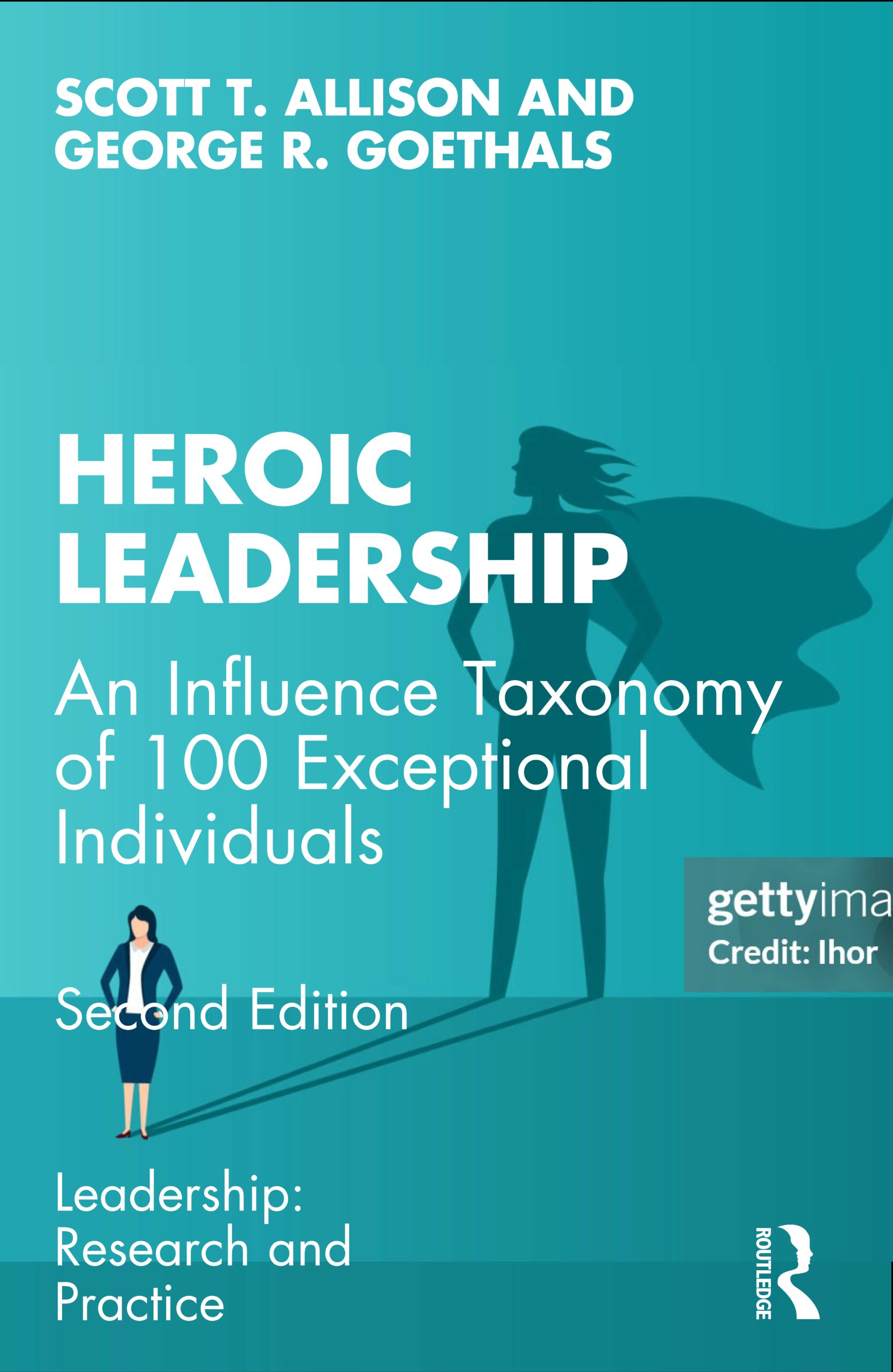
Second Edition of Our Second Book — “Heroic Leadership”

By Scott T. Allison and George R. Goethals

In this second edition of Heroic Leadership, we review the relationship between leadership and heroism, showing how our most cherished heroes are also our most transforming leaders.  We also describe in some detail a taxonomy, or conceptual framework, for differentiating among the many varieties of heroism.  Moreover, the book profiles many different individual heroes and provides an analysis of their heroic contributions.

Here’s what several distinguished reviewers have said about Heroic Leadership:

“A pioneering and insightful examination of the intersection of heroes and leaders by two gifted psychologists.  Allison and Goethals’ captivating narrative  adds a new dimension to current research on leadership.”
— JAMES MacGREGOR BURNS, Pulitzer Prize winning Professor Emeritus at Williams College and Distinguished Leadership Scholar at the James MacGregor Burns Academy of Leadership of the School of Public Policy at the University of Maryland.

* * * *

“Allison and Goethals’ stimulating and incisive survey of one-hundred influential leaders could not be more cogent or timely.  When so many of our leaders seem to have feet of clay and principles that bend with the prevailing breezes, they remind us of those leaders who rose to the occasion and stood firm in their moment of decision. As a result, they and their leadership have stood the test of time.  Heroic Leadership offers a refreshingly original and provocative perspective on what it means to be a great leader. Reading this book not only informs us, it also inspires!  My only suggestion would be that we expand their list to 102 — adding their names in appreciation of their heroic scholarly labors!”

— RODERICK M. KRAMER, Professor of Organizational Behavior, Stanford University

* * * *

“Scott Allison and  George Goethals are pioneering scholars exploring the psychology of heroism and leadership, and this book outlines their contention that while all heroes are leaders, the converse is not true. They make their case by offering snapshots of 100 characters, some fictional (e.g., King Lear), some collective (e.g., Chilean miners, Power Rangers), and some surprising (e.g., Lady Gaga, Meryl Streep) who instantiate their taxonomy of heroes. For researchers and lay people alike, this book is packed with fascinating insights into the psychology of leadership, heroism, and mere celebrity. It is a book to be enjoyed by everyone who wonders why some people attract public attention, and others, who may deserve it (e.g., parents, soldiers, teachers) do not.”

— DAVID M. MESSICK, Professor Emeritus at Northwestern University

* * * *

“Presenting vivid accounts of distinguishable forms of heroism, this is a welcome contribution to understanding heroic aspects of leader-follower relations. It deserves a place as a text, reference source, and feast of revealing narratives. The accounts chosen capture what individuals’ special qualities underlie and activate others’ sense of the “heroic,” based on five factors affecting a leader’s influence. This yields ten types of heroes that are profiled, from trending and transitory to transforming and transcendent. Among those receiving attention in this cavalcade are the tragic, (Oedipus, Tiger Woods, Richard Nixon), and many shown as the “moral,” (e.g., The Dalai Lama, Mother Teresa, Rosa Parks). Insightful analyses of individual cases provide an illuminating blend of scientific scrutiny with compelling storytelling.”

— EDWIN P. HOLLANDER, Professor Emeritus, CUNY, Baruch College, and University Graduate Center

The Hidden Heroism of Human Movement

By Scott T. Allison

When we think about intelligence, we usually think about the mind. Intelligence is commonly associated with reasoning, memory, language, creativity, or emotional awareness. Yet one of the oldest and most powerful forms of human intelligence may reside not in words or abstract thought, but in movement itself.

Long before human beings developed spoken language, our ancestors communicated through posture, gesture, rhythm, pacing, and spatial orientation. A sudden movement could warn of danger. A calm posture could reassure others. A coordinated group movement could signal trust, unity, and shared purpose. Human beings moved meaningfully before they spoke meaningfully.

My colleague George Goethals and I use the term Motional Intelligence (MI) to describe this overlooked dimension of social life. MI refers to the ability to use body movement intentionally to influence others, to accurately interpret the movements of other people, and to regulate one’s own bodily behavior in response to changing social situations. In short, MI is the intelligence of movement in human interaction.

This idea differs from emotional intelligence, which focuses primarily on recognizing and managing emotions. MI centers on the moving body itself—on posture, gesture, timing, rhythm, stillness, synchrony, and physical presence. It asks how movement shapes perception, connection, influence, and social meaning.

Once you begin paying attention to MI, you see it everywhere.

Think about how quickly we form impressions of people. Before anyone says a word, we often sense whether someone appears confident, anxious, trustworthy, dominant, warm, awkward, or emotionally withdrawn. We infer these qualities from movement: how a person enters a room, occupies space, approaches others, or carries themselves physically. Human beings constantly read one another through motion, often unconsciously.

Heroism itself may depend heavily on MI. Before people are recognized as heroes, they are often first perceived as calm under pressure, physically decisive, emotionally grounded, or capable of stepping forward when others hesitate. Movement frequently serves as the first visible signal of courage and agency.

Film offers striking examples. Some of cinema’s most memorable characters communicate more through movement than dialogue. Charlie Chaplin’s Tramp expresses vulnerability and compassion almost entirely through physical timing and gesture. Humphrey Bogart’s Rick Blaine in Casablanca projects emotional restraint through stillness and minimal movement. Heath Ledger’s Joker in The Dark Knight unsettles viewers through erratic pacing, invasive proximity, and unpredictable bodily rhythms. Their movements communicate psychological depth before words ever do.

Politics and leadership reveal similar dynamics. During the 2016 U.S. presidential debates, one of the most memorable moments involved not policy but movement. Donald Trump paced closely behind Hillary Clinton while she spoke, and viewers interpreted the same physical behavior in dramatically different ways—some seeing dominance and confidence, others perceiving intimidation and intrusion. The moment illustrated how bodily motion can shape emotional climates and public interpretation as powerfully as spoken language.

But MI is not limited to leaders, actors, or charismatic personalities. It permeates everyday life. Long-married couples often move in subtle synchrony, anticipating each other’s actions almost unconsciously. Friends walking together gradually align their pace. Parents instinctively soothe distressed children through rhythmic rocking and calming physical presence. Human relationships are constantly choreographed through movement.

Importantly, MI is probably not a fixed talent reserved for a gifted few. Like many forms of intelligence, it can likely be strengthened through awareness and practice. People can learn to become more attentive to bodily signals, more skillful in regulating tension through posture and pacing, and more accurate in interpreting the movements of others.

In an increasingly digital world, this may matter more than ever. Texting, email, and online communication strip away much of the movement information our brains evolved to process. Yet even advanced technologies—from virtual reality to social robotics—are discovering that believable movement remains essential to creating trust, connection, and emotional realism.

Perhaps this is the deeper lesson of motional intelligence: human beings do not merely think and speak their way through social life. We move our way through it. And learning to move with greater awareness, empathy, and responsibility may become one of the most important human capacities of the future.

References

Allison, S. T., & Goethals, G. R. (2026). Motional intelligence: The power of movement in leadership. Emerald.

= = = = = = = = = = = =