All posts by Scott Allison

About Scott Allison

Scott Allison has authored numerous books, including 'Heroes' and 'Heroic Leadership'. He is Professor of Psychology at the University of Richmond where he has published extensively on heroism and leadership. His other books include Reel Heroes, Conceptions of Leadership, Frontiers in Spiritual Leadership, and the Handbook of Heroism. His work has appeared in USA Today, National Public Radio, the New York Times, the Los Angeles Times, Slate Magazine, MSNBC, CBS, Psychology Today, and the Christian Science Monitor. He has received Richmond's Distinguished Educator Award and the Virginia Council of Higher Education's Outstanding Faculty Award.

The Heroism and Leadership of Fred Korematsu

Fred KorematsuBy Scott T. Allison and George R. Goethals

Heroes show leadership by taking steps to save or improve our lives.  A hero’s leadership can be direct, as when the leader interacts directly with followers, or it can be indirect, as when the leader’s works and deeds provide an example or model for others.  Two of the 20th century’s greatest indirect leaders were Rosa Parks and Fred Korematsu.  Parks became a civil rights hero when she refused to vacate her seat on a Montgomery, Alabama bus in 1955.  Korematsu’s indirect leadership is not as well known but is no less important.

Korematsu was an ordinary 22 year-old American living in Oakland, California, when Japan attacked Pearl Harbor on December 7, 1941.  In the weeks that followed, Americans feared another Japanese attack on the west coast of the United States. Racial discrimination against Japanese-Americans, already a problem before Pearl Harbor, became intensified.  Korematsu was fired from his job as a welder in a shipyard, simply because of his ancestry.

Ten weeks after the attack, President Roosevelt issued Executive Order No. 9066, which required all people of Japanese ancestry along the entire Pacific coast, including all of California and most of Oregon and Washington, to leave their homes and report to internment camps.  At the time, most Americans supported Roosevelt’s decision.  Even the Los Angeles Times defended it:  “While it might cause injustice to a few to treat them all as potential enemies,” wrote the editor, “I cannot escape the conclusion… that such treatment… should be accorded to each and all of them while we are at war with their race.”

Most Japanese-Americans complied with Executive Order 9066 to demonstrate their loyalty to America and its laws.  But KorematsuKorematsu recognized the inherent injustice of the decree.  “I was just living my life, and that’s what I wanted to do,” he said in a 1987 interview.

Korematsu did not turn himself in to authorities.  Consequently, he was arrested, jailed, convicted of a felony, and sent to the Topaz internment camp in Utah.

While imprisoned at the camp, Korematsu appealed his conviction, arguing that his constitutional rights had been violated.  The court ruled against him.  In 1944 he appealed all the way to the Supreme Court, which upheld his conviction in a 6-3 decision, authored by Justice Hugo Black.  The Court ruled that Executive Order 9066, though constitutionally suspect, is justified during times of “emergency and peril”.

After the war, Korematsu waited nearly 40 years to clear his name.  In 1982 he obtained suppressed government documents indicating that the forced relocation of Americans to internment camps was motivated by racism, not military necessity.  With this evidence, the courts overturned Korematsu’s conviction.  In 1998, President Bill Clinton awarded Korematsu the Presidential Medal of Freedom, the nation’s highest civilian honor.  At the ceremony Clinton said, “In the long history of our country’s constant search for justice, some names of ordinary citizens stand for millions of souls €” Plessy, Brown, Parks.  To that distinguished list today we add the name of Fred Korematsu.”

Heroism can take time.  Leaders know when to stay the course, and heroic leaders such as Korematsu stay the course to its triumphant conclusion.  “It may take time to prove you’re right,” he said, “but you have to stick to it.”  In the face of injustice, he urged people “to protest, but not with violence, and don’t be afraid to speak up.  One person can make a difference, even if it takes forty years.”

– – – – – –

One of our readers suggested that we profile Fred Korematsu.  We welcome your suggestions as well.  Please send your ideas to Scott T. Allison (sallison@richmond.edu) or to George R. Goethals (ggoethal@richmond.edu).

Lisbeth Salander: The Underdog Girl with the Dragon Tattoo

By Scott T. Allison and George R. Goethals

One of the most powerful underdog stories in recent fiction is that of Lisbeth Salander, the main character in Stieg Larsson’s best-selling Millennium Series trilogy.  In several ways, Salander defies the classic hero prototype.  She is a female hero in a world dominated by male heroes, and she is described as small, young, and anorexic looking – hardly the look of a hero.  And as with Harry Potter, another slightly built fictional hero, people underestimate Salander and pay the dearest of consequences for their misjudgment.

The author, Stieg Larsson, was himself an underdog.  Larsson worked as a little-known journalist and photographer in Stockholm, Sweden.  A political activist, Larsson spent years writing the Millennium Series at home at night after work, with no one knowing about his pet project until 2004 when he finally sought a publisher.  Tragically, just before the novels were published, Larsson died of a heart attack at the age of 50.  He never lived to witness the remarkable success of his trilogy, which has sold more than 70 million copies worldwide and has spawned a highly successful movie franchise.

The lead character of Lisbeth Salander is Larsson’s crowning achievement as an author.  Few fictional characters carry more gripping emotional power.  As a child, Salander witnesses her father, named Zala, brutalize and cripple her mother.  Because Zala is important to Sweden’s central intelligence agency (SAPO), he is shielded from prosecution.  One day, after witnessing Zala savagely attack her mother once again, Salander dowses him in gasoline and sets him afire, causing massive lifetime scarring over most of his body.

To protect Zala, unscrupulous elements within SAPO arrange for Salander to be judged incompetent, institutionalized, and abused by an evil psychiatrist named Teleborian.  Upon reaching adulthood, Salander is released from the hospital but is required to report to a guardian of the state, who is a friend of Zala’s.  The guardian eventually rapes Salander in a most brutal manner.  He is yet another man who has underestimated her.   Recognizing that police officials will not bring her rapist to justice, she exacts revenge by raping him herself and carving a full-body tattoo on him that reads, “I AM A SADISTIC PIG, A PERVERT, AND A RAPIST”.

For some fans of the Millennium Series, Salander’s violent vengeance on Zala and on her guardian precludes her from attaining the status of hero.  For others, Salander’s actions are heroic responses to a society that repeatedly abuses her (and other women) with impunity.  We’ll leave it to you to make the call.

Later in the trilogy there are other formidable men who also make the mistake of harming Salander and then underestimating her ability to inflict far greater harm on them.  These individuals include Zala, Teleborian, and others.  Salander’s aggression toward men is always in self-defense and arises from the fact that SAPO has doctors and law-enforcement in their back pocket.  In the end, Salander finds a way to out-wit SAPO and bring the responsible parties to justice.  And this is another key to Salander’s heroism:  She is extraordinarily intelligent and uses her cunning and her computer skills to stay one move ahead of her adversaries.

Lisbeth Salander is the ultimate underdog.  Her penchant for prevailing over men who have power over her, and who abuse that power, makes for a riveting story.  Although author Stieg Larsson is no longer with us, he has left a rich legacy in his writings of an unforgettable character whom you don’t ever want to cross in Lisbeth Salander.

– – – – – – – – – – – – – – –

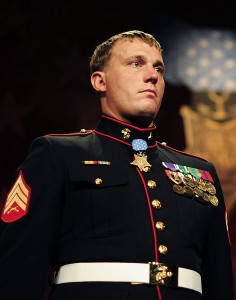
Dakota Meyer: The Hero Who Defied Orders to Save Lives

By Scott T. Allison and George R. Goethals

The war in Afghanistan is currently the longest war in U.S. history.  Americans have gotten used to very little good news coming out of that region of the world, but recently there was something to cheer about.  A U.S. Marine Corps veteran named Dakota Meyer performed a remarkable feat of heroism and received the Medal of Honor, the highest military decoration one can receive.  Meyer distinguished himself by demonstrating “conspicuous gallantry and intrepidity at the risk of his or her life above and beyond the call of duty while engaged in an action against an enemy of the United States.”

Here are the stirring details.  On September 8, 2009, Sergeant Meyer was serving his country in Afghanistan when he heard on his radio of a Taliban attack on a nearby village.  Members of his unit and a number of allied Afghan fighters were being bombarded by enemy fire.  He repeatedly asked his superiors for approval to assist those under attack, and he was repeatedly denied permission to do so.  It was simply too dangerous, and Meyer was heavily outnumbered.

Defying orders, Meyer headed into the besieged village. He first encountered several wounded allied Afghan fighters. He transported them to safety and then headed back into battle.  During the next several hours, Meyer entered the “kill zone” five times, rescuing 23 Afghans and 13 Americans.  He was under heavy enemy fire the entire time from a numerically superior foe.  Despite receiving shrapnel wounds to his arm, Meyer was able to kill at least eight Taliban while evacuating his fellow Marines to safety.

During one of his trips into the village, he stumbled across the bodies of four of his teammates killed by gunfire.  “I checked them all for a pulse. Their bodies were already stiff,” Meyer said.  Meyer made the decision to bring his friends back home. Bleeding from his shrapnel wound and still under fire, he carried their bodies back to a Humvee with the help of Afghan troops.

Meyer has said that he expected to die that day.  He also remains quite humble about his heroism, focusing instead on the guilt and pain of not being able to save the lives of the four men whose bodies he collected. “It’s hard getting recognized for the worst day of your life.  It’s a really tough thing,” Meyer said.  “There’s not a day — not a second — that goes by when I don’t think about what happened that day.  I didn’t just lose four [colleagues] that day; I lost four brothers.  I went in there to get those guys out alive, and I failed. So I think it’s more fitting to call me a failure than a hero.”

During the Medal of Honor ceremony, President Obama addressed Meyer’s obvious heartache. “Dakota, I know that you’ve grappled with the grief of that day; that you’ve said your efforts were somehow a failure because your teammates didn’t come home,” Obama said. “But as your commander-in-chief, and on behalf of everyone here today and all Americans, I want you to know it’s quite the opposite. You did your duty, above and beyond, and you kept the faith with the highest traditions of the Marine Corps that you love.  Because of your honor, 36 men are alive today.”

Below is a clip of the Medal of Honor being awarded to Dakota Meyer.

Michael J. Fox’s Heroic Battle With Parkinson’s Disease

By Scott T. Allison and George R. Goethals

In a previous blog post, we discussed the courageous story of actor Christopher Reeve, who suffered a paralyzing accident in the prime of his life.  With the help and support of his remarkable wife Dana, Christopher emerged as a gutsy champion of philanthropic causes and an inspiring hero to millions of people.  A similar story describes the life of actor Michael J. Fox.  An ultra-successful artist and comedic talent, Fox contracted Parkinson’s disease as a young man and has waged a courageous and inspiring battle ever since.

Fox first made his mark in Hollywood in his portrayal as teenager Alex Keaton in the popular television series Family Ties during the 1980s.  He then made the successful transition to feature films, his breakthrough performance coming in the blockbuster film trilogy Back to the Future.  Fox was on top of the world.  He was rich, handsome, talented, and wildly successful at his craft.  He even married the woman of his dreams, Tracy Pollan, in 1988.

Fox’s life then took a tragic, unexpected turn.  In 1991, he received the devastating diagnosis from doctors:  He had Parkinson’s disease, an incurable degenerative illness that attacks the central nervous system.  Fox continued his acting career while taking medications and undergoing numerous medical procedures.  But while starring in the hit television series Spin City ten years ago, he went public with his disease, acknowledging his steady decline and his need to curtail his acting.

His goals during his semi-retirement have been twofold:  Spend more time with his wife Tracy and their four children, and devote his remaining energies toward finding a cure for Parkinson’s.  Fox has been a workhorse in that regard.  His foundation, the Michael J. Fox Foundation, was created to help promote and support research aimed at curing Parkinson’s disease, primarily through embryonic stem cell studies.

Fox has testified a number of times before Congress to increase federal funding to defeat Parkinson’s.  He’s also rallied support from both Democrats and Republicans, using his fame and inspirational story to garner funding for his cause.  Said Fox: “Medical science has proven time and again that when the resources are provided, great progress in the treatment, cure, and prevention of disease can occur.”

The life we plan to lead is rarely the life we actually lead.  Twenty years ago, Michael J. Fox probably thought that he’d only make his mark in the world as an entertainer.  Life threw him a cruel curve, however.  Like many heroes, Fox has risen to the challenge with great aplomb and grace.  Rather than moving people with his acting, he is moving people in a far more significant and life-affirming way:  As a tireless advocate of funding and research aimed at defeating his crippling disease.  Fox’s steadfast commitment to triumphing over adversity is truly heroic.

Fox’s work has earned him some well-deserved recognition:  In 2007, Time Magazine named him one of the 100 people “whose power, talent or moral example is transforming the world.”  We wish him well on his remarkable journey.

Below is a clip from Katie Couric’s interview with Michael J. Fox in 2006.

Personal versus Cultural Heroes

By Scott T. Allison and George R. Goethals

When you think of specific heroes, what people come to mind?  In our initial survey of people’s heroes, we would often get two different kinds of answers to this question.  Some people would list the names of their parents, teachers, coaches, and other individuals close to them.  But other people would list the names of some of the classic heroes that every American learns about in school: Mahatma Gandhi, Martin Luther King, Jr., Abraham Lincoln, and other legendary figures.

Why two different lists?  It turns out that how you word the survey question makes a big difference.  We discovered that when you ask people to “list your heroes,” they list their family members and mentors.  But when you ask people to “list the names of heroes,” they list the more famous, larger-than-life, cultural heroes.  Apparently, we have two separate mental reservoirs of heroes, one that contains the names of people who heroically made a difference in our own personal lives, and another that contains the names of society’s most heroic legends.

You may not be surprised at all by this.  But it caught us off-guard.  We didn’t think that the inclusion of the pronoun “your” in the question would make a difference. But it certainly did.  Our survey respondents appear to be telling us that Gandhi is a hero but not their hero.   We apparently claim ownership of heroes who personally affect us.  They are our heroes.  But we deflect ownership, or perhaps share ownership, of famous heroes who have re-shaped entire societies.

When we first set out to study heroes, we had no idea that there were so many different distinctions and dichotomies that characterize heroes.  This distinction between personal and cultural heroes is the latest, and there have been many others.  Moral heroes versus ability-based heroes.  Global heroes versus specific heroes.  Direct heroes versus indirect heroes.  True heroes versus false heroes.  Split-second heroes versus lifetime heroes.  The list goes on and on, and it is proof that heroism is a complex, multi-faceted phenomenon.

Our experience here also illustrates the perils and pitfalls of psychometrics.  Psychologists always must be careful in how they measure responses in a survey.  Sometimes we think we’re measuring one thing but we’re actually measuring something entirely different.  And seemingly minor changes in the wording of a question can often yield very different results.

– – – – – – – – – – – – – – – –

Caregivers: Heroes with a Different Kind of Courage

By Linda Brendle

A hero is defined as a person who is admired for courage or noble qualities or is the main character in a book, play or movie who is typically identified with good qualities. A caregiver is defined as a family member or paid helper who regularly takes care of a child or a sick, elderly, or disabled person.  In many cases, the hero and the caregiver are the same person.

Heroism often involves acts of courage. Facing a life of caring for a child with cerebral palsy who will never walk or talk or learn to care for himself takes a different kind of courage than facing the bullets of an enemy, a kind of courage that puts careers, relationships, plans, privacy, and personal lives on hold. Caring for a parent facing the ravages of Alzheimer’s and old age requires the courage to watch helplessly as a loved one slips away, one ability at a time, one memory at a time.

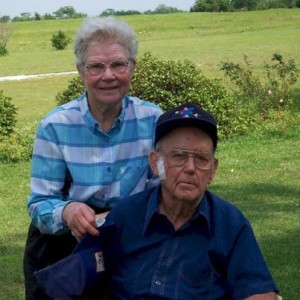
Aunt Fay is a courageous woman. At a time when her five children were grown and gone, and she and Uncle Dean were beginning to enjoy the benefits of an empty nest, she took in her widowed mother and spent the next decade or so caring for the woman who gave her life. Like all heroes, she didn’t count the cost of sleepless nights, cold meals, or missed vacations but rather did what needed to be done for someone who could not help herself. When Aunt Fay could no longer care for Granny Hagan in her home, she chose a suitable care facility and continued to fight for her through the web of red tape and the bureaucracy of aging in our modern society.

After Granny died, Aunt Fay and Uncle Dean enjoyed several years of special time together. Then came the brain tumor. Uncle Dean was incapacitated, and Aunt Fay became a caregiver again. Once more she dealt with doctors, wheelchairs, baths, medications, insurance, facing it all with grace and nobility.

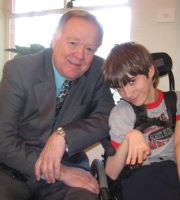
Jim is my older brother, and one of the things he loves about being older is being a grandpa. He has eight grandchildren, and loves them all dearly, but Kyle is special. Jim was at the hospital when Kyle was born, when he began having seizures, when the doctors examined and tested and announced that he had cerebral palsy. Kyle is now 15, and through the years, Jim has been one of his caregivers, spending as much time with him as possible. There have been times when circumstances separated them by miles, but there has always been a heart connection. Jim has never been afraid of or put off by the messiness of loving Kyle. He dresses him, bathes him, moves him from car to wheelchair to bed, feeds him, always with a good deal of teasing, but also with gentleness and caring.

Becoming a hero or a caregiver is not something a person plans to do. Heroism is often thrust on a person, but caregiving sometimes creeps up on you. Mom began showing signs of memory loss more than 15 years ago. At first it was more a source of irritation than anything else, but after several years, it began causing problems, especially when Dad started exhibiting some of the same symptoms. I lived close and dropped in often for a visit, so it seemed natural to check on the freshness of the food in their refrigerator or the cleanliness of their bathrooms. Gradually I began accompanying them on doctors’ visits and supervising their daily medications, and eventually they moved in with me. That’s when Aunt Fay and Jim became my personal heroes. She offered wise advice from her own experiences, cried and prayed with me through many crises, and reassured me when I second guessed my decisions. And when I reached critical mass and called Jim to say I can’t do this anymore, he picked up the reins and stepped in as Mom and Dad’s primary caregiver.

Like heroes, caregivers are admired for their courage in the face of adversity and their noble character that causes them to handle ignoble tasks with grace and love. Caregivers may never be the main character in a book, play or movie, but they are definitely the main characters in the lives of those in their care. Yes, caregivers are heroes, too.

– – – – – – – – – – – – – – – – –

Linda Brendle is retired and lives with her husband David in Emory, Texas. She writes about caregiving, faith, and family at http://www.LifeAfterCaregiving.WordPress.com. You can also find her on Facebook (https://www.facebook.com/linda.brendle) and Twitter (https://twitter.com/#!/LindaBrendle).