Category Archives: Commentary and Analysis

Our New Book — Everyday Heroism: Courage, Compassion and the Power to Change the World

By Scott T. Allison

I’ve spent the past year co‑editing a new academic volume called Everyday Heroism: Courage, Compassion and the Power to Change the World, soon to be published by Cambridge Scholars. It’s been loads of fun working with my two co-editors Joanna Pascoe and Theresa Thorhildsen — both of these colleagues also happen to co-edit the Heroism Science journal with me.

Somewhere along the way I realized that this new Everyday Heroism book addresses something I’ve been circling for years: the idea that heroism isn’t a rare, cinematic event but a daily practice—quiet, improvised, and often unnoticed. The contributors to this volume come from psychology, education, and literary studies, and they all converge on a simple but powerful insight: ordinary people routinely meet challenge, risk, and uncertainty with courage and care. We just don’t always recognize it as heroism.

One of the joys of working on this book has been seeing how differently scholars and practitioners approach the same core question: How does heroic action emerge in everyday life? Some look to classrooms, where teachers model moral courage in the small decisions that shape a child’s sense of safety and possibility. Others turn to community settings, where people respond to adversity not with grand gestures but with steady, prosocial action—checking on a neighbor, stepping into a conflict, or offering support when it’s least convenient. Still others examine the stories we tell in literature and popular media, tracing how cultural narratives shape our sense of what courage looks like and who gets to be seen as a hero.

The book doesn’t shy away from the harder edges of heroism either. Several chapters explore the ethical tensions that arise when good intentions collide with complex realities. Others examine failure—what it means when heroic efforts fall short, and how people make sense of those moments. And a few contributors take up the role of the antihero, showing how flawed or reluctant figures can illuminate the messy, ambiguous terrain of real-world moral action.

What makes this collection especially energizing is its international scope. Authors from Europe, Oceania, and North America bring perspectives shaped by different cultural contexts, different educational systems, and different social challenges. Yet across these differences, a shared theme emerges: heroism is less about extraordinary individuals and more about the everyday choices that sustain communities and foster resilience.

If you’re interested in leadership, moral courage, or simply understanding how people rise to meet the demands of the twenty‑first century, I think you’ll find something meaningful in this volume. Editing it reminded me that heroism isn’t a distant ideal. It’s something we practice—imperfectly, creatively, persistently—every day.

I’ll keep you updated about the book’s publication date, which is probably late 2026. Here’s the exact citation:

Pascoe, J., Thorkhildsen, T., & Allison, S. T. (2027). Everyday heroism: Courage, compassion and the power to change the world. Cambridge Scholars.

= = = = = = = =

Our Definition of "Hero"

who-is-your-hero1By Scott T. Allison and George R. Goethals

We’ve written an encyclopedia article about all the various definitions of a hero, which you can view here.

Most social scientists define heroism as exceptional pro-social behavior that is voluntary and involves risk and self-sacrifice.  Although we respect that definition and recognize its value, it is important to acknowledge a more subjective approach to defining a hero.

If you haven’t read our first heroes book, our definition of a hero is based on our research on people’s stated choices of heroes. We’ve asked many hundreds of people to tell us who their heroes are, and why. From our data it’s pretty clear that in our society, heroism is in the eye of the beholder. Preferences for heroes are as varied as people’s taste in music, movies, and paintings. Defining a hero is like defining good food. It depends on your tastes, your personal experiences, and maybe even the current developmental stage of your life.

Cancer victims name cancer survivors as their heroes. Soccer players list soccer stars as their heroes. In short, your needs and motives determine whom you choose as heroes. Maturity and development play a role in hero selection, with younger people tending to choose heroes known for their talents, physical skills, and celebrity status. Older people tend to favor moral heroes. As we get older and wiser, our tastes in heroes evolve. Some have suggested that with age and wisdom, our choice of heroes improves — perhaps as we get older we become more discriminating and more respectful of the term “hero”.

The point we wish to make is that every person we have profiled in this blog is someone’s hero. We didn’t choose the heroes whom we profile on this blog — you did. Each hero may not be your personal hero, but he or she is somebody’s hero, and the reasons are valid and meaningful to the person holding them.

Even Joseph Campbell, the great mythologist and founder of the study of heroes, acknowledged that heroism is in the eye of the beholder. Campbell said, “You could be a local god, but for the people whom that local god conquered, you could be the enemy. Whether you call someone a hero or a monster is all relative….” (The Power of Myth, p. 156).

The World War II German soldier who died, said Campbell, “is as much a hero as the American soldier who was sent over there to kill him.” Campbell believed that the moral objective of heroism “is that of saving a people, saving a person, or supporting an idea.”

Although we agree with Campbell, and others, that heroism is in the eye of the beholder, we will never profile people such as Adolf Hitler in our blog, even if Hitler is considered heroic to small segment of society. There are some people whose values are so repugnant to us, and to the reasonable majority, that we will never profile them here.

We’ve found that people’s beliefs about heroes tend to follow a systematic pattern. After polling hundreds of people, we discovered that heroes are perceived to be highly moral, highly competent, or both. More specifically, heroes are believed to possess eight traits, which we call The Great Eight. These traits are smart, strong, resilient, selfless, caring, charismatic, reliable, and inspiring. It’s unusual for a hero to possess all eight of these characteristics, but most heroes have a majority of them.

As authors of this blog, we do have our own personal heroes. Our heroes combine great selflessness with great ability. In our second heroes book we call heroes of this type Traditional Heroes. One of us  (Scott Allison) identifies Roberto Clemente his greatest hero.  Clemente was a great baseball player who died helping earthquake victims. The other of us (George Goethals) calls Abraham Lincoln his greatest hero. Lincoln showed remarkable heroic leadership while healing a divided nation and freeing slaves.

When we were younger, a person didn’t have to be particularly moral or selfless to be a hero to us. The person just had to be a star athlete or great rock star.  We’ve outgrown this type of hero, which we call a Transitional Hero. Now our heroes have to accomplish far more than show great ability. They must also perform some exemplary action in the service of others.

Our research has also found that there are at least 12 functions of heroism. Heroes give us hope, heroes energize us, heroes develop us, heroes heal us, heroes impart wisdom, heroes are role models for morality, heroes offer safety and protection, heroes give us positive emotions, heroes give us meaning and purpose, heroes provide social connection and reduce loneliness, heroes help individuals achieve personal goals, and heroes help society achieve societal goals.

We will certainly continue to welcome any debates about the validity of our contentions in this blog. Critiques about the hero-worthiness of a particular individual may sharpen our thinking about who are the special men and women among us who deserve the term “hero” associated with their names. In the mean time, let’s honor the diversity of opinion out there about who our heroes are. We’re all in a different place in life, and our heroes shift and evolve as we ourselves shift and evolve.

As mentioned before, we’ve recently published the Encyclopedia of Heroism Studies, and in it we describe our current thinking about the definition of heroism.

References

Allison, S. T. (Ed.) (2022). The 12 functions of heroes and heroism. Richmond: Palsgrove.

Allison, S. T. (2023). Definitions and descriptions of heroism. In S. T. Allison, J. K. Beggan, and G. R. Goethals (Eds.), Encyclopedia of Heroism Studies. New York: Springer.

Allison, S. T., & Goethals, G. R. (2011). Heroes: What They Do & Why We Need Them.  New York: Oxford University Press.

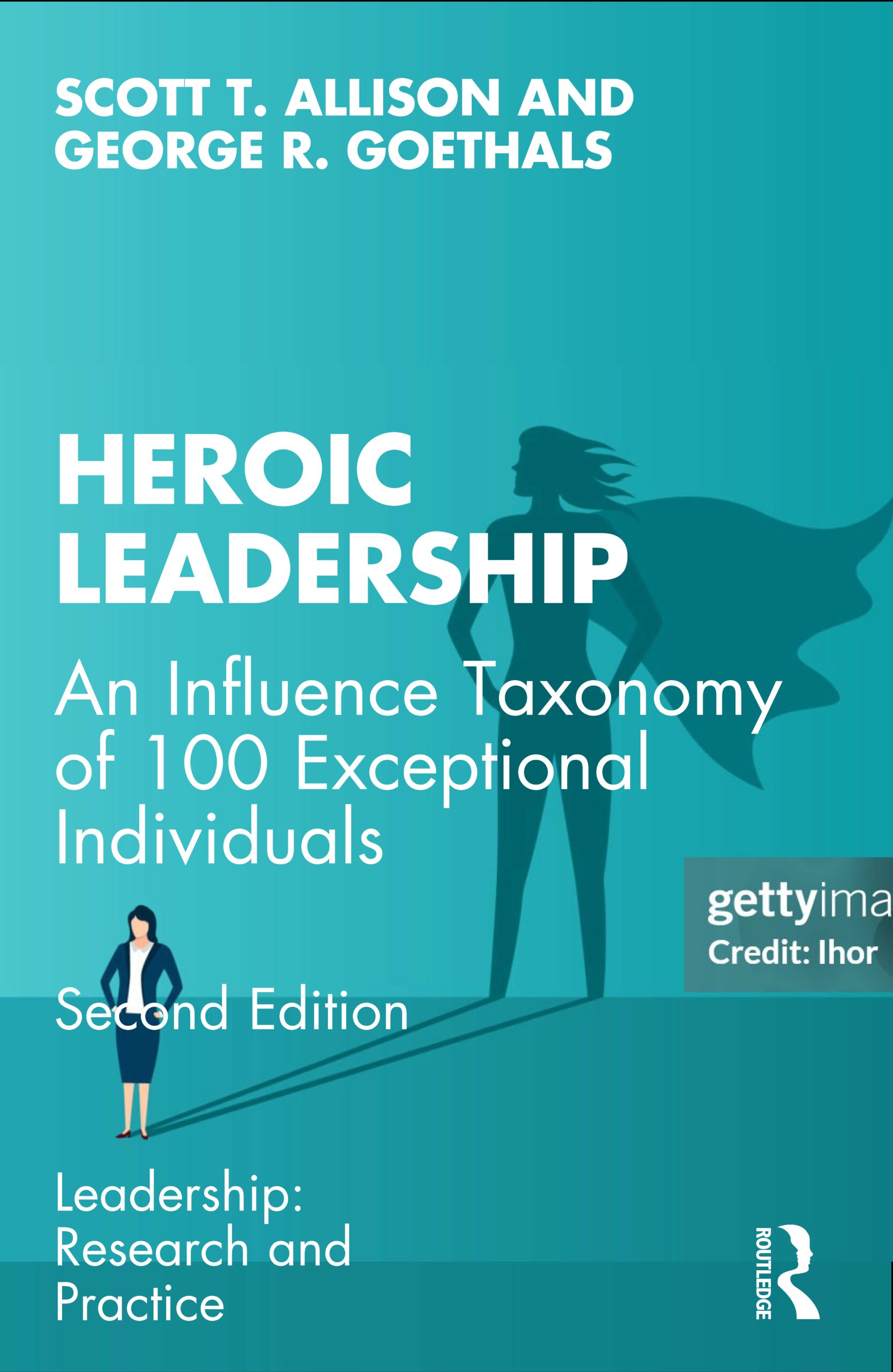
Allison, S. T., & Goethals, G. R. (2025). Heroic Leadership: An Influence Taxonomy of 100 Exceptional Individuals. New York: Routledge.

Allison, S. T., Beggan, J. K., & Goethals, G. R. (Eds.) (2024). The encyclopedia of heroism studies. Springer.

Campbell, J. (1988). The Power of Myth. (with Bill Moyers).


What is Heroic Self-Efficacy?

By Scott T. Allison

In 2025, construction worker Luis Alvarez demonstrated what psychologists call heroic self-efficacy when he rushed into the ocean to help a young girl who had been attacked by a shark. While others watched in shock, Alvarez acted immediately, entering dangerous waters and helping to apply a tourniquet that slowed the girl’s severe bleeding until emergency responders arrived.

Alvarez’s rapid and decisive intervention reflected more than spontaneous courage; it revealed a confident belief in his ability to respond effectively in a life-threatening situation. Such moments illustrate the essence of heroic self-efficacy — the confidence that one can step forward and act effectively when circumstances call for courage and service to others.

Let’s dive into the background of this idea, beginning with Bandura’s (1977) innovative self-efficacy theory.

Bandura proposed that individuals actively shape their environments through cognitive, affective, and behavioral interactions. Through this process, people regulate their behavior in pursuit of goals and develop their sense of self. Central to the theory is the idea that beliefs about personal capability are among the strongest predictors of behavior, influencing the goals individuals set, the activities they pursue, their persistence in the face of obstacles, and their decision-making and problem-solving strategies (Bandura 1977; Maddux and Gosselin 2012).

Self-efficacy refers to beliefs about one’s ability to respond effectively to specific challenges and conditions. These beliefs are not personality traits or fixed characteristics but develop across the lifespan through interaction with the environment (Maddux and Gosselin 2012; Maddux and Kleiman 2021). Self-efficacy expectations are typically domain-specific; confidence in one area does not necessarily translate to another. Self-efficacy can also operate at both individual and collective levels. Collective efficacy refers to shared beliefs about a group’s capacity to achieve desired goals and is particularly relevant for social heroes who act within groups or organizations (Bandura 2000; Condren 2019).

Self-efficacy beliefs develop from five primary sources:

  1. performance experiences
  2. vicarious experiences
  3. imagined experiences
  4. verbal persuasion
  5. physiological and emotional states

Performance experiences—successes and failures in relevant situations—are the most powerful source because they provide direct evidence of one’s capabilities. Observing role models provides vicarious experiences that help individuals learn effective strategies and increase confidence. Imagined experiences and verbal encouragement can also strengthen efficacy beliefs, though typically less strongly. Finally, physiological and emotional states influence perceived capability, with negative emotional states often undermining self-efficacy.

Applied to heroism, heroic self-efficacy refers to beliefs about one’s ability to respond effectively in situations requiring courageous or prosocial action. Psychologist Michael Condren (2024) has conducted studies demonstrating the importance of self-efficacy in predicting heroic behavior.

People who have risked their lives to save others often shared experiences that fostered heroic self-efficacy (Kohen et al. 2017). Many had previously imagined situations requiring intervention and had practiced helping behaviors in everyday life. They also possessed relevant skills and experiences that increased confidence in their ability to act effectively. These findings highlight the importance of both imagined and performance experiences in developing heroic self-efficacy.

Other forms of heroism demonstrate the importance of social influences. Dissident artists in communist Poland developed heroic self-efficacy partly through exposure to role models within their families and social networks (Csikszentmihalyi et al. 2017). These vicarious experiences provided models of courageous action and sometimes served as direct entry points into dissident activities. Participation in dissident groups then provided performance experiences that strengthened both individual and collective efficacy beliefs.

Similar developmental patterns appear among social activists. Many activists engaged in value-driven challenges to authority during adolescence or even childhood, providing early performance experiences that shaped their sense of efficacy (Condren 2019). Observing activist organizations and their public actions provided vicarious experiences that motivated participation and strengthened confidence in their ability to contribute effectively. Participation in activist groups further reinforced both self-efficacy and collective efficacy beliefs.

Vicarious experiences of heroic action may also stimulate the heroic imagination, defined as a mindset oriented toward helping others and taking risks for moral causes (Franco et al. 2011). This mindset develops through lifelong interaction with one’s environment and can foster the development of heroic self-efficacy (Allison et al. 2017). Accordingly, hero training programs aim to cultivate heroic imagination and consciousness in order to strengthen heroic self-efficacy. Programs such as the Heroic Imagination Project use role models and guided imagination exercises to help participants envision how they would respond in situations requiring courageous action (Riches et al. 2020).

Overall, heroic self-efficacy plays a central role in the developmental process of heroism. By strengthening individuals’ confidence in their ability to act effectively in challenging situations, heroic self-efficacy increases the likelihood that people will translate prosocial values into heroic action.

REFERENCES

Allison, Scott T., George R. Goethals, and Roderick M. Kramer. 2017. Setting the scene: The rise and coalescence of heroism science. In Handbook of heroism and heroic leadership, ed. Scott T. Allison, George R. Goethals, and Roderick M. Kramer, 1–16. Routledge.

Bandura, Albert. 1977. Self-efficacy: Toward a unifying theory of behavioral change. Psychological Review 84 (2): 191–215.

Bandura, Albert. 2000. Exercise of human agency through collective efficacy. Current Directions in Psychological Science 9 (3): 75–78.

Condren, Michael. 2024. Heroic self-efficacy. In S. Allison, J. Beggan, & G. Goethals (Eds.), Encyclopedia of Heroism Studies. Springer Nature.

Condren, Michael. 2019. Self-directed universalists: Social heroes and value-oriented challenges to authority. Heroism Science 4 (2).

Csikszentmihalyi, Mihaly, Michael Condren, and Izabela Lebuda. 2017. Deviant heroes and social heroism in everyday life: Activists and artists. In Handbook of heroism and heroic leadership, ed Scott T. Allison, George R. Goethals, and Roderick M. Kramer, 249–261. Routledge.

Franco, Zeno E., Kathy Blau, and Philip G. Zimbardo. 2011. Heroism: A conceptual analysis and differentiation between heroic action and altruism. Review of General Psychology 15 (2): 99–113.

Kohen, Ari, Matt Langdon, and Brian R. Riches. 2017. The making of a hero: Cultivating empathy, altruism, and heroic imagination. Journal of Humanistic Psychology.


The Impossible Dream: A Love Song to the Human Spirit

Being Heroic is Always Possible

By Scott T. Allison

Some songs reach beyond melody — they reach into our souls. The Impossible Dream, from Man of La Mancha, is one of those rare pieces of music that transcends time and genre. When Don Quixote declares his intention “to fight the unbeatable foe” and “reach the unreachable star,” we feel the pull of something deeply human — the yearning to live with purpose, integrity, and heart.

At first, Quixote’s dream seems absurd. Why chase what you can’t catch? Why take on battles that can’t be won? Yet that’s exactly what makes his dream so profoundly heroic. True heroism has never been about victory; it’s about perseverance, conviction, and the courage to act even when success seems impossible.

Psychologists describe everyday heroes as ordinary people who step forward when others stand aside. They act not because they are fearless, but because their conscience leaves them no choice. The Impossible Dream captures this quiet defiance perfectly — it’s a love song to the human spirit, to our stubborn belief that goodness still matters and that one person’s action can make a difference.

When we listen, we don’t just admire Quixote’s idealism; we join him in it. The song invites each of us to imagine what courage might look like in our own daily lives — speaking truth when silence feels safer, offering kindness in a cynical world, holding fast to compassion when it would be easier to walk away.

This kind of heroism — what psychologists call moral courage — surrounds us more than we realize. It’s visible in the nurse who keeps showing up through exhaustion, the teacher who protects a vulnerable student, the neighbor who stands up against hate. These people may never call themselves heroes, but their actions echo the same timeless call: to live with heart, no matter the cost.

Beneath its stirring lyrics, The Impossible Dream reminds us of a truth Viktor Frankl once wrote about: that meaning is what makes endurance possible. To “dream the impossible dream” is to keep believing that our lives, however small they seem, can help tilt the world a little more toward light.

Perhaps that’s why the song still moves people generations later. It speaks to something eternal in us — the desire to strive, to love, and to serve, even when the odds are steep. To chase the unreachable star is not to be delusional; it’s to live with purpose. It’s to see ourselves as part of something larger and nobler than our own comfort.

So when the world feels heavy, remember Don Quixote’s anthem. Sing it — loudly, imperfectly, unapologetically. Because the act of reaching, even when the goal is distant, is what makes us most human.

And that, in the end, is the most heroic dream of all.

References

Franco, Z., & Zimbardo, P. (2006). The banality of heroism. Greater Good, 3(2), 30-35.

Franco, Z. E., Allison, S. T., & Riches, B. R. (2025). Honoring Philip Zimbardo: Personal reflections on a legacy in Heroism Studies. Heroism Science, 10(1), 1-37.

Pascoe, J., Thorkhildsen, T., & Allison, S. T. (2026). Everyday heroism: Courage, compassion and the power to change the world. Cambridge Scholars.

= = = = =

Tragedy Begets Heroism: How Grief Became a Catalyst for Change after the Camp Mystic Tragedy

By Scott T. Allison

It is a fundamental human truth — From the depths of pain, heroism often rises.

On July 4, 2025, catastrophic flash flooding at Camp Mystic, a girls’ summer camp in Hunt, Texas, killed 27 people, including campers and staff. The tragedy occurred when the Guadalupe River and a nearby creek overflowed their banks following torrential rainfall, inundating cabins where the youngest campers were sleeping.

The level of grief and suffering felt by the parents and families of these lost girls is unimaginable for most of us.

Soon after this horrific event, the parents of many victims gave emotional testimony to Texas lawmakers, calling for stronger safety measures for youth camps. One parent stated, “The tragedy wasn’t an accident. This was complacency, and it is 100% preventable.” Another pleaded, “Our daughters deserved better, and future campers deserve better.” The urgency was unmistakable: “We would be doing a massive disservice to our daughters for not running with this bill and seeing it through.”

Their advocacy catalyzed legislative change. The Texas bill now requires youth camps to establish floodplain restrictions, emergency plans, staff training, parental notification, warning systems, safety equipment, and safety orientations for all campers and staff.

Why, then, does human suffering give rise to heroic action? Scholars and psychologists have identified several compelling mechanisms.

  1. First, tragedy shatters the illusion of permanence and control. In that raw space, people often re-evaluate their values and priorities. This “existential jolt” can awaken a sense of responsibility—if life is fragile, then what I do right now matters.
  2. Second, tragedy forges empathy through shared pain. Experiencing loss or hardship firsthand deepens the ability to recognize and respond to others’ suffering.
  3. Third, tragedy strengthens social bonds. In the aftermath of disaster, humans often experience what researchers call the “tend-and-befriend” response—banding together for mutual survival and healing. This is also called the Unification Principle of Heroism.
  4. Fourth, tragedy offers a path to redemption. Many spiritual and philosophical traditions—from Buddhism to Christianity—frame suffering as a crucible for transformation.
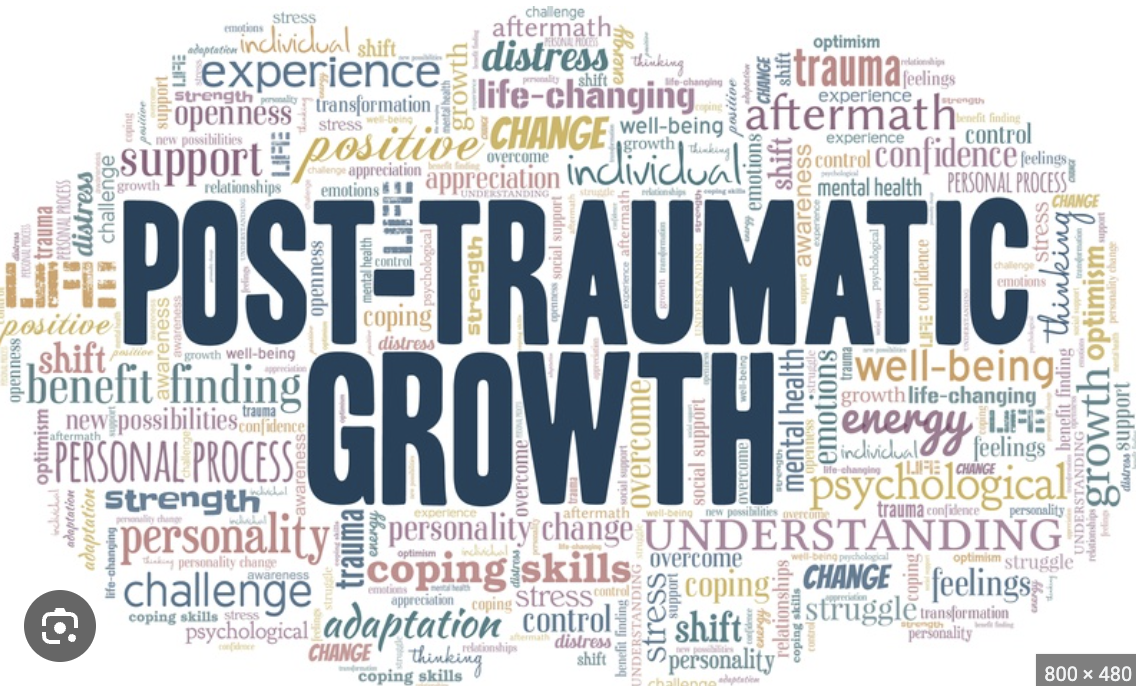
  5. Finally, tragedy catalyzes post-traumatic growth. Positive psychology research shows that some people emerge from trauma with greater resilience, purpose, and moral clarity.

In a perfect world, human beings would love, help, and look out for each other without tragedy as the inspiration. Yet in the absence of a perfect world, we are called to become more perfect versions of ourselves—where even out of devastation, the seeds of compassion, justice, and heroism can take root and flourish.

= = = = = = =

Pay it Forward 25 Years Later: How Heroism Unifies, Heals, and Transforms

By Scott T. Allison

When the movie Pay It Forward premiered in October 2000, the film earned mixed reviews from critics. Some reviewers found it emotionally manipulative or overly sentimental. Others appreciated its intentions but criticized it for leaning too heavily into tearjerker territory.

Audience reactions, however, were warmer. Many viewers were moved by its message, even as critics remained skeptical. The film sparked a meaningful grassroots response — including the creation of the Pay It Forward Foundation and millions of symbolic gestures worldwide — suggesting its core message resonated even if its cinematic execution was widely debated.

Pay It Forward tells the story of Trevor, a thoughtful and idealistic seventh-grader who gets a school assignment to “change the world.” His big idea? Help three people in a big, meaningful way. Instead of asking them to pay him back, they each help three more people. It’s like a kindness chain letter, but in real life.

Trevor’s plan sets off a quiet wave of good deeds, as acts of generosity ripple outward in unexpected ways. Along the way, we see how Trevor’s idea impacts his struggling single mom, his emotionally scarred teacher, and eventually, people he’s never even met.

The Unification Principle of Heroism in Action

Pay it Forward illustrates the Unification Principle of Heroism. All heroic actions stem from a loving commitment to healing, social responsibility, and moral contagion. Trevor’s tragic fate amplifies this theme — his sacrifice is not in vain, as it produces widespread solidarity and emotional transformation across a community.

In this way, Pay It Forward dramatizes the moral and emotional logic of the unification principle: heroism seeks to repair, unite, and uplift the human community.

Here are three key moments in Pay It Forward that capture the Unification Principle of Heroism:

1. Trevor’s Classroom Pitch
When Trevor first shares his “pay it forward” idea in class, it sounds almost too simple: help three people in a big way, and ask them to do the same. But in this moment, he’s planting a seed — not just for random acts of kindness, but for a web of mutual care. He’s not aiming to be the hero himself; he’s inviting everyone to be part of something bigger.

2. The Homeless Man’s Redemption
One of the people Trevor helps is a man struggling with addiction and homelessness. Trevor gives him food, shelter, and more importantly, hope. Later, that man “pays it forward” by helping a woman about to take her own life. It’s a powerful illustration of how heroic compassion can restore connection and meaning, even for those who feel discarded by society.

3. The Final Scene and Candlelight Vigil
After Trevor’s tragic death, something remarkable happens — a huge crowd gathers outside his home with candles. Many of them are strangers who were touched by the ripple effect of his idea. This emotional scene drives home the Unification Principle. Heroism isn’t about one person standing alone, but about how one person’s moral action can inspire unity, healing, and collective transformation.

Trevor’s heroism matters not because he was loud or famous, but because he connected people. His simple idea — help three people in a meaningful way — showed that one person’s courage and kindness can ripple outward, linking strangers, healing wounds, and reminding us that we’re all part of something bigger.

References

Allison, S.T. (2024). Unification principle of heroism. In: Allison, S.T., Beggan, J.K., Goethals, G.R. (eds) Encyclopedia of Heroism Studies. Springer.

Allison, S. T. (2025). The love with a thousand faces: Heroism as embodied love in action. Heroism Science, 10(2), 1-30.

Bray, P. (2024). Hero’s journey and positive transformation. In: Allison, S.T., Beggan, J.K., Goethals, G.R. (eds) Encyclopedia of Heroism Studies. Springer.

Franco, Z. E., Blau, K., & Zimbardo, P. G. (2011). Heroism: A conceptual analysis and differentiation between heroic action and altruism. Review of General Psychology, 15(2), 99–113.

Kidder, R. M. (2005). Moral courage. HarperCollins.

Leder, M. (Director). (2000). Pay it forward [Film]. Warner Bros.

Pascale, R., Sternin, J., & Sternin, M. (2010). The power of positive deviance: How unlikely innovators solve the world’s toughest problems. Harvard Business Press.

Perlin, J.D., McAdams, D.P. (2024). Redemption: Stories heroes live by. In: Allison, S.T., Beggan, J.K., Goethals, G.R. (eds) Encyclopedia of Heroism Studies. Springer.