Since 2005, Scott Allison’s Heroism Studies Lab has identified many principles, phenomena, and theories of heroism. These contributions illuminate:
- how people perceive heroes
- how heroes influence individuals and societies
- how heroism itself develops
The contributions below are presented in reverse chronological order so that returning visitors can immediately see the newest developments. Together they trace the continuing evolution of heroism science, from early discoveries about hero perception to recent work on the developmental systems theory of heroism.
- Reciprocal Developmental Systems Theory of Heroism (2027)
This theory recognizes that heroes are not born fully formed, nor do societies evolve just by accident. Both develop through an ongoing process of reciprocal influence. Heroes are shaped by families, mentors, adversity, communities, and culture. In turn, they reshape those same social worlds through their actions, stories, and legacies. Heroism is therefore not simply something extraordinary people do. It is one of the primary ways humanity learns, grows, and becomes its better self.
Allison, S. T., & Goethals, G. R. (2027). Heroes: What they do and why we need them (2nd ed.). Oxford University Press.
- Mature Heroism (2027)
Mature heroism is a deep understanding of heroic action that embraces its full developmental, emotional, moral, and social complexity without diminishing our admiration for it. It recognizes that the deepest acts of courage often arise when there are no perfect choices, only the responsibility to pursue the wisest and most compassionate course available. Whereas popular heroism says “Heroes are amazing,” mature heroism says “Heroism is extraordinarily complex.”
Allison, S. T., & Goethals, G. R. (2027). Heroes: What they do and why we need them (2nd ed.). Oxford University Press.
- Everyday Antiheroism (2027)
Everyday antiheroism refers to the morally complex ways ordinary people strive to do good while continuing to struggle with unresolved pain, inner conflict, or psychological wounds. Rather than representing the opposite of heroism, everyday antiheroism reflects an incomplete or imperfect heroic journey in which courage, virtue, and growth coexist with lingering suffering, moral ambiguity, or personal limitation.
Prusa, I. & Allison, S. T. (2027). Everyday antiheroism: The pain with a thousand faces. In J. Pascoe et al. (Eds.), Everyday Heroism: Courage, compassion and the power to change the world. Cambridge Scholars.
- Recursive Process of Situationally Activated Everyday Heroism (2027)
Everyday heroism is situationally activated when external circumstances cause ordinary people to act with courage, compassion, or moral responsibility. In a recursive process, the situation provides the opportunity for heroism, and the heroic actor then becomes part of the situational context that influences the next generation of everyday heroes.
Allison, S. T. (2027). Philip Zimbardo and Carl Sagan: Situationally activated everyday heroism in public life. In C. Maslach et al. (Eds.), Elgar Companion to Philip G. Zimbardo. Elgar.
- Heroism as Emotional Integration (2026)
Heroism rarely emerges from a single emotion acting alone. More often, it arises from the successful integration of competing emotional forces. To take heroic action, people must integrate positive emotions (e.g., empathy, hope, compassion) with negative emotions (e.g., fear, anger, uncertainty).
Allison, S. T. (2026). Heroism as emotional integration: A process model of emotion-driven heroic action. Heroism Science, 11, 87-116.
- The Glass Mask Phenomenon (2026)
The Glass Mask describes a subtle imbalance in how leadership is perceived: the same movements that help men be seen as both capable leaders and admirable figures do not always carry the same meaning when expressed by women. By weakening the natural link between authority and admiration, the Glass Mask makes women’s leadership less immediately recognizable as heroic and more likely to be viewed through caution or constraint.
Allison, S. T., & Goethals, G. R. (2026). Motional Intelligence: The Power of Movement in Leadership. Emerald.
- Chrono-Archetypes (2025)
Chrono-archetypes are symbolic inner personas grounded in Zimbardo’s Time Perspective Theory. They are dynamic, narrative-based identities (e.g., Legacy Keeper, Visionary, Wounded Historian) that respond to everyday “calls to action,” including ethical dilemmas, crises, and opportunities for prosocial innovation.
Allison, S. T. (2025). Temporal identities and moral courage: A chrono-archetype model of workplace heroism. Journal of Organizational Psychology, 25(3), 129-145.
- Amalgamated Heroes (2024)
An amalgamated hero is a legendary, cultural hero who is derived from a complex blending of similar historical figures and our own cognitive embellishments of those figures.
Allison, S. T. & Hutchins, R. (2024). Amalgamated heroes. In S. T. Allison, J. K. Beggan, and G. R. Goethals (Eds.), Encyclopedia of Heroism Studies. Springer.
- Heroism-by-Proxy (2024)
Heroism-by-proxy describes a psychological phenomenon that occurs when an individual develops a strong psychological association with a hero or a heroic figure, leading to a sense of personal heroism. Heroism-by-proxy can be constructive when it inspires heroism but can be destructive when it engenders either complacency or a psychological identification with violent, divisive leaders.
Allison, S. T., Beggan, J. K., & Goethals, G. R. (2024). Heroism-by-Proxy. In S. T. Allison, J. K. Beggan, and G. R. Goethals (Eds.), Encyclopedia of Heroism Studies. Springer.
- Perfect Confluence and Herois (2024)
The “perfect storm” is a term often used metaphorically to describe situations where a convergence of multiple factors leads to a particularly significant or catastrophic outcome. The perfect confluence refers to any convergence of circumstances that results in a particularly positive or heroic outcome.
Allison, S. T. (2024). Perfect storm, perfect confluence, and heroism. In S. T. Allison, J. K. Beggan, and G. R. Goethals (Eds.), Encyclopedia of Heroism Studies. Springer.
- Intuitive Heroism (2024)
Intuitive heroism refers to how individuals naturally and intuitively make sense of heroism. People have their own ideas about what heroes do, what heroes are like, and what motivates heroism. These intuitive notions of heroism are accurate in some ways but also contain factual errors and misunderstandings about heroism.
Allison, S. T. (2024). Intuitive heroism. In S. T. Allison, J. K. Beggan, and G. R. Goethals (Eds.), Encyclopedia of Heroism Studies. Springer.
- Heroism Attribution Error (2024)
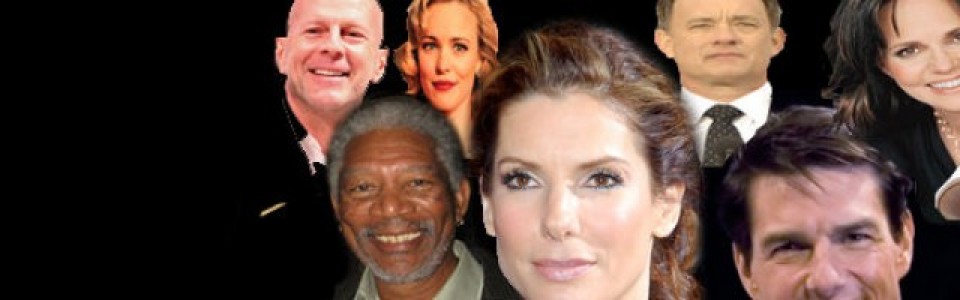
The tendency of people to confuse fame for heroism, such that they attribute heroism to celebrities who are famous for non-heroic reasons.
Allison, S. T. (2024). Heroism attribution error. In S. T. Allison, J. K. Beggan, and G. R. Goethals (Eds.), Encyclopedia of Heroism Studies. Springer.
- Hero Illiteracy (2024)
The lack of knowledge about heroism, or a misunderstanding about what comprises heroism. The condition can afflict an individual or an entire society. It can include an inability to distinguish heroes from villains and an erroneous belief that money, fame, and celebrity status are the determinants of heroism.
.Allison, S. T., & Beggan, J. K. (2024). Hero Illiteracy. In S. T. Allison, J. K. Beggan, and G. R. Goethals (Eds.), Encyclopedia of Heroism Studies. Springer.
- Motional Intelligence (2023, 2026)
A form of kinesthetic intelligence that enables leaders to move the emotions of their followers. It is the ability of heroic (and villainous) leaders to use their body movements and voices effectively in a way that inspires and mobilizes followers.
Allison, S. T. (2023). Motional intelligence and leadership. In G. R. Goethals, S. T. Allison, & G. J. Sorenson (Eds.). The SAGE Encyclopedia of Leadership Studies. Sage.
Allison, S. T., & Goethals, G. R. (2026). Motional intelligence: The power of movement in leadership. Emerald.
- Dynamic Negotiated Exchange Theory of Heroism (2022)
The dynamic negotiated exchange model of heroism refers to the processes by which the implicit exchange agreement between heroes and their followers evolves over time. Terms of the exchange agreement often change in response to a major crisis, such as the COVID pandemic of early 2020s.
Allison, S. T., & Beggan, J. K. (2022). The dynamic negotiated exchange model of heroism and heroic leadership: Lessons from the COVID-19 pandemic. Interdisciplinary Journal of Leadership Studies, 1, 15-31.
- Heroic Balance (2021)
The ability of the hero to achieve a healthy psychological balance needed to achieve their heroic mission. Heroes must balance intuition with reason; emotion with logic; self-confidence with humility; autonomy with dependency; personal life with professional life; and more.
Allison, S. T. (2021). Beth Harmon’s hero’s journey: The psychology of heroism in The Queen’s Gambit. Palsgrove.
- Heroic Autonomy (2021, 2024)
The imperative of the hero to perform the last and most crucial heroic act alone — independent from friends and mentors who have helped the hero prepare for that heroic moment.
Allison, S. T. (2021). Beth Harmon’s hero’s journey: The psychology of heroism in The Queen’s Gambit. Palsgrove.
Allison, S. T. (2024). Heroic autonomy. In S. T. Allison, J. K. Beggan, and G. R. Goethals (Eds.), Encyclopedia of Heroism Studies. Springer.
- Puer Aeternus as an Obstacle to Heroism (2020)
The Puer Aeternus complex describes an adult, often a man, who remains in an extended state of adolescence, exhibiting traits commonly associated with youth. The phenomenon represents a significant barrier to personal growth and heroism due to its characteristic evasion of the hero’s journey that transforms people into their best, most heroic selves.
Allison, S. T., Goethals, G. R., & Spyrou, S. P. (2020). Donald Trump as the archetypal puer aeternus: The psychology of mature and immature leadership. In K. Bezio & G. R. Goethals (Eds.), Leadership, populism, and resistance. Edward Elgar.
- The Hero Androgyny Phenomenon (2020)
The tendency of heroes to possess a healthy blend of both masculine and feminine traits. The blend combines a sense of agency, autonomy, and effectiveness with moral warmth, empathy, and communality.
Hoyt, C. L., Allison, S. T., Barnowski, A., & Sultan, A. (2020). Lay theories of heroism and leadership: The role of gender, communion, and agency. Social Psychology, 51, 381-395.
- Heroic Wholeness Imperative (2020)
The mandate of leaders to promote psychological wholeness and well-being by meeting the higher-level transcendent needs of followers.
Allison, S. T. & Goethals, G. R. (2020). The heroic leadership imperative: How leaders inspire and mobilize change. Emerald.
- Heroic Leadership Imperative (2020)
The mandate of transforming heroic leaders to meet the individual, collective, and transcendent needs of their followers.
Allison, S. T. & Goethals, G. R. (2020). The heroic leadership imperative: How leaders inspire and mobilize change. Emerald.
- Romance of Heroism (2019)
The romance of heroism refers to people’s idealistic and quixotic notions of heroes, which leads to exaggerated perceptions of the heroic qualities in certain types of people, especially under conditions of uncertainty. Romanticized desires to designate people as heroes are subject to distortion and can induce people to choose false heroes.
Goethals, G. R., & Allison, S. T. (2019). The romance of heroism and heroic leadership: Ambiguity, attribution, and apotheosis. Emerald.
- Seven Barriers to Heroic Transformation (2019)
Seven ways people avoid heroic transformation: self-ignorance, impoverished environments, personal trauma, victim identification, absence of mentors, mental/physical illness, and lack of psychological flexibility.
Allison, S. T., Goethals, G. R., Marrinan, A. R., Parker, O. M., Spyrou, S. P., Stein, M. (2019). The metamorphosis of the hero: Principles, processes, and purpose. Frontiers in Psychology, 10, 606.
- Heroic Consciousnes (2019, 2024)
Heroic consciousness is a state of heightened awareness, reasoning, emotional experience, self-identity, intention, and will, all aimed at saving lives, pursuing a noble cause, and promoting the greater good.
Allison, S. T. (2019). Heroic consciousness. Heroism Science, 4, 1-43.
Allison, S. T. (2024). Heroic consciousness. In S. T. Allison, J. K. Beggan, and G. R. Goethals (Eds.), Encyclopedia of Heroism Studies. Springer.
- Heroic Lag (2019, 2024)
Activist heroes are often ahead of their time, advocating changes that challenge prevailing assumptions, power structures, or group identities. Heroic lag refers to the delay between the time when a hero champions a transformative idea and the time when society comes to recognize the value of that idea.
Goethals, G. R., & Allison, S. T. (2019). The romance of heroism and heroic leadership: Ambiguity, attribution, and apotheosis. Emerald.
Allison, S. T. (2024). Heroic lag. In S. T. Allison, J. K. Beggan, and G. R. Goethals (Eds.), Encyclopedia of Heroism Studies. Springer.
- Transcendent and Trapped Immortality (2018, 2024)
The tendency of people to perceive dead heroes and villains differently. Specifically, we believe deceased good-doers achieve transcendent immortality, with their souls persisting beyond space and time. In contrast, evil-doers are perceived to have trapped immortality, with their souls persisting on Earth, bound to a physical location.
Gray, K., Anderson, S., Doyle, C. M., Hester, N., Schmitt, P., Vonasch, A., Allison, S. T., and Jackson, J. C. (2018). To be immortal, do good or evil. Personality and Social Psychology Bulletin, 44, 868-880.
Allison, S. T. (2024). Transcendent immortality and heroism. In S. T. Allison, J. K. Beggan, and G. R. Goethals (Eds.), Encyclopedia of Heroism Studies. Springer.
- The Personal Heroic Imperative (2018)
Each human being’s built-in mandate to fulfill their heroic imperative by imagining and creating their own heroic growth.
Efthimiou, O., Allison, S. T., & Franco, Z. E. (2018). Heroism and wellbeing in the 21st century: Recognizing our personal heroic imperative. In O. Efthimiou, S. T. Allison, & Z. E. Franco (Eds.), Heroism and wellbeing in the 21st Century: Applied and emerging perspectives. Routledge.
- Three Heroic Transformative Arcs (2017)
The developmental process of ordinary people transforming into heroes by transforming from a state of egocentricity to sociocentricity; from dependence to autonomy; and from stagnation to growth.
Allison, S. T., & Goethals, G. R. (2017). The hero’s transformation. In S. T. Allison, G. R. Goethals, & R. M. Kramer (Eds.), Handbook of heroism and heroic leadership. Routledge.
- Six Types of Heroic Transformation (2017, 2024)
Six commons patterns of transformation in heroes that involve changes in their mental, emotional, physical, spiritual, moral, and motivational state.
Allison, S. T., Goethals, G. R., & Kramer, R. M. (2017). Setting the scene: The rise and coalescence of heroism science. In S. T. Allison, G. R. Goethals, & R. M. Kramer (Eds.), Handbook of heroism and heroic leadership. Routledge.
Allison, S. T. (2024). Heroic transformation. In S. T. Allison, J. K. Beggan, and G. R. Goethals (Eds.), Encyclopedia of Heroism Studies. Springer.
- Six Benefits of Suffering (2016, 2024)
The identification of benefits of heroic suffering as offering (1) redemption, (2) developmental progress, (3) humility, (4) compassion, (5) social union, and (6) meaning and purpose.
Allison, S. T., & Setterberg, G. C. (2016). Suffering and sacrifice: Individual and collective benefits, and implications for leadership. In S. T. Allison, C. T. Kocher, & G. R. Goethals (Eds), Frontiers in spiritual leadership: Discovering the better angels of our nature. Palgrave Macmillan.
Allison, S. T. (2024). Suffering of the hero. In S. T. Allison, J. K. Beggan, and G. R. Goethals (Eds.), Encyclopedia of Heroism Studies. Springer.
- Need-Based Heroism — AKA The Johnny Carson Effect (2016, 2024)
The tendency of people’s current need states to determine their choice of heroes, with these need-states changing as a function of people’s developmental stages and their changing life circumstances. (named after Johnny Carson’s quip that after all his divorces, his hero changed from Babe Ruth to King Henry VIII)
Allison, S. T., & Goethals, G. R. (2016). Hero worship: The elevation of the human spirit. Journal for the Theory of Social Behaviour, 46, 187-210.
Allison, S. T. (2024). Need-based heroism. In S. T. Allison, J. K. Beggan, and G. R. Goethals (Eds.), Encyclopedia of Heroism Studies. Springer.
- Epistemic and Energizing Functions of Heroism (2014)
The conceptualization of the functions of heroism that includes epistemic needs involving the imparting of wisdom and emerging needs involving healing, growing, and inspiration.
Allison, S. T., & Goethals, G. R. (2014). “Now he belongs to the ages”: The heroic leadership dynamic and deep narratives of greatness. In Goethals, G. R., et al. (Eds.), Conceptions of leadership: Enduring ideas and emerging insights. Palgrave Macmillan.
- The Heroic Leadership Dynamic (2014)
A system of psychological forces that can explain the complex relationship between heroes and their followers. It explains how we are drawn to heroes, how we benefit from these heroes, and how our choice of heroes changes over time.
Allison, S. T., & Goethals, G. R. (2014). “Now he belongs to the ages”: The heroic leadership dynamic and deep narratives of greatness. In Goethals, G. R., et al. (Eds.), Conceptions of leadership: Enduring ideas and emerging insights. Palgrave Macmillan.
- Social Influence Based Taxonomy of Heroism (2012)
The scientific identification of heroes as Transforming, Transfigured, Traditional, Transparent, Transposed, Tragic, Transitional, Transitory, Trending, and Transcendent.
Allison, S. T., & Goethals, G. R. (2013). Heroic leadership: An influence taxonomy of 100 exceptional individuals. Routledge.
- The Great Eight Traits of Heroes (2011)
The discovery that people believe that heroes possess the traits of wise, strong, charismatic, caring, resilient, reliable, selfless, and inspiring.
Allison, S. T., & Goethals, G. R. (2011). Heroes: What they do and why we need them. Oxford University Press.
- The Underdog Abandonment Effect (2008)
The tendency of people to no longer root for underdog heroes when their success has low self-relevance and low consequences.
Kim, J., Allison, S. T., Eylon, D., Goethals, G., Markus, M., McGuire, H., & Hindle, S. (2008). Rooting for (and then Abandoning) the Underdog. Journal of Applied Social Psychology, 38, 2550-2573.
- The Frozen in Time Effect (2005)
People’s tendency to resist changing their impressions of dead heroes compared to living heroes.
Eylon, D., & Allison, S. T. (2005). The frozen in time effect in evaluations of the dead. Personality and Social Psychology Bulletin, 31, 1708-1717.
Allison, S. T. (2024). Frozen in time effect and heroism. In S. T. Allison, J. K. Beggan, and G. R. Goethals (Eds.), Encyclopedia of Heroism Studies. Springer.
- The Death Positivity Bias (2005)
The tendency of people to evaluate the dead more favorably than the living. This is one way we “heroize” past legendary figures.
Allison, S. T., & Eylon, D. (2005). The demise of leadership: Death positivity biases in posthumous impressions of leaders. In D. Messick & R. Kramer (Eds.), The Psychology of Leadership: New Perspectives and Research (pp 295-317). New York: Erlbaum.
Allison, S. T. (2024). Death positivity bias and heroism. In S. T. Allison, J. K. Beggan, and G. R. Goethals (Eds.), Encyclopedia of Heroism Studies. Springer.
LOOKING AHEAD
Heroism science continues to evolve. Many of the contributions listed above have generated new questions, theoretical models, and lines of investigation that are still unfolding. As our understanding of heroism grows, this page will continue to document new discoveries that illuminate how heroes emerge, inspire, develop, and shape the world around them.