Editor’s note:Arachnophonia is a regular feature on our blog where members of the UR community can share their thoughts about resources from the Parsons Music Library‘s collection.
I have been listening to Sam Smith since my freshman year of high school, which was now five years ago! His talent is so pure and he can convey such strong emotion through his songs. I love how he has a blend of sad, raw songs and upbeat, happy ones. I guess it depends on your mood… Although, the songs are so good that I’ve found myself listening to his slower ballads even on cheery and sunny days!
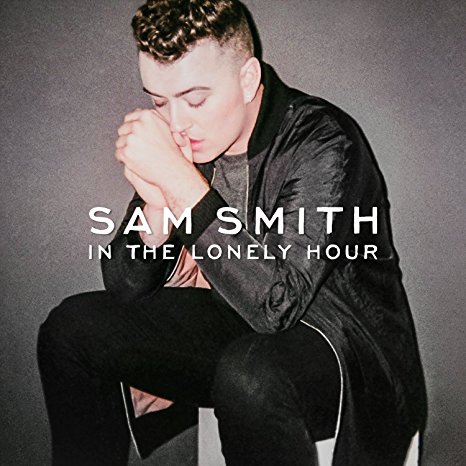
I love to sing, so I appreciate any artist that goes above and beyond with their music. I like the type of songs you can sing along to and understand the words to. My favorite album of Smith’s is In The Lonely Hour. At times some of the lyrics seem a bit trite and overdone with repetitive melodies, but nonetheless it is still quit enjoyable even for Smith’s voice alone. He reminds me of Adele and Duffy, two other British singers whom I like.
“Stay With Me” became a radio hit, but one that didn’t get as popular (and should have) was the more lively tune “Money On My Mind” which I’ve definitely had stuck in my head on more than one occasion. I like that his music has a pop, yet soul, flare to it and does not need the kind of auto-tuning that many current pop stars use. His voice is so versatile that many other famous artists have featured him, including the electronic duo Disclosure. In addition, I was so happy to hear that he was singing the theme song for the recent James Bond movie Spectre.
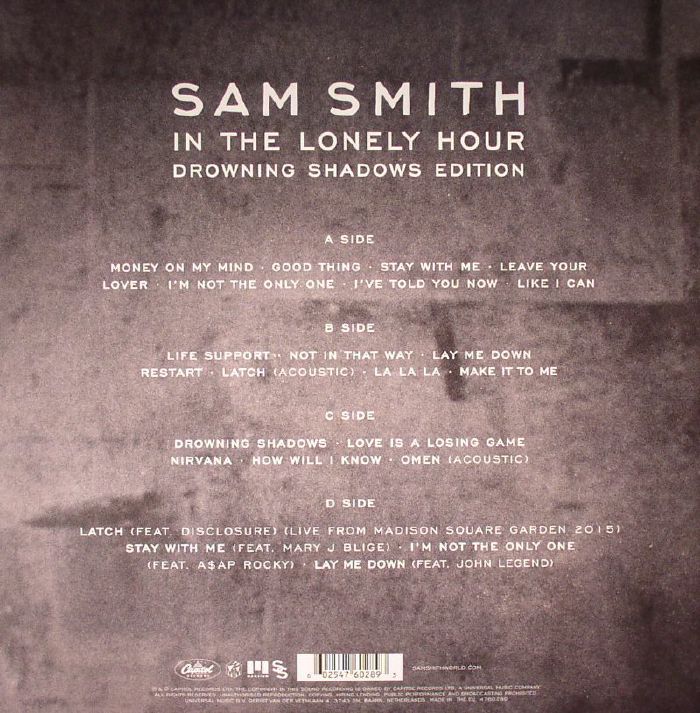
Back cover of “In The Lonely Hour”
This album‘s focus was on a lost lover, something Smith seems to sing about a lot. I hope his next album will be about something different, but if not, I am content with the talent he exudes singing about past relationships.
Editor’s note:Arachnophonia is a regular feature on our blog where members of the UR community can share their thoughts about resources from the Parsons Music Library‘s collection.
This special edition of Arachnophonia features contributions from students in Dr. Joanna Love‘s MUS 235 class: “I Want My MTV: Music Video and the Transformation of the Music Industry.”
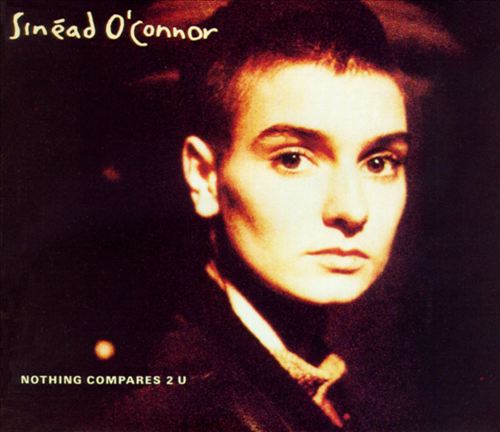
“Nothing Compares 2 U” was intended for The Family, a band formed by Prince in 1984, and was released on their self-titled 1985 album. The song was not released as a single, and the album bobbed around on the Billboard R&B Chart. While The Family was a favorite of Prince fans, “Nothing Compares 2 U” received little recognition. The song was offered to a young Irish singer, Sinéad O’Connor, fresh off releasing her first album. O’Connor embraced “Nothing Compares 2 U” in her own style, and it would end up introducing the artist to a massive global audience.
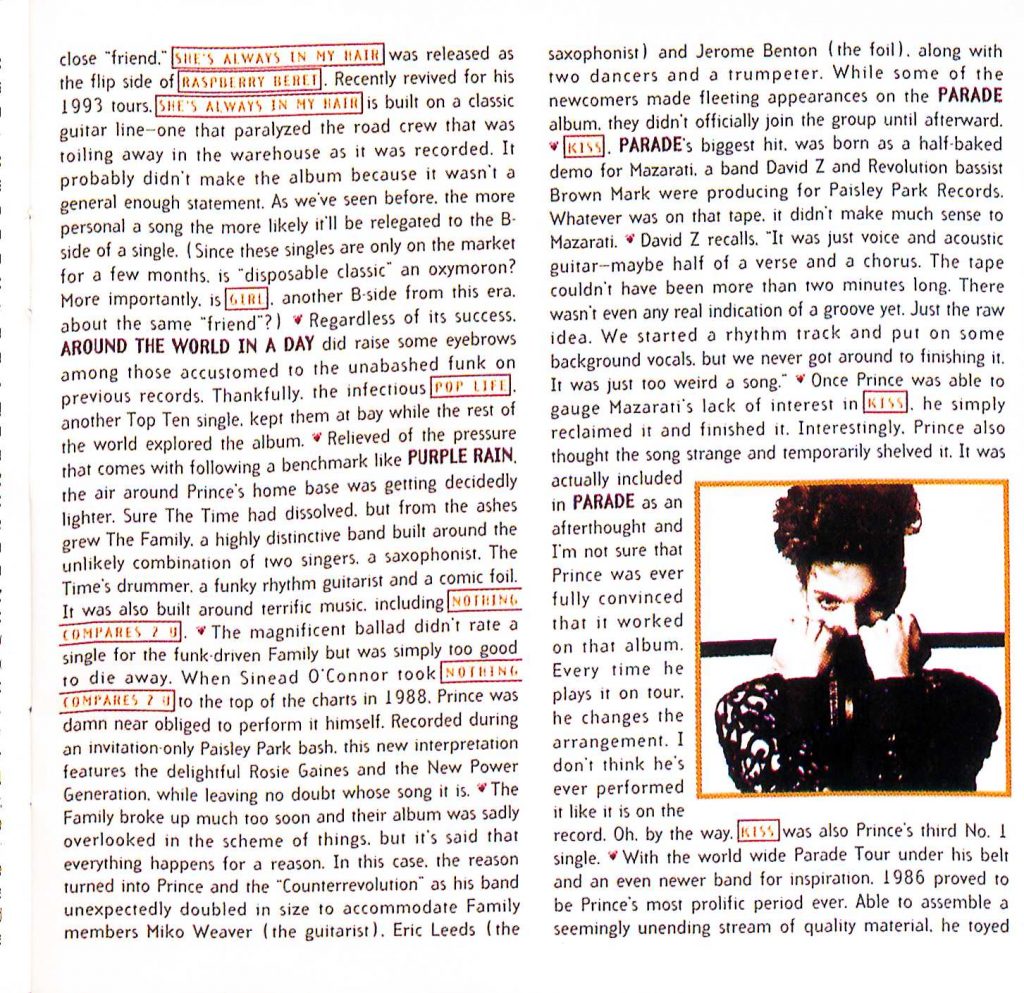
The Parsons Music Library contains two parts of this story in its collection. In 1993, Prince released his own version of “Nothing Compares 2 U” on Hits/the B-Sides. While this album is easily accessible on Spotify, it’s worth a trip to the Library’s CD collection to take a glimpse at the album itself. Flip open the first few pages of the liner notes, and the throwing-fists-in-the-driveway story gains credulity.
Excerpt from liner notes to Prince’s Hits/the B Sides
“When Sinead O’Connor took Nothing Compares 2 U to the top of the charts in 1988, Prince was damn near obliged to perform it himself… leaving no doubt whose song it was.” Fair enough. On Hits/The B-Sides, the song feels completely Prince. The song is performed live, it’s sensuous, and it has gentle echoes of Purple Rain. There’s a trumpet solo. Rosie Gaines contributes her vocals, telling a story in a way that one person just can’t do alone.
Prince’s take on “Nothing Compares 2 U” speaks to a level of artistry that only Prince could embody. Everything about the song is lush and performative. While the vocals yearn for the personal, there is a feeling that the song is still far beyond its listener. The song belongs near the center of a concert, capturing a feeling both grand and ethereal. It’s hard for me to imagine this version being excerpted on the radio or in coaxed into a short music video.
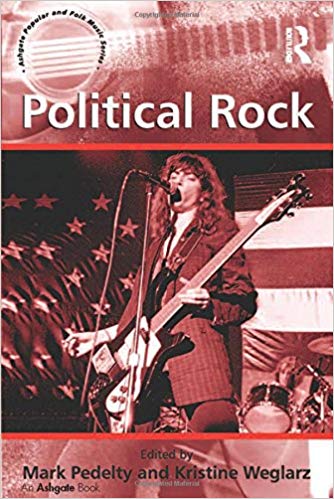
The song belonged to Prince, but it was a song that Sinéad O’Connor would succeed at first. There’s one more part of this story, one which Marcy Rose Chvasta finds related to Sinéad O’Connor’s body. Political Rock, available in the Parsons Music Library, offers a collection of critical essays on politically linked recording artists from Peter Gabriel to Pearl Jam. While O’Connor has been rooted in the political since the beginning of her artistry, Chvasta’s chapter looks to probe a little deeper. For a singer so deeply connected to the authenticity of Bel Canto, how should we handle an O’Connor who no longer feels authentic to the work and person she began with?
As O’Connor has moved on from “seven hours and fifteen days,” Chvasta notes that O’Connor has sometimes defined her popularity in relative proximity to the song. It was “Nothing Compares 2 U” that was popular, not necessarily O’Connor. The song becomes a story of O’Connor’s body, in a certain place and time, a forcible societal imagination of O’Connor as a permanently androgynous 20-something wandering around Parc de Saint-Cloud. As O’Connor has aged, she has aged out of this song, “her” song, due to an unstable and unreliably political body.
The O’Connor of today can’t quite be pinned down, and that’s a good thing — it is not the place of a 1990 hit song to define a career. Chvasta notes that O’Connor’s body and artistry are dangerous because of what they are not: lacking in eroticism, narcissism, and self-indulgence, this duality could not be popularly sustained. As an unwieldy body, O’Connor moved in directions far from her youth, and far from a place “Nothing Compares 2 U” could ever relate to.
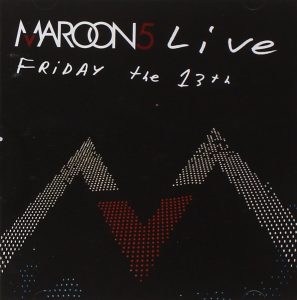
This is a live DVD and CD release by Maroon 5, and it was recorded on May 13, 2005 in Santa Barbara, California at the Santa Barbara Bowl. The live concert is a performance of all their songs and the CD contains the same tracks. I chose this one because Maroon 5 is one of my favorite artists and this CD contains one of my favorite tracks called “Sunday Morning.” “Sunday Morning” is often described as blue-eyed soul or jazz-fusion. This is one of my go-to songs when I’m driving in a nice weather. When the weather gets warm and the sky looks nice outside, I just want to drive and listen to this song. This is the kind of a song that you want to listen to when you had a lazy day, slept in on a weekend and are going to a nice brunch place on a warm nice day in April or May. The lyrics are very sweet as well as it describes someone who is all the songwriter sees when life gets hard to do. I highly recommend this song to those of you who haven’t heard it yet as the weather is warming up now!
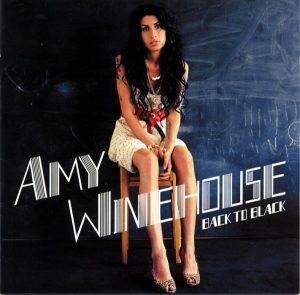
Amy Winehouse is famed for her distinctive voice and mastery of jazz, rhythm and blues, and soul, and the English singer-songwriter’s second album Back to Black reflects the impressive vocals and originality that brought her to fame. The album was released in 2006 and earned Winehouse five Grammy Awards, the 2007 Best British Female Artist Brit Award, and world-wide recognition.
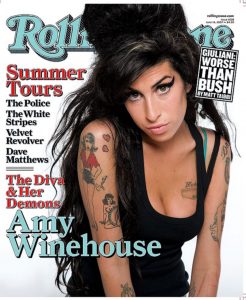
Winehouse on the cover of Rolling Stone Magazine, June 2007
Yet in many ways, Back to Black reflects the unhappy circumstances that surrounded Winehouse’s life and led to her untimely death at the age of 27. For example, songs such as “Back to Black” and “Rehab” reveal themes of depression and substance addiction struggles, while “Love is a Losing Game” speaks to the toxic nature of Winehouse’s romantic relationships. Still, darker elements of the album are balanced by upbeat tracks, and song such as “Tears Dry On Their Own” provide a refreshing message of self-confidence and perspective. If viewed through the lens of Amy Winehouse’s life, the honesty and rawness of Back to Black is moving, yet tracks also stand on their own for listener interpretation. In this way, Back to Black can be heard as a musical feat, tribute to Winehouse and medium for artistic contemplation.
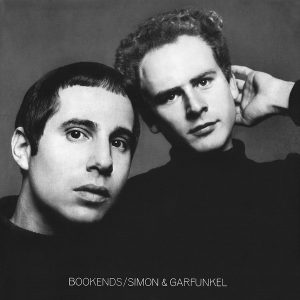
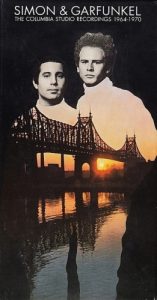
Today’s installment of Arachnophonia is by Music Library student worker, Aly (class of 2018) and features Simon & Garfunkel’s fourth studio album released in 1968, Bookends. Thanks, Aly!
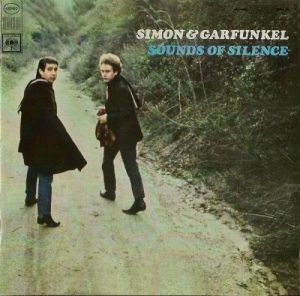
I was re-shelving CDs recently while working a slow evening shift at the music library when I came across a Simon and Garfunkel CD. It immediately brought me back to a few years ago, when I went through a “phase” of folk rock, listening to the iconic duo, as well as a few other legends such as Cat Stevens. I then browsed our collection of Simon and Garfunkel selections, and soon discovered that the library offers almost their entire discography.
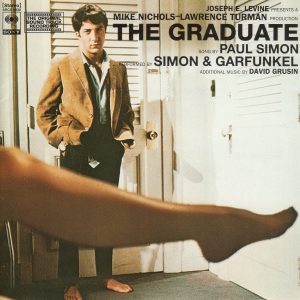
My all-time favorite album of theirs is Bookends. In my opinion, the 1968 album was released right in the “sweet spot” of Simon and Garfunkel’s musical career. It featured the quirky, iconic single we all know love, “Mrs. Robinson“, from the 1967 movieThe Graduate. Some more of the duo’s greatest hits would come later, such as “Bridge Over Troubled Water“, arguably their best-known song. (Fun fact: “The Boxer” would also come in their following album, and Mumford and Sons has a great modern cover of this piece.)
My personal favorite off the album is “Old Friends“, which sounds the best when listened to immediately before the closing theme of the album, “Bookends“, since the two songs seamlessly flow into each other. Appropriately, the album starts and ends with this theme, featuring simple harmonies and rich major-7 acoustic runs that could lull you into a peaceful relaxation.
I love modern music and radio pop just as much as the next person, but sometimes its nice to listen to things that don’t have auto tuning or heavy bass constantly blaring in the background. Simon and Garfunkel have special place in my heart because I can remember as a little girl hearing my dad play their songs in the car, and my sister singing along. Of course, I wanted to be “cool” like my older sister, so I would dance and act as if I knew exactly what the lyrics were saying. However, as I grew up and develop a better appreciation for good music, I realized just how good these songs are.
Some of my favorite songs off the set are “Cecilia” (I’m a little biased considering Cecilia is my middle name), “Mrs. Robinson,” and “The Boxer.” They are each so different, but so powerful. Their music has a way of making you want to dance around your room and sing like no one is listening, but a lot of songs also evoke a certain poetry and emotion that show just how talented these men were/are at writing and producing music. Although some of the songs deal with serious topics, the way they are written is beautiful, but they’re easy to listen to and they’re very catchy.
I don’t think I’ll ever stop listening to this album, because it’s timeless. Songs on the radio today come and go, but the music of past generations will never get old.
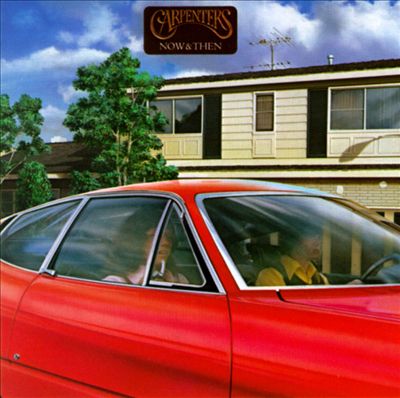
In the Carpenters’ 1973 album Now and Then, we got to hear some of the world’s best known songs like “Jambalaya” and “Yesterday Once More.” With Karen Carpenter’s deep melodic voice and Richard Carpenter’s skilled and classical use of string instruments, we hear a smooth harmonious mixture of country, folk, and bluegrass music. The Carpenters were a big hit in the UK, US, and Japan during the 1970s. Many of their songs have been revisited and covered by other artists.
When you feel stressed, frustrated, or lost, listen to the Carpenters’ Now and Then. Every single song aims to tell a story of happiness and sorrow, memories of past and present. You are welcomed not just as an audience, but also a listener, a participant, and a close friend, thinking of “those were such happy times and not so long ago, how I wondered where they’d gone.”
To me, listening to Carpenters’ music is beyond the expression of words, and I always have different thoughts about it at different time periods. I guess that’s the charm of this album and
the Carpenters’ music, that no matter when or where you hear them, you can always be renewed and enriched by the lyrics and rhythm of their songs.
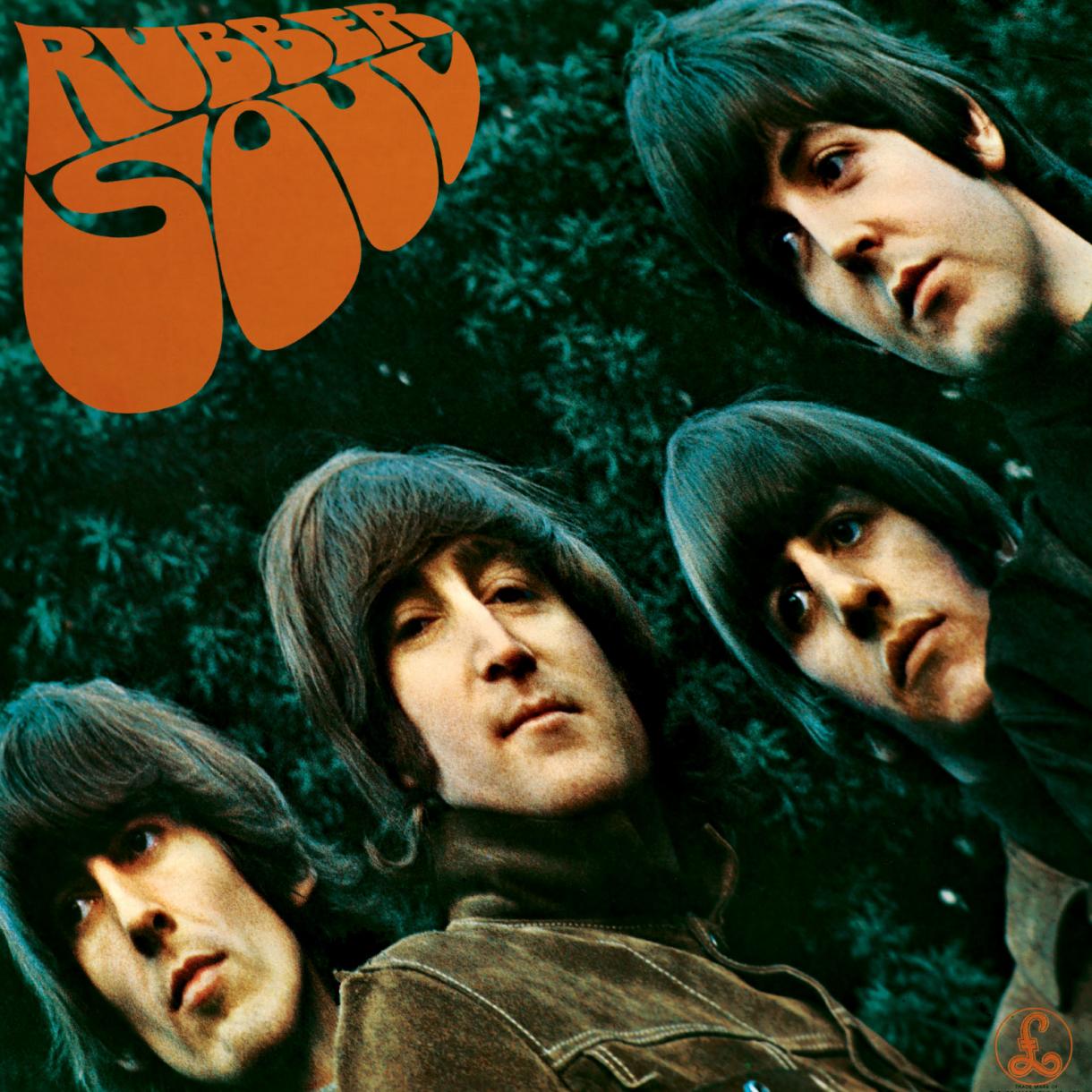
Rubber Soul is the sixth album released by the Beatles. It was issued in the UK on December 3rd, 1965, fifty years ago. (And was released in an altered form in the US on December 6th, 1965.) The album was the first album the Beatles recorded during a continuous period (between October 12th and November 15th, 1965) instead of being recorded piecemeal between tour gigs. This gave the band an opportunity to craft an album that was a more cohesive and introspective unit. Rubber Soul‘s 14 songs (11 composed by John Lennon & Paul McCartney, 2 composed by George Harrison and 1 written by Lennon, McCartney and Ringo Starr) are stylistically diverse, incorporating elements of R&B, folk rock, pop, soul and psychedelia. It is also the first Beatles album to NOT include any cover songs (i.e., songs orignally written and recorded by other artists).
Rubber Soul was unique for many reasons. The Beatles were beginning to experiment with lyrics that were not necessarily about boy-girl romance and are more lyrically sophisticated than songs like “She Loves You“. “Nowhere Man” isn’t about romance at all — a first on a Beatles album.
The group also experiments with incorporating unusual instruments (for the time) and sounds onto the album. George Harrison’s use of the sitar on Lennon’s “Norwegian Wood” helped to spark a musical craze for Indian instruments in pop music. Other “world music” influences are evident in the jazzy French style of McCartney’s “Michelle” and a Greek flavored accompaniment on Lennon’s “Girl” (with acoustic guitars standing in for bouzoukis). “In My Life” features an instrumental bridge with a Bach-like passage played on piano, but sped up to sound like a harpsichord.
The Beatles’ willingness to experiment in the studio was a feature of their work that would continue to develop by leaps and bounds over their next couple of albums. The spirit of experimentation even extended to the album cover itself, which featured a distorted image of the Fab 4 and, unlike mostpopalbumsof the time, did NOT feature the name of the band on the front cover.
Rubber Soul remains a fulfilling album to listen to and to quote music critic Walter Everett, “was made more to be thought about than danced to, and this began a far-reaching trend.”