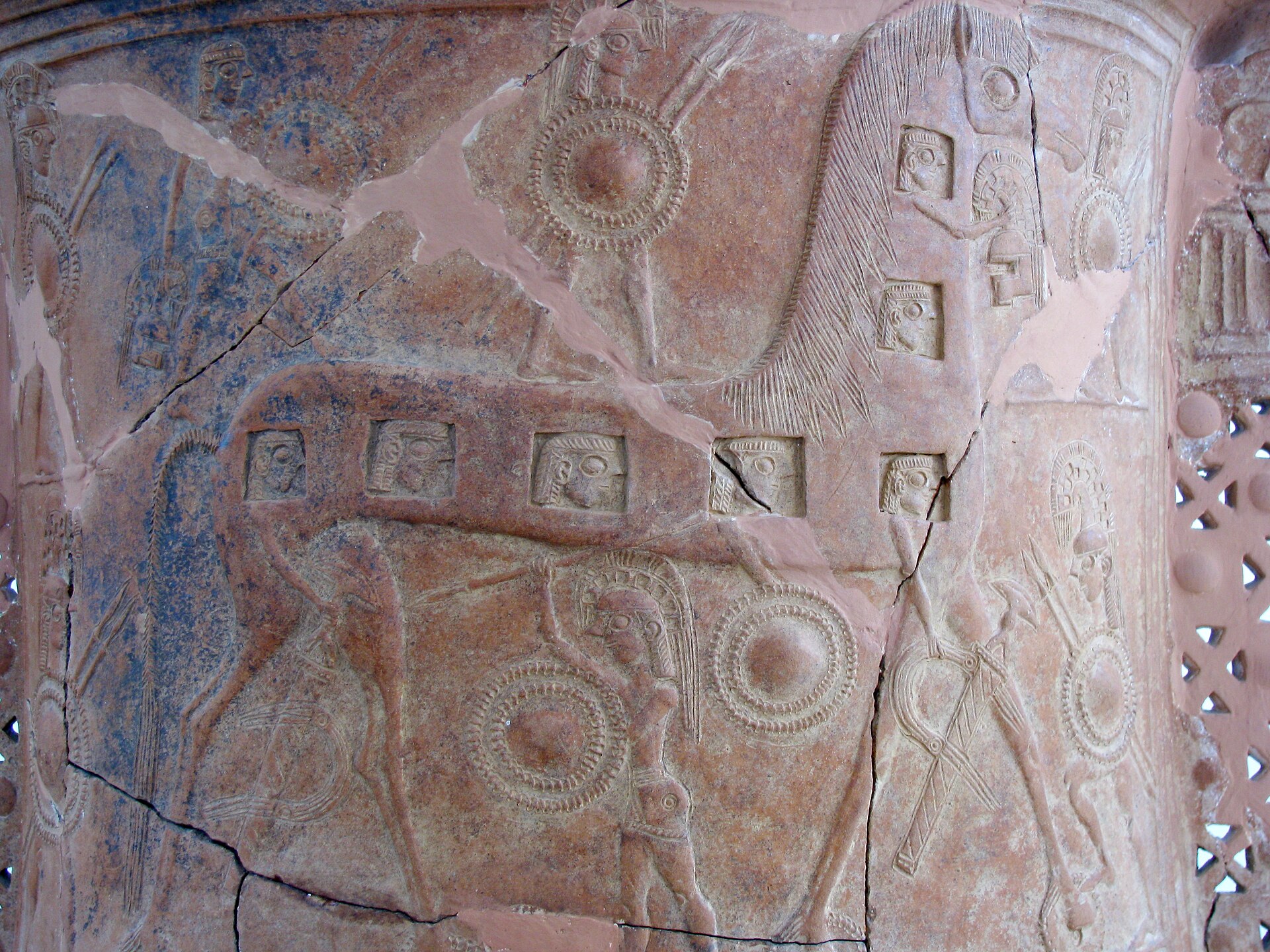
 How timely, this post and Christopher Nolan’s epic The Odyssey. I don’t need to delve far into the etymology of this word, but its continued use (like Achilles’ Heel, covered here earlier) attests to the power of the image as well as its source material.
For our horse, however, we also see how powerful trickery can be, especially when cloaked in the guise of a gift. Matt Damon’s Odysseus certainly captures the consequences of such deceit in the film.
I’d hazard a guess that the metaphor has been with us as long as Homer’s stories. Today many of us have fallen prey to the modern Trojan Horse: a piece of innocent-seeming software containing a virus or other “malware.” Usually, the attack comes from a reputable-looking sender or a family member whose contact lists have been hacked. These are, indeed, gift horses whose mouths we should look into.
You could call any “phishing” attempt that asks you to click a link or open a file attachment a Trojan Horse. I.T. folk often refer to them as “Trojans,” which has other inferences I won’t discuss, as this is a family-friendly blog.
Beware of Geeks (and ancient Greeks) bearing gifts.
“Beware of Greeks bearing gifts”: that saying comes from Virgil’s Aeneid, a far later epic of Roman origin, but it captures the idea of a Trojan Horse masterfully.
Send me words and metaphors worth covering, but not as suspicious file attachments or links! Email me (jessid -at- richmond -dot- edu) or leave a comment below. Want to write a guest entry? Let me know!
Image: Wikipedia, the Mykonos Vase, one of the earliest known depictions of the Trojan Horse, c. &50-650 BCE).