Word of the Week! Snark

Snarky comic stripFor many years, I wrote “Back Page” columns for a local alternative newspaper, Style Weekly. I recall one column, dashed off during the Iraq War, about the preferred colors of the giant SUVs threatening to crush me; I did a head-count on one bike ride to campus. Answer? Beige and silver. Boring!

I was a bike commuter at the time, pedaling to UR from Richmond’s West End near Willow Lawn. I don’t bike commute from our Goochland farm these days, or commute, period. I’m nearly retired.

I still despise giant SUVs, calling them “Suburban Baby Fortresses.” My 2006 Honda C-RV (as sinister as any Honda can be, even in black) suffices for a boring, boxy vehicle. But anyhow.

A commenter at the online version of my column noted “how cool and snarky it must be to be you.” I think my one-word reply was “quite.” I hope that I captured the essence of snark.

But what is this “snark”? It’s a word often used to label those Gen-X slackers just a few years younger than me. For the record, I’m a Gen Joneser, which a Gen Xer recently told me means “all those people who wish they were us.” That reply also exemplifies snarkiness.

The OED has a few definitions that clue us into the history and etymology of our word. From the 19th Century, we have an imaginary animal, the Snark, invented by Lewis Carroll.

To snark can also mean to snore, a form of snarking at which your author is especially adept. Finally, The OED notes that a North-American idiomatic use from 1989, a bit late in Gen-X history, meant originally “irritated grumbling or complaining” but more commonly now “snide or sarcastic criticism.”

These are my people. Can you tell I’ve resurrected my snarky Back-Page voice to write this?

I like the many examples given in the definitions, such as ” ‘That’s a big help’, I said, with even more snark that I’d intended.”

Do we live in a more serious age now? I am alarmed that since 2017, we have witnessed a roughly 25% decline in snark (at least as measured by frequency in words per million). The OED said it, so it must be true.

Yeah, right. Snark never dies. It just hides, waiting for an era of hand-wringing, finger-pointing seriousness to go away.

Please send me snarky remarks, snide asides, and outright flames. I can take it! Oh, and send me words and metaphors worth covering. Email me (jessid -at- richmond -dot- edu) or leave a comment below. Want to write a guest entry? Let me know!

See all of our Metaphors of the Month here and Words of the Week here.

Creative-Commons Image: malvasiabianca.org

Word of the Week! Deuteragonist

Fellowship of. the RingChuck Staudenmaier, Manager of UR’s Print Shop, nominated our word. He said “think Ron or Hermione” to Harry Potter’s role of protagonist. When I taught fiction to undergrads, we discussed the terms “protagonist” and “antagonist” (think Voldemort), but not this term. So thank you, Chuck, for teaching me something.

The OED’s entry cites a Greek origin for the word and provides the definition of “second actor or person in a drama.”  Only a British pronunciation is provided, and both cited uses come from the British Isles. Usage has never been common, though it rose from first noted use in the 1850s to a peak in the 1920s. Frequency declined after that and today we are roughly back where we began.

I have a hunch that our word would enjoy more popularity were it easier to pronounce in English. Most dramatic works feature important secondary characters. Think about literary, stage, film, or television dramas. Who are your favorite deuteragonists?

I’m more fond of Tolkien than Rowling, and when we get to The Fellowship of the Ring, Frodo Baggins has many deuteragonists along for the journey to Mordor with the One Ring of Power. Like many fans of the books, I find Sam to be my favorite deuteragonist.

It’s been 20 years, so it’s time to read that trilogy again and see the films, though the less said about Peter Jackson’s The Hobbit films, the better. As for the Harry Potter books? I have enjoyed three so far and am slowly working my way through the fourth.

Please send me words and metaphors worth covering. Email me (jessid -at- richmond -dot- edu) or leave a comment below. Want to write a guest entry? Let me know!

See all of our Metaphors of the Month here and Words of the Week here.

Image: Wikipedia, from Peter Jackson’s The Fellowship of the Ring.

Word of the Week! Modicum

two Victorian gentlemenMy friends and I sometimes enjoy insulting each other in fake-Victorian English, with slurs such as “You, sir, are an utter jackanapes! You have not even a modicum of propriety!” Howls of derisive laughter result; this is what well-read geeks do for fun.

Thus our word, which means “a small measure.” That’s not quite the same as “a pinch” in some recipes. It seems, to this reader, more a measure of some moral quantity than, say, that pinch of red pepper in the sausage gravy. If you have even a modicum of common sense, however, you don’t dump the entire jar into that gravy.

I was surprised to see the usage of the word steadily increase since Victorian times. See more on that with the usage graph at Etymology Online’s entry. With its Latin (Crikey! By way of Scotland!) origin, our word elevates the diction of written English. Imagine putting on dress clothes to give a presentation. You’d use a word like “modicum” there, though not in casual speech.

I invite you all, who have more than a modicum of curiosity, to send me words and metaphors worth covering.

Email me (jessid -at- richmond -dot- edu) or leave a comment below. Want to write a guest entry? Let me know!

See all of our Metaphors of the Month here and Words of the Week here.

Image: creative-commons image via stablediffusionweb.com


Metaphor of the Month! Straw Man

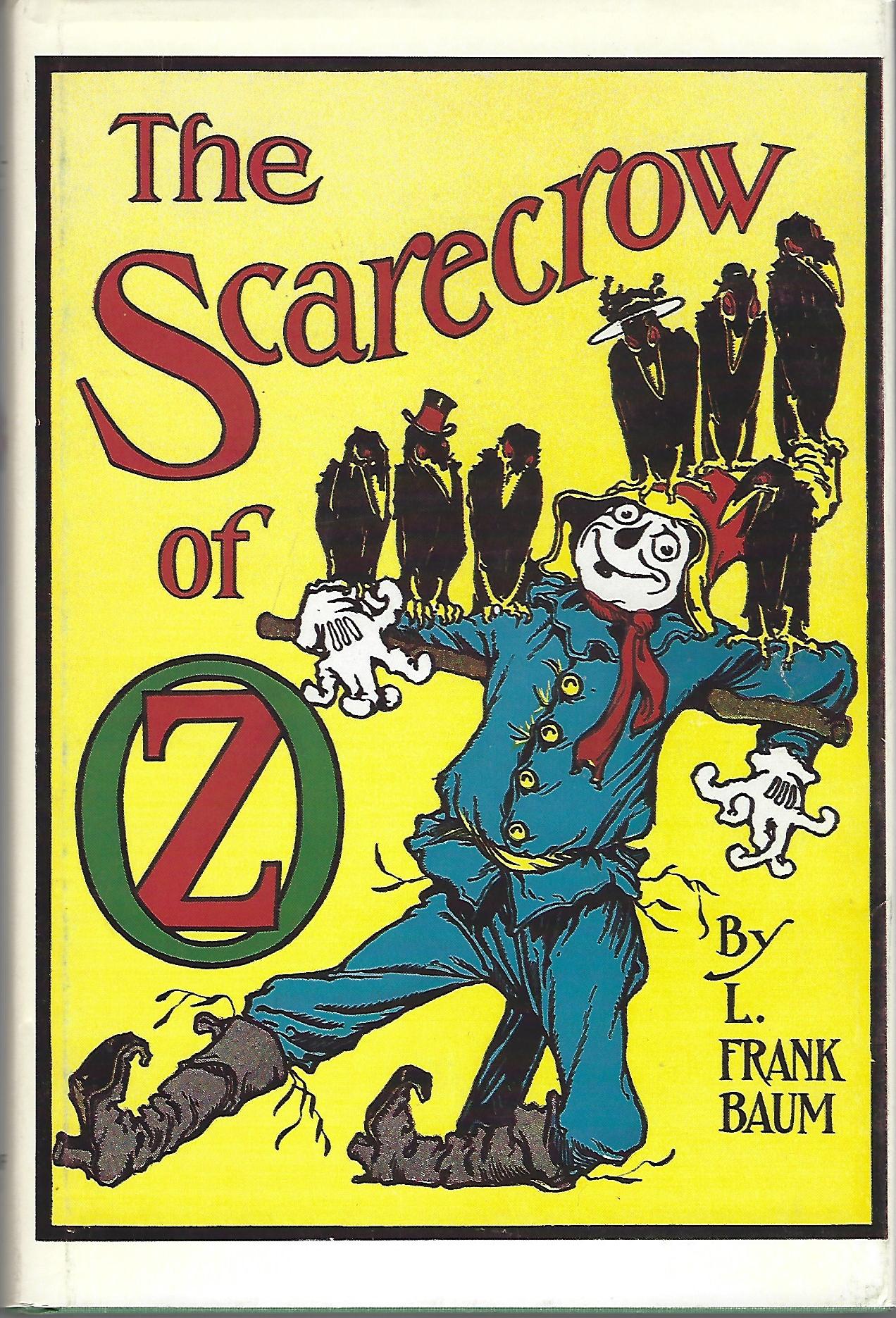
Baum's original Scarecrow, Wizard of OzI’ll follow some election-related posts (demagogue and sycophant) with this metaphor. Though an ancient term, today it has come to mean something quite different from the fellow in The Wizard of Oz who gets unstuffed by the flying monkeys.

From about 1824 on, the term came to mean a person, who might be invented for the occasion, put up as “a cover for questionable, subversive, illegal, etc., activities; a front, a stooge; a puppet.”  I’ve not seen that usage for a long time, and then only in older works of fiction.

20 years later, according to the OED entry, we have “an intentionally weak or misrepresented proposition, set up because it is easier to defeat than, or deflects attention away from, an opponent’s real argument, giving the superficial impression that the original charge has been refuted or defeated.” This usage of the metaphor has been on the rise since the Civil War, according to a chart provided by Etymologyonline.

Let’s come up with an example. I’m an environmentalist now fighting a local data-center proposal, so I love this one provided by the author of The Helpful Professor: “Those who advocate for environmental protection are clearly against progress and economic development.” Hmmm..this writer supports the economy in multiple ways, invests in the stock market, and uses computers a lot, even with AI on occasion.

When students include such logical fallacies, I give them an F and ask them to rewrite. I average the grades. Such fallacies, in academic prose, are serious business and merit harsh outcomes.

If you can stomach it, watch a few political ads for the next few weeks. Setting up a straw man and then tearing him apart is, sadly, done by flying monkeys of both political parties. The Helpful Prof includes the tragic current slurs “Democrats are Communists” and “Republicans are Racists.”

We should do better than that.

Send me your flying monkeys, straw men, plus words or metaphors of use in academic writing. Email me (jessid -at- richmond -dot- edu) or leave a comment below. Want to write a guest entry? Let me know!

See all of our Metaphors of the Month here and Words of the Week here.

Image: Open Source image from an original Wizard of Oz book 

Word of the Week! Demagogue

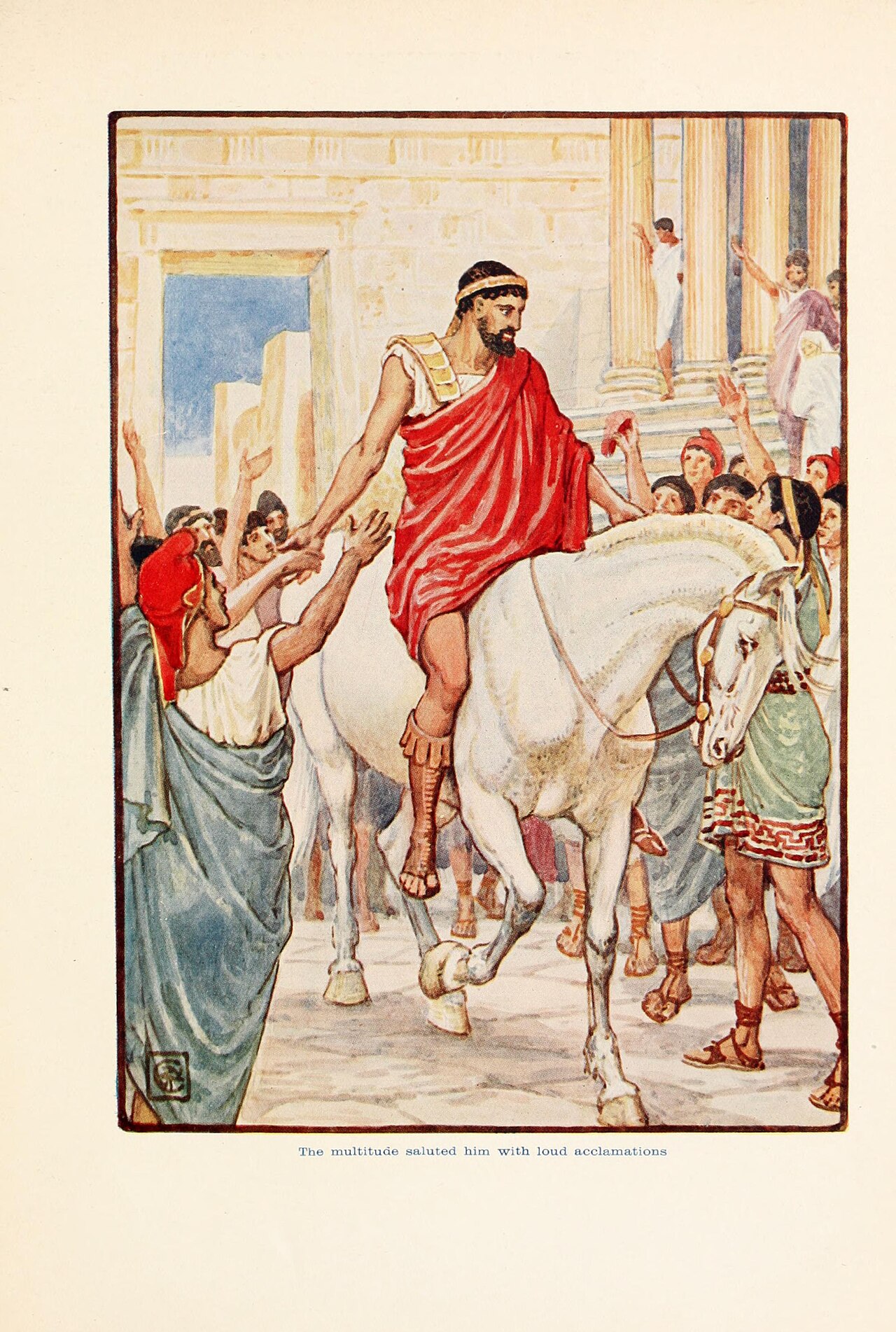
Alcibiades returns in triumph to Athens; illustration from a 1910s history textbookI’ve been less than diligent this month, as duties editing duties for a journal issue, as well putting together as a book manuscript on AI and writing instruction/tutoring, have slowed my blogging. But reader Lee Parker came to the rescue by suggesting this word. I could not recall that I had ever covered it here and a search confirmed that omission.

As first cousin to our last word, sycophant, it makes sense. Demagogues are often surrounded by sycophants.

Our current President fits the classical, and morally neutral, definition of a demagogue perfectly: a leader of the common people who appeals to the passions, rather than intellect, of his followers. That’s not a slur against the man, in fact; it’s a time-honored strategy for swaying hearts, not minds. At least it began that way in Ancient Greece, according to the Wikipedia entry on the term.

My easily-swayed mind went to Alcibiades, the former friend of Socrates who turned on him, but who also possessed military courage and other admirable qualities. Alcibiades also helped to ruin Athens, persuading them to invade Sicily, an act that helped insure their long-term decline. Novelist James Fenimore Cooper, mindful perhaps of Andrew Jackson, listed four characteristics of the demagogue, and I’ll again quote from the Wikipedia entry:

  • They present themselves as a man or woman of the common people, opposed to the elites.
  • Their politics depends on a visceral connection with the people, which greatly exceeds ordinary political popularity.
  • They manipulate this connection, and the raging popularity it affords, for their own benefit and ambition.
  • They threaten or outright break established rules of conduct, institutions, and even the law.

So when did our term acquire the negative connotation of one who leads a mob, who is a “rabble rouser”? According to the entry at Etymology Online, the negative sense of the term is as old as the term itself.

I cannot find a final answer, but I did find something else: demagogues either fall hard and their rule leads to needed reforms, or they destroy a society utterly. We will see how things end here.

Send in words or metaphors worth covering. Email me (jessid -at- richmond -dot- edu) or leave a comment below. Want to write a guest entry? Let me know!

See all of our Metaphors of the Month here and Words of the Week here.

Image: Wikipedia entry, “Alcibiades returns in triumph to Athens; illustration from a 1910s history textbook.”

Word of the Week! Sycophant

Cringing, groveling, servile lackeys and minions. Sycophants, in other words.

The term’s origin, in the Latin sȳcophanta, points to an older Greek term that might indicate a person who reported to authorities anyone who (get ready for it) unlawfully exported figs. This seems very odd to me. I have four fig trees on our farm; I’ve done two batches of canning fig jam already and we STILL have figs. “Come get ’em!” I say to the crows. And still, more figs. Perhaps they were harder to grow in Ancient Greece?

The sages at the OED find this figgy tale a dubious etymology. But the idea conveys: someone who would do anything to be seen favorably by the powerful. Any informant, in that sense, would be a sycophant.

That said, the modern sense of the word gets conveyed well by the OED’s definition of a “mean, servile, cringing, or abject flatterer; a parasite, toady, lickspittle.” That word “lickspittle” is such a vivid British slur. I’m fond of the term “toady” as well. The adjectival form, sycophantic, works very well in the right places to elevate one’s diction.

Our word this week has made a bit of a comeback in the last decade. The OED tracks its frequency at a high point in the 1800s, then a roller-coaster dip until about, say, 2016. One does wonder. I leave it to you to guess why.

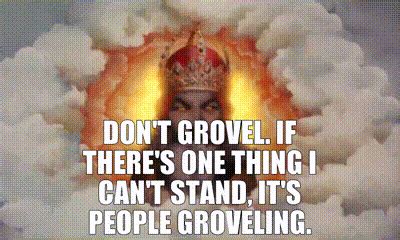
Meanwhile, I do not want your abject praise, idle flattery, or groveling. Stop it! But I do want words and metaphors of use in academic writing.

Email me (jessid -at- richmond -dot- edu) or leave a comment below. Want to write a guest entry? Let me know!

See all of our Metaphors of the Month here and Words of the Week here.

Image: Karl Marx God, from Monty Python and the Holy Grail

Word of the Week! Dusking

Village lights on a cliff at duskThis time of year the sunsets get awfully nice, and the temperatures moderate enough to enjoy some outdoor time at dusk. I’ve covered gloaming here before, eight (!) years ago, but recently a new-to-me term cropped up in a BBC story. You can find a full description of the term here at a Conversation post.

That piece notes that dusking “involves watching the light start to disappear, noticing the changing colours of the sky, the emergence of evening sounds.” This serves as a form of relaxation. My wife do this nearly every night when the weather allows, from our screened-in back porch or open front porch. With a cool drink and my occasional cigar, it’s a perfect way to celebrate quietly the passing of the day.

This piece and the BBC story link the rise in dusking to the Netherlands. It makes sense; after a brutally hot summer in 2026, Northern Europeans probably sigh in relief, as Virginians have done for a long time, and head outside to see the last of the light. I am just old enough to recall life in Richmond before central air-conditioning or even, in our modest neighborhood south of what is now Carytown, window units. Every home on the block had sizable front porches, some with ceiling fans, where we gathered at dusk. People took short walks and said hello. There was an ice-cream parlor within a five-minute stroll. It was a delightful ritual of the mid-1960s soon to vanish onto back decks and family rooms with color TVs. At the time, however, it seemed as if dusking on the front porches would never end. I wish that world still existed.

Today at our house, without neighbors to greet, we pick the front or back porch and continue the tradition. We joke about the word “mauve” and pronounce it in various ways. You only see those colors emerge around dawn and dusk.

I label this use of “dusking” as a neologism, but the word itself dates to the 16th Century, as the OED notes.

Neologism or not, I want our modern sense of the word to become common. We live in a time of screen-blindness, cognitive offloading to imperfect AI models, wasteful haste, and a ridiculous “fear of missing out.”

Just don’t miss out on that next sunset. I would love to see dusking become our next addiction.

Send in words or metaphors worth covering. Email me (jessid -at- richmond -dot- edu) or leave a comment below. Want to write a guest entry? Let me know!

See all of our Metaphors of the Month here and Words of the Week here.

Image: Creative-commons license by Cathay Pacific.

Metaphor of the Month! Trojan Horse

Mykonos Vase Trojan HorseHow timely, this post and Christopher Nolan’s epic The Odyssey. I don’t need to delve far into the etymology of this word, but its continued use  (like Achilles’ Heel, covered here earlier) attests to the power of the image as well as its source material.

For our horse, however, we also see how powerful trickery can be, especially when cloaked in the guise of a gift. Matt Damon’s Odysseus certainly captures the consequences of such deceit in the film.

I’d hazard a guess that the metaphor has been with us as long as Homer’s stories. Today many of us have fallen prey to the modern Trojan Horse: a piece of innocent-seeming software containing a virus or other “malware.” Usually, the attack comes from a reputable-looking sender or a family member whose contact lists have been hacked. These are, indeed, gift horses whose mouths we should look into.

You could call any “phishing” attempt that asks you to click a link or open a file attachment a Trojan Horse. I.T. folk often refer to them as “Trojans,” which has other inferences I won’t discuss, as this is a family-friendly blog.

Beware of Geeks (and ancient Greeks) bearing gifts.

“Beware of Greeks bearing gifts”: that saying comes from Virgil’s Aeneid, a far later epic of Roman origin, but it captures the idea of a Trojan Horse masterfully.

Send me words and metaphors worth covering, but not as suspicious file attachments or links! Email me (jessid -at- richmond -dot- edu) or leave a comment below. Want to write a guest entry? Let me know!

See all of our Metaphors of the Month here and Words of the Week here.

Image: Wikipedia, the Mykonos Vase, one of the earliest known depictions of the Trojan Horse, c. &50-650 BCE).

Word of the Week! Moribund

Late Summer pasture

With classes about to resume on campus, the moribund time of late summer is about to end. Caveat: it ends for the students and those faculty and staff working next semester; I’m away from teaching until perhaps Spring 2027 as I finish some scholarly writing. My retirement, such as it is, has not been moribund at all, even as I get to savor the Golden Hour in September from my back porch, not through a car’s windshield on a commute.

“Moribund” has a dreary sound, doesn’t it? The OED entry notes it means “at the point of death; in a dying state, close to death,” and that certainly describes our summer vacation now. At the same time, I thought that it also meant “stuck or stagnant,” and the entry online has a second definition of “displaying such a lack of vigour or vitality that recovery appears impossible.” Right on the money, again!

I wonder if the use of our word has become moribund? It was first recorded in the early 1700s; usage peaked in 1950 and has suffered a steady decline that appears irreversible. Funny thing, that: we are now about about the same usage frequency as the year 1900. The 20th century, so vital and dangerous in many ways, also served as the period of popularity for the word. I’ll hazard a guess that the reading public had better vocabularies then. Reading for pleasure, in these frantic times, seems moribund.

I like the term, because of its dreary, deathly sound but I doubt we’ll see it spring back to life as a popular word, in my lifetime.

Set aside your back-to-school plans for a moment to send in words or metaphors worth covering. Email me (jessid -at- richmond -dot- edu) or leave a comment below. Want to write a guest entry? Let me know!

See all of our Metaphors of the Month here and Words of the Week here.

Image: Late Summer by Christian Kortum at Flickr.

Word of the Week! Conundrum

Whirlpool in ScotlandNow that my password is reset at UR and I’ve the two-factor app on my new phone, these posts can resume. I feel, however, that all of our technology has put us into a conundrum: what was supposed to make life simpler has led to many complications. Consider all the passwords you have to set, all the pop-up windows you have to close, ads to block, spam to filter.

This was not the promise of the Internet in the 1990s. Instead, we are faced with an unsolvable riddle, a dilemma, a paradox. In short, a conundrum.

Our word’s etymology merits a look. The Online Etymology Dictionary has this fascinating history:

“1590s, an abusive term for a person, perhaps meaning ‘a pedant;’ c. 1600, ‘a whim;’ 1640s, ‘pun or word-play,’ a word of unknown origin, said in 17c. to be Oxford University slang.”

I have never heard anyone called a conundrum, though I’ve known plenty of pedants and been called one myself. But we can see from the evolution in our word’s meaning how the sense of something that eludes an easy answer came to be.

As for our technology conundrums? Go analog more. Silence the phone. Ditch the Social Media conundrum of it promising to connect us but instead dividing us.

Get an ad blocker. Good luck!

As Summer wanes (thank goodness; I hate hot weather) and Fall semester resumes, send in words or metaphors worth covering. Email me (jessid -at- richmond -dot- edu) or leave a comment below. Want to write a guest entry? Let me know!

See all of our Metaphors of the Month here and Words of the Week here.

Image: The Gulf of Corryvreckan whirlpool in Scotland, From Wikipedia.