Metaphor of the Month! Trojan Horse

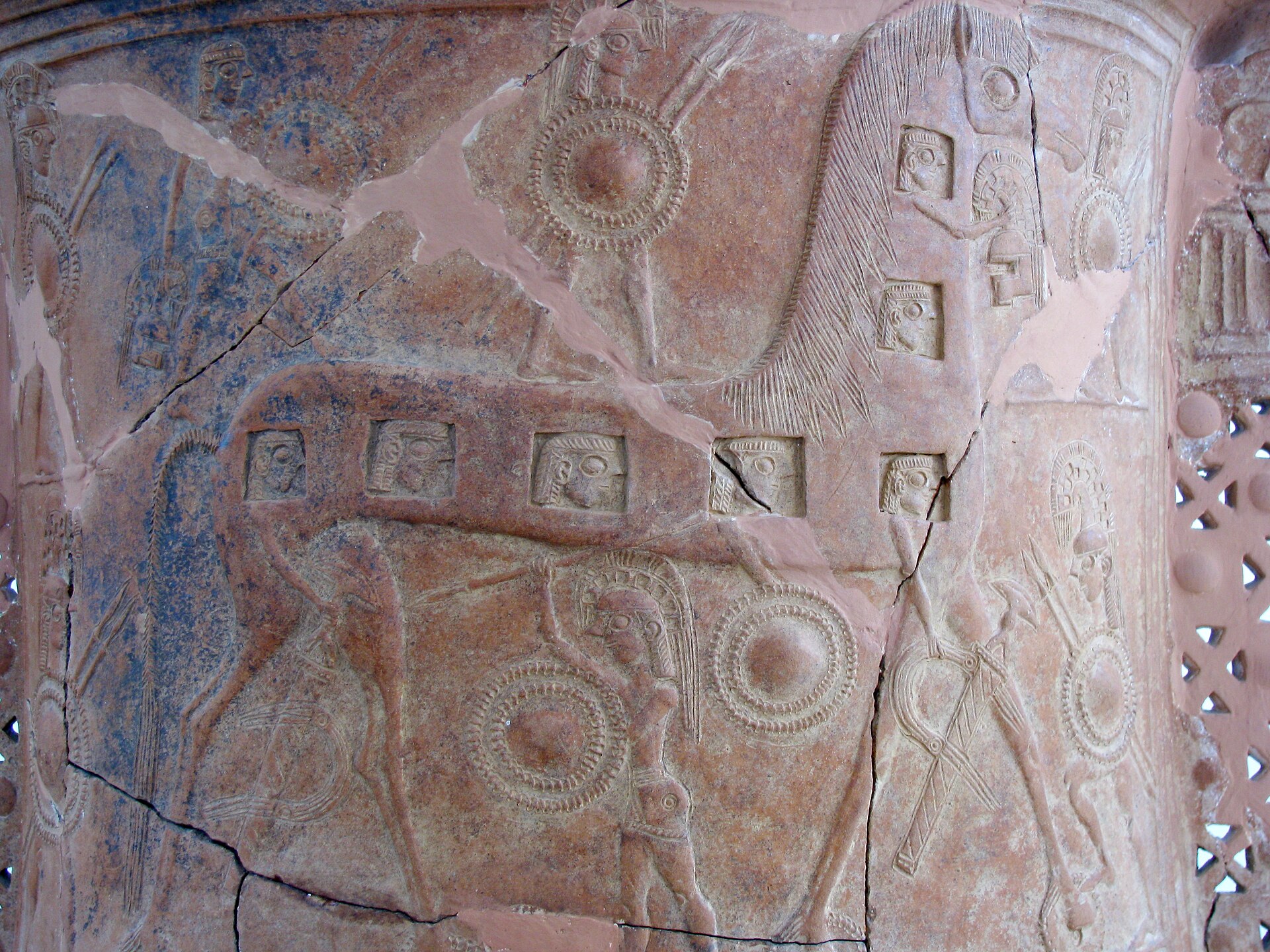
Mykonos Vase Trojan HorseHow timely, this post and Christopher Nolan’s epic The Odyssey. I don’t need to delve far into the etymology of this word, but its continued use  (like Achilles’ Heel, covered here earlier) attests to the power of the image as well as its source material.

For our horse, however, we also see how powerful trickery can be, especially when cloaked in the guise of a gift. Matt Damon’s Odysseus certainly captures the consequences of such deceit in the film.

I’d hazard a guess that the metaphor has been with us as long as Homer’s stories. Today many of us have fallen prey to the modern Trojan Horse: a piece of innocent-seeming software containing a virus or other “malware.” Usually, the attack comes from a reputable-looking sender or a family member whose contact lists have been hacked. These are, indeed, gift horses whose mouths we should look into.

You could call any “phishing” attempt that asks you to click a link or open a file attachment a Trojan Horse. I.T. folk often refer to them as “Trojans,” which has other inferences I won’t discuss, as this is a family-friendly blog.

Beware of Geeks (and ancient Greeks) bearing gifts.

“Beware of Greeks bearing gifts”: that saying comes from Virgil’s Aeneid, a far later epic of Roman origin, but it captures the idea of a Trojan Horse masterfully.

Send me words and metaphors worth covering, but not as suspicious file attachments or links! Email me (jessid -at- richmond -dot- edu) or leave a comment below. Want to write a guest entry? Let me know!

Image: Wikipedia, the Mykonos Vase, one of the earliest known depictions of the Trojan Horse, c. &50-650 BCE).
Word of the Week! Aeolian

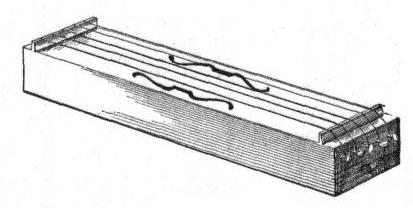
Aeolian harp

Even older than Achilles, the subject of my last entry, is the Greek god of wind, Aeolus.  From the god’s name we get our word, meaning an effect of the wind. In geology, it can mean wind-borne erosion. I’ve seen the word employed to describe features on the planet Mars, where NASA rovers are at work currently.

I first encountered the word, as “Eolian,” in an undergraduate class on the Romantic writers of England. Perhaps you know Samuel Taylor Coleridge’s 1795 poem “The Eolian Harp“? Take a peek. While it is not my favorite of his works, it certainly fixed the word we are discussing in my mind:

And that simplest Lute,
Placed length-ways in the clasping casement, hark!
How by the desultory breeze caressed,
Like some coy maid half yielding to her lover,
It pours such sweet upbraiding, as must needs
Tempt to repeat the wrong! 

At the time, many English were placing one of these wind-harps in an open window. The instrument is older still; Wikipedia’s entry on the harp cites a first description of it in the 1600s, but the instrument itself is ancient. You can find an interesting page on the harp’s history here. The OED notes that as a descriptor for a native of the Aeolian Islands, our word has a first recorded usage of 1546.

The passage of the wind would produce music quite different from a wind chime, though that too is an aeolian instrument (as compared to one that requires human breath to make music). In Coleridge’s era, there amounted to a bit of a craze for these devices, so romantics of all stripes could get one ready made.

Today it’s a bit harder to find one in Costco, so I recommend you build one. Kevin Busse offers some advice here for unusual designs that don’t require an open window. Other sites recommend building it to fit your casement. Here’s a favorite site, Fil Corbitt’s The Wind, with a page on various free-standing harps. Have a listen to the haunting melody from an “Obsidian Sky Wind Harp” (note: the harp has a high pitch, so turn down your volume at first!).

The blog will continue all summer, so send me words and metaphors worth covering. Email me (jessid -at- richmond -dot- edu) or leave a comment below. Want to write a guest entry? Let me know!

See all of our Metaphors of the Month here and Words of the Week here.

Creative-Commons image source: Wikipedia