Metaphor of the Month! Trojan Horse

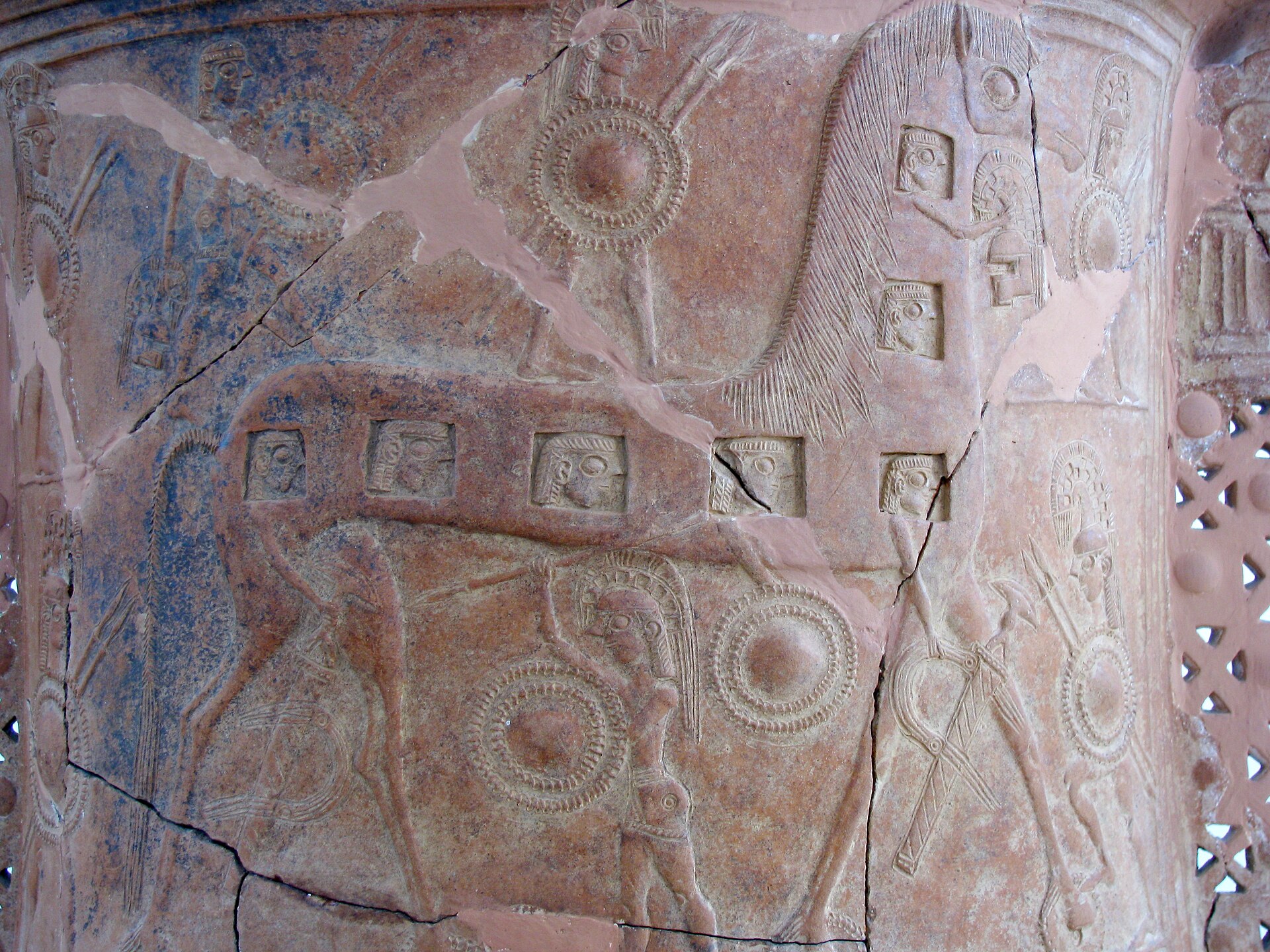
Mykonos Vase Trojan HorseHow timely, this post and Christopher Nolan’s epic The Odyssey. I don’t need to delve far into the etymology of this word, but its continued use  (like Achilles’ Heel, covered here earlier) attests to the power of the image as well as its source material.

For our horse, however, we also see how powerful trickery can be, especially when cloaked in the guise of a gift. Matt Damon’s Odysseus certainly captures the consequences of such deceit in the film.

I’d hazard a guess that the metaphor has been with us as long as Homer’s stories. Today many of us have fallen prey to the modern Trojan Horse: a piece of innocent-seeming software containing a virus or other “malware.” Usually, the attack comes from a reputable-looking sender or a family member whose contact lists have been hacked. These are, indeed, gift horses whose mouths we should look into.

You could call any “phishing” attempt that asks you to click a link or open a file attachment a Trojan Horse. I.T. folk often refer to them as “Trojans,” which has other inferences I won’t discuss, as this is a family-friendly blog.

Beware of Geeks (and ancient Greeks) bearing gifts.

“Beware of Greeks bearing gifts”: that saying comes from Virgil’s Aeneid, a far later epic of Roman origin, but it captures the idea of a Trojan Horse masterfully.

Send me words and metaphors worth covering, but not as suspicious file attachments or links! Email me (jessid -at- richmond -dot- edu) or leave a comment below. Want to write a guest entry? Let me know!

Image: Wikipedia, the Mykonos Vase, one of the earliest known depictions of the Trojan Horse, c. &50-650 BCE).

Metaphor of the Month! Earworm

Boy with fingers stuck in ears

We have, this week, a first cousin the the term lyricosis, covered a few weeks ago.

The earworm provides a vivid metaphor when a piece of music gets lodged in your ear and you cannot stop hearing it.

As early as the 16th Century, as the OED attests, an earworm meant an earwig, a common insect that is easy imagine crawling into some sleeper’s ear. There it would lay eggs that hatch brain-eating larvae. To date, I’ve know exactly zero people who have had this horror occur to them. Wikipedia’s entry on the creature claims the idea to be no more than an Old Wives’ Tale, a term worth a future post as metaphor of the month.

On the other hand, I was surprised to find that 1982 marks The OED’s first recorded use of our metaphor in the sense we use it today. What did we call such brain lodgements of music before the Reagan Era?

From ten years earlier, there’s one song I love to hate, “Sylvia’s Mother,” a 1972 hit by the rock band Doctor Hook’s Medicine Show. A talented children’s cartoonist and author, Shel Silverstein, wrote this clunker. It bubbles up out of my subconscious every so often and I begin to sing it. My old man and I would belt it out, amid gales of laughter, along with the radio when it came on in the car; he despised the song as much as I do. Dad’s verdict was “That lady was a good mother. The guy on the phone sounds like a loser!” After singing the song, the demon would be exorcised for several months.

The only way for me to be rid of an Earworm, apparently, is to feed it once in a while!

If you have other solutions, please share them, along with words or metaphors worth covering. Email me (jessid -at- richmond -dot- edu) or leave a comment below. Want to write a guest entry? Let me know!

See all of our Metaphors of the Month here and Words of the Week here.

Creative-Commons Image: Chris Rowbury’s Blog

Metaphor of the Month! Liminal Space

Original room that inspired "The Backrooms" series.

Where oh where have 7 years gone? It was yesterday, it seems, that I covered the word “liminal” in this blog. It’s a fancy word for a transition, really. Academics love it in the Humanities, but lately it has taken on a new life with a different category of geeks, namely gamers and internet-forum junkies when used to describe certain sorts of disturbing spaces.

You may have seen advertisements for the horror film The Backrooms. The image above comes from an Internet meme at 4chan that began the uptick in usage for our metaphor. It was taken at a closed furniture store in Oshkosh, Wisconsin. It’s now a Hobby Town franchise. How the various Backrooms fanatics found that out, I don’t know, but if you wish to dive into the history of this meme, here you go.

I’ve seen Web series called The Backrooms by Kane Parsons; it’s excellent.  I find the episodes the sort of psychological horror for those who dislike blood and gore (that would include me). It’s really a masterpiece of the uncanny. I hope the new feature film by Parsons captures that mood as well.

What I find outstanding about The Backrooms concept is how it plays into a uneasiness we all experience when traversing empty transitional spaces. I’ve heard college classrooms called liminal spaces; we don’t decorate them as do K-12 teachers. They are generic and when vacant, mildly unsettling. So are parking garages, empty subway cars, hotel corridors, and even lonely highways (for many of us; I love traveling empty backroads, at least in daylight).

Empty hotel corridorThis corridor looks familiar, but it would have a eerie effect on many of us who travel it, even if we had not seen Kubrick’s The Shining. Where are the other guests? Not all liminal spaces are confining. I’d claim that a busy airport terminal feels very different from one late at night, when the last flights have landed and the snack bars have closed. You know what I mean if you have arrived in the wee hours because of a delay.

My pop-psych explanation for The Backrooms craze? COVID-19. We were suddenly confronted with empty spaces that had once teemed with people. I flew through Chicago just a few weeks before the outbreak. It now seems like another world, even compared to airports I visit now. Then for a while, airports all looked like this.

Empty Airport Terminal

There’s a danger of the metaphor: once you start noticing liminal spaces you cannot stop. The other day I was on campus and visited the Humanities Building, where I once had my office. No one was about, and my footsteps echoed in the corridors. I didn’t tarry long there and got quickly into the bright sunlight.

It unsettled me in a familiar way. One summer, I had the unenviable job of working until midnight at Indiana University’s windowless graduate stacks. I’d start at the 12th floor, sing out that the library was closing, and then turn out the lights. We had to do this for safety reasons. Grad students would work late and fall asleep at their study carrels.

This chore was not frightening, with a master switch for the lights by the stairs, except on one floor. There I had to walk all the way to the end of the stacks to get to the switch. I’d then race back to the stairwell, with only an emergency light to guide me and a feeling that someone, or something, was watching me every night. Every library worker I knew shared the same fear. We waited for that hand to dart out from between the shelves and grab us.

Library Stacks Empty

For this and many other reasons, the psychology of liminal spaces interests me, and you can make a beginning study of it all here. Finally, if you see The Backroooms, let me know what you think.

Perhaps I should have saved this post for Halloween! Pleasant dreams.

Don’t be afraid to send me words and metaphors worth covering. Email me (jessid -at- richmond -dot- edu) or leave a comment below. Want to write a guest entry? Let me know!

See all of our Metaphors of the Month here and Words of the Week here.

Creative-Commons images From Wikipedia; Singapore airport image by David Gan. IU Library Stacks from Pinterest.

Metaphor of the Month! Achilles Heel

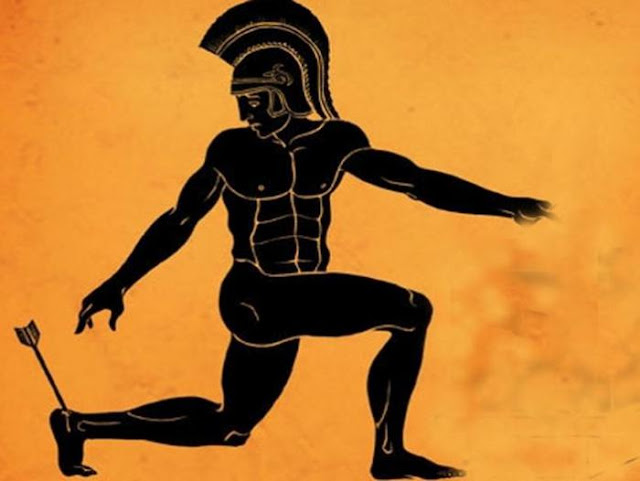
Achilles struck in heel by an arrow.This is a term I use frequently, probably too frequently. I’ve considered covering another metaphor here from Antiquity, Thucydides Trap, that has been in the news lately. Let’s save that for June.

What of an Achilles Heel?

Our ongoing war with Iran revealed an ugly truth about US life: if you want to make Americans angry across all the social and cultural divides, just raise gas prices. Despite our nation being a net exporter of oil, that commodity gets priced on a global market. If supplies get pinched anywhere, prices rise everywhere. Globally, then, oil prices are an Achilles Heel for our technological civilization. From stupid one-use plastic bags to high-test gas to the diesel in my farm tractors, petrol remains the key ingredient.

It’s then our weakest point. The OED dates the use of the metaphor back to 1705, but the story of nearly invincible Achilles stretches back to Homeric Greece and certainly beyond.  The son of a goddess, Achilles got a magical protection from his mother Thetis, who held the boy by his heel and dipped him into the River Styx in the underworld. His heel remained vulnerable, and there an arrow found him during the Trojan War.

Achilles, a cruel warrior, met his doom. Let’s hope we don’t follow him in our addiction to fossil fuels of all sorts. The usage chart at the OED shows no sign of tapering off. Our metaphor, sadly, remains a fresh one.

Update on “Muster”: I covered this term last time, and a reader on campus sent me an example from STEM: “From a psychological standpoint, imagine being a graduate student, particularly a new one, and you find some amazing new chemical entity that passes muster in all respects except for the fact that it is repeatedly returned as a “fail” from a company you do not know.”

Let’s not forget that “muster” appears often in the phrase “pass muster,” which may relate to how soldiers get inspected when they muster for roll call. As I learned in military school, shine that brass and polish those shoes!

The blog will continue all summer, so muster your courage and send me words and metaphors worth covering. Email me (jessid -at- richmond -dot- edu) or leave a comment below. Want to write a guest entry? Let me know!

See all of our Metaphors of the Month here and Words of the Week here.

Creative Commons Image: Achilles from gamificapassengers.blogspot.com

Metaphor of the Month! Bluebird Day

A Bluebird DayThis week I’ll add a favorite new term, one I learned just recently from my friend Henry. I’ve known him since childhood, and I drove out to his farm to see how his animals were doing, help pick up some remaining firewood I’d cut in the Winter, and take a ride in his classic car.

We were cruising down US 33 toward lunch in the town of Montpellier VA when Henry said “it’s a perfect Bluebird day today.” I love bluebirds and looked around, not seeing any, but the deep-blue sky reminded me of their plumage. The noon sky was cloudless, the air crisp, and (at least until the recent April heat wave) my instincts told me to promised a balance of cool weather, sun, and rain that typify early Spring in central Virginia.

Today, some lovely rain has broken the hot-and-dry conditions. Tomorrow, when I hit the road, the forecast promises a few Bluebird days ahead. It’s perfect flying weather up to Bangor Maine, then to visit family in New Brunswick, Canada. Not sure if I’ll see any blue birds, but birding and wildlife watching in the Canadian Maritimes is a very rewarding pastime.

So far, so good. Our metaphor simply means a cloudless day, and The Merriam-Webster Dictionary online cites a first use of 1860 but no context.

I turned to the OED for more guidance. Not a sausage, as the Brits say. I did learn elsewhere that skiers use the term and enjoy such days on the slopes. A blog post on the term claims it originated with skiing. I don’t ski but I love to kayak or hike on a cool, cloudless day.

Tomorrow I begin a short vacation; (semi)retirement means I can take them generally whenever I want. This post will be the last for a a few weeks. I’ll take us out with some Frank Sinatra, so the Chairman of the Board can send you and me on our way.

Whatever the weather, I’ll still be posting here. Send metaphors and words to cover by e-mailing me (jessid -at- richmond -dot- edu) or leaving a comment below. Want to write a guest entry? Let me know!

See all of our Metaphors of the Month here and Words of the Week here.

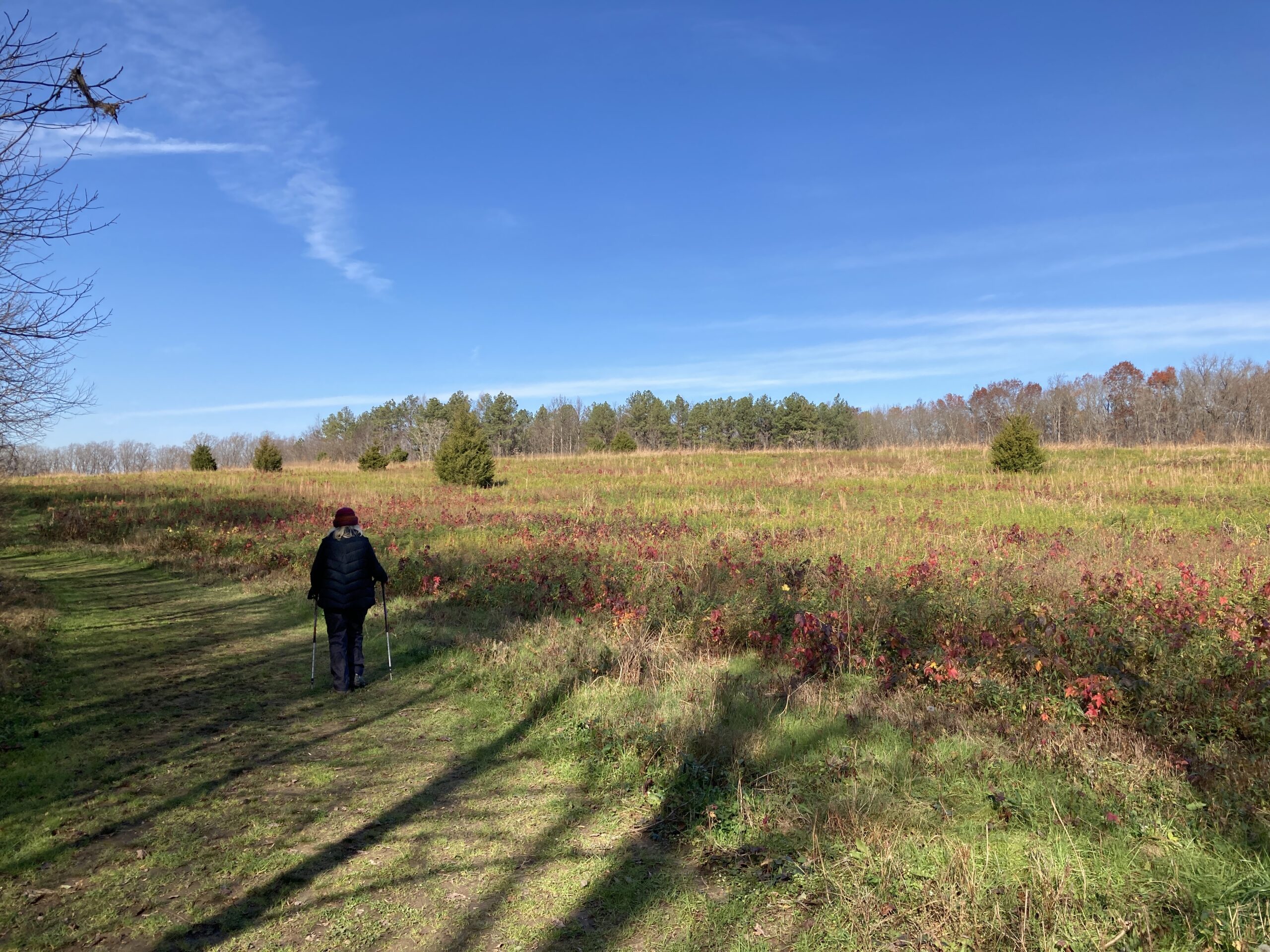
Image: Close to a Bluebird Day at Powhatan State Park.


Metaphor of the Month! Brain Rot

Steampunk brain scultureTo be honest, this is our metaphor of the year. It was Oxford’s a year ago.

Given my research on generative AI, I should have seen this metaphor coming long ago. Henry David Thoreau, quoted by Oxford University Press, noted in 1854, “While England endeavours to cure the potato rot, will not any endeavour to cure the brain-rot – which prevails so much more widely and fatally?”

Today Oxford defines it as “the supposed deterioration of a person’s mental or intellectual state, especially viewed as the result of overconsumption of material (now particularly online content) considered to be trivial or unchallenging.” Thoreau’s peers with brain rot must have spent all day reading trivial books and newspapers.

Nowadays I’m seeing brain rot in my laziest and most harried/distracted students who depend upon AI to do the thinking for them. They cannot remember what they have done for earlier assignments, cannot connect parts of the coursework, and they will not check the names of sources or veracity of direct quotations in works I know well.

By the way, Oxford’s word for 2025 is a phrase, rage bait.

Evidence of brain-rot proves to be rage bait for me, though I reply in a civil manner with “this is not in our source” or “this is not the source’s claim” or “this is not the source’s name.” I give the writer an F and let them revise, but I only average the grades. There are no free lunches in the working world, and there should not be in college, either. As I tell these students “if you cannot add value to an AI’s output on the job, you will be unemployed.”

That’s my fear for them. May I be wrong, and may 2026 be less full of rage and more mentally uplifting for us all. May your brains never rot or even hurt.Gumby, Monty PythonMister Gumby and I will you again here in the new year.

Send words and metaphors my way by e-mailing me (jessid -at- richmond -dot- edu) or leaving a comment below. Want to write a guest entry? Let me know!

See all of our Metaphors of the Month here and Words of the Week here.

images: Steampunk brain, Creative-Commons image via freepix. Monty Python screen cap.

Metaphor of the Month! Stendhal Syndrome

I would wager that unless you have read Michael Finkel’s excellent book The Art Thief, you’ve not encountered our November metaphor. Finkel tells the true story of Stéphane Bréitwieser, who amassed a collection of stolen art with an estimated value of two billion dollars. Instead of selling what he stole, the thief built what amounted to his own private gallery where he felt the works would be better appreciated than in a museum.

Bréitwieser would be so transported emotionally by certain priceless artwork that he’d be obsessed with owning it. Finkel and those experts he interviewed attribute this to Stendhal Syndrome; our Wikipedia page on the topic notes that rapid heartbeat, dizziness, hallucinations, even fainting can be symptoms. For Bréitwieser, he was so moved that he had to steal, and this of course led to his eventual arrest.

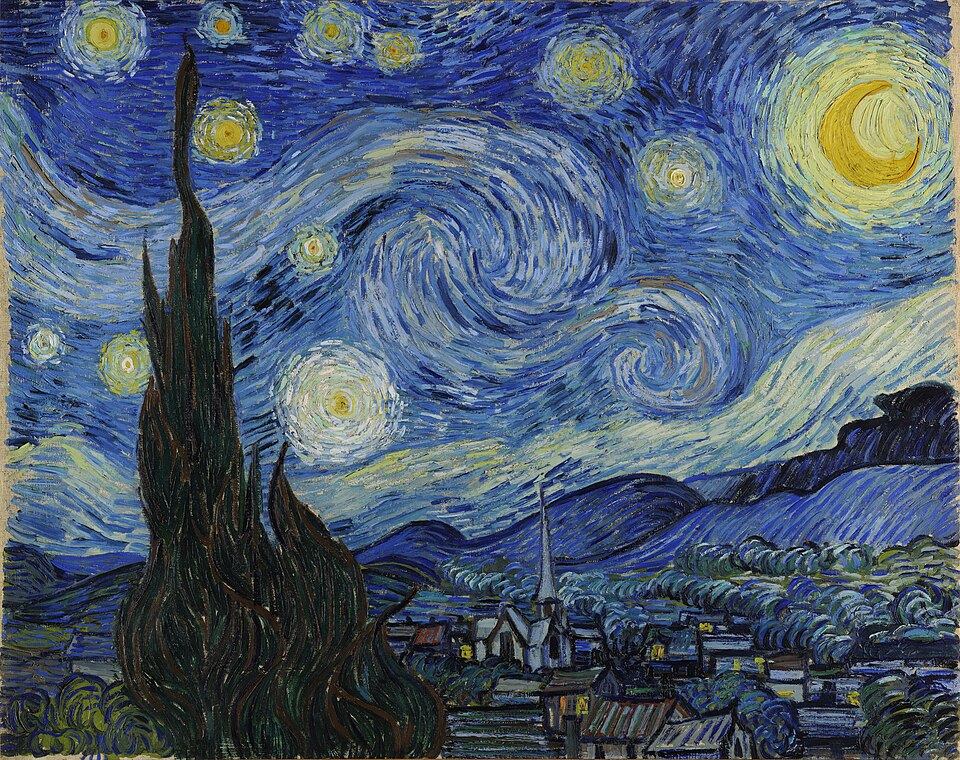
I tried to think hard about when such reactions occurred for me; perhaps seeing the Bosch paintings in the Prado for the first time in 1985. I have revisited them several times, and my reactions are still strong. I’d say the same for Van Gogh’s Starry Night. The writer Stendahl (Marie-Henri Beyle) was overcome by emotion when first visiting Florence’s Basilica of Santa Croce; others have fainted in museums or become dizzy; one person had a heart attack while viewing Botticelli’s The Birth of Venus.

We need a different term for what I experienced when I first saw sunset over the Wellsville Mountains in Utah; it was a euphoria that verged on mania, very different from the majestic serenity of catching that moment three times on the South Rim of the Grand Canyon in 2022.

The overwrought reactions of Stendhal Syndrome seem quite different from when a work of art, a landscape, or a piece of music bring us great joy or tears. So what works of art move you so deeply that you fear you might faint?

See you in the museum. The VMFA collection is varied and, in many spots, sublime (we need a Word-of-The-Week post for that term). With a little more time on my hands since switching to part-time work, I’ve increased both my reading as well as my museum visits. After reading about Bréitwieser, I’ll never look at artwork the same way again.

Send words and metaphors my way by e-mailing me (jessid -at- richmond -dot- edu) or leaving a comment below. Want to write a guest entry? Let me know!

See all of our Metaphors of the Month here and Words of the Week here.

Image Source: Wikipedia

Metaphor of the Month! Cognitive Offloading

offloading strawSo another school year begins in the age of Generative AI, with the majority of students using AI for some purpose or other, no matter what faculty or institutions say. You can read Ian Bogost’s excellent piece in The Atlantic, or have an AI summarize it for you, or look to my own survey data from the past three years. We are in a new world, educationally, yet only now are be coming to terms with some of the effects of widespread cognitive offloading to AI.

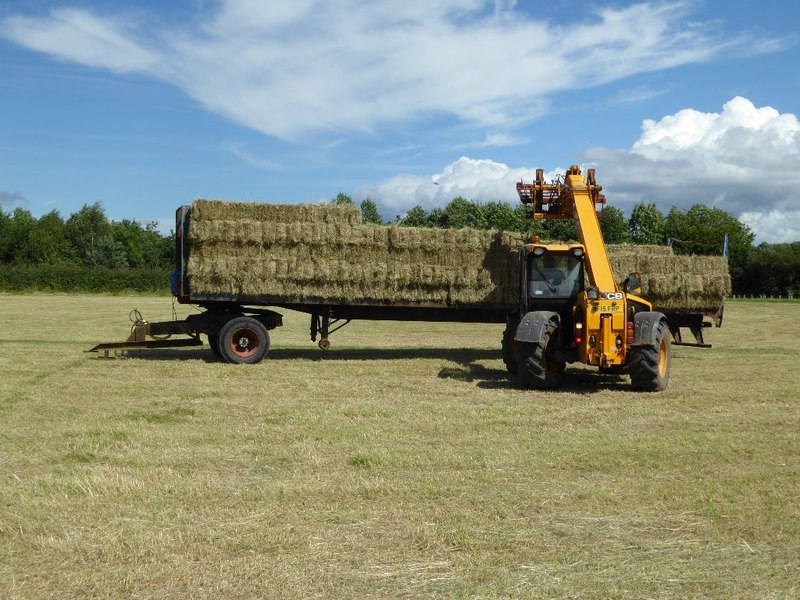
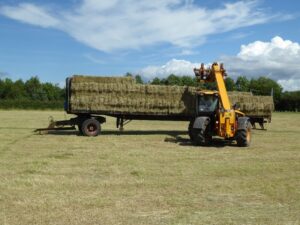
Our metaphor implies moving something to another place, the way I offload bales of straw from my pickup’s bed into our barn. Intellectually, however, cognitive offloading means letting something else perform a mental task. We have all done this: the calculator and map application on one’s phone perform jobs once done by hand and on paper.

I had tried a simple Web search to locate first use of the term. Not having any luck, I turned, naturally, to ChatGPT 5, a model I find works far better than earlier iterations. Here’s my prompt:

I’m curious to know when and where the term “cognitive offloading” was coined. If you can provide a source I can check, all the better. Thanks.

The reply was succinct and included links I checked for accuracy:

Earliest formal introduction: The term appears prominently in academic literature in a 2016 publication by Elisabeth F. Risko and colleagues. Their work explicitly defined cognitive offloading as “the use of physical action to alter the information processing requirements of a task in order to reduce cognitive demand.”

In a review or conference-style piece published around the same time, Risko noted that the term had long existed conceptually among cognitive scientists—but was rarely investigated empirically until then.

A 2016 article authored by E. F. Risko also reiterates the definition and situates cognitive offloading within a growing trend of interest in embodied, embedded, extended, and distributed cognition.

I recommend public-access sources here and here for readers who want to learn more directly, instead of cognitively offloading the work to an AI.

Learning takes time; I partner with AI to learn more, but I don’t lean too heavily on its reasoning.

Similarly, I still prefer paper maps as well as memorizing directions through experience; I even try alternative routes to help me understand the road-grid. I do use apps to plan trips, but when driving I tend to leave them off until the route becomes very complex (and you will also rarely find me on the Interstates, as I despise them). But I’m a map-geek who taught topographical-map reading when I was in military school. I do, however, love letting a machine shoulder the drudgery of multiplying or dividing numbers.

When it comes to more subtle and creative tasks, however, I grow concerned.

Like the person who only travels by map-app and finds it gives bad directions, what happens when the AI we rely upon makes mistakes we do not check? And longer term, what mental abilities may atrophy from cognitive offloading, and how, frankly, can one get back home again afterward?

Those remain unanswered questions of enormous consequence.

Send words and metaphors my way by e-mailing me (jessid -at- richmond -dot- edu) or leaving a comment below. Want to write a guest entry? Let me know!

See all of our Metaphors of the Month here and Words of the Week here.

Creative-Commons Image source: Geograph. That’s about four years worth of straw at our place, and I have loader-envy.
Metaphor of the Month! Data Scraping

Web Scraping GraphicAs I prepare for my Fall class, “Writing With and About AI,” as well as a book proposal on AI in the writing classroom, I keep encountering neologisms like this month’s metaphor.

What do “scrapers” do? They can, according to a firm that employs them, “browse sites based on your keyword inputs or connections to your website or social media accounts. They can also skim through online reviews, product descriptions, and other categories.” That sounds benign enough, as sites like this one lie behind no pay-walls (there’s a neologism to which I’ll return in some future post).  The practice, according to the Wikipedia entry, appears to date to the 1980s, before we had The Web or household Internet.

Why scrape data to train AI? From the firm quoted in the previous paragraph, data scrapers assist in “automating outreach, [and] they can also help during the early company development and research phases. Even later on, you can use them to monitor online chatter and brand perception.” As I tell my students constantly, they need to learn how to use these AI-based tools, even if they dislike them. Getting a job will depend upon AI-fluency.

And yet as I write this, the BBC has threatened to take the AI firm Perplexity to court for unauthorized scraping of its data and “reproducing BBC content ‘verbatim’ without its permission.” This use of BBC content, though free, poses a new problem for me, a self-professed “Copy Leftist” who has long opposed copyright save for creative work.

Open-access scholarship, my own syllabi, and more in The Creative Commons are there to be scraped. The problem for me involves my and other creators’ words being used without any asking or attribution; this use violates the ethos of the Creative Commons. 20 years ago, I wrote to a Hong-Kong firm that had used our online handbook pages, verbatim, without acknowledgement. I told them I’d be contacting every e-list I knew to show that they had done this. They relented and gave our creators credit. I gave them my blessing to use our content under that one condition.

I’ve long advocated having everything save classified government information and creative work given away, free. That was one promise of the original Internet. Just cite it if you scrape it. I dislike copyright for other materials intensely.

Now I’m thinking that Web-crawlers and other bots that scrape data pose an even larger problem than copyright laws and pay walls. We may need to revise copyright laws to require attribution even for Creative-Commons work, or to watermark all AI-scraped content.

Scrape the barrel for new words and metaphors, then send them to me at jessid -at- richmond -dot- edu or leaving a comment below.

See all of our Metaphors of the Month here and Words of the Week here.

Creative-Commons image courtesy of lab.howie.tw

Metaphor of the Month! Rugged Individualism

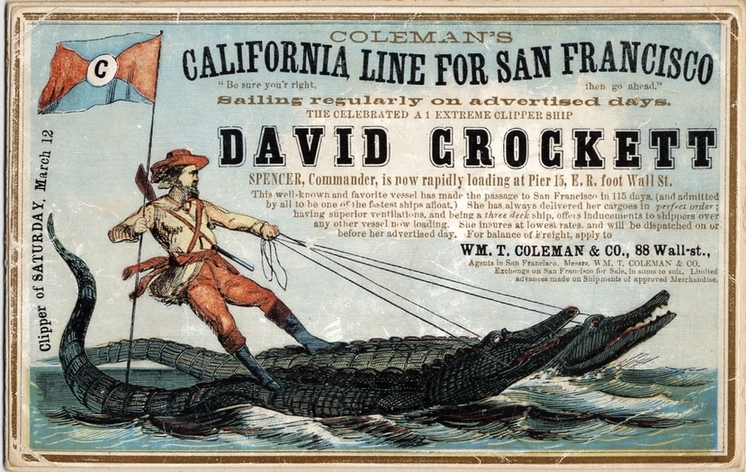
Davey CrockettLet’s begin with a lesson I teach students: check your sources.

Wikipedia provides a dubious first coinage for this month’s metaphor, citing President Herbert Hoover. Yet the OED goes earlier, to 1897 and this use by J.G. Rogers, “The stern and rugged individualism which finds no charm in the fellowship of kindred souls.” That said, Hoover may have popularized this term in the American mind.

Flawed origin-story and all, you can read about the history of our metaphor at Wikipedia’s page. Though the concept may inspire a great deal of libertarian philosophy, usage peaked in 1950 and has slowly fallen off since, as shown on the OED’s frequency chart.

Born of our nation’s frontier roots, the metaphor implies that the most resourceful people always provide for themselves. On a frontier, they often had to endure hardships, though the history we receive oversimplifies trading posts and other early means for European settlers to survive in a harsh landscape. Even Davy Crockett and Daniel Boone, our quintessential rugged individuals, did not make their own rifles and gunpowder, no matter how many alligators and bears they wrestled or rivers they jumped across in one bound. See the decent, if uneven, film The Alamo for a re-assessment of Crockett’s life. The famous frontiersman comes across as a charismatic man trapped by his own self-made mythology.

While the term may have declined, its principles continue to inform contemporary political debates. We hear related terms such as “bootstrapping,” to pull oneself up from poverty to prosperity, despite obstacles.

It escapes me how a frontier concept, at the core of so much political discourse, works in an interconnected, urbanized nation. I suppose some of the origin of our metaphor comes from Emerson’s influential essay “Self Reliance,” which you can read here. When read carefully, Emerson does not imply that we are islands, nor his he talking about bear-hunting. Instead, he focuses on our inner lives, where solitude and self-knowledge make a person stronger but where being overly social distracts one from that goal. Think of Thoreau at Walden (yes, his mom baked pies for him).

I agree, yet nowhere in Emerson do I detect a survival-of-the-fittest mentality that underlies so much of the Rugged Individualist concept.

I farm and DIY a lot of things that urban and suburban folks cannot, yet I laugh at both this concept as well as the findings of 2016 Pew Research poll reported in the Wikipedia entry, that “57% of Americans did not believe that success in life was determined by forces outside of their control.”

One wonders how many of them have been subjected to natural disasters, layoffs not their doing, random accidents, or medical emergencies. So much lies beyond our control; As Emperor Marcus Aurelius contends in his Meditations many times, we can only control ourselves. See my entry on Stoic. May you be stoic in the face of things you cannot change.

Send bears to wrestle, as well as words and metaphors to jessid-at-richmond-edu or by leaving a comment below.

See all of our Metaphors of the Month here and Words of the Week here.