Metaphor of the Month! Trojan Horse

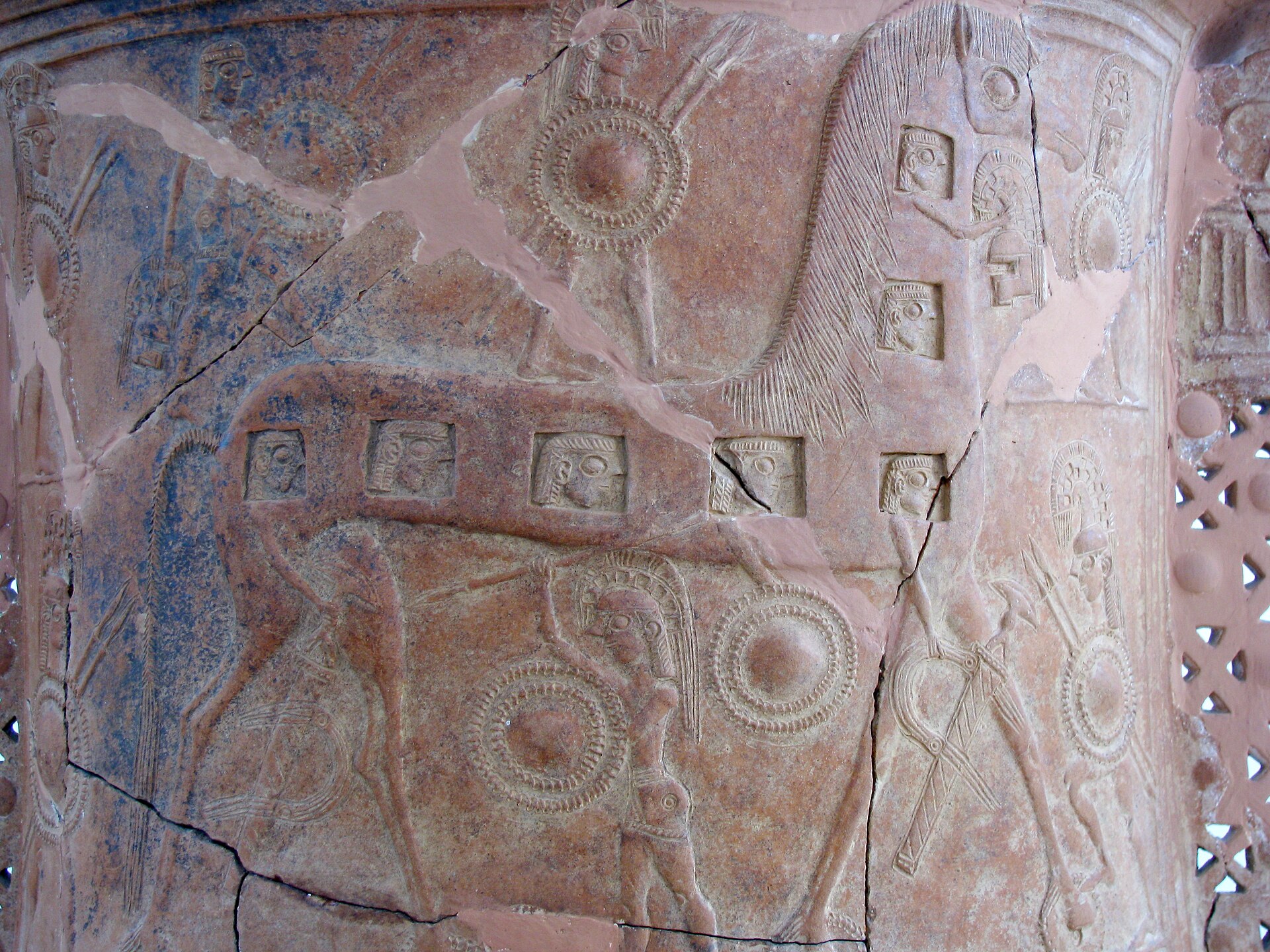
Mykonos Vase Trojan HorseHow timely, this post and Christopher Nolan’s epic The Odyssey. I don’t need to delve far into the etymology of this word, but its continued use  (like Achilles’ Heel, covered here earlier) attests to the power of the image as well as its source material.

For our horse, however, we also see how powerful trickery can be, especially when cloaked in the guise of a gift. Matt Damon’s Odysseus certainly captures the consequences of such deceit in the film.

I’d hazard a guess that the metaphor has been with us as long as Homer’s stories. Today many of us have fallen prey to the modern Trojan Horse: a piece of innocent-seeming software containing a virus or other “malware.” Usually, the attack comes from a reputable-looking sender or a family member whose contact lists have been hacked. These are, indeed, gift horses whose mouths we should look into.

You could call any “phishing” attempt that asks you to click a link or open a file attachment a Trojan Horse. I.T. folk often refer to them as “Trojans,” which has other inferences I won’t discuss, as this is a family-friendly blog.

Beware of Geeks (and ancient Greeks) bearing gifts.

“Beware of Greeks bearing gifts”: that saying comes from Virgil’s Aeneid, a far later epic of Roman origin, but it captures the idea of a Trojan Horse masterfully.

Send me words and metaphors worth covering, but not as suspicious file attachments or links! Email me (jessid -at- richmond -dot- edu) or leave a comment below. Want to write a guest entry? Let me know!

Image: Wikipedia, the Mykonos Vase, one of the earliest known depictions of the Trojan Horse, c. &50-650 BCE).

Metaphor of the Month! Earworm

Boy with fingers stuck in ears

We have, this week, a first cousin the the term lyricosis, covered a few weeks ago.

The earworm provides a vivid metaphor when a piece of music gets lodged in your ear and you cannot stop hearing it.

As early as the 16th Century, as the OED attests, an earworm meant an earwig, a common insect that is easy imagine crawling into some sleeper’s ear. There it would lay eggs that hatch brain-eating larvae. To date, I’ve know exactly zero people who have had this horror occur to them. Wikipedia’s entry on the creature claims the idea to be no more than an Old Wives’ Tale, a term worth a future post as metaphor of the month.

On the other hand, I was surprised to find that 1982 marks The OED’s first recorded use of our metaphor in the sense we use it today. What did we call such brain lodgements of music before the Reagan Era?

From ten years earlier, there’s one song I love to hate, “Sylvia’s Mother,” a 1972 hit by the rock band Doctor Hook’s Medicine Show. A talented children’s cartoonist and author, Shel Silverstein, wrote this clunker. It bubbles up out of my subconscious every so often and I begin to sing it. My old man and I would belt it out, amid gales of laughter, along with the radio when it came on in the car; he despised the song as much as I do. Dad’s verdict was “That lady was a good mother. The guy on the phone sounds like a loser!” After singing the song, the demon would be exorcised for several months.

The only way for me to be rid of an Earworm, apparently, is to feed it once in a while!

If you have other solutions, please share them, along with words or metaphors worth covering. Email me (jessid -at- richmond -dot- edu) or leave a comment below. Want to write a guest entry? Let me know!

See all of our Metaphors of the Month here and Words of the Week here.

Creative-Commons Image: Chris Rowbury’s Blog

Metaphor of the Month! Liminal Space

Original room that inspired "The Backrooms" series.

Where oh where have 7 years gone? It was yesterday, it seems, that I covered the word “liminal” in this blog. It’s a fancy word for a transition, really. Academics love it in the Humanities, but lately it has taken on a new life with a different category of geeks, namely gamers and internet-forum junkies when used to describe certain sorts of disturbing spaces.

You may have seen advertisements for the horror film The Backrooms. The image above comes from an Internet meme at 4chan that began the uptick in usage for our metaphor. It was taken at a closed furniture store in Oshkosh, Wisconsin. It’s now a Hobby Town franchise. How the various Backrooms fanatics found that out, I don’t know, but if you wish to dive into the history of this meme, here you go.

I’ve seen Web series called The Backrooms by Kane Parsons; it’s excellent.  I find the episodes the sort of psychological horror for those who dislike blood and gore (that would include me). It’s really a masterpiece of the uncanny. I hope the new feature film by Parsons captures that mood as well.

What I find outstanding about The Backrooms concept is how it plays into a uneasiness we all experience when traversing empty transitional spaces. I’ve heard college classrooms called liminal spaces; we don’t decorate them as do K-12 teachers. They are generic and when vacant, mildly unsettling. So are parking garages, empty subway cars, hotel corridors, and even lonely highways (for many of us; I love traveling empty backroads, at least in daylight).

Empty hotel corridorThis corridor looks familiar, but it would have a eerie effect on many of us who travel it, even if we had not seen Kubrick’s The Shining. Where are the other guests? Not all liminal spaces are confining. I’d claim that a busy airport terminal feels very different from one late at night, when the last flights have landed and the snack bars have closed. You know what I mean if you have arrived in the wee hours because of a delay.

My pop-psych explanation for The Backrooms craze? COVID-19. We were suddenly confronted with empty spaces that had once teemed with people. I flew through Chicago just a few weeks before the outbreak. It now seems like another world, even compared to airports I visit now. Then for a while, airports all looked like this.

Empty Airport Terminal

There’s a danger of the metaphor: once you start noticing liminal spaces you cannot stop. The other day I was on campus and visited the Humanities Building, where I once had my office. No one was about, and my footsteps echoed in the corridors. I didn’t tarry long there and got quickly into the bright sunlight.

It unsettled me in a familiar way. One summer, I had the unenviable job of working until midnight at Indiana University’s windowless graduate stacks. I’d start at the 12th floor, sing out that the library was closing, and then turn out the lights. We had to do this for safety reasons. Grad students would work late and fall asleep at their study carrels.

This chore was not frightening, with a master switch for the lights by the stairs, except on one floor. There I had to walk all the way to the end of the stacks to get to the switch. I’d then race back to the stairwell, with only an emergency light to guide me and a feeling that someone, or something, was watching me every night. Every library worker I knew shared the same fear. We waited for that hand to dart out from between the shelves and grab us.

Library Stacks Empty

For this and many other reasons, the psychology of liminal spaces interests me, and you can make a beginning study of it all here. Finally, if you see The Backroooms, let me know what you think.

Perhaps I should have saved this post for Halloween! Pleasant dreams.

Don’t be afraid to send me words and metaphors worth covering. Email me (jessid -at- richmond -dot- edu) or leave a comment below. Want to write a guest entry? Let me know!

See all of our Metaphors of the Month here and Words of the Week here.

Creative-Commons images From Wikipedia; Singapore airport image by David Gan. IU Library Stacks from Pinterest.

Metaphor of the Month! Bluebird Day

A Bluebird DayThis week I’ll add a favorite new term, one I learned just recently from my friend Henry. I’ve known him since childhood, and I drove out to his farm to see how his animals were doing, help pick up some remaining firewood I’d cut in the Winter, and take a ride in his classic car.

We were cruising down US 33 toward lunch in the town of Montpellier VA when Henry said “it’s a perfect Bluebird day today.” I love bluebirds and looked around, not seeing any, but the deep-blue sky reminded me of their plumage. The noon sky was cloudless, the air crisp, and (at least until the recent April heat wave) my instincts told me to promised a balance of cool weather, sun, and rain that typify early Spring in central Virginia.

Today, some lovely rain has broken the hot-and-dry conditions. Tomorrow, when I hit the road, the forecast promises a few Bluebird days ahead. It’s perfect flying weather up to Bangor Maine, then to visit family in New Brunswick, Canada. Not sure if I’ll see any blue birds, but birding and wildlife watching in the Canadian Maritimes is a very rewarding pastime.

So far, so good. Our metaphor simply means a cloudless day, and The Merriam-Webster Dictionary online cites a first use of 1860 but no context.

I turned to the OED for more guidance. Not a sausage, as the Brits say. I did learn elsewhere that skiers use the term and enjoy such days on the slopes. A blog post on the term claims it originated with skiing. I don’t ski but I love to kayak or hike on a cool, cloudless day.

Tomorrow I begin a short vacation; (semi)retirement means I can take them generally whenever I want. This post will be the last for a a few weeks. I’ll take us out with some Frank Sinatra, so the Chairman of the Board can send you and me on our way.

Whatever the weather, I’ll still be posting here. Send metaphors and words to cover by e-mailing me (jessid -at- richmond -dot- edu) or leaving a comment below. Want to write a guest entry? Let me know!

See all of our Metaphors of the Month here and Words of the Week here.

Image: Close to a Bluebird Day at Powhatan State Park.


Metaphor of the Month! Level Up

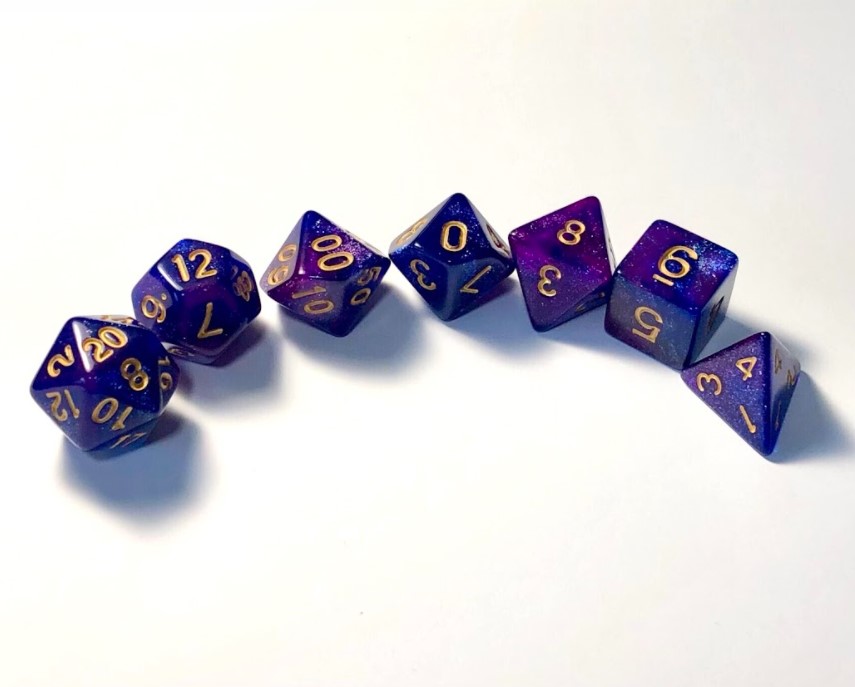
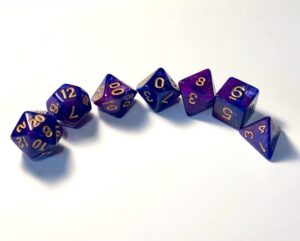
Polyhedra Dice A feature story I spotted in the lifestyle section of a major news outlet mentioned “leveling up” the reader’s cooking skills.

What a strange world of ours. A niche hobby for geeks in the 70s and 80s, when I discovered it, has become so mainstream that it gives us a term for self improvment.

The tabletop roleplaying game Dungeons and Dragons probably needs little introduction. Just in case, however, you can read the history of Gygax and Arneson’s brainchild. Some basics: players create a character in a fictional world of fantasy (usually a sword & sorcery Conan or high-fantasy Middle Earth setting) who begins as a novice thief, warrior, cleric, mage, or other profession. The characters who survive their adventures, moderated by a Game Master (GM) with rules and multi-sided polyhedral dice, gain “levels” of experience.

Perhaps played over many years or even decades of real life, a well-crafted “campaign” of adventures becomes an act of collaborative storytelling.

I never liked the D&D game system, since poor gameplay might boil down to “I am Sir Hardhelm, a 15th level Fighter! You’ll never defeat me!” I prefer systems where one does not wear one’s abilities and personalities, so to speak, on robes or shield.  Yet the idea of “leveling up” is now everywhere in print. It has become a cliche. I see it in corporate literature, news stories, and feature pieces even in Atlantic. Nary an Elf or Orc to be seen.

I no longer play D&D, though I do enjoy other simpler, less-binary rules for science-fiction or fantasy settings, such as Savage Worlds, promising “fast, furious, and fun!” gaming. It uses those dice plus playing cards to introduce randomness I found missing in D&D, even 40+ years ago in college. Nearly every week, my team of players, both old-time D&Ders with graduate degrees, outsmart me, their GM, during our two-hour Nerd Night.

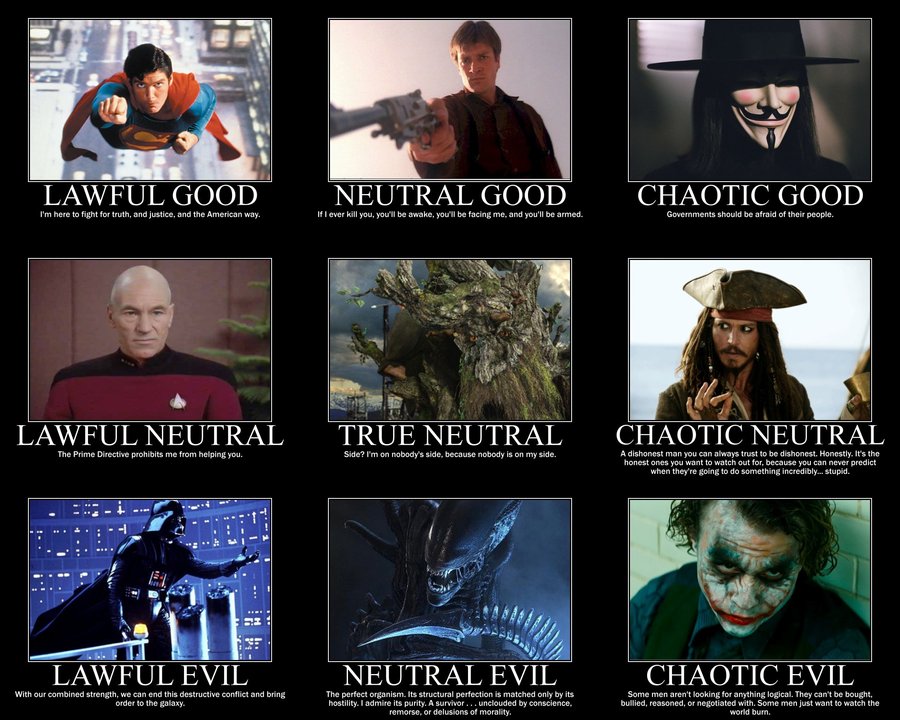
Despite my distaste for D&D’s system, we must give the game its due; it gave birth to many other games and rules systems, including my favorite that lacks levels or alignments of personalities. D&D’s moral alignments too are close to becoming cliches.  You can see D&D’s nine pigeonholes on this chart, a Creative-Commons image from Hogan Hayes’ Blog “How We Argue.” Many versions can be found with a simple search, but any chart with Mal Reynolds from Firefly makes my personal cut.Dungeons and Dragons Alignment Chart
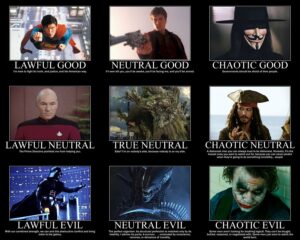
In our real world, no human I’ve met fits these templates neatly. Some come close, but I prefer to think of us as a stew of good and bad character traits. Savage Worlds builds that into character development, so you could have, for instance, an evil starship captain I created as a non-player character in the far future: he collects artwork without stealing it and adores playing the cello. He will spare and even aid others, including enemies, who share his joy when hearing or performing classical music. Otherwise, you might end up being tossed out an airlock without your space suit, just for giggles.

I’m pleased, in a way, that my many hours of time spent playing role-playing games has been vindicated by the masses. Celebrities play D&D during YouTube videos.
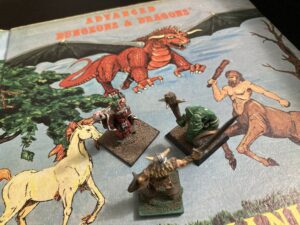
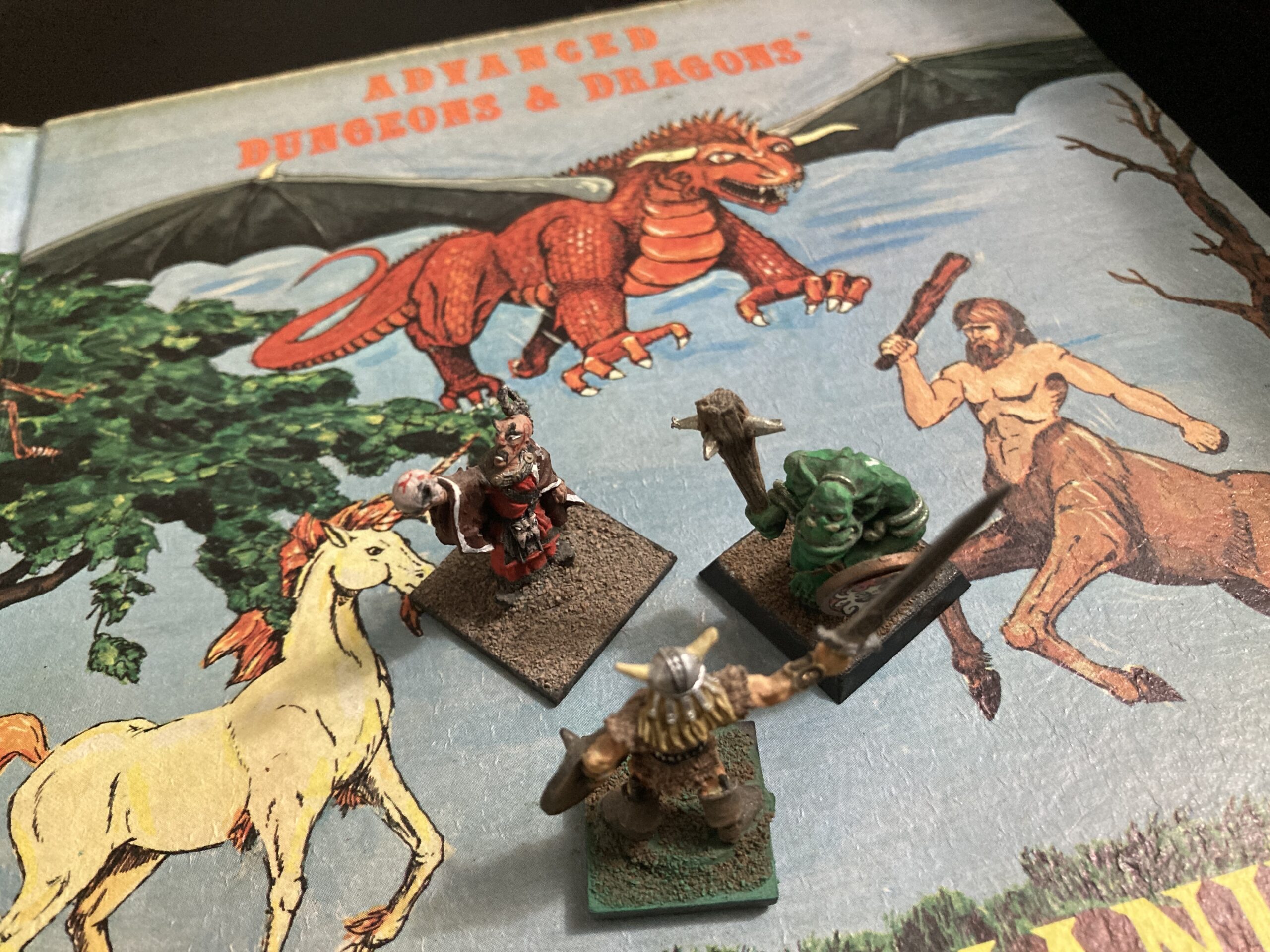
Dungeons & Dragons GearI like not only embracing parts of geekdom but also seeing them emerge as a key elements of pop culture. Gaming with other humans, as compared to playing video games, was (and remains) for me a fun hobby when indulged in moderation.

Yet all those years of playing D&D taught me a thing or two about…when to stop (X-Files reference for the truly geeky). We all know youngsters who didn’t and squandered personal relationships, GPAs, and job opportunities to the allure of rolling those polyhedra dice and acting melodramatic while speaking in strange accents such as “You again, Looftar the Lord of the Stinking Horde? Begone, vile jelly! Unhand the fair Elven Princess Willowand! Verily, begone, I say!”

No, I never said that. Well, not exactly. May you always make your saving throws this Spring!

Help me to level up this blog with new words and metaphors. Send them my way by e-mailing me (jessid -at- richmond -dot- edu) or leaving a comment below. Want to be GM for a week and write a guest entry? Let me know!

See all of our Metaphors of the Month here and Words of the Week here.

Images: Dice from Wikipedia, bottom image from my collection of old D&D stuff.
 

Word of the Week! Aperitif

in flight snack and drink

Reader Michael Stern, who describes himself as “a card-carrying student in the School of Professional and Continuing Studies” and a lifelong learner, nominated this week’s word. He’d seen it used in a novel way in a university announcement and asked if it might make a good word to discuss. I agree!

Our word is modern, with the first recorded borrowing from French in the 1890s. Michael’s sense of the term is correct: an aperitif is an alcoholic drink taken before dinner to stimulate appetite.

Though it’s not a traditional aperitif, a gin Martini is part of nearly every pre-dinner ritual for me. More than one drink like that makes me useless to the world, so “one and done” as we prepare food (I love to cook). Often we imbibe our drink with a small appetizer, which serves a very different purpose from an aperitif.

The appetizer takes the edge off one’s hunger, whereas the aperitif helps provoke appetite. You’ll find a list of traditional aperitifs here, including a vermouth I often use in my very traditional Martinis. Recipe follows:

  • 1/3 Vermouth,
  • 2/3 gin,
  • dash of bitters,
  • shaken with very small ice cubes; shaker and glasses and all ingredients cold,
  • Twist of lemon in warm weather, olive–never olive juice!–in winter).

According to the site noted in the last paragraph, “let the flavors of Noilly Prat Extra Dry Vermouth transport you to a world of sophistication.” This captures my sense of an aperitif; it’s for sipping sociably, not guzzling, chugging, shooting, etc. That’s juvenile drinking and a nasty habit to be left behind after college.

Back to our word: if something whets your taste for more, it can be, metaphorically, an aperitif. If it numbs that taste, it’s not.

Drink and eat responsibly this winter!

The blog will continue during exam week, with a final metaphor for 2025, then go on hiatus until the new year.

Send words and metaphors my way by e-mailing me (jessid -at- richmond -dot- edu) or leaving a comment below. Want to write a guest entry? Let me know!

See all of our Metaphors of the Month here and Words of the Week here.

Image: Appetizer and aperitif,”ANA SFO to NRT Business Class Inflight Meal” by Jun Seita, Flikr

Metaphor of the Month! Stendhal Syndrome

I would wager that unless you have read Michael Finkel’s excellent book The Art Thief, you’ve not encountered our November metaphor. Finkel tells the true story of Stéphane Bréitwieser, who amassed a collection of stolen art with an estimated value of two billion dollars. Instead of selling what he stole, the thief built what amounted to his own private gallery where he felt the works would be better appreciated than in a museum.

Bréitwieser would be so transported emotionally by certain priceless artwork that he’d be obsessed with owning it. Finkel and those experts he interviewed attribute this to Stendhal Syndrome; our Wikipedia page on the topic notes that rapid heartbeat, dizziness, hallucinations, even fainting can be symptoms. For Bréitwieser, he was so moved that he had to steal, and this of course led to his eventual arrest.

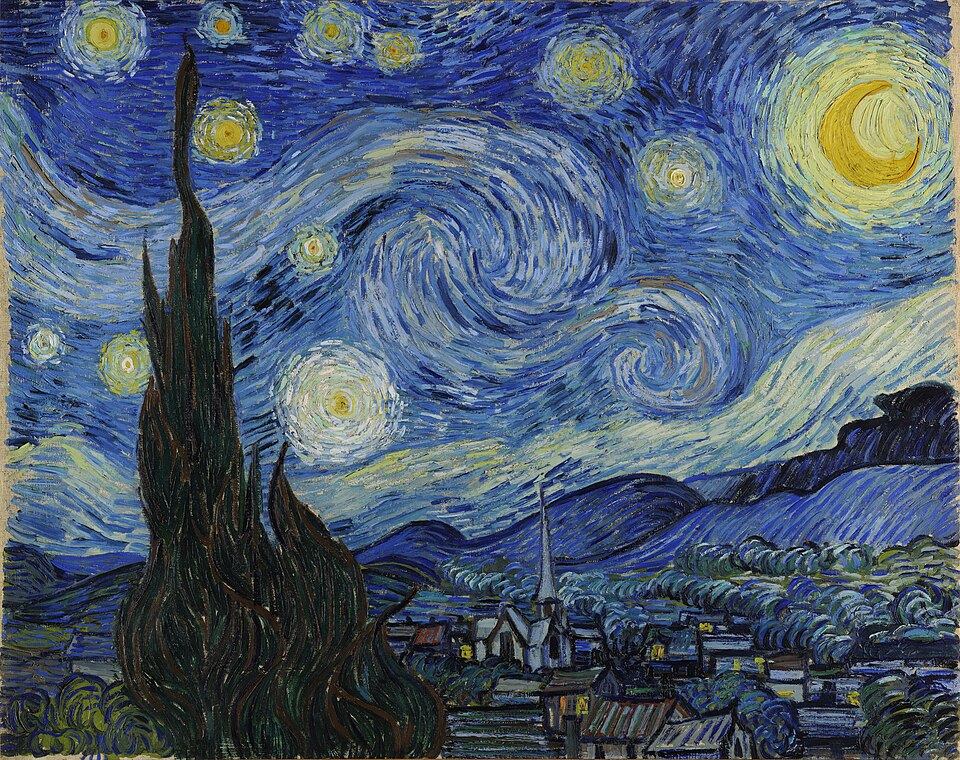
I tried to think hard about when such reactions occurred for me; perhaps seeing the Bosch paintings in the Prado for the first time in 1985. I have revisited them several times, and my reactions are still strong. I’d say the same for Van Gogh’s Starry Night. The writer Stendahl (Marie-Henri Beyle) was overcome by emotion when first visiting Florence’s Basilica of Santa Croce; others have fainted in museums or become dizzy; one person had a heart attack while viewing Botticelli’s The Birth of Venus.

We need a different term for what I experienced when I first saw sunset over the Wellsville Mountains in Utah; it was a euphoria that verged on mania, very different from the majestic serenity of catching that moment three times on the South Rim of the Grand Canyon in 2022.

The overwrought reactions of Stendhal Syndrome seem quite different from when a work of art, a landscape, or a piece of music bring us great joy or tears. So what works of art move you so deeply that you fear you might faint?

See you in the museum. The VMFA collection is varied and, in many spots, sublime (we need a Word-of-The-Week post for that term). With a little more time on my hands since switching to part-time work, I’ve increased both my reading as well as my museum visits. After reading about Bréitwieser, I’ll never look at artwork the same way again.

Send words and metaphors my way by e-mailing me (jessid -at- richmond -dot- edu) or leaving a comment below. Want to write a guest entry? Let me know!

See all of our Metaphors of the Month here and Words of the Week here.

Image Source: Wikipedia

Metaphor of the Month! Data Scraping

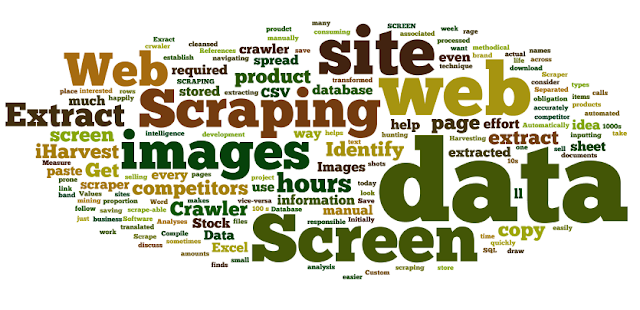
Web Scraping GraphicAs I prepare for my Fall class, “Writing With and About AI,” as well as a book proposal on AI in the writing classroom, I keep encountering neologisms like this month’s metaphor.

What do “scrapers” do? They can, according to a firm that employs them, “browse sites based on your keyword inputs or connections to your website or social media accounts. They can also skim through online reviews, product descriptions, and other categories.” That sounds benign enough, as sites like this one lie behind no pay-walls (there’s a neologism to which I’ll return in some future post).  The practice, according to the Wikipedia entry, appears to date to the 1980s, before we had The Web or household Internet.

Why scrape data to train AI? From the firm quoted in the previous paragraph, data scrapers assist in “automating outreach, [and] they can also help during the early company development and research phases. Even later on, you can use them to monitor online chatter and brand perception.” As I tell my students constantly, they need to learn how to use these AI-based tools, even if they dislike them. Getting a job will depend upon AI-fluency.

And yet as I write this, the BBC has threatened to take the AI firm Perplexity to court for unauthorized scraping of its data and “reproducing BBC content ‘verbatim’ without its permission.” This use of BBC content, though free, poses a new problem for me, a self-professed “Copy Leftist” who has long opposed copyright save for creative work.

Open-access scholarship, my own syllabi, and more in The Creative Commons are there to be scraped. The problem for me involves my and other creators’ words being used without any asking or attribution; this use violates the ethos of the Creative Commons. 20 years ago, I wrote to a Hong-Kong firm that had used our online handbook pages, verbatim, without acknowledgement. I told them I’d be contacting every e-list I knew to show that they had done this. They relented and gave our creators credit. I gave them my blessing to use our content under that one condition.

I’ve long advocated having everything save classified government information and creative work given away, free. That was one promise of the original Internet. Just cite it if you scrape it. I dislike copyright for other materials intensely.

Now I’m thinking that Web-crawlers and other bots that scrape data pose an even larger problem than copyright laws and pay walls. We may need to revise copyright laws to require attribution even for Creative-Commons work, or to watermark all AI-scraped content.

Scrape the barrel for new words and metaphors, then send them to me at jessid -at- richmond -dot- edu or leaving a comment below.

See all of our Metaphors of the Month here and Words of the Week here.

Creative-Commons image courtesy of lab.howie.tw

Word of the Week! Picayune

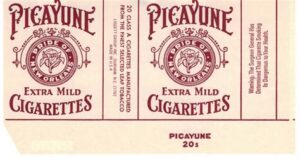
Cigarette paper wrapperI love this word. I love the idea that New Orleans named a newspaper after it. There’s a Mississippi town called Picayune that I should visit, and of course I love it that Mark Twain / Sam Clemens used the word and has also been skewered with it. In this recent example in The Atlantic by Graeme Wood, he describes a new biography focusing on Clemens’ difficult personal life and financial disasters thus: “His credulity led to misadventures the details of which are so picayune that Chernow’s emphasis on them can be maddening.” No detail about Clemens’ life can be maddening to me: I immediately ordered a copy of Chernow’s giant biography, Mark Twain.
What makes something picayune? We have an answer! The OED notes a French / Occitan etymology but Southern US origin with an 1806 first recorded use, “One can’t buy anything [at New Orleans] for less than a six cent piece, called a picayune.” Over time, the term morphed from a small amount of money to a trifling amount to a worthless person. Thus it became a metaphor for things or people of no value.

We can name many such persons, some with considerable influence (I don’t care for influences nor do I wish to be one). In any case, despite the rise of many picayune people and pastimes, our word continues a gradual decline in usage.

Send words and metaphors my way by e-mailing me (jessid -at- richmond -dot- edu) or leaving a comment below.

See all of our Metaphors of the Month here and Words of the Week here.

Image: though blocked by the picayune I.T. rules on campus, I managed to outsmart them and got this form cigarettecollector.net. I dislike cigs, but not cigars. They will yank my final stogie from my tobacco-stained, dead lips.


Metaphor of the Month! Burner Phone

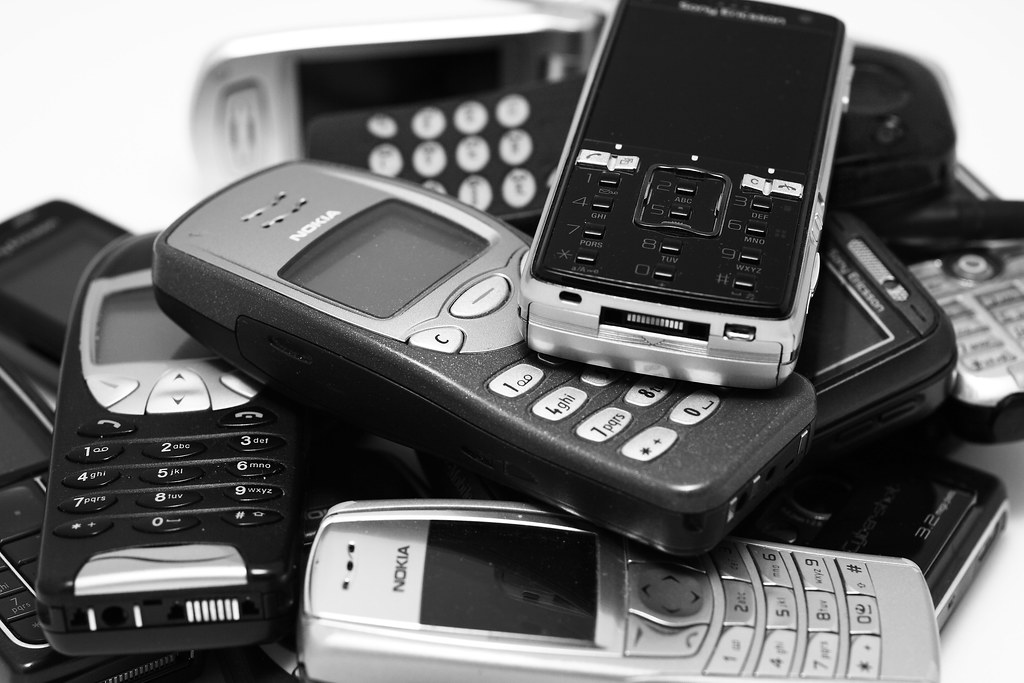
Pile of old phonesMany pleasure-travelers are opting for a burner phone this year, a generic prepaid device that does. not contain their personal information. So are many corporate and governmental employees traveling to surveillance states like China.

But where did the idea of a phone we might burn up when done come from? The OED dates the term back to 1996 as first usage, the era of my first phone, a flip-phone called a TracPhone. The Rap lyrics are so dirty I can’t quote them here. But suffice to say, the brains at The OED found this first usage.

We already have what I would call “burner cars” (in the Upper Midwest, they are called Winter Beaters) and “burner clothes” (tragically unsustainable fast-fashion clothing). I suppose some readers may even have “burner friends.” Don’t tell me.

I have an inkling that we’ll be using the adjective “burner” in many more new metaphors in the times to come. Frequency of use for our metaphor continues to rise on a steady slope.

TracPhone is still around. I’ll get one for my next international trip. I’ll only want basic browsing, texts, voice, and the ability to take photos. I don’t use much social media with on the road.

Given reports of Americans’ social-media histories being demanded when they re-enter the US, I’m taking a “burner phone” to Canada next year. Frankly, my Constitutionally protected speech is none of TSA’s or Customs and Enforcement’s darned business, unless I advocate something illegal. And I don’t do that.

Safe travels.

Send me words and metaphors that express your freedom of speech by emailing me (jessid -at- richmond -dot- edu) or leaving a comment below.

See all of our Metaphors of the Month here and Words of the Week here.

Creative-Commons image: courtesy of Adrian Clark at Flickr.