Metaphor of the Month! Earworm

Boy with fingers stuck in ears

We have, this week, a first cousin the the term lyricosis, covered a few weeks ago.

The earworm provides a vivid metaphor when a piece of music gets lodged in your ear and you cannot stop hearing it.

As early as the 16th Century, as the OED attests, an earworm meant an earwig, a common insect that is easy imagine crawling into some sleeper’s ear. There it would lay eggs that hatch brain-eating larvae. To date, I’ve know exactly zero people who have had this horror occur to them. Wikipedia’s entry on the creature claims the idea to be no more than an Old Wives’ Tale, a term worth a future post as metaphor of the month.

On the other hand, I was surprised to find that 1982 marks The OED’s first recorded use of our metaphor in the sense we use it today. What did we call such brain lodgements of music before the Reagan Era?

From ten years earlier, there’s one song I love to hate, “Sylvia’s Mother,” a 1972 hit by the rock band Doctor Hook’s Medicine Show. A talented children’s cartoonist and author, Shel Silverstein, wrote this clunker. It bubbles up out of my subconscious every so often and I begin to sing it. My old man and I would belt it out, amid gales of laughter, along with the radio when it came on in the car; he despised the song as much as I do. Dad’s verdict was “That lady was a good mother. The guy on the phone sounds like a loser!” After singing the song, the demon would be exorcised for several months.

The only way for me to be rid of an Earworm, apparently, is to feed it once in a while!

If you have other solutions, please share them, along with words or metaphors worth covering. Email me (jessid -at- richmond -dot- edu) or leave a comment below. Want to write a guest entry? Let me know!

See all of our Metaphors of the Month here and Words of the Week here.

Creative-Commons Image: Chris Rowbury’s Blog

Word of the Week! Lyricosis

Creedence Clearwater RevivalWhile enjoying the July 4th holiday, outside if you can bear the heat wave, turn on some music. Then consider how you might mishear the lyrics to many a popular song.

“More than a woman,” a 70s hit, became “Bald-headed woman.” I can provide many more examples of lyricosis, or if you prefer Grammar Girl’s term, a Mondegreen, from a writer named Sylvia Wright who misheard a Scottish ballads’ words “and laid him on the green” as “And Lady Mondegreen.”

I have a feeling that lyricosis will outlive its rival, though the OED prefers Mondegreen, offering no entry for lyricosis, and dates Mondegreen’s first use to 1954. I disagree; “lyricosis” has the right root and affix to make it resemble a problem of the ears. “Mondegreen” is a bit too precious and obscure to catch on as slang when we are talking about Abba’s misheard lyric “Dancing Queen, young and sweet, only seven teeth.”

You youngsters might think lyricosis only afflicts those who listen to “Dad Rock” (as if The Ramones would ever qualify, after writing “Teenage Lobotomy“). I disagree: maybe the digital equipment plugged into your fully-functional ears does deliver crisper sound than radio or scratchy LPs, but if a singer slurs any words, you might suffer from lyricosis yourself. While I didn’t ask for AI help, it helped anyway during a Web search, noting that in Taylor Swift’s “Blank Space,” many hear “All the lonely Starbucks lovers” instead of “Got a long list of ex-lovers,” which seems a stretch but it is funny. That’s the point of lyricosis.

Our word is a neologism, much like musician Steve Miller’s term “Pompatus” that I covered here.

Remember, readers, at the cookout, don’t kiss a fly. `Happy Fourth of July.

Also don’t be afraid to send me misheard lyrics, or words and metaphors worth covering. Email me (jessid -at- richmond -dot- edu) or leave a comment below. Want to write a guest entry? Let me know!

See all of our Metaphors of the Month here and Words of the Week here.

Image source: Creative-Commons image of Creedence Clearwater Revival, looking for that bathroom on the right.

Word of the Week! Aeolian

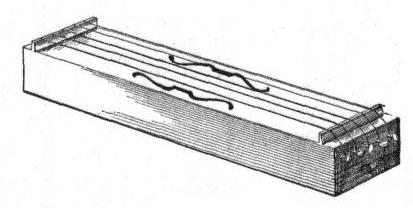
Aeolian harp

Even older than Achilles, the subject of my last entry, is the Greek god of wind, Aeolus.  From the god’s name we get our word, meaning an effect of the wind. In geology, it can mean wind-borne erosion. I’ve seen the word employed to describe features on the planet Mars, where NASA rovers are at work currently.

I first encountered the word, as “Eolian,” in an undergraduate class on the Romantic writers of England. Perhaps you know Samuel Taylor Coleridge’s 1795 poem “The Eolian Harp“? Take a peek. While it is not my favorite of his works, it certainly fixed the word we are discussing in my mind:

And that simplest Lute,
Placed length-ways in the clasping casement, hark!
How by the desultory breeze caressed,
Like some coy maid half yielding to her lover,
It pours such sweet upbraiding, as must needs
Tempt to repeat the wrong! 

At the time, many English were placing one of these wind-harps in an open window. The instrument is older still; Wikipedia’s entry on the harp cites a first description of it in the 1600s, but the instrument itself is ancient. You can find an interesting page on the harp’s history here. The OED notes that as a descriptor for a native of the Aeolian Islands, our word has a first recorded usage of 1546.

The passage of the wind would produce music quite different from a wind chime, though that too is an aeolian instrument (as compared to one that requires human breath to make music). In Coleridge’s era, there amounted to a bit of a craze for these devices, so romantics of all stripes could get one ready made.

Today it’s a bit harder to find one in Costco, so I recommend you build one. Kevin Busse offers some advice here for unusual designs that don’t require an open window. Other sites recommend building it to fit your casement. Here’s a favorite site, Fil Corbitt’s The Wind, with a page on various free-standing harps. Have a listen to the haunting melody from an “Obsidian Sky Wind Harp” (note: the harp has a high pitch, so turn down your volume at first!).

The blog will continue all summer, so send me words and metaphors worth covering. Email me (jessid -at- richmond -dot- edu) or leave a comment below. Want to write a guest entry? Let me know!

See all of our Metaphors of the Month here and Words of the Week here.

Creative-Commons image source: Wikipedia

Word of the Week! Hootenanny

Title card from TV show HootenannyI’d planned this word for Burn’s Night, the January 25th celebration of Scotland’s national Bard. Like Galoot, I figured the word to be of Scots origin, but as with Galoot, the etymology of hootenanny proves unusual. I’m now calling it an American neologism of the year 1900 or so.

My erroneous thinking can be traced to by a couple of fine nights of drinking pints and listening to music at a pub of that name in Inverness. It’s a fine venue for “trad” or modern music and the crowd is friendly. In any case, our word seems American in origin. At Etymology Online, we find either an informal gathering of folk musicians, as compared to any old jam session, or (new to me) a type of tool used by car-thieves in the early 1930s. The OED gives it a first use of 1906, in a similar sense of “thingumajig,” “doo-dad,” or “whatchamacallit.”

In any case, in Inverness I attended a hootenanny, since we had lots of locals come by to play traditional tunes. There’s a long tradition at work here; across sea in Ireland, we’d call that a céilí; in Scots’ Gaelic, it’s cèilidh. I hope you encounter one in your lifetime; travel to small places in the Celtic lands, as we like to do–no packaged tours!–and you’ll find them. They can include poetry and dance, too. The most haunting for me? An old man singing a traditional ballad a capella in the back room of a tiny pub on the island of Inishmore, a couple of years back. It brought a bunch of young toughs who were with him to respectful silence. We all raised our glasses when the singer finished to toast the gentleman, and the whisky and stout ran like a river afterwards while a band played popular tunes.

As for this side of the Atlantic, I’m too young to recall the TV show for folk performers that ran briefly in the early 60s. The network would not allow Pete Seeger to perform unless he signed what amounted to a loyalty oath to the US, a late-blooming weed from McCarthy’s witch-hunts of a decade earlier. Seeger refused, and others boycotted the show. It’s a distant prelude to the Kennedy Center fiasco currently underway.

Set aside today’s rancor and enjoy some locally sourced live music soon. It might not be a hootenanny, but you’ll be continuing an old tradition. As for our word? I was planning to place it with “shindig” in our list of endangered words. When did you last hear either?

Wrong, again, Mister Blogger. There’s a revival for our word since 2000. The frequency chart at the OED shows a steady rise in usage until 1990, then a dip and recovery. I am pleased to report that are back to peak hootenanny. Is a might wind a-blowin’ again for folk music?

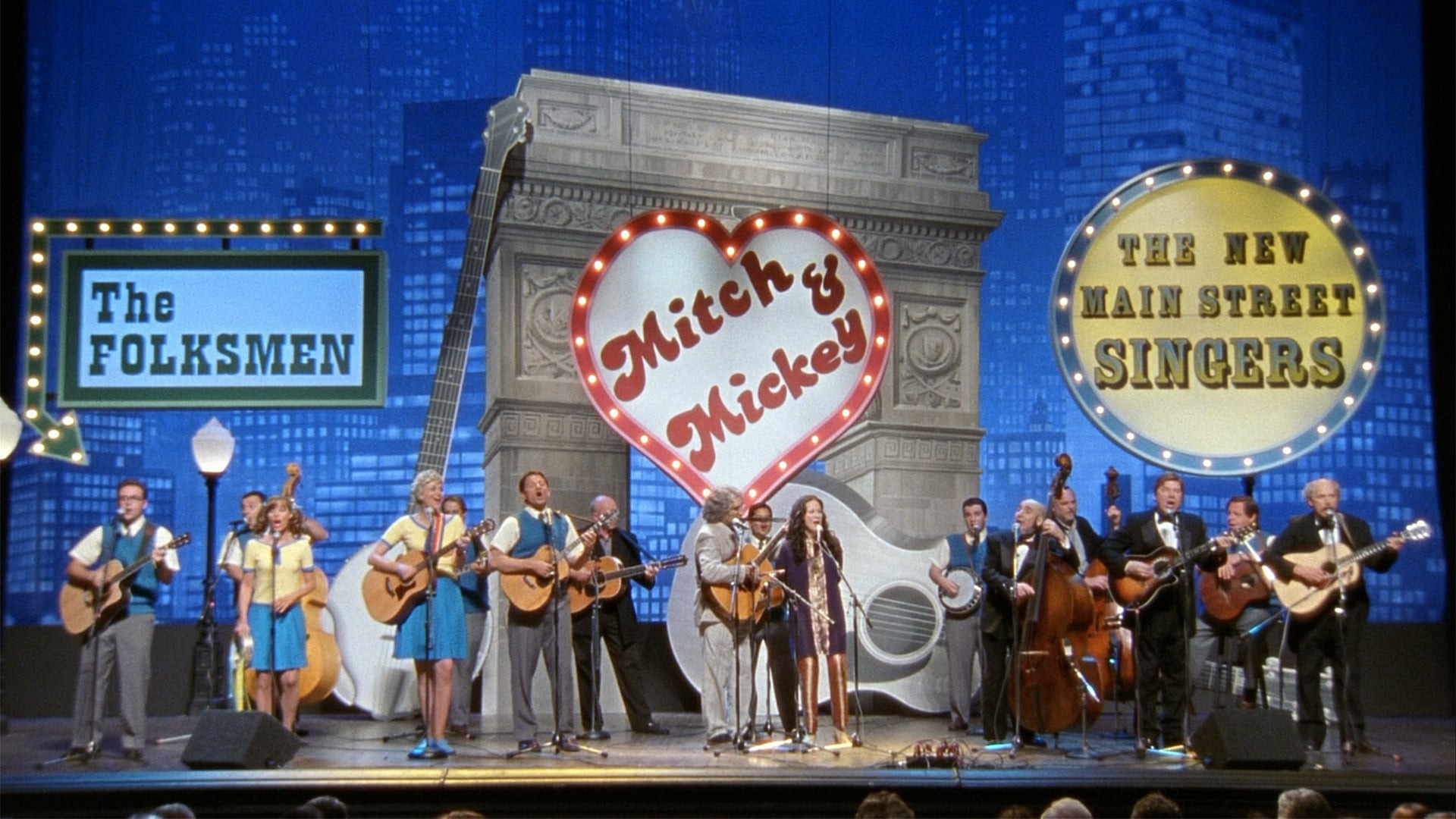
If you have seen Christopher Guest’s film, you’ll get the reference.  My musical tastes run more to glam, Americana, Brit Pop, Celtic (Trad or modern), and post-punk than to 1950s-60s American folk, but this film is a must-see for its humor and one big, endearing hootenanny.scene from the film "A Mighty Wind"Send words, folk songs, and metaphors my way by e-mailing me (jessid -at- richmond -dot- edu) or leaving a comment below. Want to write a guest entry? Let me know!

See all of our Metaphors of the Month here and Words of the Week here.

Image: Wikipedia page for that long-gone TV show

Word of the Week! Fugue

Person walking in fogI had a college roommate who enjoyed learning new words. One day he said “I had a vision while in a fugue state.” He meant that half-awake, half-asleep moment when you might recall a dream to be lost by the first cup of coffee.

Fugues in music I knew, and The OED gives us a definition that dates to a first use in the 16th Century, “A polyphonic composition constructed on one or more short subjects or themes, which are harmonized according to the laws of counterpoint, and introduced from time to time with various contrapuntal devices.” You know a fugue when you hear one. They are hard to forget.

What of my roommate’s sense of the word? He was a surf-punk rocker, not Bach. Then we get this definition, just by scrolling down below all that music, “A flight from one’s own identity, often involving travel to some unconsciously desired locality.” This usage dates to 1901 and comes from psychology. You’ll find more on the phenomenon here.

So my roomie was using our word incorrectly; he was aware of himself when in that transition between sleep and alertness and began to keep a dream-journal. Pro tip: If you want to record those visions from sleep, keep a notebook by the bed and scribble down details before you lose them. Artists tend to do these things. Or perhaps some dreams, like fugue states, are best forgotten?

Send words and metaphors my way by e-mailing me (jessid -at- richmond -dot- edu) or leaving a comment below. Want to write a guest entry? Let me know!

See all of our Metaphors of the Month here and Words of the Week here.

image: creative-commons image from Lumen Learning.