Metaphor of the Month! Achilles Heel

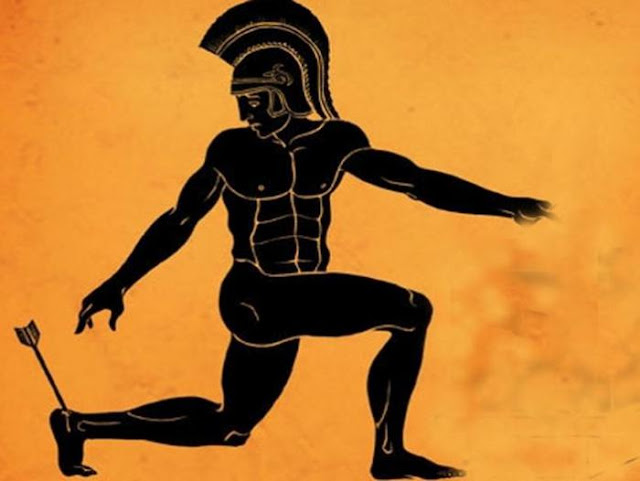
Achilles struck in heel by an arrow.This is a term I use frequently, probably too frequently. I’ve considered covering another metaphor here from Antiquity, Thucydides Trap, that has been in the news lately. Let’s save that for June.

What of an Achilles Heel?

Our ongoing war with Iran revealed an ugly truth about US life: if you want to make Americans angry across all the social and cultural divides, just raise gas prices. Despite our nation being a net exporter of oil, that commodity gets priced on a global market. If supplies get pinched anywhere, prices rise everywhere. Globally, then, oil prices are an Achilles Heel for our technological civilization. From stupid one-use plastic bags to high-test gas to the diesel in my farm tractors, petrol remains the key ingredient.

It’s then our weakest point. The OED dates the use of the metaphor back to 1705, but the story of nearly invincible Achilles stretches back to Homeric Greece and certainly beyond.  The son of a goddess, Achilles got a magical protection from his mother Thetis, who held the boy by his heel and dipped him into the River Styx in the underworld. His heel remained vulnerable, and there an arrow found him during the Trojan War.

Achilles, a cruel warrior, met his doom. Let’s hope we don’t follow him in our addiction to fossil fuels of all sorts. The usage chart at the OED shows no sign of tapering off. Our metaphor, sadly, remains a fresh one.

Update on “Muster”: I covered this term last time, and a reader on campus sent me an example from STEM: “From a psychological standpoint, imagine being a graduate student, particularly a new one, and you find some amazing new chemical entity that passes muster in all respects except for the fact that it is repeatedly returned as a “fail” from a company you do not know.”

Let’s not forget that “muster” appears often in the phrase “pass muster,” which may relate to how soldiers get inspected when they muster for roll call. As I learned in military school, shine that brass and polish those shoes!

The blog will continue all summer, so muster your courage and send me words and metaphors worth covering. Email me (jessid -at- richmond -dot- edu) or leave a comment below. Want to write a guest entry? Let me know!

See all of our Metaphors of the Month here and Words of the Week here.

Creative Commons Image: Achilles from gamificapassengers.blogspot.com

Word of the Week! Muster

International space station crew muster

While on holiday in Digby, Nova Scotia we noticed a sign by a waterfront park: Muster Point. One such sign had also been on the Digby-Saint John ferry, which I have ridden a couple of times to avoid driving the long way around the Bay of Fundy when visiting my Canadian relatives.

My brain went back to militia musters of Colonial America,  where the citizen-soldiers would show up to drill, practice marksmanship, and get drunk. One hopes it was in that order!

On a ship it makes sense to have a designated place for crew and passengers to assemble, in case of emergencies. On land it seems less clear. Digby has the world’s largest scallop fleet. Perhaps the muster is for Coast Guard rescues?

While I never figured out why Digby has such a spot, I can at least share with you the term’s etymology. The Online Etymology Dictionary traces our word to Antiquity, with the Latin word monstrare, “to show,” which we see in our modern “demonstrate.” Later, the term evolved to indicate “show up” or “gather” and we have our militia showing up in the 18th century or crew gathering on deck in a crisis.

There is also a fine share of difference between a muster and assembly point. Read more about that here.

The blog will continue all summer, so muster your courage and send me words and metaphors worth covering. Email me (jessid -at- richmond -dot- edu) or leave a comment below. Want to write a guest entry? Let me know!

See all of our Metaphors of the Month here and Words of the Week here.

Image: crew muster aboard the International Space Station, NASA at Flickr.


Metaphor of the Month! Bluebird Day

A Bluebird DayThis week I’ll add a favorite new term, one I learned just recently from my friend Henry. I’ve known him since childhood, and I drove out to his farm to see how his animals were doing, help pick up some remaining firewood I’d cut in the Winter, and take a ride in his classic car.

We were cruising down US 33 toward lunch in the town of Montpellier VA when Henry said “it’s a perfect Bluebird day today.” I love bluebirds and looked around, not seeing any, but the deep-blue sky reminded me of their plumage. The noon sky was cloudless, the air crisp, and (at least until the recent April heat wave) my instincts told me to promised a balance of cool weather, sun, and rain that typify early Spring in central Virginia.

Today, some lovely rain has broken the hot-and-dry conditions. Tomorrow, when I hit the road, the forecast promises a few Bluebird days ahead. It’s perfect flying weather up to Bangor Maine, then to visit family in New Brunswick, Canada. Not sure if I’ll see any blue birds, but birding and wildlife watching in the Canadian Maritimes is a very rewarding pastime.

So far, so good. Our metaphor simply means a cloudless day, and The Merriam-Webster Dictionary online cites a first use of 1860 but no context.

I turned to the OED for more guidance. Not a sausage, as the Brits say. I did learn elsewhere that skiers use the term and enjoy such days on the slopes. A blog post on the term claims it originated with skiing. I don’t ski but I love to kayak or hike on a cool, cloudless day.

Tomorrow I begin a short vacation; (semi)retirement means I can take them generally whenever I want. This post will be the last for a a few weeks. I’ll take us out with some Frank Sinatra, so the Chairman of the Board can send you and me on our way.

Whatever the weather, I’ll still be posting here. Send metaphors and words to cover by e-mailing me (jessid -at- richmond -dot- edu) or leaving a comment below. Want to write a guest entry? Let me know!

See all of our Metaphors of the Month here and Words of the Week here.

Image: Close to a Bluebird Day at Powhatan State Park.


Word of the Week! Sine Qua Non

BoethiusThree words this week, for the price of one. I find this term useful; though I don’t use it myself, I have seen it recently in long-form journalism. Wikipedia has an entire entry on it, so here are a few highlights. See that Wikipedia entry for its application in writing about medicine and the law.

Let’s get the definition out of the way: a mandatory precondition, an essential element, a key ingredient. The full Latin term is condicio sine qua non. So “today, a valid passport is a sine qua non of international travel,” or “to govern well at any level today, knowledge of macroeconomics appears to be a sine qua non for successful leadership.”

The origin is ancient, as we can tell from its Latin roots. That meaning, as given in Wikipedia “without which [there is] nothing,” appeared in the work of the early Christian philosopher Boethius. Earlier still, Aristotle used its Greek equivalent. For formal writing, I always like how a Latin phrase or Latinate word elevates the occasion, as does my taste for dress shirts and sometimes a tie when in the classroom.

What are some other expressions where our phrase might impress readers and make your prose more formal?  We simply lack good alternatives in English. “Must have” sounds blunt to me.

Summer break is a sine qua non for most academics and their students. So are frequent posts in a successful blog. As Spring turns to Summer and students leave for break, I’ll still be posting here. Send metaphors and words to cover by e-mailing me (jessid -at- richmond -dot- edu) or leaving a comment below. Want to write a guest entry? Let me know!

See all of our Metaphors of the Month here and Words of the Week here.

Image of Boethius from Wikipedia.

Word of the Week! Ephemeral

Wild Geranium in bloomSome words, like some wines, feel pleasant in the mouth. Our word is one of them; it has no sharp edges when present and when gone, it leaves a pleasant recollection.

The term’s etymology is Greek, “combined with an English element,” The OED entry reports. Dating from at least the 16th Century, it means transient or temporary. All things are temporary, if one takes a long enough view: the Blue Ridge Mountains once stood far taller. Yet “ephemeral” gives the sense of things that pass quickly, not durations of hundreds of millions of years. If you don’t pause to look, they are gone. Look at a cloud in the wind or the latest cultural fad. Here today, gone tomorrow?

I had always used the word in this sense until my wife began reminded me of the plants we see only at this time of year in flower. Our honey bees, as well as many native pollinators, love them. Soon we get hotter days and the grass grows taller, and our spring ephemerals vanish until next March and April.

If you look in a natural grassy area, instead of some chemically treated lawn, or in woodland area at this time of year, you may see many small flowering plants. These are the Spring ephemerals. Look for violets, the poorly named “Dead Nettle,” Virginia Bluebells, Dutchman’s Breeches, and more. I found a site about Northern Virginia ephemerals, a fine resource for an overdeveloped, overbuilt part of our state that, if you know where to look contains many lovely spots that have escaped the bulldozer’s blade.

Before it stops flowering, I’m going to toss some Dead Nettle along with Wild Onions I glean in a salad. It’s not only edible but purportedly has medicinal properties. Be careful where you forage in these days of overuse of lawn chemicals. We put none on the ground at our farm.

Some insects are know as ephemerals, too. They might live only a day. In the case of gnats, we can be thankful.

I’ll employ a cliche: some of the best things in life also are free and many are ephemeral. Slow down, put up the phone, and look. Enjoy while you can.

It costs you nothing to say our word or, if you know were to look, spot an ephemeral.

Send metaphors and words to cover by e-mailing me (jessid -at- richmond -dot- edu) or leaving a comment below. Want to write a guest entry? Let me know!

See all of our Metaphors of the Month here and Words of the Week here.

Image: Wild Geranium from Flickr, courtesy of Virginia State Parks.

Word of the Week! Shrinkflation

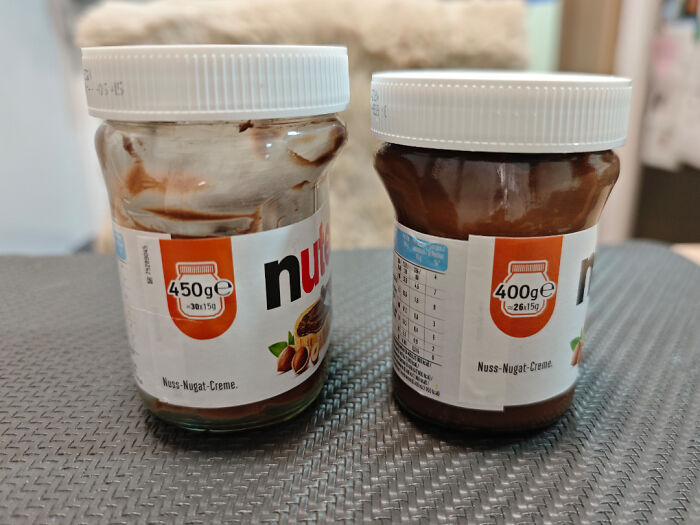
Nutella Jars, before and after ShrinkflationWe are in the process of switching brands for the dry kibble we feed our three livestock dogs. The dogs are huge, each over 100 pounds, and they eat a LOT of food. Our current brand, which I won’t name, began selling 38-pound bags for the same price as an older 50-pound bag.

It’s a good example of shrinkflation, a common problem visible to anyone who pays attention in the grocery-store aisles. You can read all about the economics of this portmanteau word at Wikipedia, but I’m curious about the term’s origin. The Online Etymology Dictionary was of no help, but a Stack Exchange discussion led to a possible first use in 2014. There’s a precedent, too, in the term “stagflation,” a bogeyman of 1970s economics.

Is this post shorter than last week? Since it costs you nothing but time to consume a post, it’s not shrinkflation. I simply found myself taciturn and grumpy this week about that dog food!

Send metaphors and words to cover by e-mailing me (jessid -at- richmond -dot- edu) or leaving a comment below. Want to write a guest entry? Let me know!

See all of our Metaphors of the Month here and Words of the Week here.

Creative-Commons Image: Ink.com. I’m not a Nutella fan, either.

Metaphor of the Month! Level Up

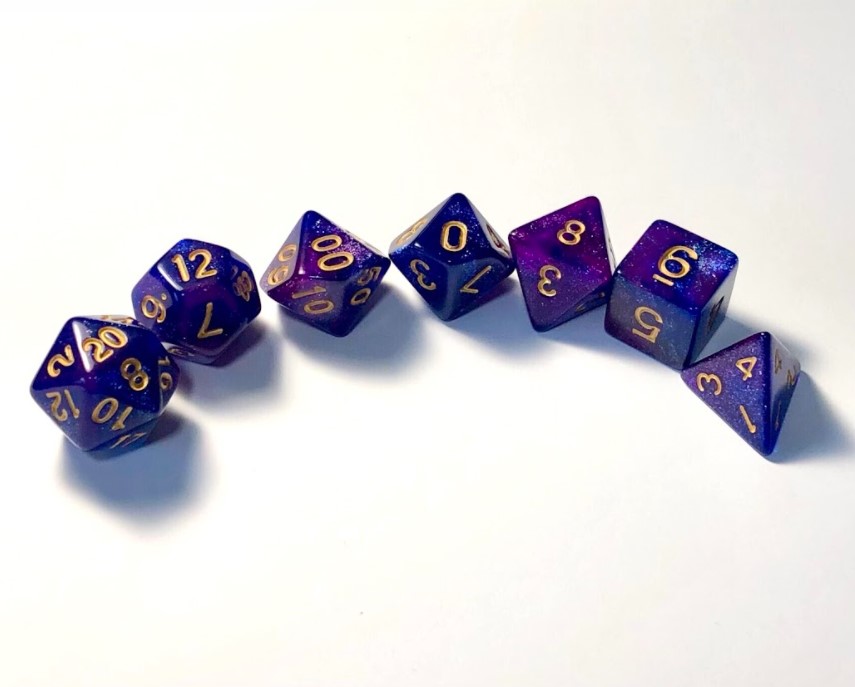
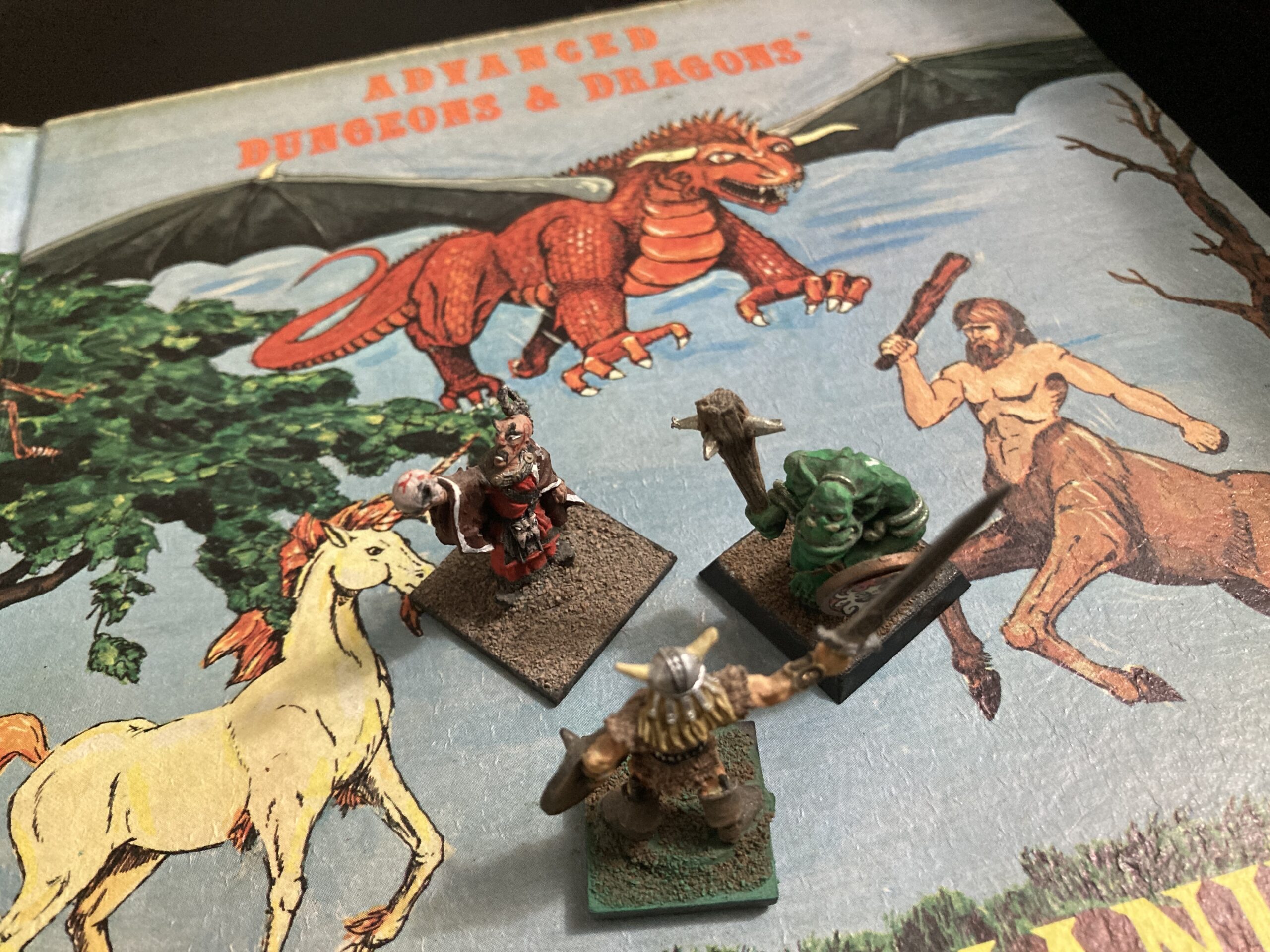
Polyhedra Dice A feature story I spotted in the lifestyle section of a major news outlet mentioned “leveling up” the reader’s cooking skills.

What a strange world of ours. A niche hobby for geeks in the 70s and 80s, when I discovered it, has become so mainstream that it gives us a term for self improvment.

The tabletop roleplaying game Dungeons and Dragons probably needs little introduction. Just in case, however, you can read the history of Gygax and Arneson’s brainchild. Some basics: players create a character in a fictional world of fantasy (usually a sword & sorcery Conan or high-fantasy Middle Earth setting) who begins as a novice thief, warrior, cleric, mage, or other profession. The characters who survive their adventures, moderated by a Game Master (GM) with rules and multi-sided polyhedral dice, gain “levels” of experience.

Perhaps played over many years or even decades of real life, a well-crafted “campaign” of adventures becomes an act of collaborative storytelling.

I never liked the D&D game system, since poor gameplay might boil down to “I am Sir Hardhelm, a 15th level Fighter! You’ll never defeat me!” I prefer systems where one does not wear one’s abilities and personalities, so to speak, on robes or shield.  Yet the idea of “leveling up” is now everywhere in print. It has become a cliche. I see it in corporate literature, news stories, and feature pieces even in Atlantic. Nary an Elf or Orc to be seen.

I no longer play D&D, though I do enjoy other simpler, less-binary rules for science-fiction or fantasy settings, such as Savage Worlds, promising “fast, furious, and fun!” gaming. It uses those dice plus playing cards to introduce randomness I found missing in D&D, even 40+ years ago in college. Nearly every week, my team of players, both old-time D&Ders with graduate degrees, outsmart me, their GM, during our two-hour Nerd Night.

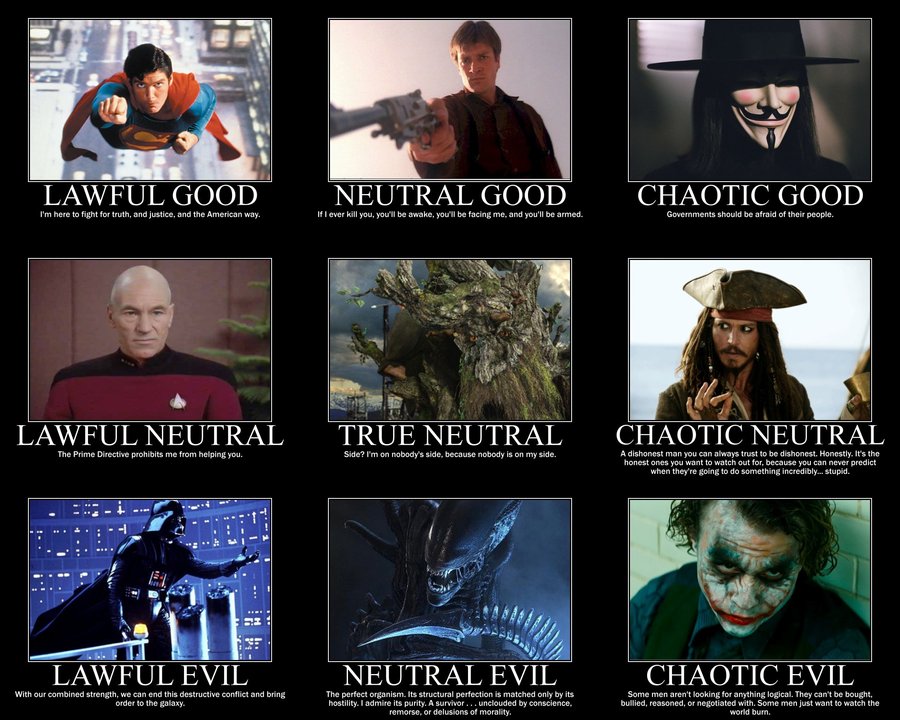
Despite my distaste for D&D’s system, we must give the game its due; it gave birth to many other games and rules systems, including my favorite that lacks levels or alignments of personalities. D&D’s moral alignments too are close to becoming cliches.  You can see D&D’s nine pigeonholes on this chart, a Creative-Commons image from Hogan Hayes’ Blog “How We Argue.” Many versions can be found with a simple search, but any chart with Mal Reynolds from Firefly makes my personal cut.Dungeons and Dragons Alignment Chart

In our real world, no human I’ve met fits these templates neatly. Some come close, but I prefer to think of us as a stew of good and bad character traits. Savage Worlds builds that into character development, so you could have, for instance, an evil starship captain I created as a non-player character in the far future: he collects artwork without stealing it and adores playing the cello. He will spare and even aid others, including enemies, who share his joy when hearing or performing classical music. Otherwise, you might end up being tossed out an airlock without your space suit, just for giggles.

I’m pleased, in a way, that my many hours of time spent playing role-playing games has been vindicated by the masses. Celebrities play D&D during YouTube videos.

Dungeons & Dragons GearI like not only embracing parts of geekdom but also seeing them emerge as a key elements of pop culture. Gaming with other humans, as compared to playing video games, was (and remains) for me a fun hobby when indulged in moderation.

Yet all those years of playing D&D taught me a thing or two about…when to stop (X-Files reference for the truly geeky). We all know youngsters who didn’t and squandered personal relationships, GPAs, and job opportunities to the allure of rolling those polyhedra dice and acting melodramatic while speaking in strange accents such as “You again, Looftar the Lord of the Stinking Horde? Begone, vile jelly! Unhand the fair Elven Princess Willowand! Verily, begone, I say!”

No, I never said that. Well, not exactly. May you always make your saving throws this Spring!

Help me to level up this blog with new words and metaphors. Send them my way by e-mailing me (jessid -at- richmond -dot- edu) or leaving a comment below. Want to be GM for a week and write a guest entry? Let me know!

See all of our Metaphors of the Month here and Words of the Week here.

Images: Dice from Wikipedia, bottom image from my collection of old D&D stuff.


Word of the Week! Nuance

Everglades sunsetWhen checking to see if I’d featured this useful term before, I found  FOUR pages of entries that contained “nuance” in the text but none that gave it a starring role. Time to fix that! Clearly, I love this word.

Frankly, I love anything nuances. You may know my hatred of the Superhero genre of film: I can tell you the plot after 10 minutes for most of them. Boring! They contain some clever dialogue but little mystery or surprise: those are the soul of nuanced stories.

So few things in our world–whatever zealots of any stripe say–are binary. Instead, we encounter subtle shades of differences, slightly varying experiences, a spectrum of personalities, not a series of pigeon-holes. Just put down the phone some twilight and watch a sunset unfold. No two are identical.

The Online Etymology Dictionary notes the origin of our word, “slight or delicate degree of difference in expression, feeling, opinion, etc.,” 1781, from French nuance “slight difference, shade of color.”

And there we have it. Now get out of your chair and enjoy some nuanced experiences outdoors as Spring unfolds. They are as close on the UR campus as a stroll around Westhampton Lake as the leaves unfurl.

Send words and metaphors my way by e-mailing me (jessid -at- richmond -dot- edu) or leaving a comment below. Want to write a guest entry? Let me know!

See all of our Metaphors of the Month here and Words of the Week here.

Image: Publicdomainpictures.net, “Everglades Sunset”

Word of the Week Update! Googly Eyes

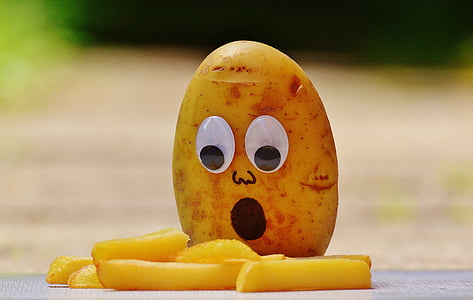
Googly Eyed Potato

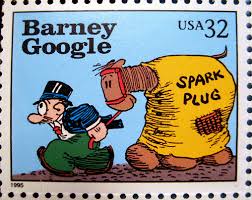
Being an academic includes, believe it or not, a measure of humility. So when I covered this term here before,  I wrote “my money, as well as Wikipedia’s, is on Barney Google, a nearly forgotten cartoon character. ”

I may have lost that bet. There’s some evidence that Barney’s popularity led to a shift in an existing term.

While doing some research on sites to visit in Northumbria, in service of a long-term plan to walk the Hadrian’s Wall Path, I came across the legend of The Lambton Worm, a crawling horror dispatched by local nobleman, Sir John Lambton. As a lad he went fishing and caught the creature, when it too was a youngster. He disposed of the strange “fish” by tossing it in a well, and trouble followed. You may recall the legend if you saw Ken Russell’s B-movie adaptation of Bram Stoker’s reportedly awful novel, The Lair of the White Worm.

I hope to visit the scene of these adventures, south of Newcastle, when I begin my rambles across the north of England. As for my evidence that I was wrong earlier about googly eyes? Doubts began when I found a folk-song composed in 1867 by Clarence M. Leumane, and I’ll quote part of it here, after Sir John unwisely tosses the baby worm down a well:

But the worm got fat an’ grewed an’ grewed,
An’ grewed an aaful size;
He’d greet big teeth, a greet big gob,
An greet big goggly eyes.

The Online Etymology Dictionary notes that our “googly eyes” comes from the older “goggly eyes” of the song, and, further back, to the 1530s and Middle English.

Sorry Barney Google, our term is far older than you. Perhaps Barney’s pop-eyed look helped morph “goggly-eyes” to “googly-eyes”?

Barney and Spark Plug Send words, stick-on googly eyes, monster legends, and metaphors my way by e-mailing me (jessid -at- richmond -dot- edu) or leaving a comment below. Want to write a guest entry? Let me know!

See all of our Metaphors of the Month here and Words of the Week here.

Images: Picpik.com and Wikipedia.

Word of the Week! Shuffle

Here’s a word of common parlance with an interesting etymology. We think of shuffling cards or perhaps walking slowly along, dragging our feet. Both meanings exist alongside each other and pose no problems for native speakers of English. My gut instinct told me that the sliding motion of cards when shuffling them (unlike cutting a deck of cards) gives us a hint of the origin.

The Online Etymology Dictionary provides both the “Middle English shovelen “to move with dragging feet,”  and well as a possible “Low German schuffeln ‘to walk clumsily, deal dishonestly.’ ” That latter meaning gives us a possible link to the noun “shuffle,” which can be a trick or deceit.

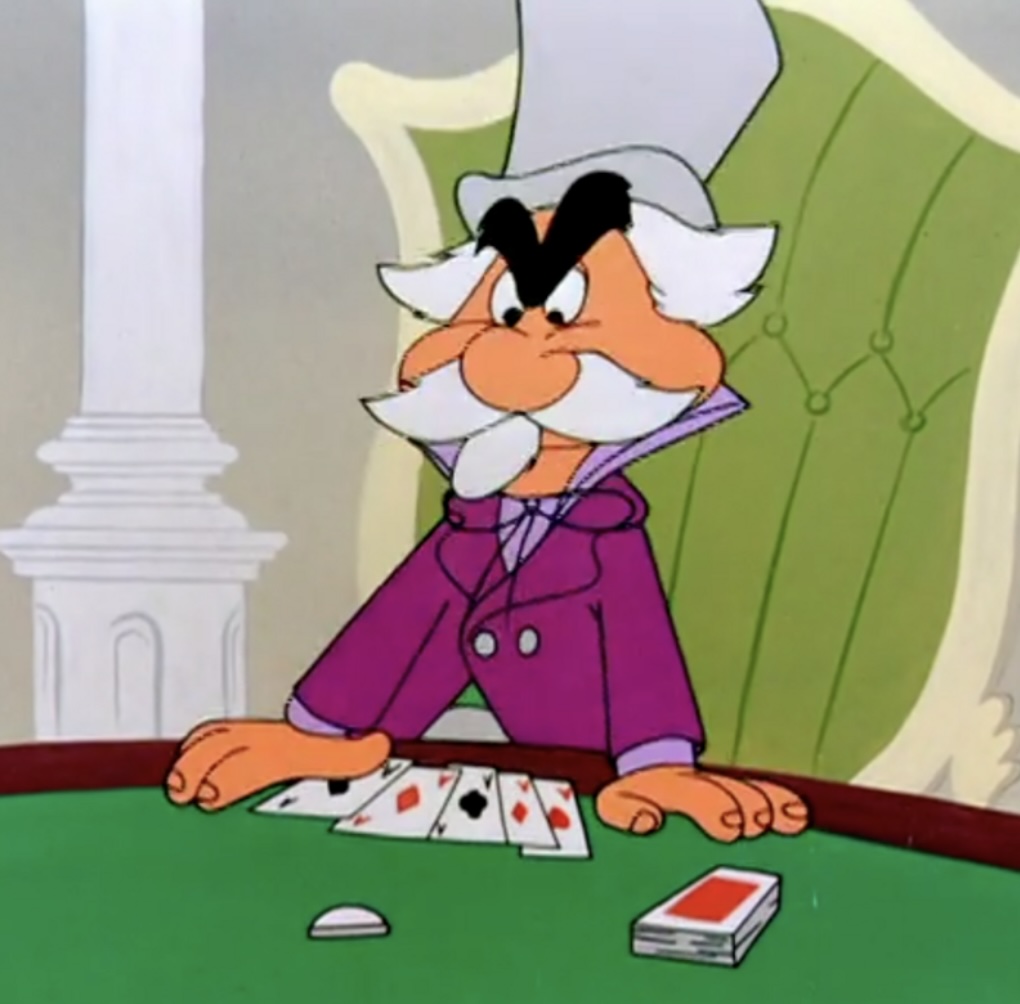
At last, I know what was on the minds of the geniuses at Warner Brothers who created my favorite deep-fried Southern trickster and foil for Bugs Bunny, Colonel Shuffle. He’s a thin-skinned Southern aristocrat in a few cartoons, including the memorable “Mississippi Hare,” with Bugs getting the best of Shuffle at every turn, leading to one of the finest lines in cartoon history when Shuffle is shoved over the side of a riverboat, “Why did you dunk my poor old hide in Ol’ Man River?” Shuffle appeared elsewhere, usually as the butt of jokes rather than playing them, try as he might.

Shuffle is descended from not only Mark Twain’s King and Duke but a long series of picaresque characters that came before the Civil War. When Shuffle declares that he is “the rip-roarin’-est, gold-diggin’-est, sharp-shootin’-est, poker-playin’-est riverboat gambler on the Mississippi!,” he uses boasts we associate with Davy Crockett, Sut Lovingood, Simon Suggs, and other real and fictional “ring-tailed roarers” of Southern-frontier history and tall tales. All of them were expert at playing tricks and pulling cons on gullible strangers.

Good thing they never shuffled their cards around Bugs Bunny, Doc.

Send words, card tricks, and metaphors my way by e-mailing me (jessid -at- richmond -dot- edu) or leaving a comment below. Want to write a guest entry? Let me know!

See all of our Metaphors of the Month here and Words of the Week here.

Image: Col. Shuffle’s card-game shuffle–5 aces!