 I’ve been less than diligent this month, as duties editing duties for a journal issue, as well putting together as a book manuscript on AI and writing instruction/tutoring, have slowed my blogging. But reader Lee Parker came to the rescue by suggesting this word. I could not recall that I had ever covered it here and a search confirmed that omission.
As first cousin to our last word, sycophant, it makes sense. Demagogues are often surrounded by sycophants.
Our current President fits the classical, and morally neutral, definition of a demagogue perfectly: a leader of the common people who appeals to the passions, rather than intellect, of his followers. That’s not a slur against the man, in fact; it’s a time-honored strategy for swaying hearts, not minds. At least it began that way in Ancient Greece, according to the Wikipedia entry on the term.
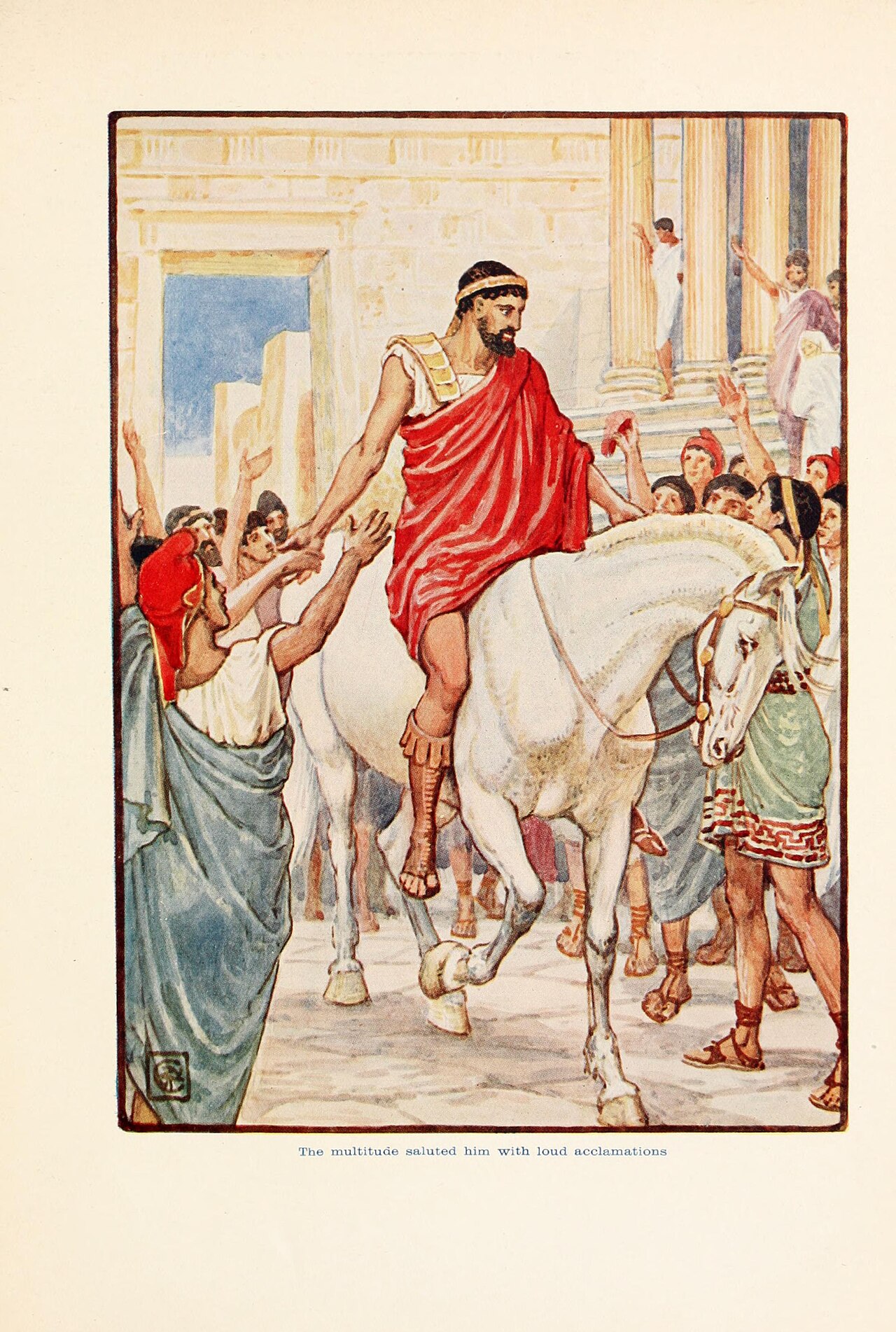
My easily-swayed mind went to Alcibiades, the former friend of Socrates who turned on him, but who also possessed military courage and other admirable qualities. Alcibiades also helped to ruin Athens, persuading them to invade Sicily, an act that helped insure their long-term decline. Novelist James Fenimore Cooper, mindful perhaps of Andrew Jackson, listed four characteristics of the demagogue, and I’ll again quote from the Wikipedia entry:
- They present themselves as a man or woman of the common people, opposed to the elites.
- Their politics depends on a visceral connection with the people, which greatly exceeds ordinary political popularity.
- They manipulate this connection, and the raging popularity it affords, for their own benefit and ambition.
- They threaten or outright break established rules of conduct, institutions, and even the law.
So when did our term acquire the negative connotation of one who leads a mob, who is a “rabble rouser”? According to the entry at Etymology Online, the negative sense of the term is as old as the term itself.
I cannot find a final answer, but I did find something else: demagogues either fall hard and their rule leads to needed reforms, or they destroy a society utterly. We will see how things end here.
Send in words or metaphors worth covering. Email me (jessid -at- richmond -dot- edu) or leave a comment below. Want to write a guest entry? Let me know!
See all of our Metaphors of the Month here and Words of the Week here.
Image: Wikipedia entry, “Alcibiades returns in triumph to Athens; illustration from a 1910s history textbook.”