 Chuck Staudenmaier, Manager of UR’s Print Shop, nominated our word. He said “think Ron or Hermione” to Harry Potter’s role of protagonist. When I taught fiction to undergrads, we discussed the terms “protagonist” and “antagonist” (think Voldemort), but not this term. So thank you, Chuck, for teaching me something.
The OED’s entry cites a Greek origin for the word and provides the definition of “second actor or person in a drama.” Only a British pronunciation is provided, and both cited uses come from the British Isles. Usage has never been common, though it rose from first noted use in the 1850s to a peak in the 1920s. Frequency declined after that and today we are roughly back where we began.
I have a hunch that our word would enjoy more popularity were it easier to pronounce in English. Most dramatic works feature important secondary characters. Think about literary, stage, film, or television dramas. Who are your favorite deuteragonists?
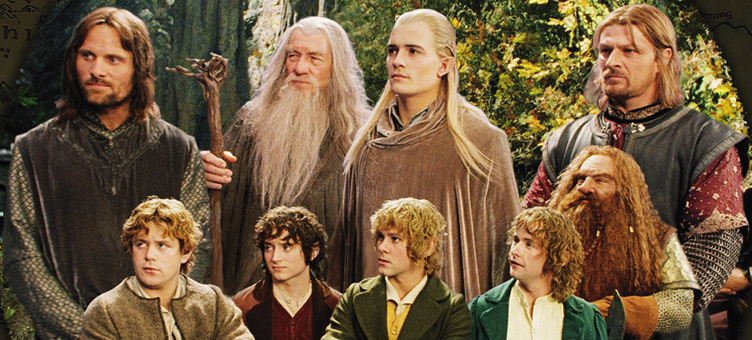
I’m more fond of Tolkien than Rowling, and when we get to The Fellowship of the Ring, Frodo Baggins has many deuteragonists along for the journey to Mordor with the One Ring of Power. Like many fans of the books, I find Sam to be my favorite deuteragonist.
It’s been 20 years, so it’s time to read that trilogy again and see the films, though the less said about Peter Jackson’s The Hobbit films, the better. As for the Harry Potter books? I have enjoyed three so far and am slowly working my way through the fourth.
Please send me words and metaphors worth covering. Email me (jessid -at- richmond -dot- edu) or leave a comment below. Want to write a guest entry? Let me know!
See all of our Metaphors of the Month here and Words of the Week here.
Image: Wikipedia, from Peter Jackson’s The Fellowship of the Ring.