Word of the Week! Mogul

I strongly recommend that anyone in the area attend the exhibition “India’s Great Mughals: Art, Power, and Opulence” at the Virginia Museum of Fine Arts. It is yet another stunner from America’s finest state-run museum.

But this blog is not about museums; it’s about words. The wealth of the royal court of the Mughal empire seems distant now, unless one goes to the Taj Mahal or uses the word “mogul.” Dating from 1653 in the sense I wish to discuss, according to the OED, our term comes directly from the Anglicized version of “Mughal,” itself an Urdu word for “Mongol,” since the Mughals traced their ancestry back to Genghis Khan.

In our modern sense, this week’s word means a person of great wealth and power.

The OED’s most recent citation, from 1999, notes that Rupert Murdoch is “a television mogul.” We had movie moguls from the first half of the last century, then software moguls at the turn of the century, though (if I recall correctly) Neal Stephenson called them “software khans” in one of his science-fiction novels. I still prefer that term!

Today, amid the vast sums of money swirling around artificial intelligence, we have AI moguls. All of them, so far, are humans. At times I do wonder, but that would make another post.

The word’s frequency of use bottomed out in 2021 and then began a slow climb. We seem to be in a new era of moguls and their empires. Where it ends, no one knows. The Mughal Empire peaked and then experienced a series of bad leaders and overly lavish living, as its sphere of influence and power slowly withered.

Send me words and metaphors worth covering. Email me (jessid -at- richmond -dot- edu) or leave a comment below. Want to write a guest entry? Let me know!

See all of our Metaphors of the Month here and Words of the Week here.

Image: Shah Jahan and an gem. Who knew that he, like me, collected rocks? Image by me.

Word of the Week! Lyricosis

Creedence Clearwater RevivalWhile enjoying the July 4th holiday, outside if you can bear the heat wave, turn on some music. Then consider how you might mishear the lyrics to many a popular song.

“More than a woman,” a 70s hit, became “Bald-headed woman.” I can provide many more examples of lyricosis, or if you prefer Grammar Girl’s term, a Mondegreen, from a writer named Sylvia Wright who misheard a Scottish ballads’ words “and laid him on the green” as “And Lady Mondegreen.”

I have a feeling that lyricosis will outlive its rival, though the OED prefers Mondegreen, offering no entry for lyricosis, and dates Mondegreen’s first use to 1954. I disagree; “lyricosis” has the right root and affix to make it resemble a problem of the ears. “Mondegreen” is a bit too precious and obscure to catch on as slang when we are talking about Abba’s misheard lyric “Dancing Queen, young and sweet, only seven teeth.”

You youngsters might think lyricosis only afflicts those who listen to “Dad Rock” (as if The Ramones would ever qualify, after writing “Teenage Lobotomy“). I disagree: maybe the digital equipment plugged into your fully-functional ears does deliver crisper sound than radio or scratchy LPs, but if a singer slurs any words, you might suffer from lyricosis yourself. While I didn’t ask for AI help, it helped anyway during a Web search, noting that in Taylor Swift’s “Blank Space,” many hear “All the lonely Starbucks lovers” instead of “Got a long list of ex-lovers,” which seems a stretch but it is funny. That’s the point of lyricosis.

Our word is a neologism, much like musician Steve Miller’s term “Pompatus” that I covered here.

Remember, readers, at the cookout, don’t kiss a fly. `Happy Fourth of July.

Also don’t be afraid to send me misheard lyrics, or words and metaphors worth covering. Email me (jessid -at- richmond -dot- edu) or leave a comment below. Want to write a guest entry? Let me know!

See all of our Metaphors of the Month here and Words of the Week here.

Image source: Creative-Commons image of Creedence Clearwater Revival, looking for that bathroom on the right.

Word of the Week! Doohickey

Cat with computer parts

Editor’s Note: Reader Michael Stern authored this post for our summer enjoyment. Consider how many “doodad” or “doololly” or “doojolly” words relate to this neologism. Etymology Online does not give this origin but notes it to be an American neologism from 1914. Now on to Michael’s post.

Merriam-Webster’s Collegiate Dictionary defines doohickey as a “doodad,” which is itself defined as “an often small article whose common name is unknown or forgotten: gadget.” The OED defines it as “any small object, esp. mechanical; a ‘thingummy.” Neither offer a useful derivation but I happened upon what might be a reasonable and interesting one.

On July 9, 1776, Virginia patriots attacked Lord Dunmore and his supporters who were holed up on Gwynn’s Island in Chesapeake Bay. Embedded with the patriots was a French artillery captain who had joined the Continental Army. He built an experimental wooden mortar which was put to use in the attack, only to explode, killing him. He was the only casualty on the patriot side. His name was Dohicky Arundel.

Perhaps Arundel’s given name became a synonym for a nameless contraption (although more than a hundred years would pass before its first recorded use in Kansas Farmer in 1908, according to the OED.)

My source for this information is A Perfect Frenzy: A Royal Governor, His Black Allies, and the Crisis That Spurred the American Revolution by Andrew Lawler. My wife and I attended a lecture by Lawler at UR a few months ago and, needless to say, we purchased his book.

Send us words, thingamabobs, whatchamacallits, linguistic kluges, and metaphors worth covering. Email me (jessid -at- richmond -dot- edu) or leave a comment below. Want to write a guest entry? Let me know!

See all of our Metaphors of the Month here and Words of the Week here.

Creative-Commons Image: Sleepypete’s blog. Thanks, Pete. 

Word of the Week! Aeolian

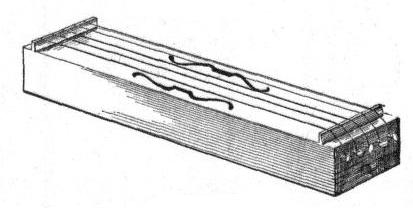
Aeolian harp

Even older than Achilles, the subject of my last entry, is the Greek god of wind, Aeolus.  From the god’s name we get our word, meaning an effect of the wind. In geology, it can mean wind-borne erosion. I’ve seen the word employed to describe features on the planet Mars, where NASA rovers are at work currently.

I first encountered the word, as “Eolian,” in an undergraduate class on the Romantic writers of England. Perhaps you know Samuel Taylor Coleridge’s 1795 poem “The Eolian Harp“? Take a peek. While it is not my favorite of his works, it certainly fixed the word we are discussing in my mind:

And that simplest Lute,
Placed length-ways in the clasping casement, hark!
How by the desultory breeze caressed,
Like some coy maid half yielding to her lover,
It pours such sweet upbraiding, as must needs
Tempt to repeat the wrong! 

At the time, many English were placing one of these wind-harps in an open window. The instrument is older still; Wikipedia’s entry on the harp cites a first description of it in the 1600s, but the instrument itself is ancient. You can find an interesting page on the harp’s history here. The OED notes that as a descriptor for a native of the Aeolian Islands, our word has a first recorded usage of 1546.

The passage of the wind would produce music quite different from a wind chime, though that too is an aeolian instrument (as compared to one that requires human breath to make music). In Coleridge’s era, there amounted to a bit of a craze for these devices, so romantics of all stripes could get one ready made.

Today it’s a bit harder to find one in Costco, so I recommend you build one. Kevin Busse offers some advice here for unusual designs that don’t require an open window. Other sites recommend building it to fit your casement. Here’s a favorite site, Fil Corbitt’s The Wind, with a page on various free-standing harps. Have a listen to the haunting melody from an “Obsidian Sky Wind Harp” (note: the harp has a high pitch, so turn down your volume at first!).

The blog will continue all summer, so send me words and metaphors worth covering. Email me (jessid -at- richmond -dot- edu) or leave a comment below. Want to write a guest entry? Let me know!

See all of our Metaphors of the Month here and Words of the Week here.

Creative-Commons image source: Wikipedia

Metaphor of the Month! Achilles Heel

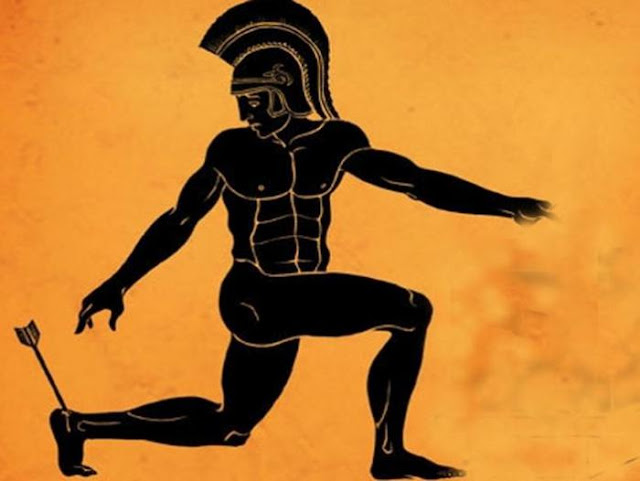
Achilles struck in heel by an arrow.This is a term I use frequently, probably too frequently. I’ve considered covering another metaphor here from Antiquity, Thucydides Trap, that has been in the news lately. Let’s save that for June.

What of an Achilles Heel?

Our ongoing war with Iran revealed an ugly truth about US life: if you want to make Americans angry across all the social and cultural divides, just raise gas prices. Despite our nation being a net exporter of oil, that commodity gets priced on a global market. If supplies get pinched anywhere, prices rise everywhere. Globally, then, oil prices are an Achilles Heel for our technological civilization. From stupid one-use plastic bags to high-test gas to the diesel in my farm tractors, petrol remains the key ingredient.

It’s then our weakest point. The OED dates the use of the metaphor back to 1705, but the story of nearly invincible Achilles stretches back to Homeric Greece and certainly beyond.  The son of a goddess, Achilles got a magical protection from his mother Thetis, who held the boy by his heel and dipped him into the River Styx in the underworld. His heel remained vulnerable, and there an arrow found him during the Trojan War.

Achilles, a cruel warrior, met his doom. Let’s hope we don’t follow him in our addiction to fossil fuels of all sorts. The usage chart at the OED shows no sign of tapering off. Our metaphor, sadly, remains a fresh one.

Update on “Muster”: I covered this term last time, and a reader on campus sent me an example from STEM: “From a psychological standpoint, imagine being a graduate student, particularly a new one, and you find some amazing new chemical entity that passes muster in all respects except for the fact that it is repeatedly returned as a “fail” from a company you do not know.”

Let’s not forget that “muster” appears often in the phrase “pass muster,” which may relate to how soldiers get inspected when they muster for roll call. As I learned in military school, shine that brass and polish those shoes!

The blog will continue all summer, so muster your courage and send me words and metaphors worth covering. Email me (jessid -at- richmond -dot- edu) or leave a comment below. Want to write a guest entry? Let me know!

See all of our Metaphors of the Month here and Words of the Week here.

Creative Commons Image: Achilles from gamificapassengers.blogspot.com

Word of the Week! Muster

International space station crew muster

While on holiday in Digby, Nova Scotia we noticed a sign by a waterfront park: Muster Point. One such sign had also been on the Digby-Saint John ferry, which I have ridden a couple of times to avoid driving the long way around the Bay of Fundy when visiting my Canadian relatives.

My brain went back to militia musters of Colonial America,  where the citizen-soldiers would show up to drill, practice marksmanship, and get drunk. One hopes it was in that order!

On a ship it makes sense to have a designated place for crew and passengers to assemble, in case of emergencies. On land it seems less clear. Digby has the world’s largest scallop fleet. Perhaps the muster is for Coast Guard rescues?

While I never figured out why Digby has such a spot, I can at least share with you the term’s etymology. The Online Etymology Dictionary traces our word to Antiquity, with the Latin word monstrare, “to show,” which we see in our modern “demonstrate.” Later, the term evolved to indicate “show up” or “gather” and we have our militia showing up in the 18th century or crew gathering on deck in a crisis.

There is also a fine share of difference between a muster and assembly point. Read more about that here.

The blog will continue all summer, so muster your courage and send me words and metaphors worth covering. Email me (jessid -at- richmond -dot- edu) or leave a comment below. Want to write a guest entry? Let me know!

See all of our Metaphors of the Month here and Words of the Week here.

Image: crew muster aboard the International Space Station, NASA at Flickr.


Word of the Week! Sine Qua Non

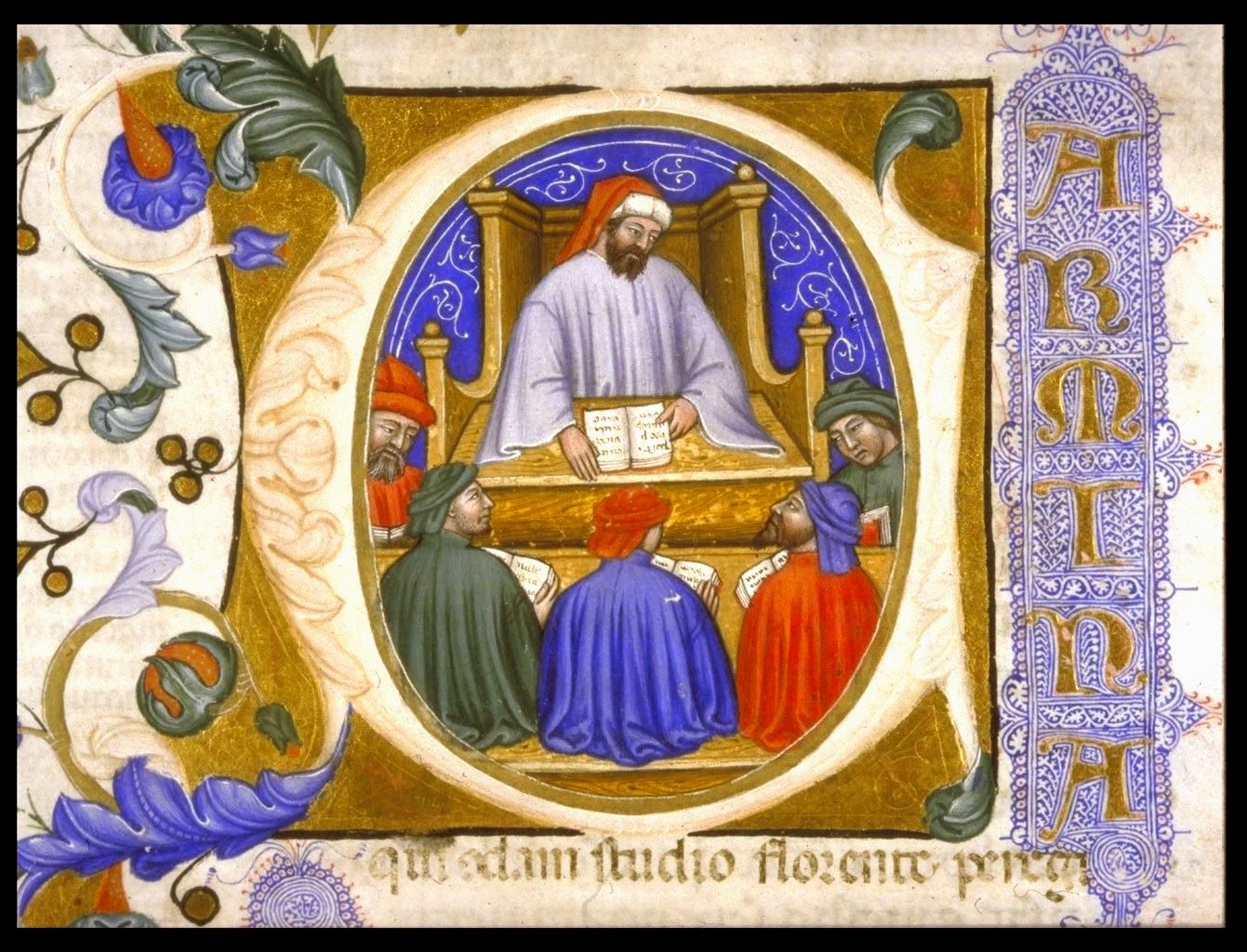
BoethiusThree words this week, for the price of one. I find this term useful; though I don’t use it myself, I have seen it recently in long-form journalism. Wikipedia has an entire entry on it, so here are a few highlights. See that Wikipedia entry for its application in writing about medicine and the law.

Let’s get the definition out of the way: a mandatory precondition, an essential element, a key ingredient. The full Latin term is condicio sine qua non. So “today, a valid passport is a sine qua non of international travel,” or “to govern well at any level today, knowledge of macroeconomics appears to be a sine qua non for successful leadership.”

The origin is ancient, as we can tell from its Latin roots. That meaning, as given in Wikipedia “without which [there is] nothing,” appeared in the work of the early Christian philosopher Boethius. Earlier still, Aristotle used its Greek equivalent. For formal writing, I always like how a Latin phrase or Latinate word elevates the occasion, as does my taste for dress shirts and sometimes a tie when in the classroom.

What are some other expressions where our phrase might impress readers and make your prose more formal?  We simply lack good alternatives in English. “Must have” sounds blunt to me.

Summer break is a sine qua non for most academics and their students. So are frequent posts in a successful blog. As Spring turns to Summer and students leave for break, I’ll still be posting here. Send metaphors and words to cover by e-mailing me (jessid -at- richmond -dot- edu) or leaving a comment below. Want to write a guest entry? Let me know!

See all of our Metaphors of the Month here and Words of the Week here.

Image of Boethius from Wikipedia.

Word of the Week! Ephemeral

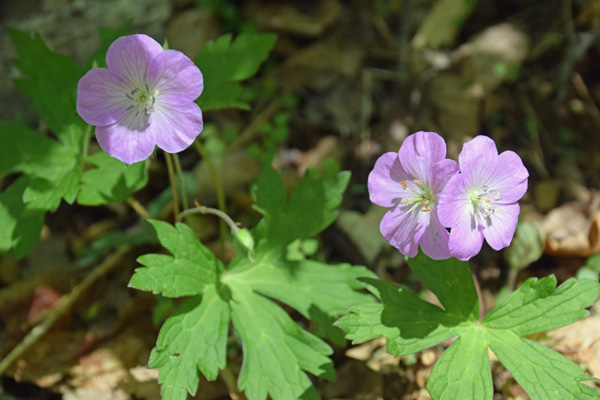
Wild Geranium in bloomSome words, like some wines, feel pleasant in the mouth. Our word is one of them; it has no sharp edges when present and when gone, it leaves a pleasant recollection.

The term’s etymology is Greek, “combined with an English element,” The OED entry reports. Dating from at least the 16th Century, it means transient or temporary. All things are temporary, if one takes a long enough view: the Blue Ridge Mountains once stood far taller. Yet “ephemeral” gives the sense of things that pass quickly, not durations of hundreds of millions of years. If you don’t pause to look, they are gone. Look at a cloud in the wind or the latest cultural fad. Here today, gone tomorrow?

I had always used the word in this sense until my wife began reminded me of the plants we see only at this time of year in flower. Our honey bees, as well as many native pollinators, love them. Soon we get hotter days and the grass grows taller, and our spring ephemerals vanish until next March and April.

If you look in a natural grassy area, instead of some chemically treated lawn, or in woodland area at this time of year, you may see many small flowering plants. These are the Spring ephemerals. Look for violets, the poorly named “Dead Nettle,” Virginia Bluebells, Dutchman’s Breeches, and more. I found a site about Northern Virginia ephemerals, a fine resource for an overdeveloped, overbuilt part of our state that, if you know where to look contains many lovely spots that have escaped the bulldozer’s blade.

Before it stops flowering, I’m going to toss some Dead Nettle along with Wild Onions I glean in a salad. It’s not only edible but purportedly has medicinal properties. Be careful where you forage in these days of overuse of lawn chemicals. We put none on the ground at our farm.

Some insects are know as ephemerals, too. They might live only a day. In the case of gnats, we can be thankful.

I’ll employ a cliche: some of the best things in life also are free and many are ephemeral. Slow down, put up the phone, and look. Enjoy while you can.

It costs you nothing to say our word or, if you know were to look, spot an ephemeral.

Send metaphors and words to cover by e-mailing me (jessid -at- richmond -dot- edu) or leaving a comment below. Want to write a guest entry? Let me know!

See all of our Metaphors of the Month here and Words of the Week here.

Image: Wild Geranium from Flickr, courtesy of Virginia State Parks.

Word of the Week! Shrinkflation

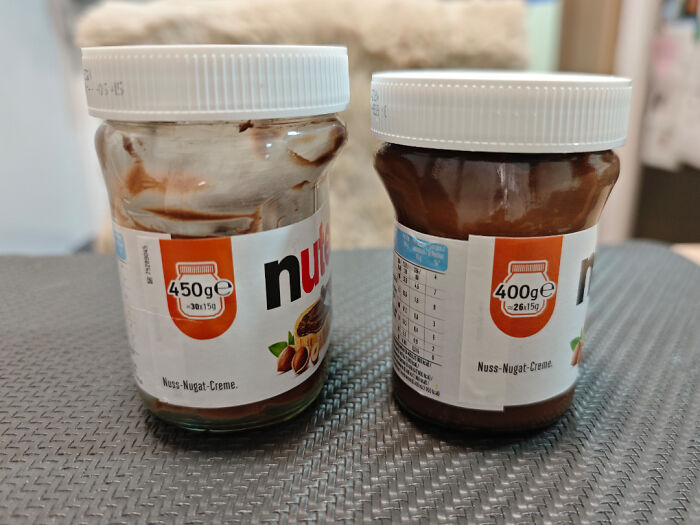
Nutella Jars, before and after ShrinkflationWe are in the process of switching brands for the dry kibble we feed our three livestock dogs. The dogs are huge, each over 100 pounds, and they eat a LOT of food. Our current brand, which I won’t name, began selling 38-pound bags for the same price as an older 50-pound bag.

It’s a good example of shrinkflation, a common problem visible to anyone who pays attention in the grocery-store aisles. You can read all about the economics of this portmanteau word at Wikipedia, but I’m curious about the term’s origin. The Online Etymology Dictionary was of no help, but a Stack Exchange discussion led to a possible first use in 2014. There’s a precedent, too, in the term “stagflation,” a bogeyman of 1970s economics.

Is this post shorter than last week? Since it costs you nothing but time to consume a post, it’s not shrinkflation. I simply found myself taciturn and grumpy this week about that dog food!

Send metaphors and words to cover by e-mailing me (jessid -at- richmond -dot- edu) or leaving a comment below. Want to write a guest entry? Let me know!

See all of our Metaphors of the Month here and Words of the Week here.

Creative-Commons Image: Ink.com. I’m not a Nutella fan, either.

Metaphor of the Month! Level Up

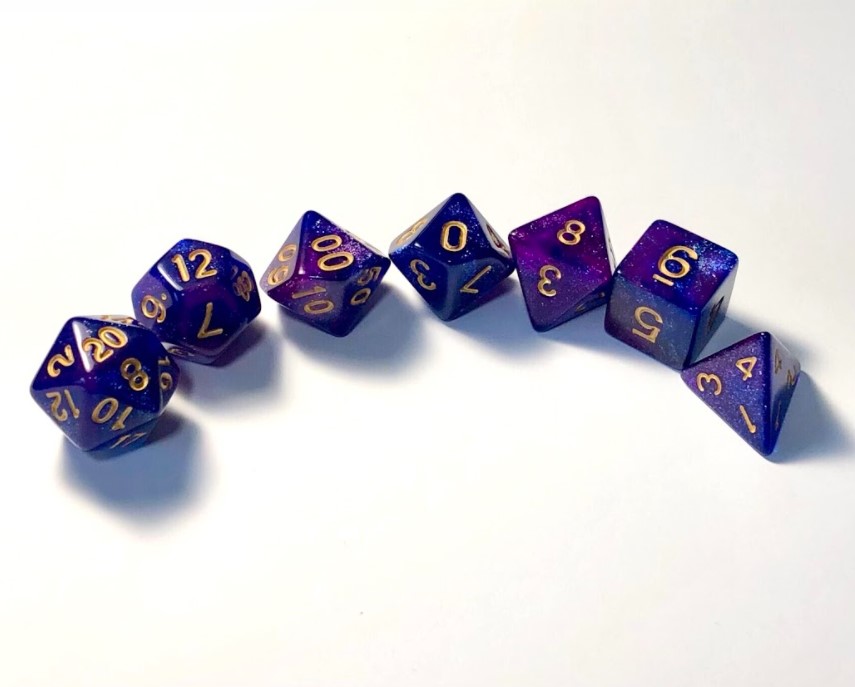
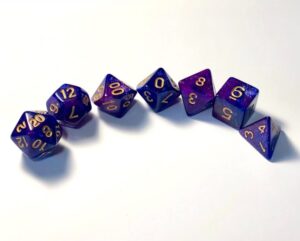
Polyhedra Dice A feature story I spotted in the lifestyle section of a major news outlet mentioned “leveling up” the reader’s cooking skills.

What a strange world of ours. A niche hobby for geeks in the 70s and 80s, when I discovered it, has become so mainstream that it gives us a term for self improvment.

The tabletop roleplaying game Dungeons and Dragons probably needs little introduction. Just in case, however, you can read the history of Gygax and Arneson’s brainchild. Some basics: players create a character in a fictional world of fantasy (usually a sword & sorcery Conan or high-fantasy Middle Earth setting) who begins as a novice thief, warrior, cleric, mage, or other profession. The characters who survive their adventures, moderated by a Game Master (GM) with rules and multi-sided polyhedral dice, gain “levels” of experience.

Perhaps played over many years or even decades of real life, a well-crafted “campaign” of adventures becomes an act of collaborative storytelling.

I never liked the D&D game system, since poor gameplay might boil down to “I am Sir Hardhelm, a 15th level Fighter! You’ll never defeat me!” I prefer systems where one does not wear one’s abilities and personalities, so to speak, on robes or shield.  Yet the idea of “leveling up” is now everywhere in print. It has become a cliche. I see it in corporate literature, news stories, and feature pieces even in Atlantic. Nary an Elf or Orc to be seen.

I no longer play D&D, though I do enjoy other simpler, less-binary rules for science-fiction or fantasy settings, such as Savage Worlds, promising “fast, furious, and fun!” gaming. It uses those dice plus playing cards to introduce randomness I found missing in D&D, even 40+ years ago in college. Nearly every week, my team of players, both old-time D&Ders with graduate degrees, outsmart me, their GM, during our two-hour Nerd Night.

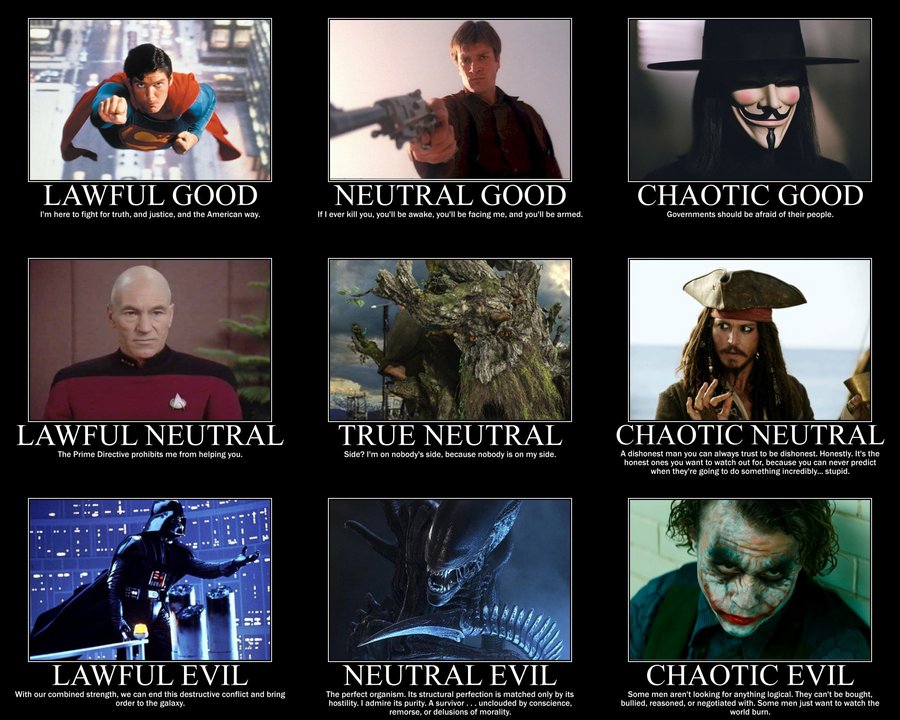
Despite my distaste for D&D’s system, we must give the game its due; it gave birth to many other games and rules systems, including my favorite that lacks levels or alignments of personalities. D&D’s moral alignments too are close to becoming cliches.  You can see D&D’s nine pigeonholes on this chart, a Creative-Commons image from Hogan Hayes’ Blog “How We Argue.” Many versions can be found with a simple search, but any chart with Mal Reynolds from Firefly makes my personal cut.Dungeons and Dragons Alignment Chart
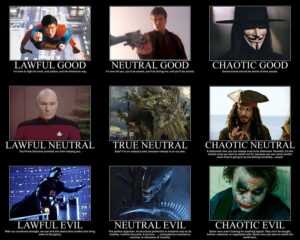
In our real world, no human I’ve met fits these templates neatly. Some come close, but I prefer to think of us as a stew of good and bad character traits. Savage Worlds builds that into character development, so you could have, for instance, an evil starship captain I created as a non-player character in the far future: he collects artwork without stealing it and adores playing the cello. He will spare and even aid others, including enemies, who share his joy when hearing or performing classical music. Otherwise, you might end up being tossed out an airlock without your space suit, just for giggles.

I’m pleased, in a way, that my many hours of time spent playing role-playing games has been vindicated by the masses. Celebrities play D&D during YouTube videos.
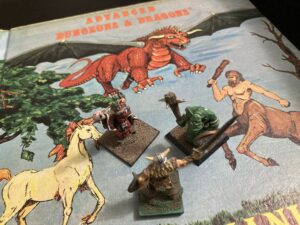
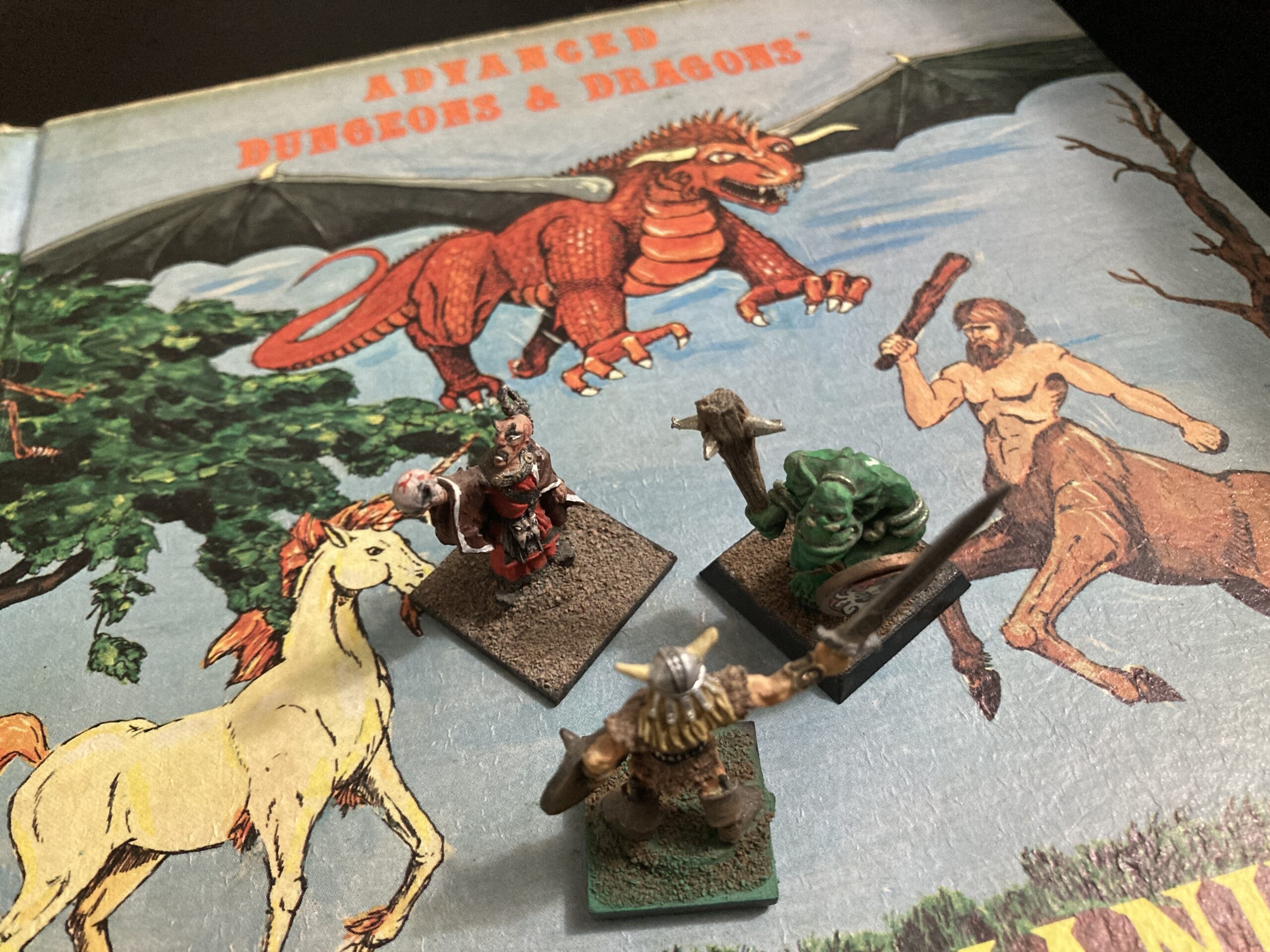
Dungeons & Dragons GearI like not only embracing parts of geekdom but also seeing them emerge as a key elements of pop culture. Gaming with other humans, as compared to playing video games, was (and remains) for me a fun hobby when indulged in moderation.

Yet all those years of playing D&D taught me a thing or two about…when to stop (X-Files reference for the truly geeky). We all know youngsters who didn’t and squandered personal relationships, GPAs, and job opportunities to the allure of rolling those polyhedra dice and acting melodramatic while speaking in strange accents such as “You again, Looftar the Lord of the Stinking Horde? Begone, vile jelly! Unhand the fair Elven Princess Willowand! Verily, begone, I say!”

No, I never said that. Well, not exactly. May you always make your saving throws this Spring!

Help me to level up this blog with new words and metaphors. Send them my way by e-mailing me (jessid -at- richmond -dot- edu) or leaving a comment below. Want to be GM for a week and write a guest entry? Let me know!

See all of our Metaphors of the Month here and Words of the Week here.

Images: Dice from Wikipedia, bottom image from my collection of old D&D stuff.