Word of the Week! Doohickey

Cat with computer parts

Editor’s Note: Reader Michael Stern authored this post for our summer enjoyment. Consider how many “doodad” or “doololly” or “doojolly” words relate to this neologism. Etymology Online does not give this origin but notes it to be an American neologism from 1914. Now on to Michael’s post.

Merriam-Webster’s Collegiate Dictionary defines doohickey as a “doodad,” which is itself defined as “an often small article whose common name is unknown or forgotten: gadget.” The OED defines it as “any small object, esp. mechanical; a ‘thingummy.” Neither offer a useful derivation but I happened upon what might be a reasonable and interesting one.

On July 9, 1776, Virginia patriots attacked Lord Dunmore and his supporters who were holed up on Gwynn’s Island in Chesapeake Bay. Embedded with the patriots was a French artillery captain who had joined the Continental Army. He built an experimental wooden mortar which was put to use in the attack, only to explode, killing him. He was the only casualty on the patriot side. His name was Dohicky Arundel.

Perhaps Arundel’s given name became a synonym for a nameless contraption (although more than a hundred years would pass before its first recorded use in Kansas Farmer in 1908, according to the OED.)

My source for this information is A Perfect Frenzy: A Royal Governor, His Black Allies, and the Crisis That Spurred the American Revolution by Andrew Lawler. My wife and I attended a lecture by Lawler at UR a few months ago and, needless to say, we purchased his book.

Send us words, thingamabobs, whatchamacallits, linguistic kluges, and metaphors worth covering. Email me (jessid -at- richmond -dot- edu) or leave a comment below. Want to write a guest entry? Let me know!

See all of our Metaphors of the Month here and Words of the Week here.

Creative-Commons Image: Sleepypete’s blog. Thanks, Pete. 
Word of the Week! Aeolian

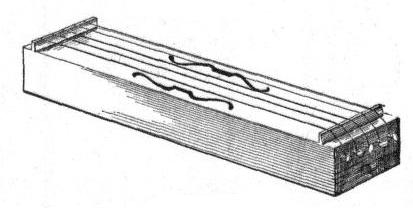
Aeolian harp

Even older than Achilles, the subject of my last entry, is the Greek god of wind, Aeolus.  From the god’s name we get our word, meaning an effect of the wind. In geology, it can mean wind-borne erosion. I’ve seen the word employed to describe features on the planet Mars, where NASA rovers are at work currently.

I first encountered the word, as “Eolian,” in an undergraduate class on the Romantic writers of England. Perhaps you know Samuel Taylor Coleridge’s 1795 poem “The Eolian Harp“? Take a peek. While it is not my favorite of his works, it certainly fixed the word we are discussing in my mind:

And that simplest Lute,
Placed length-ways in the clasping casement, hark!
How by the desultory breeze caressed,
Like some coy maid half yielding to her lover,
It pours such sweet upbraiding, as must needs
Tempt to repeat the wrong! 

At the time, many English were placing one of these wind-harps in an open window. The instrument is older still; Wikipedia’s entry on the harp cites a first description of it in the 1600s, but the instrument itself is ancient. You can find an interesting page on the harp’s history here. The OED notes that as a descriptor for a native of the Aeolian Islands, our word has a first recorded usage of 1546.

The passage of the wind would produce music quite different from a wind chime, though that too is an aeolian instrument (as compared to one that requires human breath to make music). In Coleridge’s era, there amounted to a bit of a craze for these devices, so romantics of all stripes could get one ready made.

Today it’s a bit harder to find one in Costco, so I recommend you build one. Kevin Busse offers some advice here for unusual designs that don’t require an open window. Other sites recommend building it to fit your casement. Here’s a favorite site, Fil Corbitt’s The Wind, with a page on various free-standing harps. Have a listen to the haunting melody from an “Obsidian Sky Wind Harp” (note: the harp has a high pitch, so turn down your volume at first!).

The blog will continue all summer, so send me words and metaphors worth covering. Email me (jessid -at- richmond -dot- edu) or leave a comment below. Want to write a guest entry? Let me know!

See all of our Metaphors of the Month here and Words of the Week here.

Creative-Commons image source: Wikipedia

Word of the Week! Muster

International space station crew muster

While on holiday in Digby, Nova Scotia we noticed a sign by a waterfront park: Muster Point. One such sign had also been on the Digby-Saint John ferry, which I have ridden a couple of times to avoid driving the long way around the Bay of Fundy when visiting my Canadian relatives.

My brain went back to militia musters of Colonial America,  where the citizen-soldiers would show up to drill, practice marksmanship, and get drunk. One hopes it was in that order!

On a ship it makes sense to have a designated place for crew and passengers to assemble, in case of emergencies. On land it seems less clear. Digby has the world’s largest scallop fleet. Perhaps the muster is for Coast Guard rescues?

While I never figured out why Digby has such a spot, I can at least share with you the term’s etymology. The Online Etymology Dictionary traces our word to Antiquity, with the Latin word monstrare, “to show,” which we see in our modern “demonstrate.” Later, the term evolved to indicate “show up” or “gather” and we have our militia showing up in the 18th century or crew gathering on deck in a crisis.

There is also a fine share of difference between a muster and assembly point. Read more about that here.

The blog will continue all summer, so muster your courage and send me words and metaphors worth covering. Email me (jessid -at- richmond -dot- edu) or leave a comment below. Want to write a guest entry? Let me know!

See all of our Metaphors of the Month here and Words of the Week here.

Image: crew muster aboard the International Space Station, NASA at Flickr.


Word of the Week! Sine Qua Non

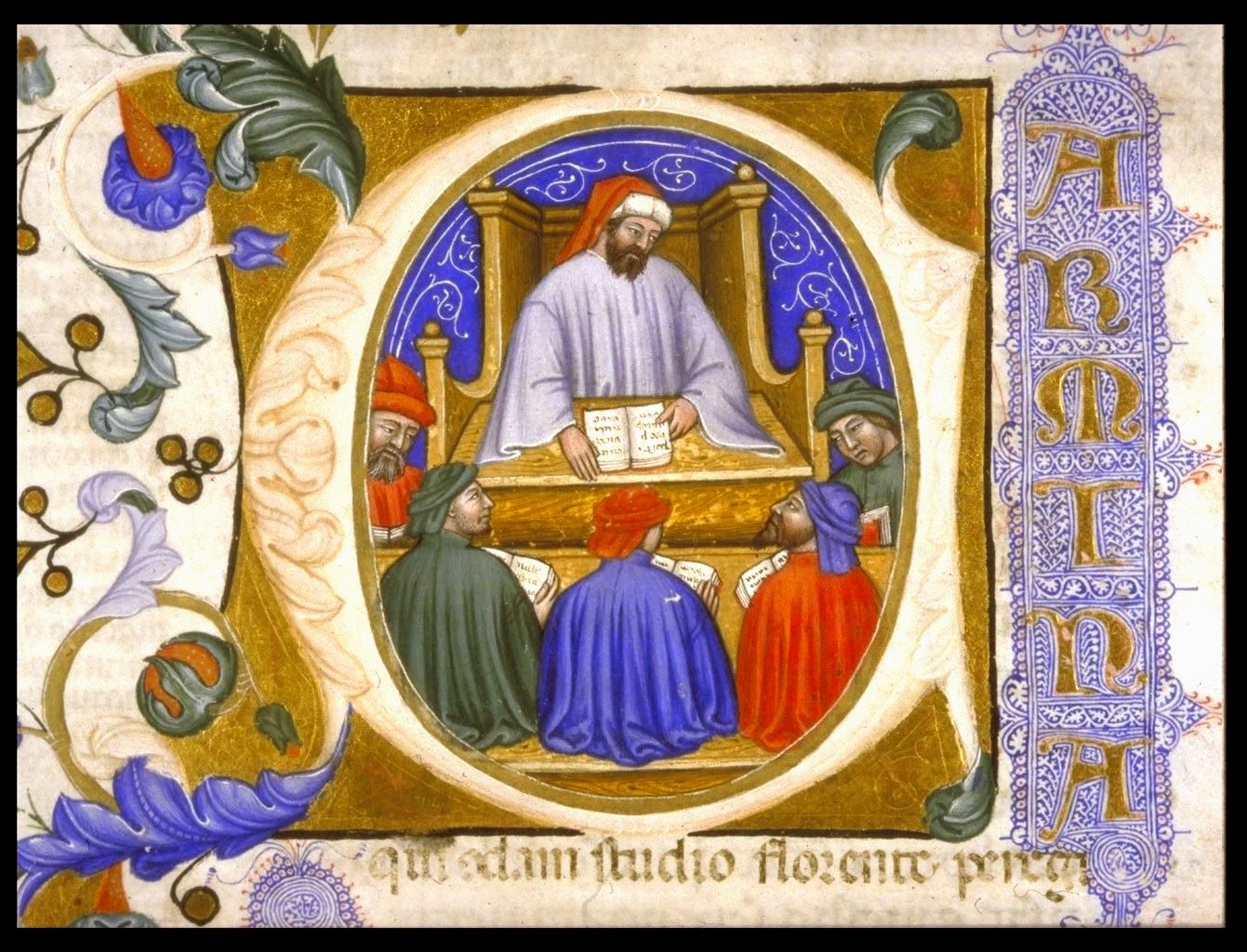
BoethiusThree words this week, for the price of one. I find this term useful; though I don’t use it myself, I have seen it recently in long-form journalism. Wikipedia has an entire entry on it, so here are a few highlights. See that Wikipedia entry for its application in writing about medicine and the law.

Let’s get the definition out of the way: a mandatory precondition, an essential element, a key ingredient. The full Latin term is condicio sine qua non. So “today, a valid passport is a sine qua non of international travel,” or “to govern well at any level today, knowledge of macroeconomics appears to be a sine qua non for successful leadership.”

The origin is ancient, as we can tell from its Latin roots. That meaning, as given in Wikipedia “without which [there is] nothing,” appeared in the work of the early Christian philosopher Boethius. Earlier still, Aristotle used its Greek equivalent. For formal writing, I always like how a Latin phrase or Latinate word elevates the occasion, as does my taste for dress shirts and sometimes a tie when in the classroom.

What are some other expressions where our phrase might impress readers and make your prose more formal?  We simply lack good alternatives in English. “Must have” sounds blunt to me.

Summer break is a sine qua non for most academics and their students. So are frequent posts in a successful blog. As Spring turns to Summer and students leave for break, I’ll still be posting here. Send metaphors and words to cover by e-mailing me (jessid -at- richmond -dot- edu) or leaving a comment below. Want to write a guest entry? Let me know!

See all of our Metaphors of the Month here and Words of the Week here.

Image of Boethius from Wikipedia.

Word of the Week! Ephemeral

Wild Geranium in bloomSome words, like some wines, feel pleasant in the mouth. Our word is one of them; it has no sharp edges when present and when gone, it leaves a pleasant recollection.

The term’s etymology is Greek, “combined with an English element,” The OED entry reports. Dating from at least the 16th Century, it means transient or temporary. All things are temporary, if one takes a long enough view: the Blue Ridge Mountains once stood far taller. Yet “ephemeral” gives the sense of things that pass quickly, not durations of hundreds of millions of years. If you don’t pause to look, they are gone. Look at a cloud in the wind or the latest cultural fad. Here today, gone tomorrow?

I had always used the word in this sense until my wife began reminded me of the plants we see only at this time of year in flower. Our honey bees, as well as many native pollinators, love them. Soon we get hotter days and the grass grows taller, and our spring ephemerals vanish until next March and April.

If you look in a natural grassy area, instead of some chemically treated lawn, or in woodland area at this time of year, you may see many small flowering plants. These are the Spring ephemerals. Look for violets, the poorly named “Dead Nettle,” Virginia Bluebells, Dutchman’s Breeches, and more. I found a site about Northern Virginia ephemerals, a fine resource for an overdeveloped, overbuilt part of our state that, if you know where to look contains many lovely spots that have escaped the bulldozer’s blade.

Before it stops flowering, I’m going to toss some Dead Nettle along with Wild Onions I glean in a salad. It’s not only edible but purportedly has medicinal properties. Be careful where you forage in these days of overuse of lawn chemicals. We put none on the ground at our farm.

Some insects are know as ephemerals, too. They might live only a day. In the case of gnats, we can be thankful.

I’ll employ a cliche: some of the best things in life also are free and many are ephemeral. Slow down, put up the phone, and look. Enjoy while you can.

It costs you nothing to say our word or, if you know were to look, spot an ephemeral.

Send metaphors and words to cover by e-mailing me (jessid -at- richmond -dot- edu) or leaving a comment below. Want to write a guest entry? Let me know!

See all of our Metaphors of the Month here and Words of the Week here.

Image: Wild Geranium from Flickr, courtesy of Virginia State Parks.

Word of the Week! Shrinkflation

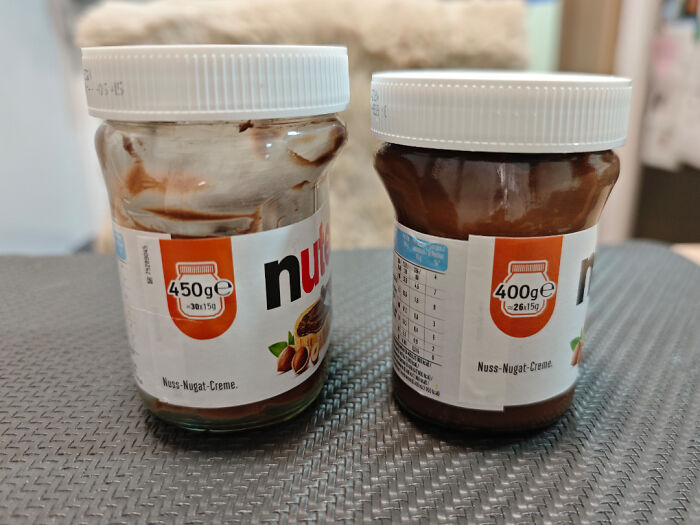
Nutella Jars, before and after ShrinkflationWe are in the process of switching brands for the dry kibble we feed our three livestock dogs. The dogs are huge, each over 100 pounds, and they eat a LOT of food. Our current brand, which I won’t name, began selling 38-pound bags for the same price as an older 50-pound bag.

It’s a good example of shrinkflation, a common problem visible to anyone who pays attention in the grocery-store aisles. You can read all about the economics of this portmanteau word at Wikipedia, but I’m curious about the term’s origin. The Online Etymology Dictionary was of no help, but a Stack Exchange discussion led to a possible first use in 2014. There’s a precedent, too, in the term “stagflation,” a bogeyman of 1970s economics.

Is this post shorter than last week? Since it costs you nothing but time to consume a post, it’s not shrinkflation. I simply found myself taciturn and grumpy this week about that dog food!

Send metaphors and words to cover by e-mailing me (jessid -at- richmond -dot- edu) or leaving a comment below. Want to write a guest entry? Let me know!

See all of our Metaphors of the Month here and Words of the Week here.

Creative-Commons Image: Ink.com. I’m not a Nutella fan, either.

Word of the Week! Nuance

Everglades sunsetWhen checking to see if I’d featured this useful term before, I found  FOUR pages of entries that contained “nuance” in the text but none that gave it a starring role. Time to fix that! Clearly, I love this word.

Frankly, I love anything nuances. You may know my hatred of the Superhero genre of film: I can tell you the plot after 10 minutes for most of them. Boring! They contain some clever dialogue but little mystery or surprise: those are the soul of nuanced stories.

So few things in our world–whatever zealots of any stripe say–are binary. Instead, we encounter subtle shades of differences, slightly varying experiences, a spectrum of personalities, not a series of pigeon-holes. Just put down the phone some twilight and watch a sunset unfold. No two are identical.

The Online Etymology Dictionary notes the origin of our word, “slight or delicate degree of difference in expression, feeling, opinion, etc.,” 1781, from French nuance “slight difference, shade of color.”

And there we have it. Now get out of your chair and enjoy some nuanced experiences outdoors as Spring unfolds. They are as close on the UR campus as a stroll around Westhampton Lake as the leaves unfurl.

Send words and metaphors my way by e-mailing me (jessid -at- richmond -dot- edu) or leaving a comment below. Want to write a guest entry? Let me know!

See all of our Metaphors of the Month here and Words of the Week here.

Image: Publicdomainpictures.net, “Everglades Sunset”

Word of the Week Update! Googly Eyes

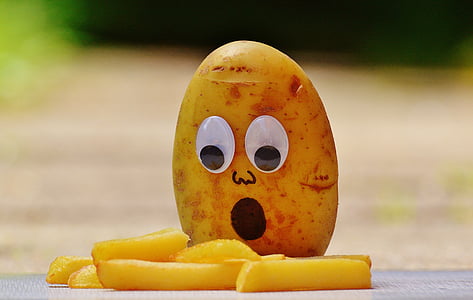
Googly Eyed Potato

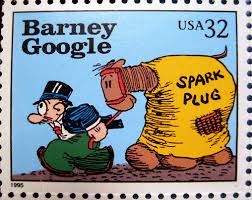
Being an academic includes, believe it or not, a measure of humility. So when I covered this term here before,  I wrote “my money, as well as Wikipedia’s, is on Barney Google, a nearly forgotten cartoon character. ”

I may have lost that bet. There’s some evidence that Barney’s popularity led to a shift in an existing term.

While doing some research on sites to visit in Northumbria, in service of a long-term plan to walk the Hadrian’s Wall Path, I came across the legend of The Lambton Worm, a crawling horror dispatched by local nobleman, Sir John Lambton. As a lad he went fishing and caught the creature, when it too was a youngster. He disposed of the strange “fish” by tossing it in a well, and trouble followed. You may recall the legend if you saw Ken Russell’s B-movie adaptation of Bram Stoker’s reportedly awful novel, The Lair of the White Worm.

I hope to visit the scene of these adventures, south of Newcastle, when I begin my rambles across the north of England. As for my evidence that I was wrong earlier about googly eyes? Doubts began when I found a folk-song composed in 1867 by Clarence M. Leumane, and I’ll quote part of it here, after Sir John unwisely tosses the baby worm down a well:

But the worm got fat an’ grewed an’ grewed,
An’ grewed an aaful size;
He’d greet big teeth, a greet big gob,
An greet big goggly eyes.

The Online Etymology Dictionary notes that our “googly eyes” comes from the older “goggly eyes” of the song, and, further back, to the 1530s and Middle English.

Sorry Barney Google, our term is far older than you. Perhaps Barney’s pop-eyed look helped morph “goggly-eyes” to “googly-eyes”?

Barney and Spark Plug Send words, stick-on googly eyes, monster legends, and metaphors my way by e-mailing me (jessid -at- richmond -dot- edu) or leaving a comment below. Want to write a guest entry? Let me know!

See all of our Metaphors of the Month here and Words of the Week here.

Images: Picpik.com and Wikipedia.

Word of the Week! Shuffle

Here’s a word of common parlance with an interesting etymology. We think of shuffling cards or perhaps walking slowly along, dragging our feet. Both meanings exist alongside each other and pose no problems for native speakers of English. My gut instinct told me that the sliding motion of cards when shuffling them (unlike cutting a deck of cards) gives us a hint of the origin.

The Online Etymology Dictionary provides both the “Middle English shovelen “to move with dragging feet,”  and well as a possible “Low German schuffeln ‘to walk clumsily, deal dishonestly.’ ” That latter meaning gives us a possible link to the noun “shuffle,” which can be a trick or deceit.

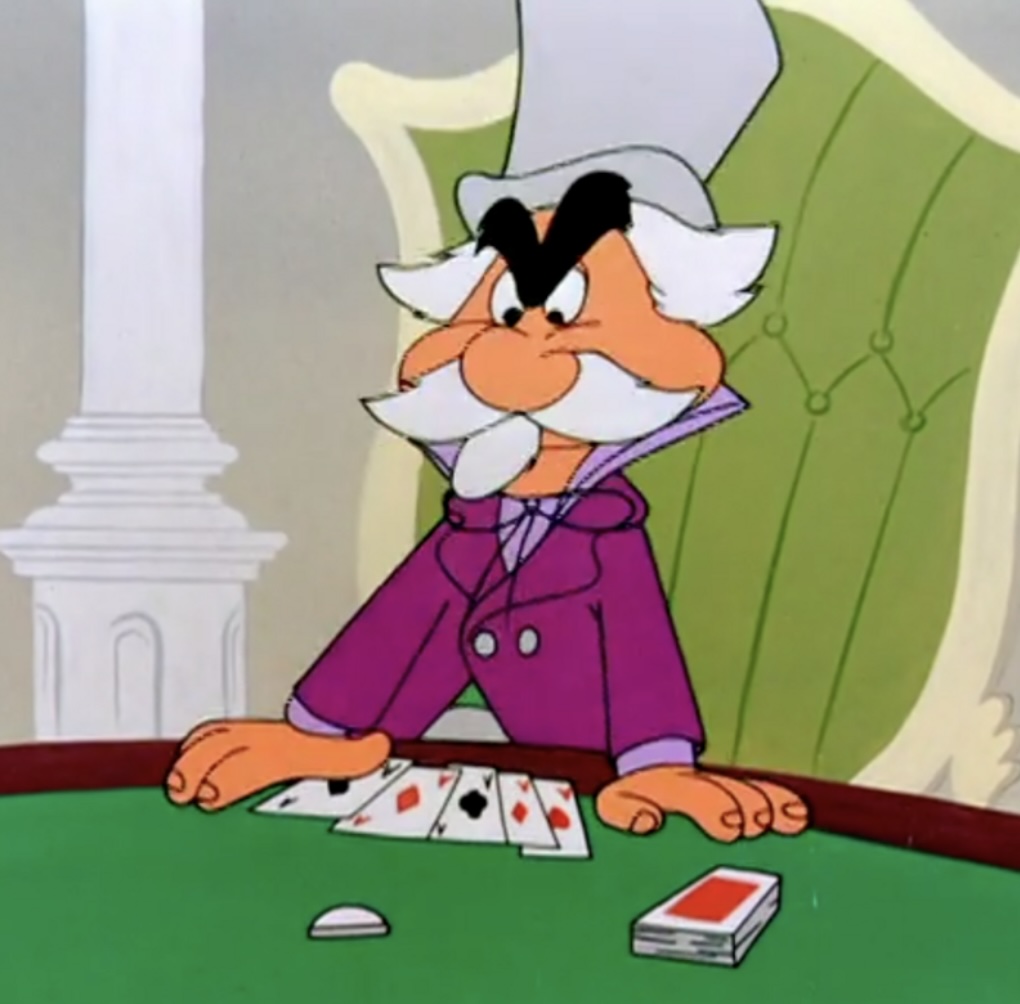
At last, I know what was on the minds of the geniuses at Warner Brothers who created my favorite deep-fried Southern trickster and foil for Bugs Bunny, Colonel Shuffle. He’s a thin-skinned Southern aristocrat in a few cartoons, including the memorable “Mississippi Hare,” with Bugs getting the best of Shuffle at every turn, leading to one of the finest lines in cartoon history when Shuffle is shoved over the side of a riverboat, “Why did you dunk my poor old hide in Ol’ Man River?” Shuffle appeared elsewhere, usually as the butt of jokes rather than playing them, try as he might.

Shuffle is descended from not only Mark Twain’s King and Duke but a long series of picaresque characters that came before the Civil War. When Shuffle declares that he is “the rip-roarin’-est, gold-diggin’-est, sharp-shootin’-est, poker-playin’-est riverboat gambler on the Mississippi!,” he uses boasts we associate with Davy Crockett, Sut Lovingood, Simon Suggs, and other real and fictional “ring-tailed roarers” of Southern-frontier history and tall tales. All of them were expert at playing tricks and pulling cons on gullible strangers.

Good thing they never shuffled their cards around Bugs Bunny, Doc.

Send words, card tricks, and metaphors my way by e-mailing me (jessid -at- richmond -dot- edu) or leaving a comment below. Want to write a guest entry? Let me know!

See all of our Metaphors of the Month here and Words of the Week here.

Image: Col. Shuffle’s card-game shuffle–5 aces!

Word of the Week! Charlatan

Snake Oil SalesmanOur trivia team, “Electric Mayhem,” got stumped by this word this week, so I decided I’d cover it.

Our trivia-host stated that he wanted a term that came from the Italian word “to babble” for a type of confidence man. We wrote down this week’s word, but we figured that the origin of our word was French, so we erased it. We’d have still lost that round, and so it goes.

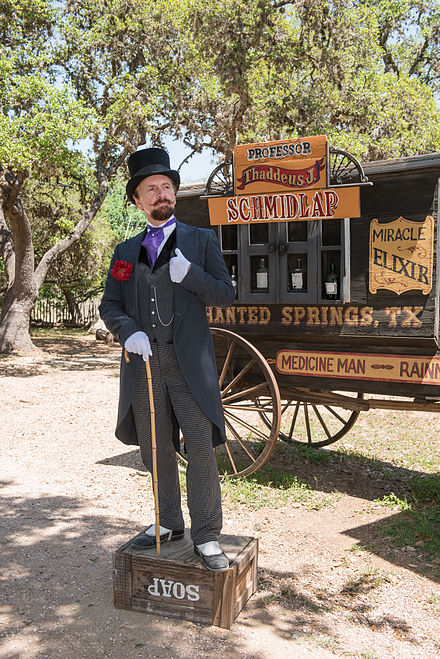
Like “Montebank” that I’ve covered here before, this week’s work is of Italian parentage yet it shares French roots as well. I’ll use the same image. Whereas Montebank comes from the monta in banco, “to stand on a bench” TO sell that snake-oil, “Charlatan” has a more complex etymology. From The Etymology Dictionary Online:

“one who pretends to knowledge, skill, importance, etc.,” 1610s, from French charlatan “mountebank, babbler” (16c.), from Italian ciarlatano “a quack,” from ciarlare “to prate, babble,” from ciarla “chat, prattle,” which is perhaps imitative of ducks’ quacking.

Today we have charlatans online, promising us miracles. We have others in positions of great power. We have many who blog. I hope this post, at least, might babble a bit but present you with an accurate origin on a still-popular word.

Send words and metaphors my way by e-mailing me (jessid -at- richmond -dot- edu) or leaving a comment below. Want to write a guest entry? Let me know!

See all of our Metaphors of the Month here and Words of the Week here.

Image of “Professor Thaddeus Schmidlap, resident snake-oil salesman at the Enchanted Springs Ranch and Old West theme park” courtesy of Wikipedia, via the Library of Congress.